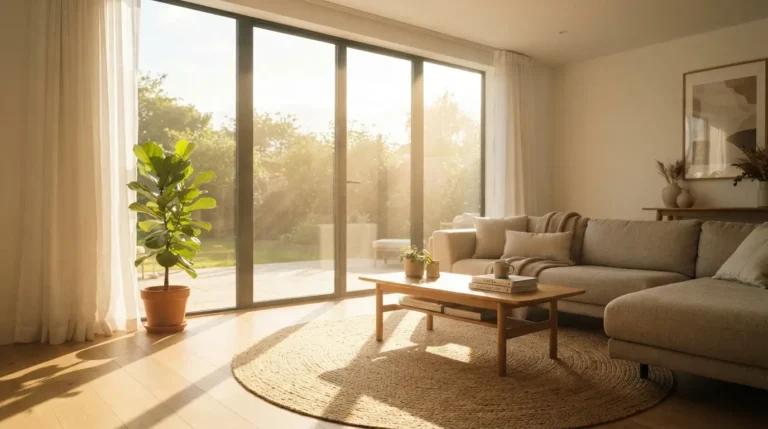

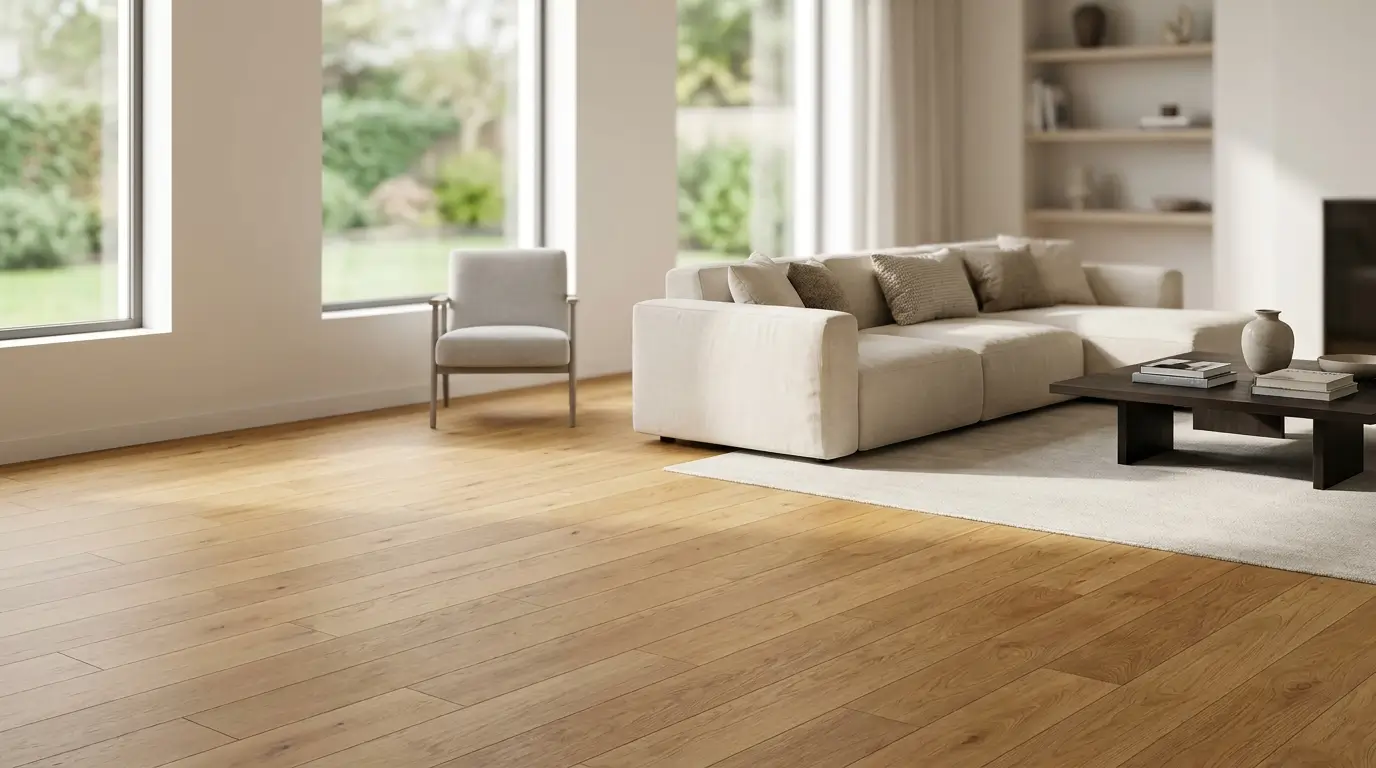
Engineered hardwood flooring looks like solid wood. That is because the surface is real wood. It sits on top of a stronger layered core underneath. This guide explains how it is made. You will learn how it handles moisture and how many times you can refinish it. You will see how it compares to solid hardwood, vinyl plank and laminate flooring. You will also learn which wood species suit your home and how to spot real quality before you buy. By the end, you will know exactly where this flooring makes sense for your house.
What Is Engineered Hardwood Flooring?
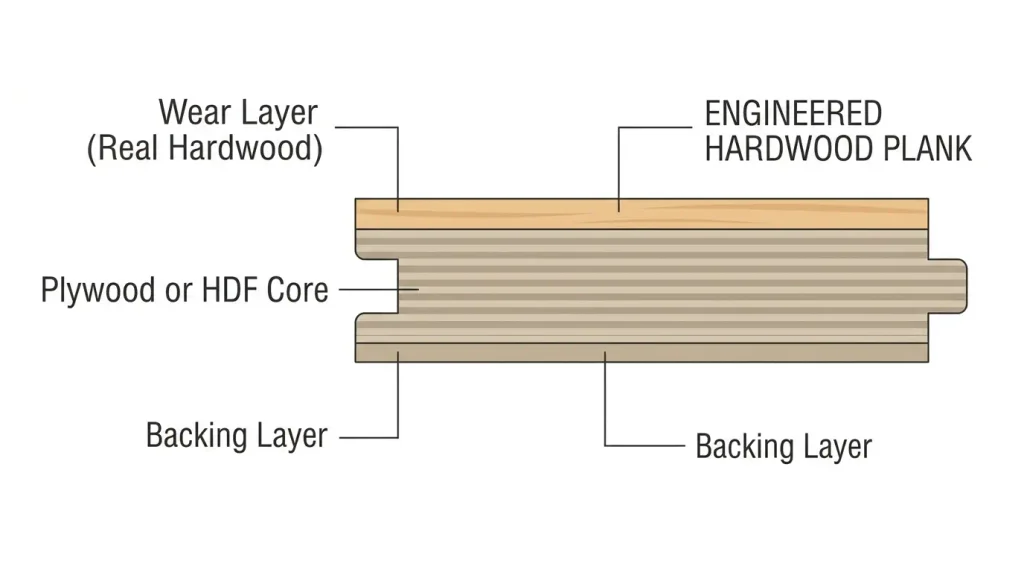
Engineered hardwood is a wood floor made of two main parts. The top layer is a thin slice of real hardwood, called the wear layer. Underneath sits a core built from layers of plywood or high density fiberboard. Those layers stack in a crisscross pattern.
That layered core is what sets engineered wood apart from a solid plank. It holds its shape better when temperature and humidity shift. The wear layer still gives you the same grain and color as solid wood. That is because it is solid wood.
Homeowners choose engineered flooring for a simple reason. It gives the beauty of hardwood with more flexibility in where you can install it. That flexibility opens up rooms solid wood usually cannot handle safely.
How Engineered Hardwood Is Made
Engineered hardwood comes in several types, based on core construction, wood species, and finish. The construction process explains almost everything about how this flooring performs.
The Wear Layer
The wear layer sits on top. It is genuine hardwood, sliced thin from species like oak, maple, hickory, or walnut. Its thickness ranges from about 0.6 millimeters on budget floors. Premium lines can reach 6 millimeters or more.
A thicker wear layer means the floor can be sanded later. A thin wear layer usually cannot be refinished at all. Sanding would cut straight through to the core.
Plywood Core vs. HDF Core
Most engineered floors use one of two core types. The difference matters more than most buyers realize.
Plywood cores stack several thin layers of wood veneer. Each layer turns at a right angle to the one below it. This crisscross pattern makes the plank strong. It resists warping well. Plywood cores generally handle moisture better than HDF.
HDF, or high density fiberboard, is made from compressed wood fibers. Heat and pressure bond them together. HDF cores cost less to produce, so those floors often sell for less. They are more sensitive to standing water and humidity swings than plywood.
If you plan to install in a humid room, pick a plywood core. It is usually the safer choice.
How the Layers Work Together for Stability
Wood naturally expands and shrinks as humidity changes. Solid wood moves as one piece. Over time, this can cause gaps, cupping, or warping.
Engineered construction fights this problem directly. Each layer runs in a different grain direction. The layers hold each other in check. The plank stays flatter across seasons, even in rooms with big humidity swings.
Engineered Hardwood vs. Solid Hardwood
Both options are genuine wood floors. The difference comes down to construction and what that construction allows.
Construction Differences
Solid hardwood is one piece of wood, top to bottom. It usually runs three quarters of an inch thick. Engineered hardwood is thinner overall, often between three eighths and three quarters of an inch. It has a layered core beneath the wear layer.
Solid wood generally comes in narrower planks. Engineered flooring is easier to produce in wide plank styles. The core provides stability that a wide solid plank would lack.
Cost Differences
Price varies by species, grade, and brand. General ranges still hold up across most of the market. Solid hardwood typically runs four to fifteen dollars per square foot. The average sits close to eight dollars.
Engineered hardwood tends to cost less. Budget lines start around two to three dollars per square foot. Most mid range and higher end engineered floors fall between four and seven dollars per square foot.
Installation costs vary separately. They depend heavily on your local labor market and installation method.
How Many Times You Can Refinish Each One
Solid hardwood can typically be refinished four to six times. The entire plank is solid wood, so there is a lot of material to sand.
Engineered hardwood usually allows one to three refinishes. This depends on the wear layer thickness. Floors with a wear layer under two millimeters often cannot be refinished at all. Check this number before buying if long term refinishing matters to you.
Underfoot Feel and Sound
Solid hardwood is almost always nailed or glued down. This creates a firm, dense feel underfoot. It also absorbs sound well.
Engineered hardwood is often installed as a floating floor. Floating floors feel slightly softer underfoot. They can produce a faint hollow sound when walked on. A denser underlayment pad reduces this effect significantly.
Is Engineered Hardwood Real Wood?
Yes. The visible surface of engineered hardwood is genuine hardwood. It is not a printed image or a laminate coating. The only real difference from solid wood sits underneath the surface.
This surprises many first time buyers. The word “engineered” sounds artificial to some ears. In reality, engineered construction is simply a different way to build a wood floor. It is not a substitute material.
One mix-up trips people up during research. Engineered hardwood is not the same product as vinyl plank flooring. Engineered vinyl plank, often called rigid core vinyl, has no real wood in it at all. It uses a printed image layer over a rigid plastic core. Engineered hardwood always has a genuine hardwood surface. If a product listing does not clearly state a real wood wear layer, it is likely vinyl, not hardwood.
Moisture Resistance: What It Can and Cannot Handle
Moisture is the biggest factor separating engineered hardwood flooring from solid hardwood. It also decides where you can install each one.
Water-Resistant vs. Waterproof
Engineered hardwood is water resistant, not waterproof. The layered core handles brief spills and humidity better than solid wood does. Standing water left for hours or days will still cause damage. It can swell the core or lift the finish.
A small number of engineered hardwood lines are marketed as waterproof engineered hardwood. This usually comes from a sealed core or a different manufacturing process. Confirm this with the manufacturer’s spec sheet. Do not assume it from marketing language alone.
Where You Can Install Engineered Hardwood Flooring
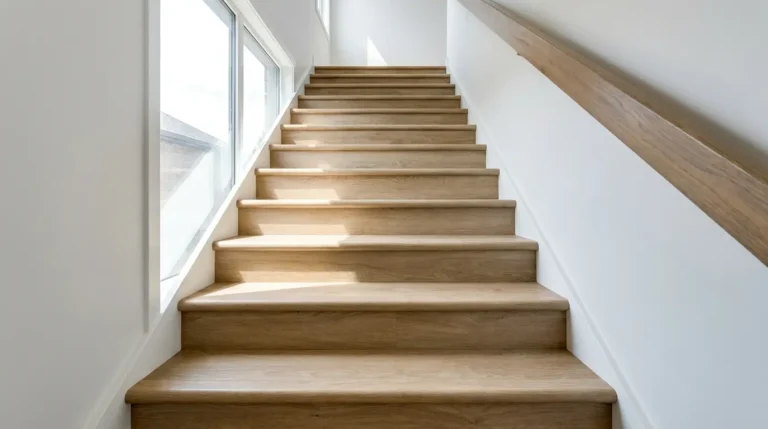
Because of its layered core, engineered hardwood flooring works in rooms where solid wood usually cannot go. Basements, kitchens, and rooms over concrete slabs are common examples. Stairs are another common spot for Engineered Hardwood Flooring on Stairs, though the installation takes a different approach than a flat room floor.
Engineered hardwood also pairs well with radiant floor heating. The layered core resists the warping that heat cycles can cause in solid wood. Full bathrooms and laundry rooms still call for a fully waterproof product instead.
Before installing below ground level, let the flooring acclimate in the room first. Follow the manufacturer’s recommended period, usually several days. This lets the wood adjust to the room’s humidity.
Wood Species and the Janka Hardness Scale
Wood species affects both looks and durability. The Janka hardness scale measures how well wood resists denting. It uses the force needed to embed a steel ball halfway into the wood.
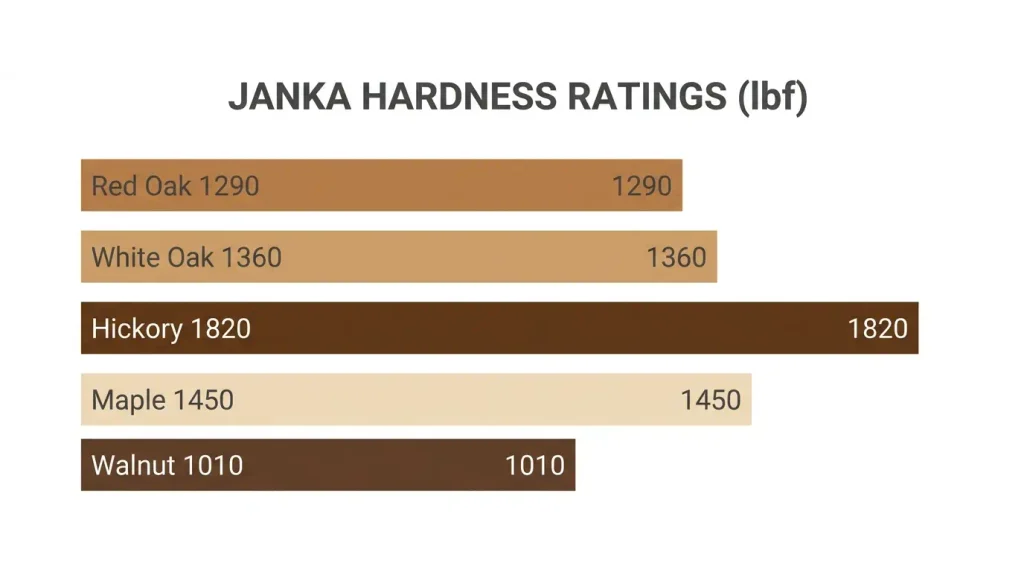
Red oak scores around 1,290 on the Janka scale. It remains the most common species in American flooring. Its grain pattern and cost balance out well for most homes.
White oak rates slightly harder, at roughly 1,360. It carries a straighter, more uniform grain. Many homeowners prefer this look for a modern interior.
Hickory is one of the hardest domestic species, scoring near 1,820. It suits households with large dogs, heavy furniture, or high foot traffic.
Maple rates close to 1,450. It offers a smoother, more subtle grain pattern. This works well in contemporary spaces.
Walnut sits lower on the scale, around 1,010. It offers a rich, dark color that many buyers choose for looks. Save it for calmer, lower traffic rooms.
Species comparisons matter here. Engineered hardwood flooring performs differently depending on the wood type and the wear layer protecting it.
Plank Width, Finishes, and Surface Treatments
Beyond species and construction, a few style choices change both the look and the feel of your floor.
Plank Width
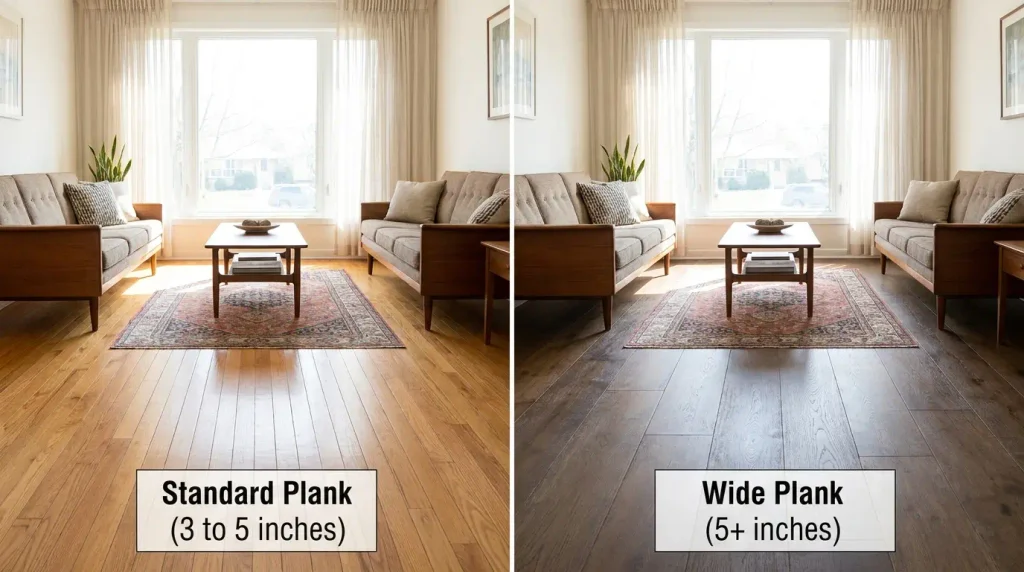
Standard planks run roughly three to five inches wide. They give a traditional look. They also tend to stay slightly more stable against humidity changes.
Wide planks, five inches or wider, have become popular for their open feel. Wider boards show more natural grain. They make smaller rooms feel larger, though they can be a bit more sensitive to humidity shifts.
Finish Types
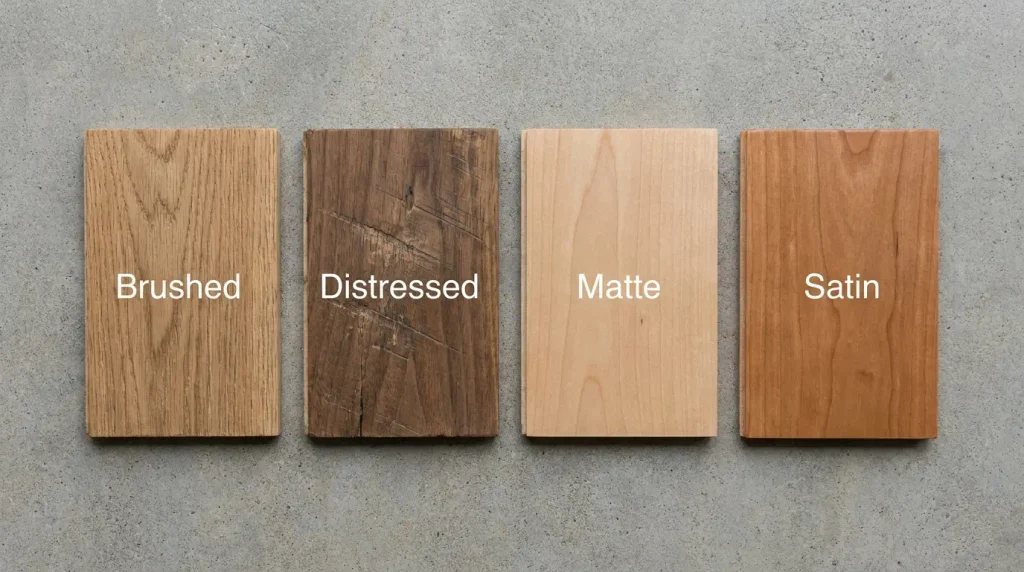
Factory finishes protect the wear layer and affect maintenance. A brushed finish highlights natural grain texture. It also hides light scratches well. A distressed finish adds an intentionally aged, rustic look.
Surface treatments vary too. Oil finishes bring out natural wood tone but need more frequent care. Lacquer finishes come in matte or satin sheen. They form a harder shell and usually need less upkeep than oil.
How to Check the Quality of Engineered Hardwood Flooring Before You Buy
Quality varies a lot between brands, even at similar prices. Check these five details before you commit to any purchase.
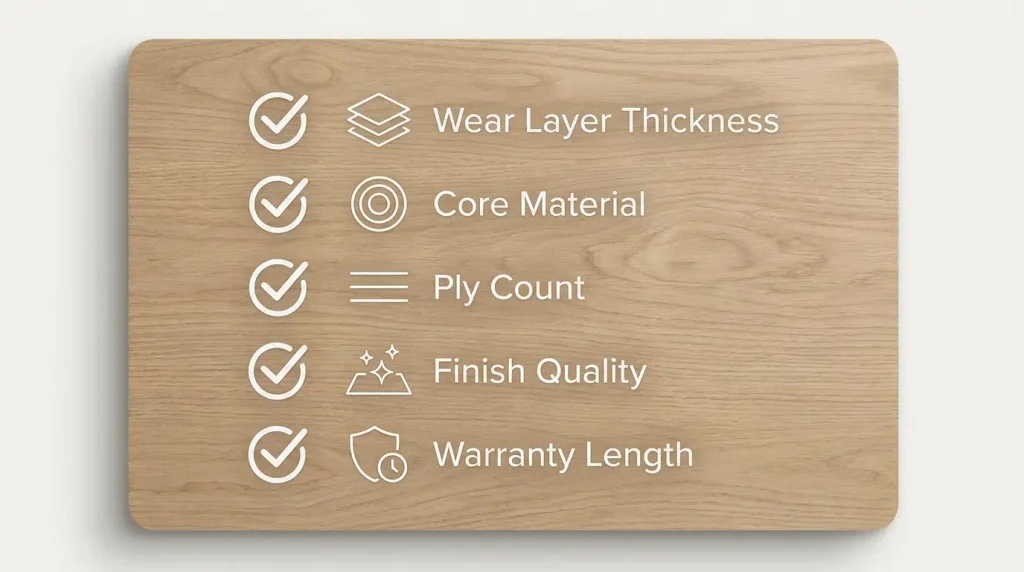
Wear layer thickness matters most for long term value. Look for at least two millimeters if you want any refinishing option later. Go for three millimeters or more for the best flexibility.
Core material affects moisture resistance directly. Ask whether the core is plywood or HDF. Sales listings do not always state this clearly.
Ply count adds stability to the plank. Cores built with seven to nine plies generally outperform cheap three ply construction. This matters most in wider planks.
Finish quality determines daily durability. Ask about scratch resistance ratings. Also ask if the finish is factory applied under UV curing. That tends to last longer than site applied finishes.
Warranty length signals manufacturer confidence. A structural warranty of 25 years or more is a good sign. Pair that with a reasonable finish warranty for real peace of mind.
Installation Methods: Floating, Glue-Down, and Nail-Down
Engineered hardwood flooring typically installs using one of three methods. The right choice depends on your subfloor and skill level.
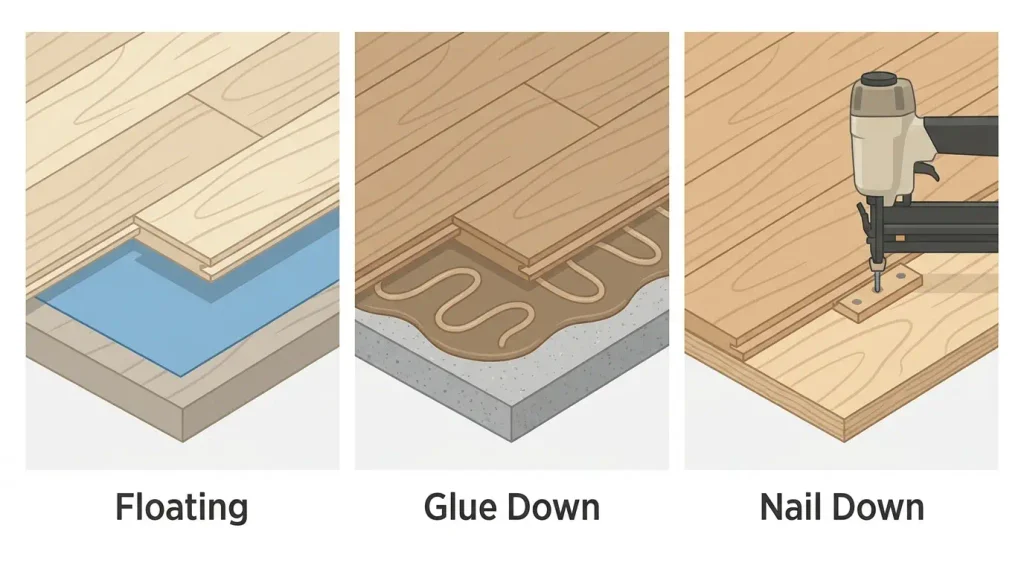
Floating installation connects planks to each other, not to the subfloor. It uses a click lock system over an underlayment pad. This method suits DIY installers well. It works over most existing hard flooring too.
Glue-down installation bonds planks directly to a concrete or wood subfloor. It creates a firmer, quieter floor. It also requires more preparation and experience.
Nail or staple-down installation fastens planks through the tongue into a plywood subfloor. This traditional method works well above ground level. It is not suitable over concrete.
Confirm the subfloor is clean, dry, and level before you start. A few practical tips help any installation go smoother. Let planks acclimate in the room first. Stagger the end joints between rows for a natural look and better strength. Leave a small expansion gap along the walls, since engineered wood still shifts slightly with the seasons.
How Does Engineered Hardwood Compare to Laminate and Vinyl Plank?
Each material solves a different problem. The right choice depends on your priorities.
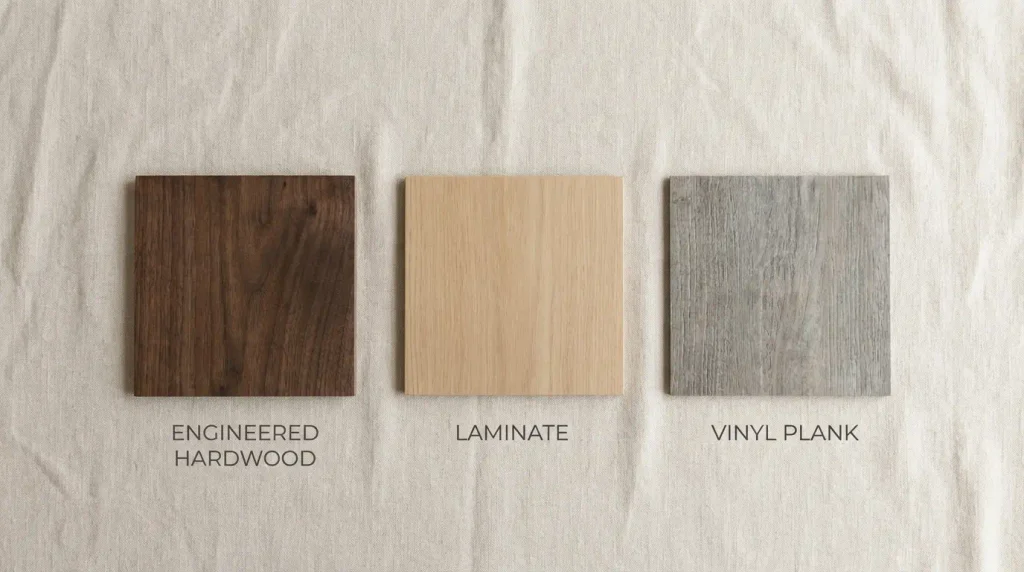
| Feature | Engineered Hardwood | Laminate | Vinyl Plank |
| Real wood | Yes, wear layer is genuine hardwood | No, printed image layer | No, printed image layer |
| Water resistance | Water resistant, rarely waterproof | Water resistant, rarely waterproof | Often fully waterproof |
| Refinishable | Yes, one to three times | No | No |
| Typical cost per sq ft | $4 to $7 | $2 to $5 | $2 to $7 |
| Resale value impact | Generally positive | Neutral | Neutral to slightly positive |
Laminate and vinyl plank flooring use a photographic layer to mimic wood grain. They can look convincing from a distance. Neither matches the texture of real wood underfoot. Vinyl plank generally offers better waterproofing. This makes it a stronger fit for full bathrooms or laundry rooms.
Real wood underfoot and resale value matter most to many buyers. Engineered hardwood flooring remains the stronger choice for most living spaces.
Caring for Engineered Hardwood Floors
Daily care matters more here than on solid wood, since the wear layer has limited room for mistakes, and cleaning engineered hardwood floors the right way takes more than a quick sweep and mop.
One thing specific to buying decisions: keep indoor relative humidity between 35 and 55 percent year round. Flooring manufacturers and wood flooring associations recommend this range. It keeps planks from shrinking, swelling, or developing gaps.
Is Engineered Hardwood Good for the Environment?
Engineered hardwood uses less raw hardwood than a solid plank of the same size. Only the thin top layer needs to be premium wood. Core layers can often use lower grade wood or recycled material.
Look for flooring certified by the Forest Stewardship Council. This confirms the wood came from a responsibly managed forest. Also check that adhesives meet current formaldehyde emission standards under federal rules for composite wood products. Older or lower grade adhesives can release higher levels of volatile organic compounds.
Solid hardwood still holds an edge in one area. It lasts longer on average and is fully biodegradable. Engineered wood’s adhesives make it harder to recycle at the end of its life.
Is Engineered Wood Flooring Good for Your Home?
The honest answer depends on what your household needs most.
Real advantages: genuine wood look, better moisture resistance than solid wood, flexible installation locations, and generally lower cost.
Real trade-offs: limited refinishing and water resistance rather than true waterproofing.
Most homeowners renovating a kitchen, basement, or living area want this balance. Engineered hardwood flooring offers real wood character with practical durability. Some households want a floor with no limits on refinishing. Solid hardwood may suit them better in above ground rooms.
Final Thoughts
Engineered hardwood flooring gives you real wood on the surface with a more stable structure underneath. It costs less than solid hardwood and installs in more rooms. It still adds genuine value to your home. The trade-off is a limited number of refinishings and water resistance rather than full waterproofing. Check the wear layer, core material, and warranty before you buy. You will end up with a floor that looks great and holds up for decades.
Frequently Asked Questions
What are the pros and cons of engineered hardwood flooring?
The main advantages are real wood appearance, better moisture handling than solid wood, and flexible installation. The main drawbacks are limited refinishing, water resistance instead of true waterproofing, and a softer feel when floated.
Which rooms are best suited for engineered hardwood flooring?
Living rooms, bedrooms, dining rooms, and kitchens all work well. Basements and rooms over concrete work too, thanks to the moisture resistant core. Full bathrooms and laundry rooms need fully waterproof flooring instead.
How can you tell if engineered hardwood flooring is high quality before buying?
Check the wear layer thickness, core material, ply count, finish type, and warranty length. Look for a wear layer of two millimeters or more. A plywood core and a 25 year warranty are also strong signs of quality.
What is the best thickness for engineered hardwood flooring?
Most quality floors range from three eighths to three quarters of an inch overall. The wear layer usually falls between two and six millimeters. Thicker wear layers allow more future refinishing.
How long does engineered hardwood flooring last?
With proper care, engineered hardwood typically lasts 20 to 30 years. Floors with thicker wear layers tend to outlast budget lines with thin wear layers.
Can engineered hardwood flooring be installed in a bathroom?
It can handle powder rooms with light moisture exposure. Full bathrooms with showers or tubs need a fully waterproof option instead. Standing water will eventually damage the core.
About HomeFixStyle
HomeFixStyle is a home improvement blog dedicated to helping readers create better, more comfortable, and stylish homes. We share practical ideas, helpful guides, home decor inspiration, renovation tips, and simple solutions for everyday home projects. Our goal is to make home improvement easier to understand and apply, whether you are updating one room or improving your entire home.