
Waterproof engineered hardwood flooring is real wood built over a waterproof core. The surface looks like solid hardwood because it is genuine wood. But the layer underneath blocks water instead of absorbing it. That design lets a wood floor survive spills and even standing water for a limited time. This guide explains how it is built. You will learn why some products truly resist water while others only claim to. You will see which rooms it fits and which still need caution. You will also learn how to check a waterproof claim before you buy. We cover installation, cost, and how it compares to vinyl, laminate, and tile. By the end, you will know exactly what to look for.
What Is Waterproof Engineered Hardwood Flooring
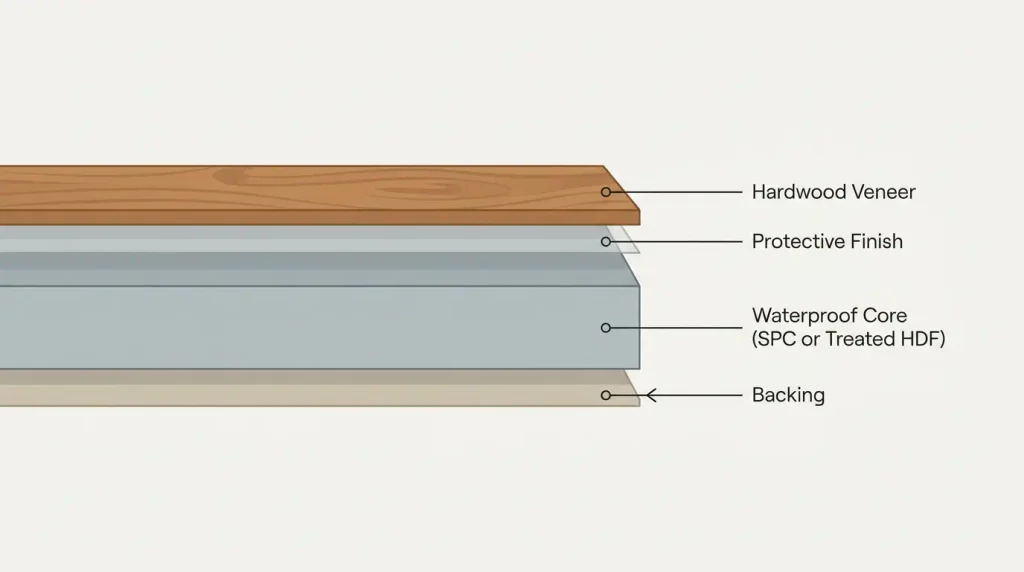
This flooring is a layered wood floor with a waterproof core under a real hardwood surface. The top layer is genuine wood, called the wear layer or veneer. Below it sits the core, and that is where the waterproofing actually happens.
Standard engineered hardwood uses a plywood or fiberboard core. That core can still absorb water over time. A true waterproof product replaces that core with a material built to resist moisture completely. Common choices are stone plastic composite or a treated composite base.
The planks also use click lock edges and sealed seams. This keeps water from creeping between boards and reaching the subfloor. The result looks and feels like traditional hardwood but behaves very differently when water hits it.
Is Engineered Hardwood Really Waterproof
This is the question most homeowners actually want answered. The honest answer depends on the product, not the general category.
Standard engineered hardwood is water resistant, not waterproof. It handles small spills if you wipe them up fast. It cannot handle standing water or constant moisture. A true waterproof product is a distinct line built specifically to survive that kind of exposure.
Why the Answer Comes Down to the Core, Not the Wood
Real wood is porous. No coating changes that fact. So true waterproofing never comes from the wood itself. It comes from what sits beneath it.
Manufacturers build a synthetic or reinforced core that physically blocks water. The wood veneer on top still needs a durable finish. But the core is what actually stops water from destroying the floor.
What 100% Waterproof Actually Means
A label claiming 100% waterproof usually means the plank will not swell or warp for a defined period. That claim is often backed by standardized water exposure testing.
It does not mean the floor can sit underwater forever. It also does not protect your subfloor automatically. Water can still travel through gaps or damaged seams. Installation quality matters just as much as the product itself, and we cover that in detail later.
How This Flooring Is Made
Understanding the construction helps you judge any product with confidence, rather than trusting marketing language alone.
The Hardwood Veneer
The top layer is a thin cut of real hardwood, often just a millimeter or two thick. This veneer gives the floor its authentic grain and color. A protective finish, usually aluminum oxide, adds scratch resistance and a first line of defense against surface moisture.
The Waterproof Core Defines Waterproof Engineered Hardwood Flooring
The core is what separates a true waterproof product from standard engineered hardwood. Common core materials include stone plastic composite, treated high density fiberboard, and proprietary composite blends built by individual manufacturers.
Stone plastic composite cores resist water strongly because they contain no wood fibers at all. Treated fiberboard cores can also perform well, though results vary by brand. This is why checking the specific core material matters more than trusting a single word on the label.
Click-Lock Systems and Sealed Edges
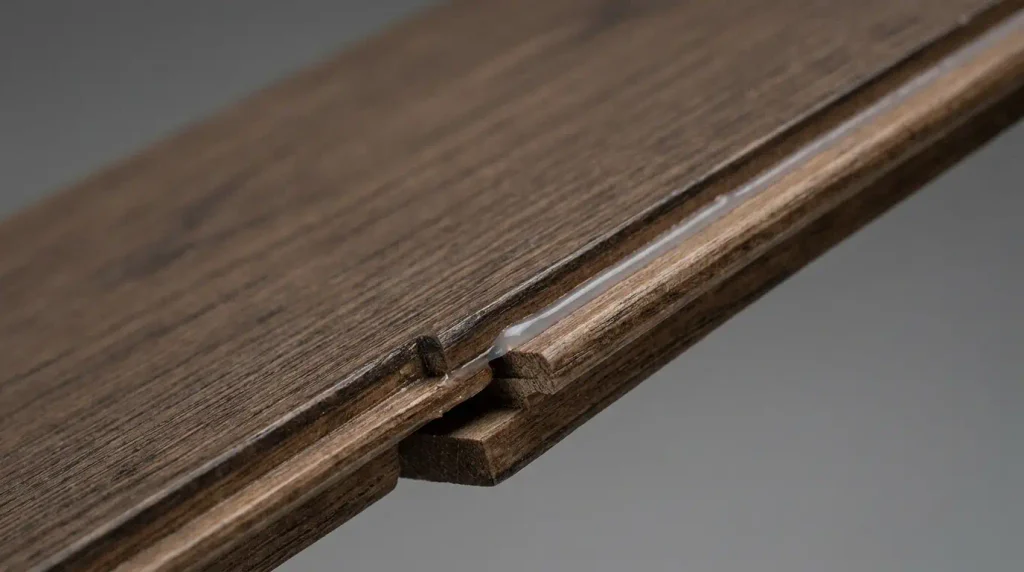
Most waterproof planks use a click lock system. Planks snap together at tight, interlocking joints. Many products also apply a factory sealant along each edge.
Together, the locking system and sealed edges keep water on the surface. They stop it from seeping down between boards. This detail is easy to overlook, but it shapes real world performance more than most buyers realize.
Waterproof vs Water-Resistant Engineered Hardwood
These two terms get used interchangeably online, but they describe different products. Getting this distinction right will save you from a costly mistake.
What Water-Resistant Engineered Hardwood Can Handle
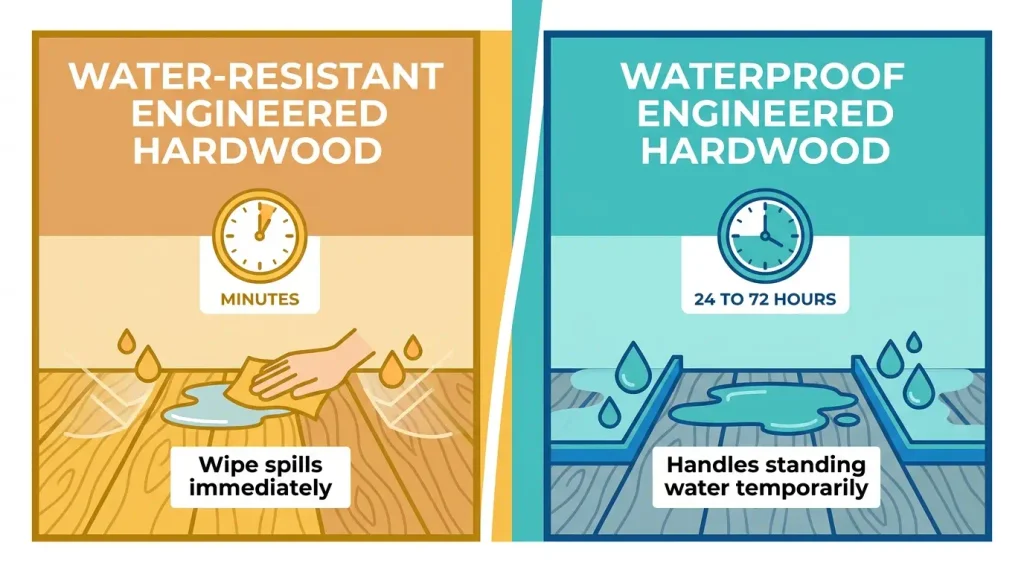
Water resistant engineered hardwood handles everyday humidity and quick spills well. Wipe up a splash within a few minutes and the floor should be fine. Left overnight, that same spill can cause swelling or gaps between planks.
This is the standard product already in most living rooms and bedrooms. It performs well almost everywhere except rooms with heavy, repeated moisture.
What Waterproof Engineered Hardwood Can Handle
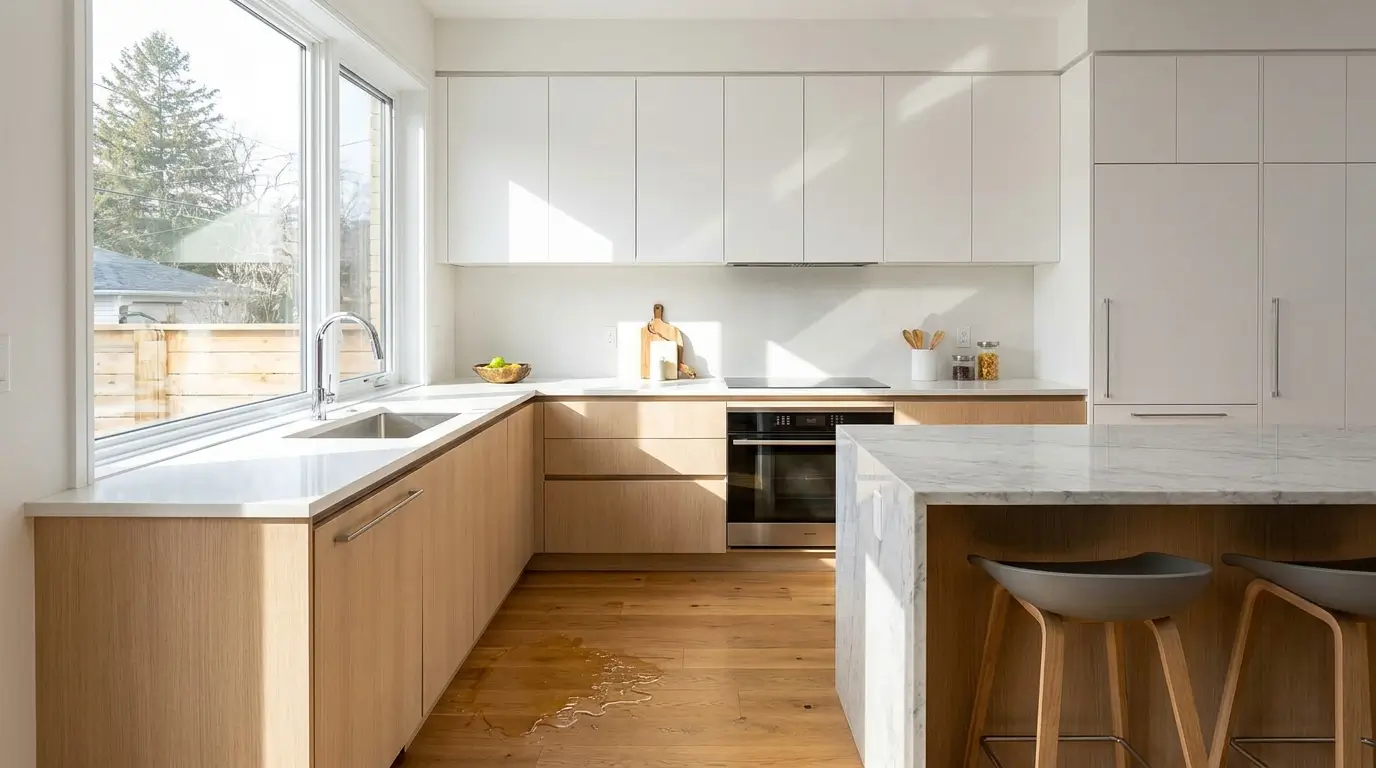
A genuine waterproof product is built for a different level of exposure. It can survive pet accidents, dishwasher leaks, and tracked in water without immediate plank damage.
This makes it suitable for kitchens, powder rooms, and basements. Water resistant hardwood flooring would carry real risk in those same spaces.
Standing Water Time Limits Explained
No flooring, waterproof or not, is meant for permanent submersion. Most waterproof rated products are tested for a specific window. That window is commonly 24 to 72 hours of standing water exposure.
That range exists because testing happens under controlled conditions, not indefinite flooding. Water sitting far beyond that window will likely cause damage, regardless of what the packaging claims.
Best Rooms for This Flooring
Knowing where this flooring genuinely belongs prevents wasted money and future regret.
Where It Excels
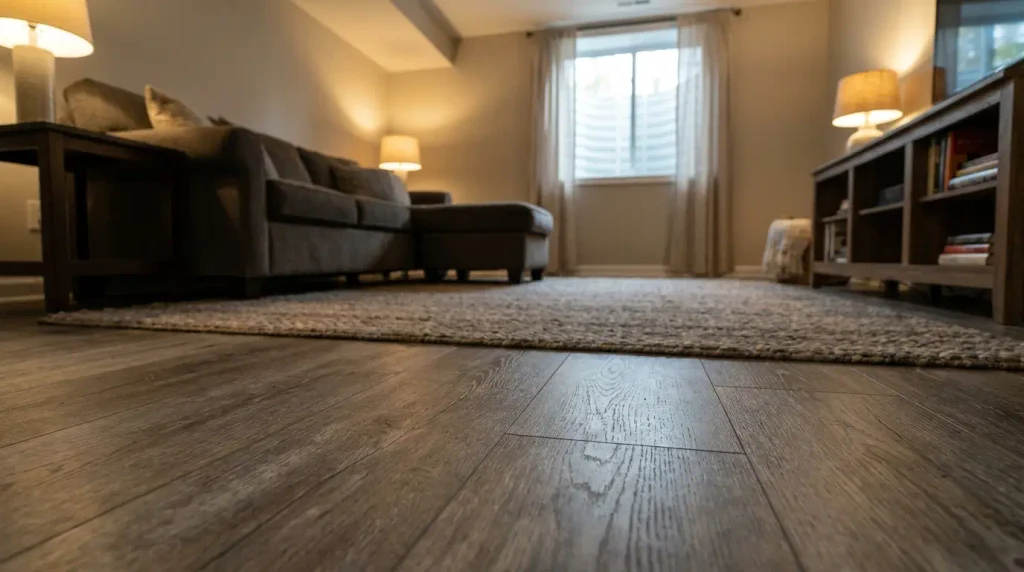
Kitchens are the most common fit, since spills happen daily. Basements benefit too, especially where humidity shifts through the year. Mudrooms, laundry rooms, and entryways make strong sense as well, since tracked in moisture is a constant reality there.
Homes with pets are a natural match too. Accidents happen, and a waterproof core removes the panic that usually follows. A full comparison of durable flooring options for pets deserves its own guide. That is beyond the scope of this one.
Where Caution Is Still Needed
Full bathrooms with showers or tubs deserve extra scrutiny. Even a waterproof floor is not built for constant standing water at drains or shower thresholds. Many manufacturers still point buyers toward vinyl or tile for those wet zones.
Flood prone basements need caution too. If your basement has a history of flooding, no engineered wood product replaces proper drainage first. Planning the best flooring for a basement renovation usually means weighing several materials together, not one product alone.
How to Verify a Waterproof Claim Before You Buy
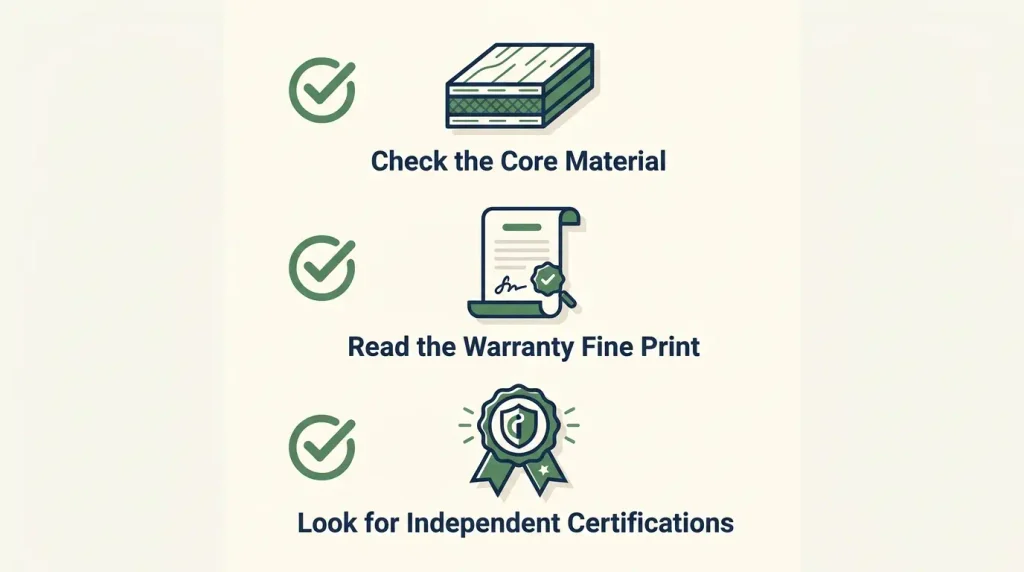
This step gets skipped in most buying guides, and skipping it is exactly where disappointment starts. Before you commit to waterproof engineered hardwood flooring, take a few minutes to verify the claim yourself. Do not just trust the label.
Check the Core Material
Ask the retailer or manufacturer what the core is made from. A specific answer, such as stone plastic composite or a named treated composite, is a good sign. A vague answer is a warning sign.
Read the Warranty Fine Print
Warranty language often reveals more than marketing copy does. Look for the exact standing water time limit stated in writing, not just the word waterproof on the box. Check whether the warranty covers residential use only, and whether it requires a specific installation method to stay valid.
Look for Independent Certifications
Third party certifications add real credibility beyond a brand’s own claims. Look for compliance with EPA TSCA Title VI formaldehyde emission standards. Certifications such as GREENGUARD Gold from UL confirm low chemical emissions independently. Products meeting Decorative Hardwoods Association construction standards are a good sign too. So is Forest Stewardship Council sourcing certification. Both show a manufacturer willing to back its claims with outside verification.
Installing This Flooring the Right Way
Even a genuinely waterproof product can fail if installed poorly. Installation quality here is not optional.
Floating with a click lock system is the most common method for this flooring. Planks snap together without glue or nails, which makes it doable for most DIY homeowners in a weekend. Gluing down is also an option, usually chosen for larger or higher traffic spaces.
Expansion Gaps
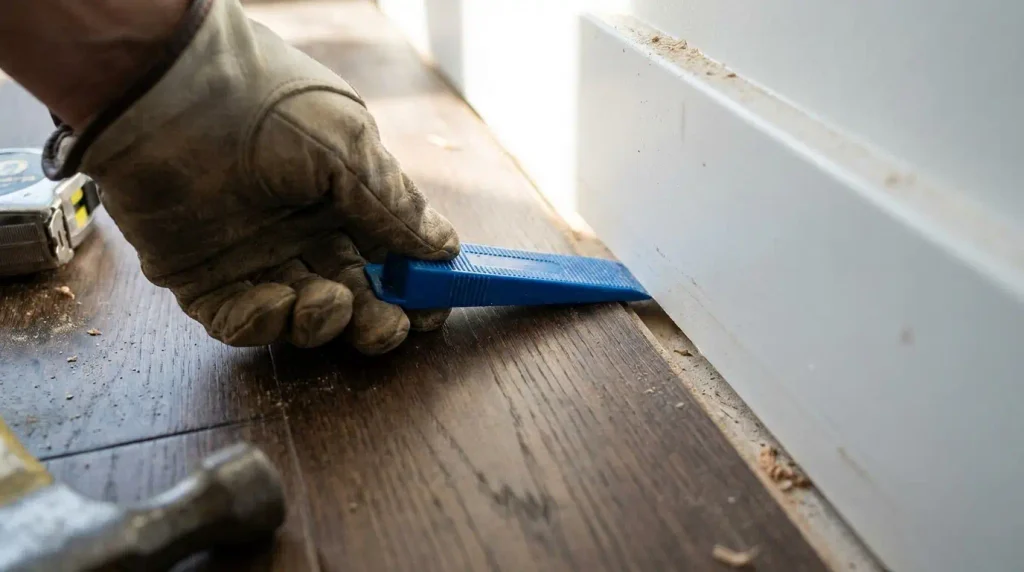
Engineered wood still expands and contracts with temperature and humidity. Leave a small gap, typically a quarter inch, along every wall and fixed object. Skipping this step is one of the most common mistakes. It can cause buckling months after the floor looks perfect.
Sealing Seams and Transitions
Every seam, doorway, and transition to another flooring type needs proper sealing. Use the sealant your manufacturer recommends, especially near sinks, dishwashers, and exterior doors. This step is what actually delivers on the waterproof promise day to day.
Testing Subfloor Moisture First
Before installation begins, test the subfloor with a moisture meter. A waterproof plank cannot compensate for a subfloor that is already wet. This is also the point to confirm whether new flooring can go directly over an existing floor. That is often possible over a single layer of vinyl, tile, or hardwood. The surface just needs to be flat, clean, and sound.
Species and Finish: What Changes With a Waterproof Core
Species and hardness affect looks and scratch resistance, not water protection. That protection comes entirely from the core, not the wood on top. Oak, hickory, white oak, and maple are the species most commonly used on waterproof product lines.
Finish matters more than species here. A matte or satin finish hides scratches and water spots better than high gloss. That makes it a smart choice for kitchens and mudrooms specifically.
How Much Does Waterproof Engineered Hardwood Flooring Cost
Standard engineered hardwood runs a moderate price range depending on species and thickness. A true waterproof product carries a premium on top of that baseline. The specialized core and sealed locking system cost more to manufacture.
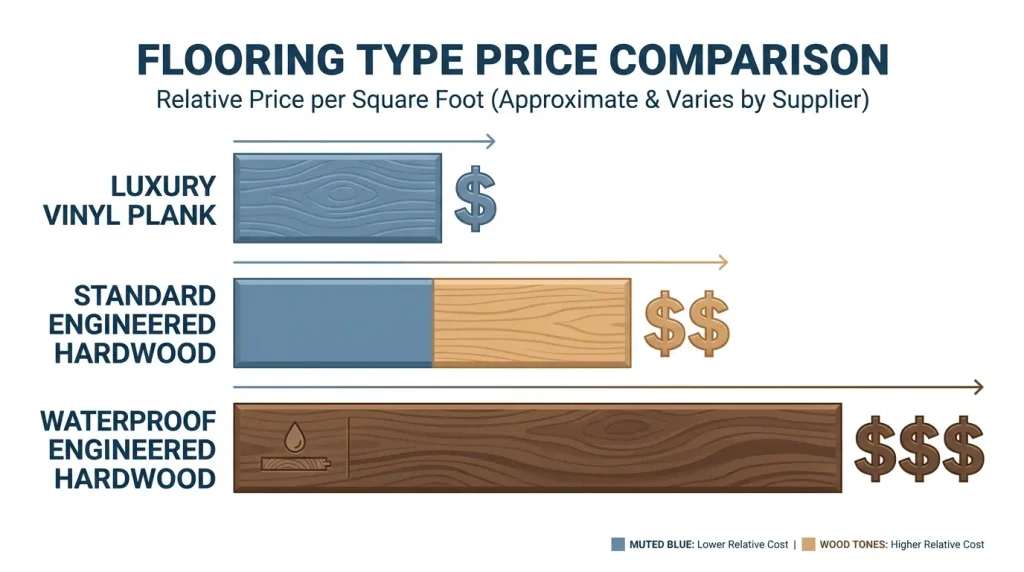
Expect to pay noticeably more per square foot than standard engineered hardwood. Expect somewhat more than many luxury vinyl products too. Installation adds to that total, particularly with glue down methods, which need more labor than a floating floor.
Exact pricing depends heavily on species, brand, and thickness. Getting a current quote from a local supplier is still the most reliable way to budget accurately. Many suppliers offer free in home measurement, worth requesting before you place a final order.
Waterproof Engineered Hardwood vs Other Waterproof Options
This is not the only flooring built for moisture heavy rooms. Here is how it stacks up against the other waterproof options for wet areas specifically.
| Flooring Type | Real Wood | Waterproof | Best For |
| Waterproof Engineered Hardwood | Yes | Yes, with time limit | Kitchens, basements, living areas |
| Luxury Vinyl Plank | No | Yes, fully | Bathrooms, basements, laundry rooms |
| Waterproof Laminate | No | Yes, with sealed core | Budget friendly wet areas |
| Wood Grain Porcelain Tile | No | Yes, naturally | Bathrooms, entries, high moisture zones |
Luxury vinyl plank flooring offers the strongest overall water protection, since it contains no wood at all. Waterproof laminate has improved a lot but still relies on sealed edges to keep its core dry. Porcelain tile is naturally waterproof but feels harder underfoot and costs more to install. This flooring sits in a unique spot. It offers genuine wood character with strong, though not unlimited, water protection.
Caring for This Flooring
Good habits extend the life of any finish, and the basic routine for cleaning engineered hardwood floors applies here too, just with more breathing room since the core resists water.
One rule is specific to a waterproof core: wipe up standing water within the tested time window stated in your warranty. Do not wait until you reach that limit, since the waterproof rating is time-limited, not permanent.
Final Thoughts
Waterproof engineered hardwood flooring gives you real wood character with genuine protection against everyday moisture. It is not indestructible, and no honest manufacturer claims it can survive a flood. But for kitchens, basements, and busy households with kids or pets, it solves a problem standard hardwood never could.
Take time to verify the core material. Read the warranty carefully. Install it correctly. Do that, and this flooring will reward you with years of good looking performance. That holds true even in rooms where wood was once considered too risky to use.
Frequently Asked Questions
Is engineered hardwood waterproof?
Standard engineered hardwood is water resistant, not waterproof. Only products built with a true waterproof core are designed to handle standing water for a limited time.
Can waterproof engineered hardwood still be damaged by water?
Yes. Exposure beyond the tested time limit can still cause problems. So can water reaching an unsealed subfloor or damage at unsealed seams.
What’s the difference between water-resistant and waterproof engineered hardwood?
Water resistant products handle quick spills if cleaned promptly. Waterproof products use a different core built specifically to withstand standing water, often for 24 to 72 hours.
Can I make regular engineered hardwood waterproof?
Not completely. Sealants and finishes can improve moisture resistance slightly, but they cannot replicate a purpose built waterproof core. Choose a product designed as waterproof from the start for real wet area protection.
Is waterproof engineered hardwood worth the extra cost?
For kitchens, basements, and pet friendly homes, the added cost often pays off. It can prevent the warping and replacement costs that come with water damage on standard flooring.
What should I avoid when buying waterproof engineered hardwood?
Avoid products that use the word waterproof without naming the core material or a tested time limit. Also avoid skipping the warranty details, since vague language often signals weaker real world performance.
Can I install waterproof engineered hardwood myself?
Yes, particularly with floating, click lock systems built for straightforward DIY work. Glue down methods take more experience and are often better left to a professional installer.
Can I install waterproof engineered hardwood over an existing floor?
Often yes, provided the existing surface is flat, clean, and structurally sound. A single layer of vinyl, tile, or hardwood is usually an acceptable base. Check manufacturer guidelines first.
About HomeFixStyle
HomeFixStyle is a home improvement blog dedicated to helping readers create better, more comfortable, and stylish homes. We share practical ideas, helpful guides, home decor inspiration, renovation tips, and simple solutions for everyday home projects. Our goal is to make home improvement easier to understand and apply, whether you are updating one room or improving your entire home.