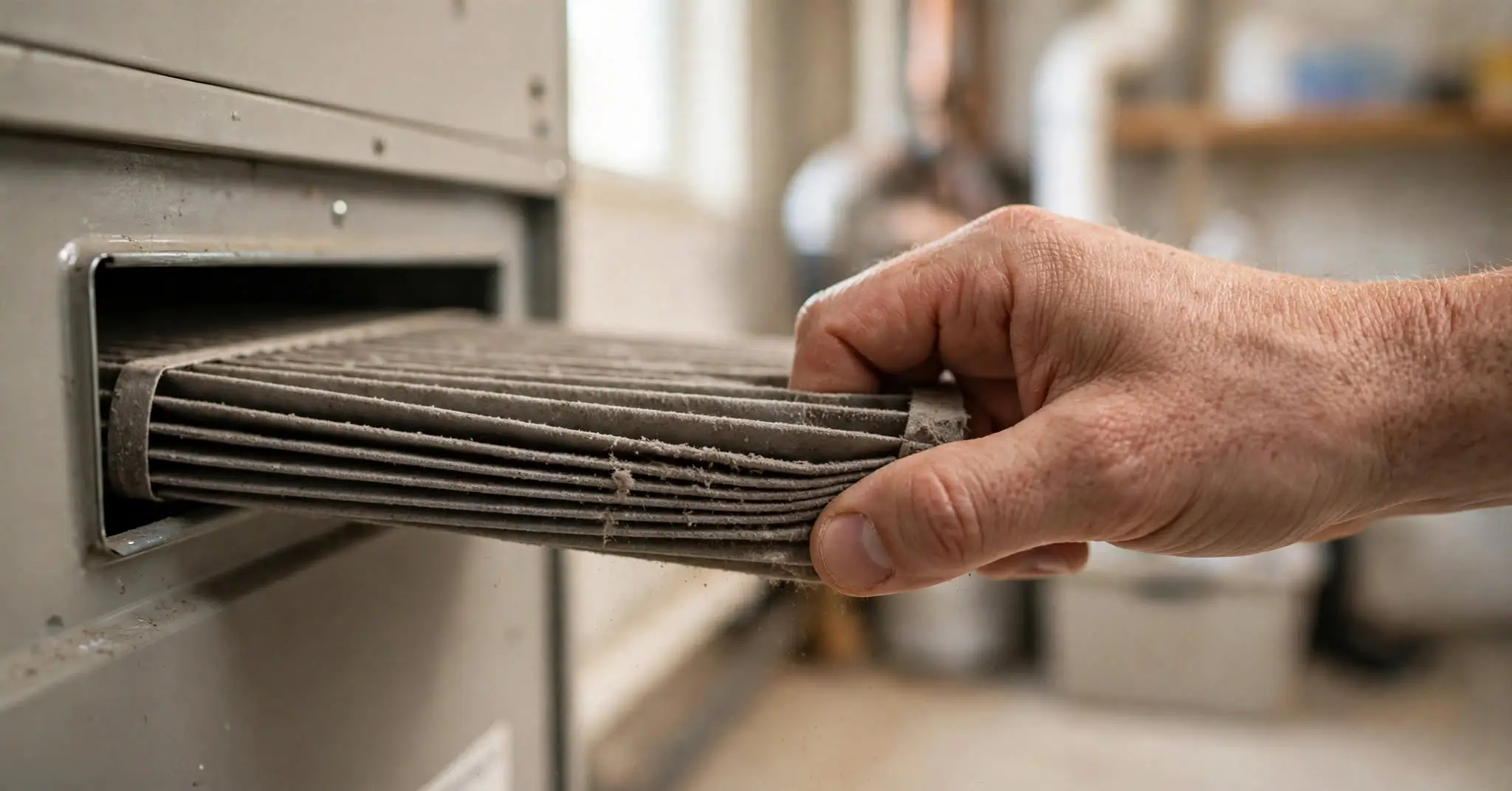
Most furnace filters need a change every 60 to 90 days. Thin, one-inch filters usually need it sooner. Thick, four-inch filters can often wait up to a year. Pets, allergies, and heavy winter heating cycles all shorten that window. A gray, dust-covered filter is your clearest sign it’s overdue, and a simple monthly habit keeps you from ever forgetting again. Knowing how often to change furnace filter for your specific home takes the guesswork out of furnace care.
How Often to Change Furnace Filter by Type and Home
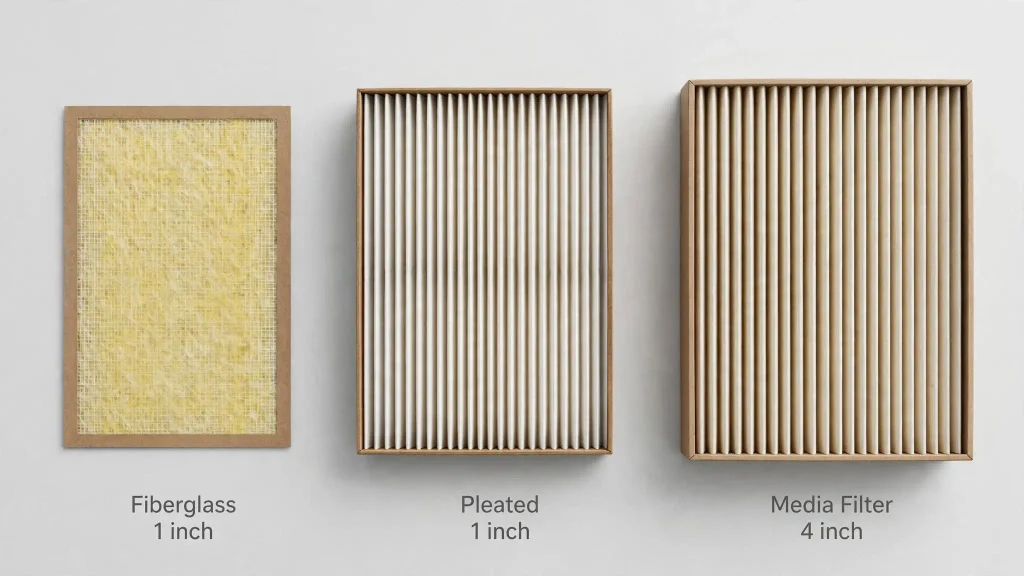
This table answers how often to change furnace filters across every common type. Find your filter and household situation below.
| Filter Type | Thickness | Standard Home | Pets or Allergies | High Dust or Heavy Use |
| Fiberglass | 1 inch | 30 days | 20 to 30 days | 20 days |
| Pleated | 1 inch | 60 to 90 days | 30 to 60 days | 30 days |
| Pleated | 2 inch | 90 days | 60 days | 45 days |
| Pleated | 4 inch | 6 to 9 months | 3 to 4 months | 3 months |
| Media filter | 5 inch | 9 to 12 months | 6 months | 4 to 6 months |
| HEPA | Varies | 6 to 12 months | 4 to 6 months | 3 to 4 months |
| Washable | Varies | Clean every 30 days | Clean every 2 weeks | Clean every 2 weeks |
This also answers how often to change air filter and how often to change ac filter. Most homes use one filter for both the furnace and the air conditioner. Disposable filters follow this table closely. Washable filters need cleaning instead of replacement, but they still need attention on a fixed schedule.
What MERV Rating Do You Actually Need
MERV stands for Minimum Efficiency Reporting Value. It measures how well a filter traps particles. The scale runs from 1 to 16. The American Society of Heating, Refrigerating, and Air-Conditioning Engineers created this standard. A higher number means finer filtration. It does not always mean better for your furnace.
Most homes do well with a MERV 8 filter. It catches dust, pollen, and lint. Homes with pets or allergies benefit from MERV 11 to 13. This range traps pet dander and smaller allergens. MERV 14 and higher belongs mostly in hospitals and labs. A furnace built for MERV 8 can strain under a MERV 16 filter. The tighter weave blocks more airflow than the blower motor expects. Check your furnace manual before choosing a high MERV number.
How Your Home and Household Affect the Schedule
Filter type sets the baseline. Your household decides the real number.
Pets in the Home
Pet hair and dander clog filters fast. One cat or dog usually fits the standard schedule. Two or more pets cut that time by a third. Heavy shedding breeds need a check every three to four weeks.
Allergies, Asthma, and Indoor Air Quality
A clogged filter recirculates allergens instead of trapping them. The Environmental Protection Agency notes that indoor air can carry more pollutants than outdoor air. That fact turns filter maintenance into a health issue, not just a comfort one. Homes with asthma or allergy sufferers should check filters monthly. A MERV 11 to 13 filter paired with frequent changes gives the best result.
Home Size and Household Activity
Larger homes push more air through the same filter. More people means more dust, skin cells, and fabric fibers in the air. A five-bedroom home with a large family needs shorter intervals than a one-bedroom apartment.
How Often You Run the System
Vacation homes and rarely used systems can stretch the standard schedule well past the table above. A system that only runs a few hours a day loads its filter slowly. The opposite is true once winter arrives, covered next.
Why Furnaces Need More Frequent Checks in Winter
Winter changes the math. Furnaces run longer heating cycles when outdoor temperatures drop. Each cycle pulls more air, and more air means more particles caught in the filter. A filter that lasted 90 days in fall might need a change in 45 days during a hard freeze. This is why how often to change furnace filter matters more in January than in June. Set a mid-winter check even if your last change was recent.
Signs Your Furnace Filter Needs Changing Right Now
A schedule is a guide, not a guarantee. Watch for these signs between changes.
Reduced Airflow or Uneven Heat
Weak air from the vents often points to a clogged filter. Some rooms may feel colder than others. The furnace works harder to push air through a blocked filter.
Visible Dust or Gray Discoloration
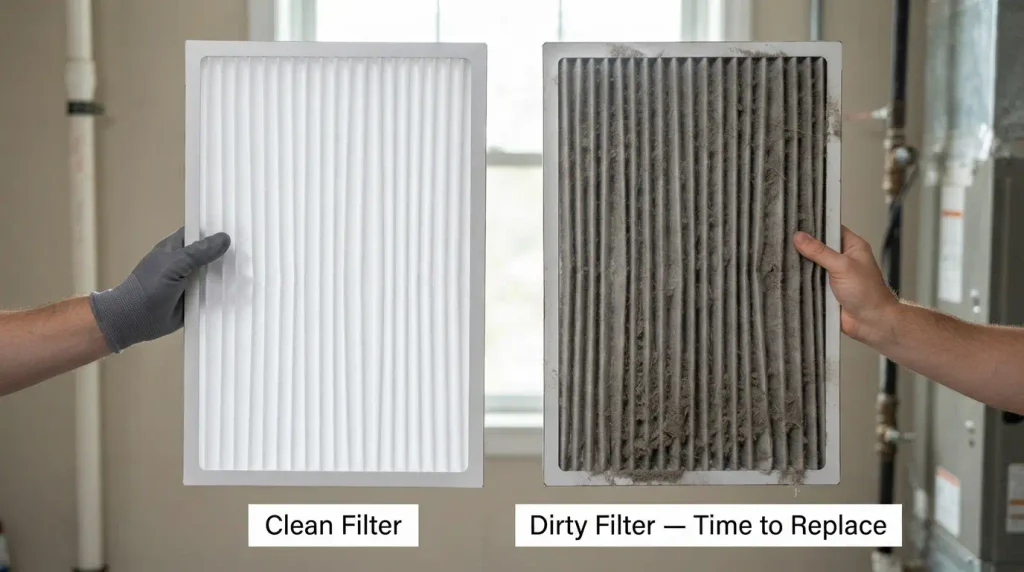
Pull the filter and hold it to the light. A gray or dust-covered filter has done its job and needs a replacement now.
Rising Energy Bills
A dirty filter forces the blower motor to work overtime. That extra work shows up on your energy bill within a month or two.
Longer Heating Cycles
If your furnace runs longer than usual to reach the same temperature, a clogged filter is often the cause. The system strains to pull air through blocked material.
What Happens If You Don’t Change It
Furnace filters are inexpensive compared to what neglect can cost. The U.S. Department of Energy notes that dirty filters make heating and cooling systems work harder, which raises energy use. Continued neglect strains the blower motor and can lead to overheating. Replacement parts and repair visits often cost far more than a year of filters combined. In the worst cases, a fully blocked filter can cause the furnace to shut down completely.
Ignoring the filter also affects the air inside your home. Dust, pollen, and pet dander build up and circulate instead of getting trapped. This matters most for households with young children, older adults, or anyone with respiratory conditions. Long-term neglect can also shorten the life of the system itself, which matters when you’re deciding whether your furnace is due for replacement.
How to Change a Furnace Filter Yourself
Replacing a furnace filter takes under five minutes for most homeowners, and no tools are required.
- Turn off the furnace at the thermostat or the power switch.
- Find the filter slot. It usually sits inside the return air duct or the blower compartment near the furnace cabinet. Check both spots if you are not sure where yours is.
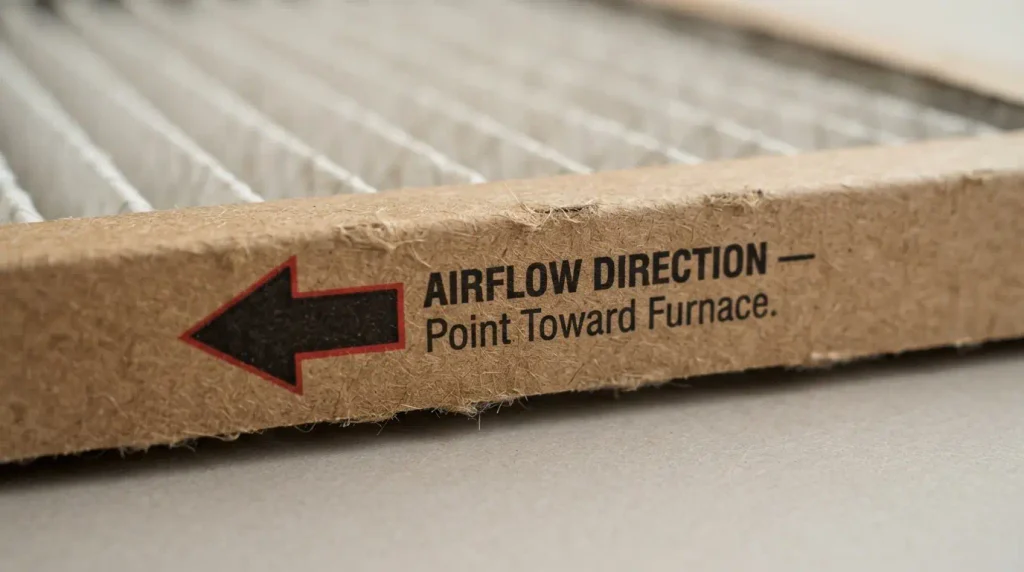
- Note the airflow direction. Look for an arrow printed on the filter frame. That arrow should point toward the furnace, not away from it. Installing a filter backward reduces its effectiveness
- Slide out the old filter and check the size printed on its edge.
- Slide in the new filter, arrow facing the correct direction, until it sits flush.
- Turn the furnace back on and confirm normal airflow at a nearby vent.
A Simple Way to Remember Your Filter Schedule
The honest answer to how often should you change your furnace filter is simple. Follow the table above, then check again whenever you notice a warning sign. Most people do not hit the 90-day mark exactly, and that is normal. A missed week or two will not ruin your furnace. What matters is building a habit that sticks.
Tie the task to something you already do. Change the filter on the first of the month you pay your mortgage or rent. Set a recurring phone reminder for the day you switch your furnace from heat to cool. Some homeowners use a filter subscription service that ships a new one on a set schedule. Any of these methods beats trying to remember on your own.
Final Thoughts
A clean furnace filter protects your system, your air, and your energy bill. Knowing how often to change furnace filter for your specific home removes the guesswork. Check the table, watch for warning signs, and build a reminder into your routine. Your furnace, and your energy bill, will thank you.
Frequently Asked Questions
Here are quick answers to how often should you change furnace filter and other common questions.
How Often to Change Furnace Filter With Pets or Allergies?
Homes with pets or allergy sufferers should check the filter every 30 to 45 days. Multiple pets or severe allergies may call for checks every three weeks.
What MERV Rating Should I Use for Pets or Allergies?
Look for MERV 11 to 13 on the filter packaging. That range is the practical sweet spot. It catches pet dander and pollen without forcing your blower motor to work harder than it was designed to.
What Happens If You Never Change Your Furnace Filter?
Airflow drops to nearly nothing over time, and the system responds by running longer to reach the same temperature. Left long enough, this can trip a safety shutoff or damage the blower motor. A filter that costs a few dollars can turn into a repair bill worth hundreds.
How Much Does a Furnace Filter Cost?
Basic fiberglass filters cost two to five dollars each. Pleated filters run five to twenty dollars, depending on size and MERV rating. Four-inch media filters cost twenty to fifty dollars but last far longer, which evens out the yearly cost.
Can I Change a Furnace Filter Myself?
Yes. Most furnace filters are designed for homeowners to replace without tools or training. Call a technician only if your filter is hard to reach or built into a whole-house air cleaner.
Which Way Does a Furnace Filter Go In?
Check the arrow printed on the filter frame. It should point in the direction air flows toward the furnace, not back toward the room.
Why Do Furnace Filters Cost So Much?
Higher MERV filters use denser material to trap smaller particles. That denser material costs more to manufacture. Filter prices have also risen with general material and shipping costs in recent years.

About HomeFixStyle
HomeFixStyle is a home improvement blog dedicated to helping readers create better, more comfortable, and stylish homes. We share practical ideas, helpful guides, home decor inspiration, renovation tips, and simple solutions for everyday home projects. Our goal is to make home improvement easier to understand and apply, whether you are updating one room or improving your entire home.