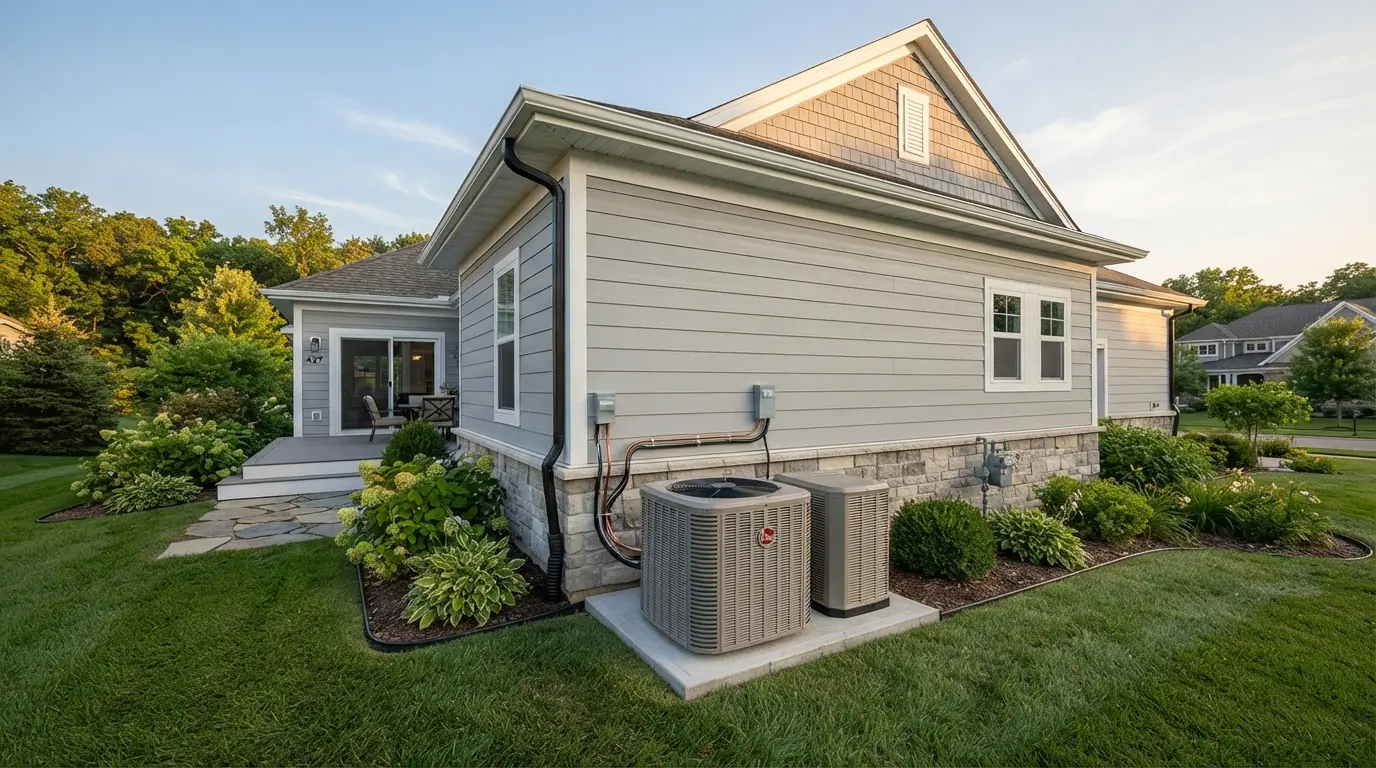
Choosing a new heating and cooling system means understanding a few key things first. Here is how to choose heating and air conditioning system that fits your home, your climate, and your budget. You will learn the main system types, what SEER2 and AFUE mean, and why sizing matters more than brand name. If your old system just failed, the sections on cost and contractor quotes matter most. If you are building a new home, you have more freedom to compare every option from the start.
How Heating and Cooling Systems Actually Work
HVAC stands for heating, ventilation, and air conditioning. Most homes use one of two basic methods to move heat. The first method blows heated or cooled air through ducts and vents. The second method uses hot or cold water piped through radiators or baseboards. Air conditioners and heat pumps use a refrigerant cycle to move heat instead of creating it. A thermostat tells the system when to turn on and off. Once you understand this basic logic, every system type on the market makes a lot more sense.
Types of Heating and Cooling Systems for Your Home
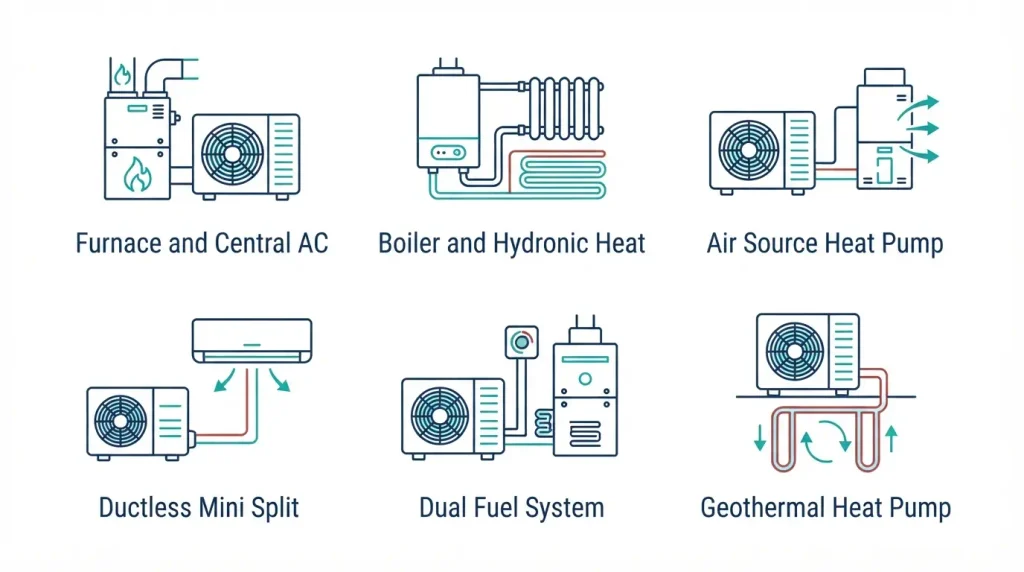
Every heating and cooling system on the market falls into a handful of categories. Choosing an HVAC system starts with knowing what these categories actually offer. Your home’s layout, your climate, and your fuel access will point you toward the right one.
Furnace and Central Air Conditioner (Split System)
This is the most common setup in American homes. A furnace heats air and pushes it through ducts. A separate outdoor unit cools that same air in summer. Both share the same ductwork, which keeps installation simpler. This split system works well if your home already has ducts in place.
Boiler and Hydronic Heat
A boiler heats water instead of air. That hot water travels through pipes to radiators or baseboards. Boilers cost more to install than furnaces, but they need less maintenance over time. They also heat evenly without the dry air that forced air systems can create. Boilers only handle heating, so you will still need a separate cooling solution.
Air Source Heat Pumps
A heat pump moves heat instead of burning fuel to create it. In summer, it pulls heat out of your home like an air conditioner. In winter, it reverses that cycle and pulls heat from the outside air. One unit handles both heating and cooling. Heat pumps work best in climates with mild to moderate winters.
Ductless Mini-Split Systems
A ductless mini split skips ductwork entirely. An outdoor unit connects to one or more indoor units through small refrigerant lines. Each indoor unit controls its own zone. Mini splits work well for additions and older homes without ducts. They also fix rooms that run too hot or too cold.
Dual Fuel Systems (Heat Pump Plus Furnace Backup)
A dual fuel system pairs a heat pump with a gas furnace. The heat pump handles most of the year efficiently. When temperatures drop too low for the heat pump to keep up, the furnace takes over automatically. This setup gives you heat pump savings without losing performance on the coldest days.
Ground-Source (Geothermal) Heat Pumps
A geothermal system uses buried pipes to exchange heat with the ground instead of the outside air. Ground temperature stays stable year round, which makes these systems highly efficient. Installation costs run much higher than other options. Geothermal makes the most sense for homeowners planning to stay long term.
How to Choose Heating and Air Conditioning System for New Construction
New construction gives you more freedom than a straight replacement. You are not limited by existing ductwork, old piping, or a fuel line already in the ground. You can compare every system type on equal footing and pick based on long term cost. A replacement buyer often needs to work around what is already installed.
Fuel Source: Gas, Electric, Oil, or Propane
Your fuel options often depend on what is already available at your home. Natural gas is common, efficient, and priced on demand with no storage needed. Electricity powers heat pumps and central air conditioners, and it works everywhere. Oil heat requires a storage tank and scheduled deliveries, and it costs more to run than gas in most regions. Propane serves homes without natural gas access, usually in rural areas. Most homeowners stick with the fuel source their home was built around. Switching fuel types often means new equipment and new lines.
Distribution System: Forced Air vs. Hydronic vs. Ductless
If you are replacing an existing system, your home’s current infrastructure often decides this for you. Forced air systems use ductwork, which lets the same ducts handle both heating and cooling. Hydronic systems use pipes and radiators, which heat evenly but need a separate cooling method. Ductless systems skip both ducts and pipes in favor of small refrigerant lines and individual room units. Switching between these categories usually means a bigger renovation, not a simple swap.
Checking Your Ductwork Before You Choose a System
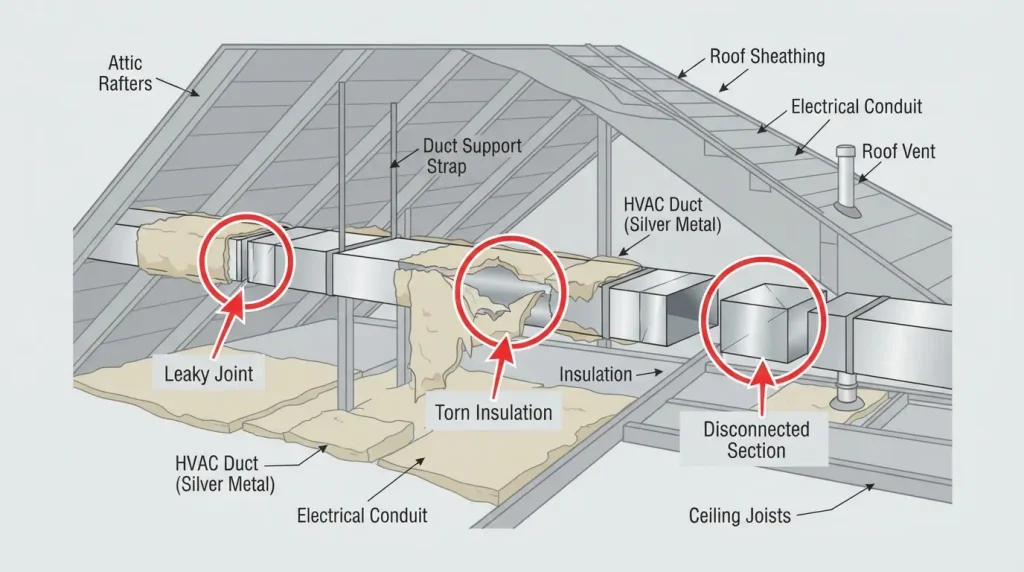
Old or leaky ductwork can undercut even the best new system. Leaky ducts waste conditioned air before it reaches your rooms. Poor insulation around ducts in an attic or crawl space makes the problem worse. A duct condition check and any needed sealing can improve comfort and lower bills, regardless of which system you choose.
Efficiency Ratings Explained: SEER2, AFUE, and HSPF2
Efficiency ratings tell you how much heating or cooling you get for the energy you pay for. Higher numbers mean better performance for your money. What SEER rating do I need? How many SEER AC do I need for my home? Your climate zone answers both questions.
What SEER2 Rating Do You Actually Need
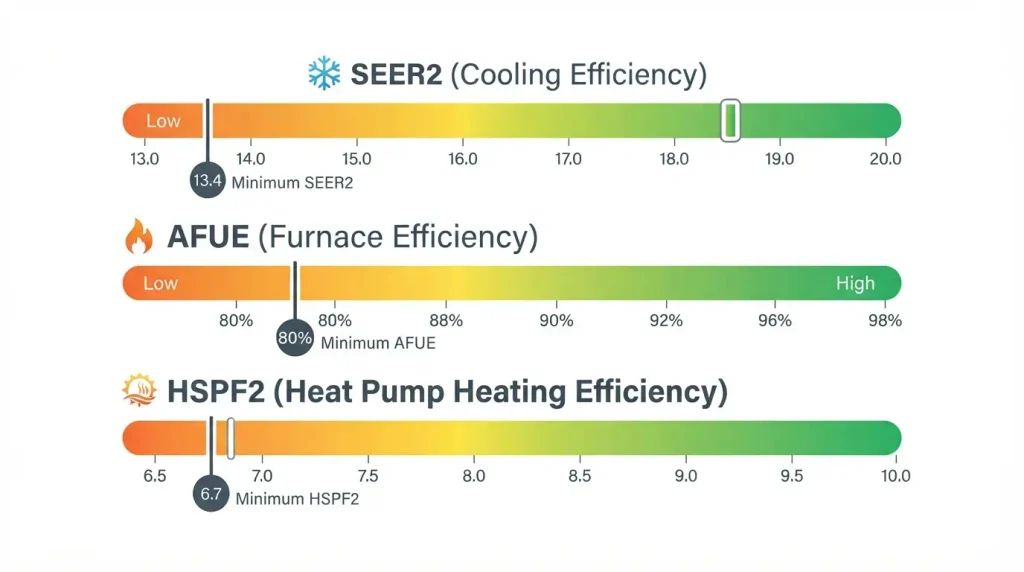
SEER2 measures how efficiently an air conditioner or heat pump cools your home over a full season. The Department of Energy sets regional minimums. Homes in northern states need at least 13.4 SEER2. Homes in the south, southeast, and southwest need at least 14.3 SEER2. Hot climates with heavy AC use benefit most from a higher SEER2 rating. That extra efficiency pays for itself through lower summer bills.
AFUE for Furnaces and Boilers
AFUE measures how much fuel a furnace or boiler actually turns into heat. An AFUE of 90 means 90 percent of the fuel becomes usable heat, and the rest escapes as waste. Furnaces built before the 1990s often ran as low as 60 percent. Today’s ENERGY STAR furnaces typically reach 90 percent AFUE or higher.
HSPF2 for Heat Pumps
HSPF2 measures how efficiently a heat pump heats your home during winter. This rating matters as much as SEER2 for anyone considering a heat pump in a colder climate. ENERGY STAR certified heat pumps generally need an HSPF2 of at least 7.8. A higher HSPF2 rating means lower heating bills once the temperature drops.
What ENERGY STAR Certification Actually Guarantees
ENERGY STAR is a federal program run by the EPA. A certified system has passed independent testing above the minimum legal efficiency standard. It does not guarantee the system fits your home correctly. Certification confirms efficiency, not proper sizing or installation quality. Knowing how to choose the right HVAC system means looking past the label and checking the sizing too.
Sizing Your System the Right Way: Why Manual J Matters
Getting the size right matters more than picking a brand name. A correctly sized system is how to choose heating and air conditioning system that actually performs well for years. A professional load calculation beats guesswork every time.
Why Square-Footage Rules of Thumb Get It Wrong
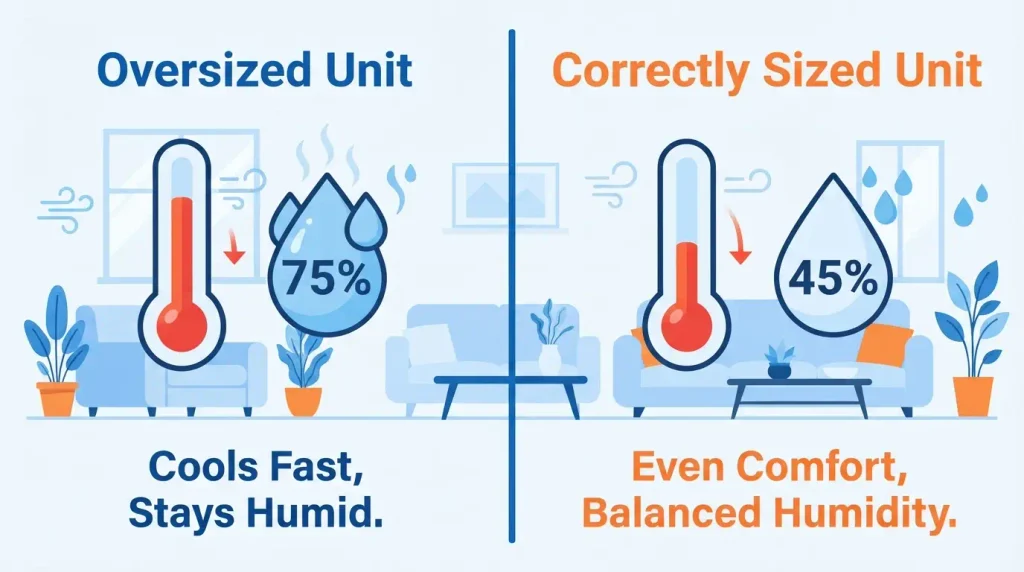
Old rules of thumb suggest one ton of cooling for every 400 to 500 square feet. A 1,500 square foot home might seem to need a 3 or 4 ton unit under that logic. In practice, a well-insulated 1,500 square foot home may only need a 2 ton unit to stay comfortable. Insulation, window count, ceiling height, and local climate all change the real number. An oversized unit cools your home fast, then shuts off before it removes enough humidity. That leaves you with a clammy, uneven house and a shorter equipment lifespan.
What a Manual J Load Calculation Actually Checks
Manual J is a calculation method created by the Air Conditioning Contractors of America. It accounts for square footage, insulation levels, window area, ceiling height, and local climate data. A contractor who skips this step is guessing at your system size. Always ask whether your contractor performs a Manual J calculation before they recommend equipment.
How to Choose Heating and Air Conditioning System Based on Your Climate
Climate should drive your system choice more than any other single factor.
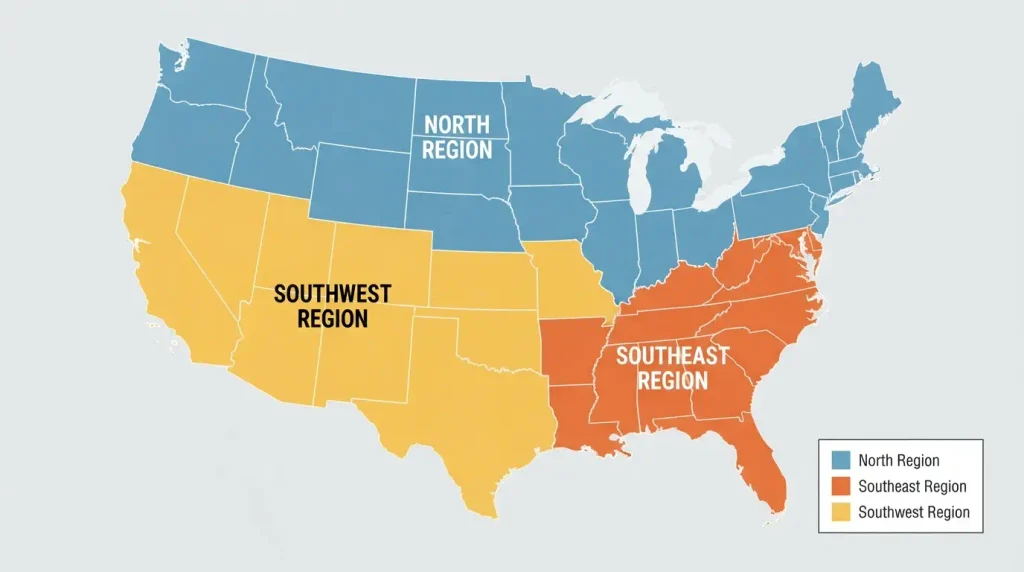
In hot, humid regions, a high SEER2 air conditioner with strong dehumidification matters most. In cold climates, a furnace or a dual fuel system usually outperforms a standalone heat pump on the coldest nights. In mild climates with moderate winters, a heat pump alone often covers both seasons efficiently. Mixed climates, with hot summers and cold winters, tend to benefit most from a dual fuel setup. That setup adapts as temperatures shift throughout the year.
Is There a Single Best HVAC System?
There is no single best HVAC system for every home. What is the best heating and air conditioning system for a hot desert climate? It looks nothing like the best system for a cold northern climate. The best HVAC system for your home depends on climate, ductwork, fuel access, and budget. A small home in Arizona and a large home in Minnesota will land on very different answers.
Do HVAC Brands Actually Matter?
Homeowners often ask whether Carrier or Trane is the better brand. Most major manufacturers, including Carrier, Trane, Lennox, Rheem, and American Standard, build reliable equipment across their product lines. Installation quality affects performance and lifespan more than brand choice alone. A mid-tier unit installed correctly will usually outperform a premium unit installed poorly.
How Much Does a New Heating and Cooling System Cost
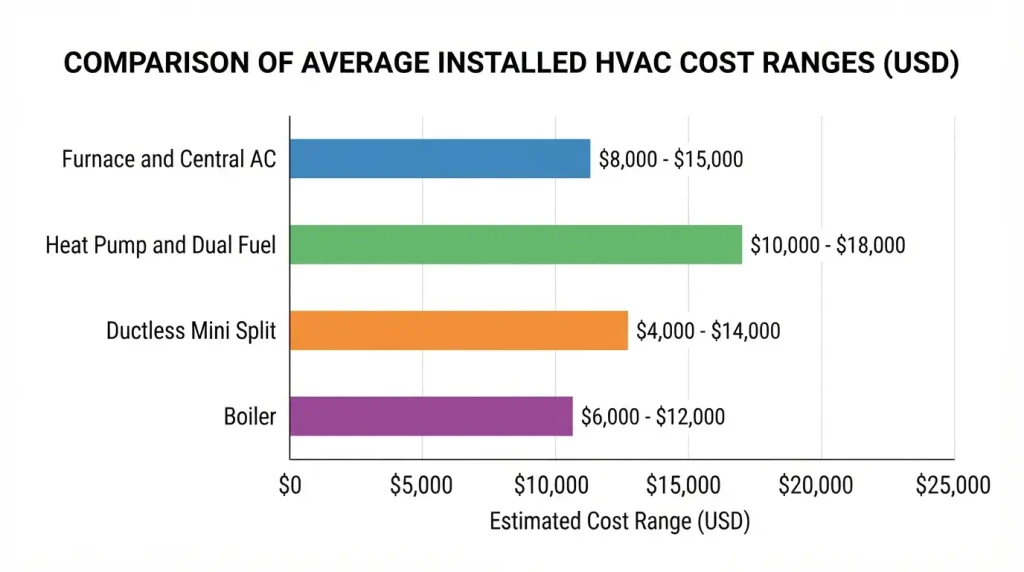
Most homeowners spend between 5,000 and 12,500 dollars on a new system. Many land closer to 7,500 dollars. The exact price depends on system type, home size, ductwork condition, and local labor rates.
Installation Cost by System Type
A standard furnace and central AC split system usually costs less to install. Ductwork is often already in place, which keeps labor simpler. Heat pumps and dual fuel systems generally cost more upfront but can lower monthly bills. Boilers usually carry the highest installation cost due to piping work. Ductless mini splits cost more per zone but avoid the expense of new ductwork entirely.
The “$5,000 Rule”: When to Repair vs. Replace
The 5,000 dollar rule offers a quick way to decide between repairing and replacing, best used alongside the warning signs your system is failing rather than on its own. Multiply your system’s age by the estimated repair cost. If that number tops 5,000, replacement usually makes more financial sense. For example, a 12 year old air conditioner with a 500 dollar repair equals 6,000. That points toward replacement. A 7 year old system with a 400 dollar repair equals 2,800. That points toward repair instead.
Long-Term Operating Cost
A higher efficiency system often costs more upfront but less to run every month. Over a 10 to 15 year lifespan, those monthly savings can outweigh the higher purchase price. Looking only at the sticker price ignores this long term math. Estimated annual operating cost is worth understanding alongside the installation price.
The Cheapest Time of Year to Buy
Spring and fall tend to bring lower prices and faster scheduling. Contractors are busiest during peak summer heat and winter cold snaps, which can drive up both price and wait times. A replacement planned ahead of a failure allows more time to compare options.
The Shift to New Refrigerants: What R-454B Means for Your Purchase
Since January 1, 2025, manufacturers can no longer build new residential air conditioners and heat pumps using R-410A refrigerant. This change comes from the EPA’s AIM Act, which targets refrigerants with a high global warming potential. Most new systems now use R-454B or R-32 instead. Both refrigerants are classified as mildly flammable, so installation and service require a trained technician. If your current system uses R-410A, it remains legal to keep and service. If you are buying new equipment in 2026, expect it to run on one of these newer refrigerants.
How to Choose Heating and Air Conditioning System: Questions to Ask Yourself First
How to choose an HVAC system starts before you ever call a contractor. Answer a few questions about your own home and goals first.
- What is your main goal? Lower bills, better comfort, or a system that already failed.
- Does your home have working ductwork, or would a new system need it installed?
- What fuel sources reach your property right now?
- How many more years do you plan to stay in this home?
- Are certain rooms always too hot or too cold?
- Do you want a smart thermostat you can control from your phone?
Having these answers ready makes comparing systems and contractors much easier.
How HVAC Contractor Quotes Work
Homeowners typically gather at least three quotes when comparing contractors. A solid quote should include a Manual J load calculation, not a square-footage guess. It helps to confirm the contractor is licensed and insured in your state. Technicians with NATE certification have completed verified technical training. A contractor who pushes same-day signing, or will not explain price differences, is worth a second look. A detailed, itemized quote is a good sign. A vague one-line price is not.
What to Expect During Installation
Most residential HVAC installations take one to three days, depending on system type and complexity. Your contractor will remove the old equipment first. Ductwork or refrigerant lines get inspected and repaired as needed. Many areas require a permit and a final inspection before the job is considered complete. Ask your contractor upfront who handles the permit process, since this varies by company.
Rebates, Tax Credits, and Financial Assistance
Financial help for HVAC upgrades has changed recently, so current rules are worth understanding.
Federal Tax Credits for HVAC Systems
The federal Energy Efficient Home Improvement Credit, known as Section 25C, expired for equipment installed after December 31, 2025. If you installed a qualifying system by that date, you may still claim it. Use IRS Form 5695 on your 2025 tax return. Systems installed in 2026 do not qualify for this federal credit. Income-qualified households may still access separate federal rebate programs through state energy offices. Always confirm current details with a tax professional.
State and Utility Rebate Programs
Many states and local utilities offer their own rebates for efficient HVAC equipment, separate from federal programs. Weatherization and energy assistance programs also help lower income households cover heating and cooling costs. These programs are not a literal free air conditioner from the government, but they can meaningfully offset your total cost. Check your state energy office and your local utility company for current programs in your area.
Maintenance That Extends System Lifespan
Regular maintenance keeps your system running efficiently and extends its lifespan.
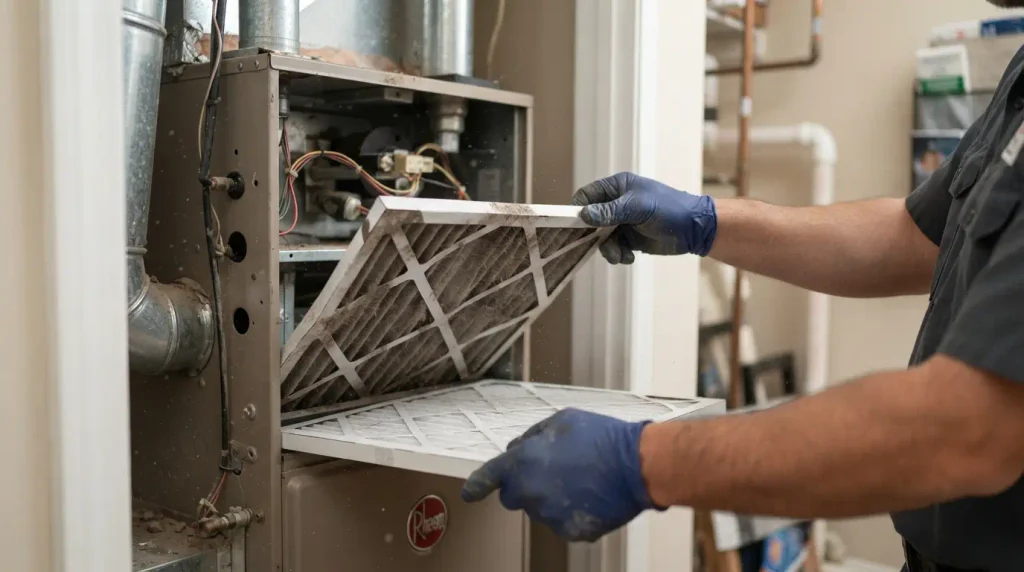
Change or clean your air filter every one to three months during heavy use. Schedule a professional tune-up each spring for your AC and each fall for your furnace. Keep the area around outdoor units clear of debris and overgrown plants. Small maintenance habits now prevent expensive repairs later.
Final Thoughts
A new heating and cooling system is a long term factor in your home’s comfort. The right choice depends on climate, ductwork, fuel access, and budget. It does not depend on a single “best” brand or model. Now you know how to choose heating and air conditioning system using real numbers, not guesswork. Proper sizing, an honest look at operating costs, and current rebate programs all matter more than any single brand name. Understanding these factors puts you ahead of most homeowners facing this decision.
Frequently Asked Questions
Who qualifies for the $6,000 senior HVAC tax credit?
There is no HVAC-specific senior tax credit. The $6,000 figure refers to a general federal senior tax deduction. It applies to taxpayers 65 and older for tax years 2025 through 2028. It lowers taxable income, not just the cost of HVAC purchases, and it phases out above certain income levels.
Can I write off a new HVAC unit on my taxes?
The federal HVAC tax credit expired for systems installed after December 31, 2025. If your system was running by that date, you may still claim it on your 2025 return. Systems installed in 2026 currently have no federal HVAC credit available. Check with a tax professional for your situation.
Is Carrier or Trane better?
Both brands make reliable, well-tested equipment. Installation quality and proper sizing affect your long-term results more than the brand name on the unit.
How many years should a home AC unit last?
Most air conditioners last 10 to 15 years with regular maintenance. Some well-maintained systems reach 20 years, though efficiency tends to decline as equipment ages.
Should I replace my furnace and AC at the same time?
Replacing both at once often gives you matched efficiency and one warranty period. It is not always required. Mismatched old and new parts can still hurt system performance.
Gas furnace or heat pump, which is cheaper to run?
It depends on your local gas and electricity rates and your climate. Heat pumps often cost less to run in mild climates. Gas furnaces can be cheaper in cold regions with low natural gas prices.

About HomeFixStyle
HomeFixStyle is a home improvement blog dedicated to helping readers create better, more comfortable, and stylish homes. We share practical ideas, helpful guides, home decor inspiration, renovation tips, and simple solutions for everyday home projects. Our goal is to make home improvement easier to understand and apply, whether you are updating one room or improving your entire home.