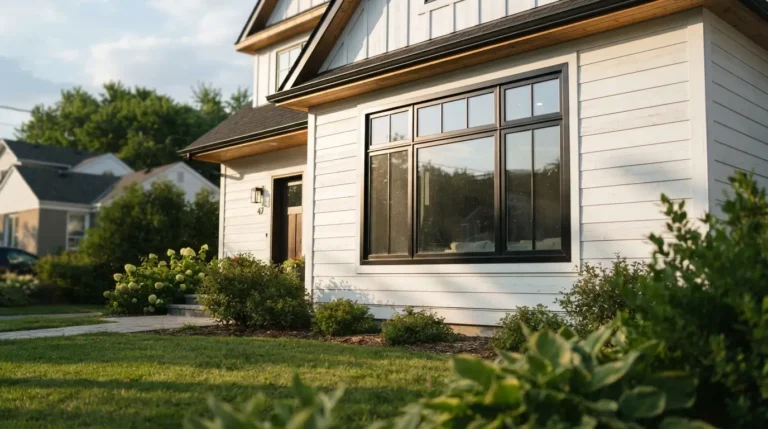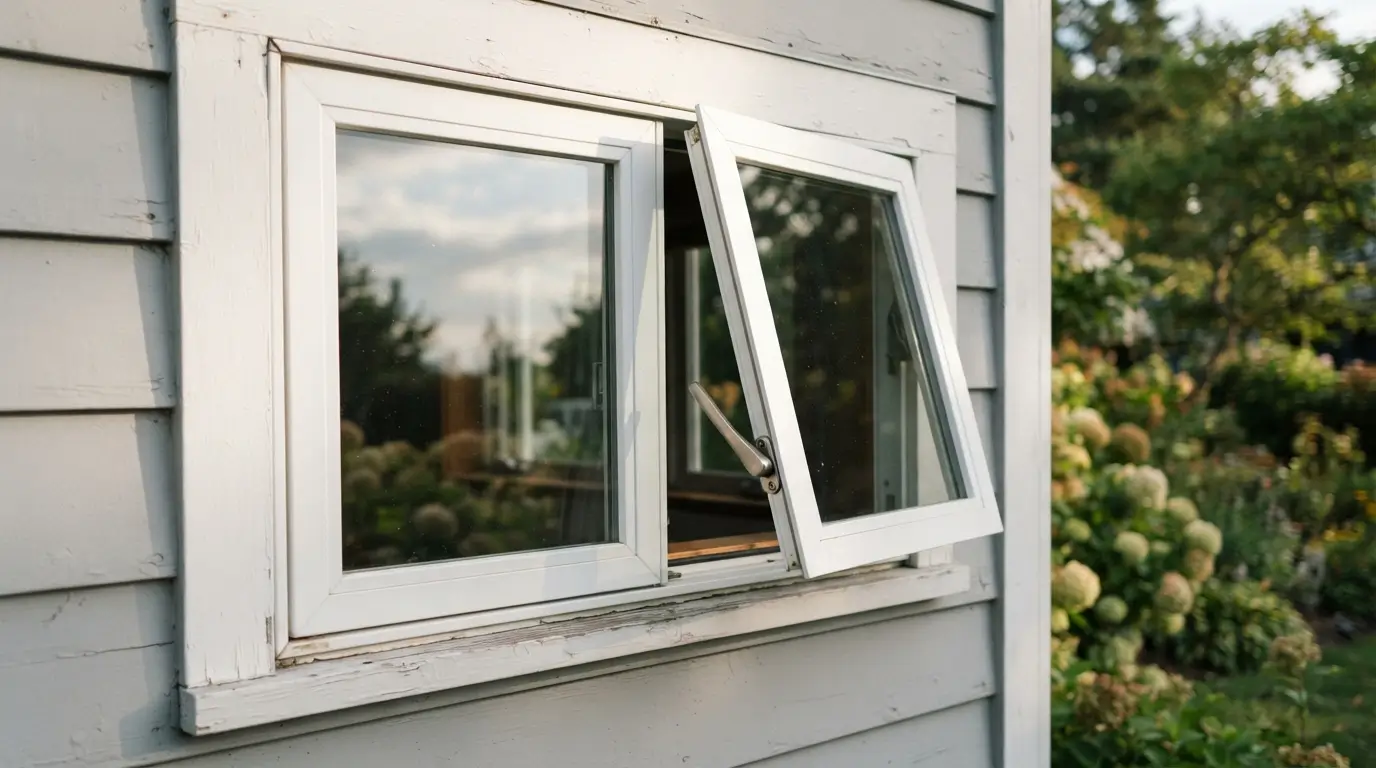
A casement window opens outward on side hinges, usually turned by a crank handle. This guide covers how it works. You will see every type available, real parts inside the frame, honest costs, and simple fixes most articles skip. You will also see how casement windows compare directly against double hung windows. That way, you can choose with confidence.
What Is This Window Style, Exactly?
Think of a door on a wall, but made of glass. This works the same way as hinged doors, just with a crank instead of a handle. That’s the basic idea behind this window style.
The word “casement” describes the opening method itself, not one fixed material. You can find it in vinyl, wood, or aluminum. So the real difference from other windows isn’t the look. It’s the hinge and the swing.
Homes have used side hinged windows for centuries. Early versions used leaded glass and metal frames, common across Britain before sliding sash windows took over. Today’s versions use the same basic hinge and crank system, built with better seals and hardware.
A double hung window slides up and down instead. That single difference changes almost everything about how the two styles perform. We break that down later in this guide.
How Does It Work?
A crank and gear system sits inside the frame. Turn the handle, and gears push the sash outward.
Older models use a hand crank linked to gears. Turning it moves a metal arm. The arm pushes the sash out at an angle. Some newer designs skip the crank. You release the sash and push it open by hand instead. It works much like a cabinet door.
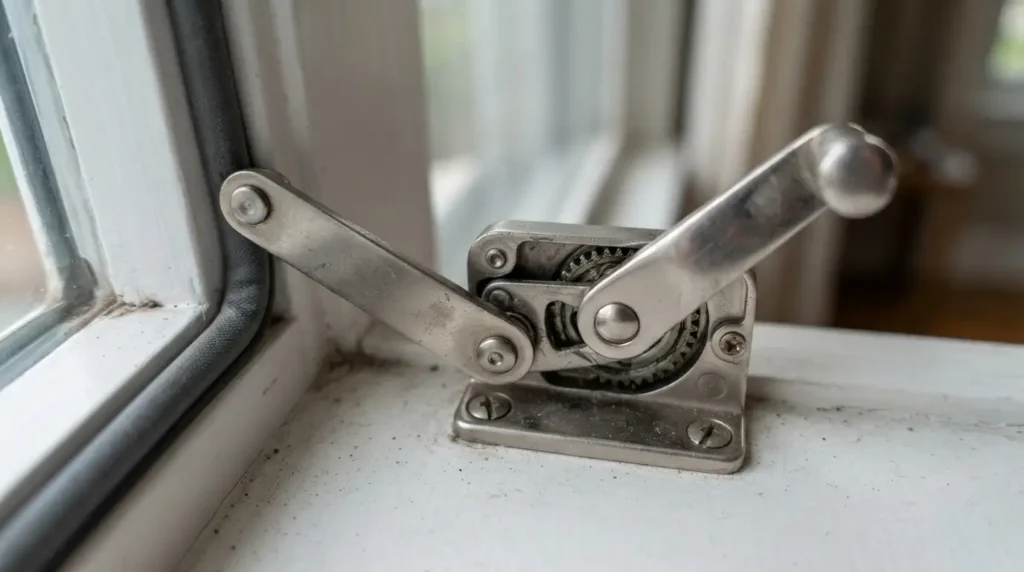
Here’s why the mechanism matters. When closed, the sash presses firmly against the frame. This creates a compression seal. A sliding window relies on friction between two tracks instead. Compression seals close tighter. They leave fewer gaps for air to slip through. That’s the real reason this window style often tests as more airtight.
The Different Types of Casement Windows
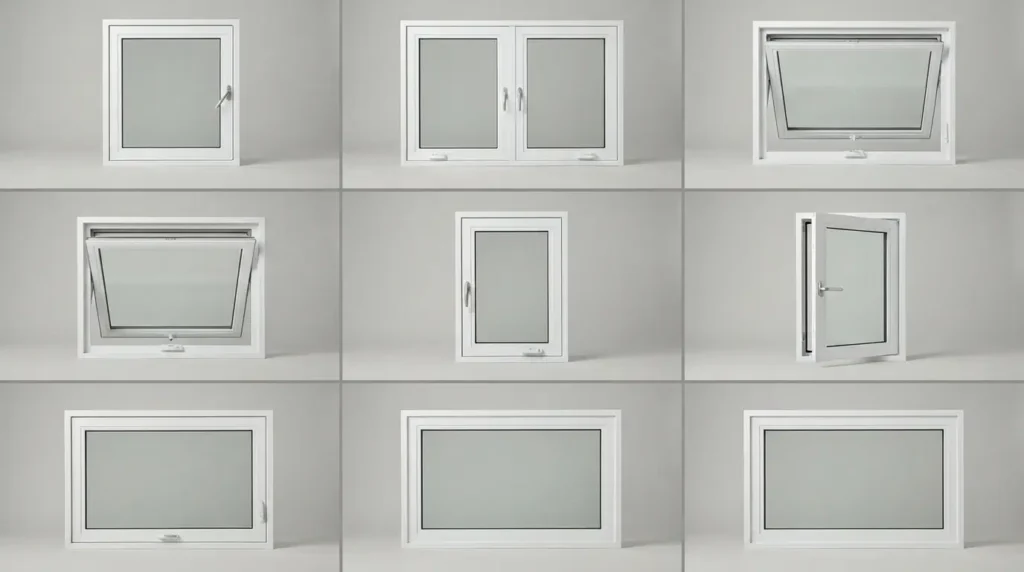
Casement windows come in several distinct types. Each one suits a different room or budget. Knowing the differences helps you choose the right fit.
Single Casement Window
This version has one sash. It opens left or right, depending on hinge placement. It’s the most common type, and it fits narrow wall openings well.
Double or French Casement
Two sashes meet in the center on this style, sometimes called a French casement. Both open outward. No center rail blocks your view when closed. This fits wider openings where a bigger view matters.
Top Hung or Awning Window
This type hinges at the top instead of the side. It swings outward from the bottom. The top stays closed, so you can leave it open slightly during light rain. That makes it smart for wetter climates.
Bottom Hung or Hopper Window
This one hinges at the bottom and opens inward at the top. It suits basements or small bathrooms where space is tight. The partial opening gives steady ventilation without a wide gap.
Tilt and Turn Window
Two functions live in one frame here. Turn the handle one way, and the top tilts inward for limited airflow. Turn it the other way, and the whole sash swings open. Cleaning the outside glass gets far easier this way.
Pivot Window
Hinges sit in the center of the frame on this design, not the side. It can rotate a full 180 degrees. This allows very large glass panels, since weight balances evenly on both sides.
Flush Casement
The sash sits level with the surrounding frame here, instead of sitting slightly proud of it. This creates a slimmer, modern look. Renovators favor it for that reason.
Fixed Casement
This version looks the same but doesn’t open at all. Installers often pair it beside an operable unit. It adds light without adding another handle. You’ll see it used inside bay window setups often.
What Is a Casement Picture Window?
A large, fixed panel styled this way, built purely for the view, is called a picture window. It doesn’t open, and it usually skips dividing bars across the glass. Homeowners choose this when a scenic outlook matters more than airflow. It’s often paired with smaller operable units on either side.
Window Anatomy: The Parts You Should Know
Knowing the parts helps when comparing products or talking to an installer.
- Frame: The outer structure holding the window in the wall.
- Sash: The moving part that holds the glass.
- Sill: The bottom piece, angled to direct rain away from the house.
- Mullion: A vertical bar separating two units side by side.
- Transom: A horizontal bar, often above a door for extra glass.
- Hinge: The joint that lets the sash swing outward.
- Crank handle: The mechanism you turn to open and close it.
- Multi point lock: A lock with several contact points, not just one.
- Weatherstripping: The seal that blocks drafts when shut.
- Trickle vent: A small vent allowing airflow even while locked.
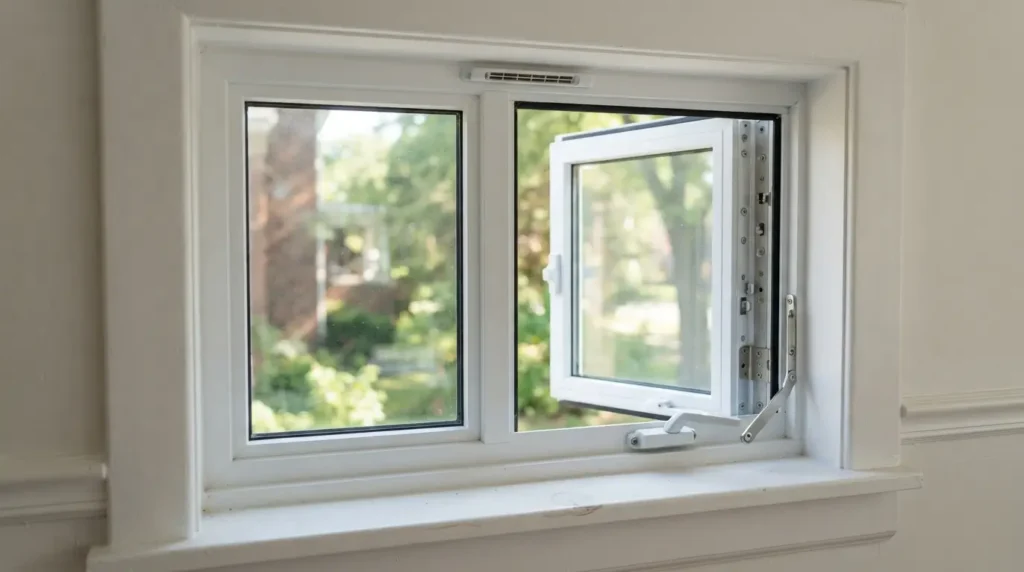
Each part plays a role. A worn weatherstripping seal is often the real cause of a draft. The window itself usually isn’t the problem.Many of these terms, like frame and sill, carry over directly from doors too. Our guide to the parts of a door frame covers those in more detail.
Casement Windows vs. Double Hung Windows
This comparison comes up constantly for anyone shopping for new windows. The two styles solve airflow and light very differently.
| Feature | Casement Windows | Double Hung Windows |
| Opening style | Swings outward on side hinges | Slides up and down |
| Ventilation | Full sash opens fully | Partial, top and bottom |
| Energy efficiency | Tighter compression seal | Slightly less airtight |
| Security | Multi point locks resist prying | Single or double lock points |
| View | No center rail | Center rail where sashes meet |
| Weather exposure when open | More exposed to sun and rain | Stays sheltered within frame |
| Cleaning | Easy from inside | Tilt in sashes simplify cleaning |
| Best for | Kitchens, tight spaces, views | Multi story homes, classic style |
So which wins? It depends on your priority. Want a stronger seal and a clear view? Pick the crank style. Live somewhere very windy or rainy? A double hung option may suit you better, since it stays sheltered even partly open.
Double hung windows also offer one safety edge. You can open just the top portion. That limits how far a child or pet could reach through. Worth factoring into a family home.
What Are the Benefits of Casement Windows?
Real, measurable advantages explain why casement windows stay popular, once you understand the mechanics behind each claim.
Strong ventilation. The entire sash swings open. It can catch side breezes and funnel them straight into the room. Many homeowners notice stronger airflow than a partly opened double hung window delivers.
Tighter energy efficiency. The compression seal limits air leakage more effectively than sliding tracks do. The National Fenestration Rating Council, known as NFRC, tracks this. It generally groups sealed casement windows among the more efficient operable styles sold today.
Clear, unobstructed views. No center rail interrupts the glass. That matters most in rooms built around a view, like a kitchen facing a garden.
Stronger security. Multi point locks sit along the sash edge on most units. They resist prying far better than a single latch, since force at one point won’t release the whole lock.
Material flexibility. Vinyl costs less and needs little upkeep, making it the most popular choice for budget-conscious homeowners. Wood offers a classic, warm look but needs more care over time. Aluminum holds up well in modern builds and resists warping. If you’re weighing these options closely, our vinyl vs aluminum windows comparison breaks down the trade-offs in more depth.Fiberglass windows are a fourth option worth considering too, since they resist warping and rotting better than any of the three, though they cost more upfront.
Drawbacks Worth Knowing
No window style is perfect. Real limitations exist here too.
This style needs clearance to open fully. Near a walkway or deck, an open sash can block foot traffic. Measure the space before installing one nearby.
The crank mechanism wears down over time, especially with frequent use. A worn crank may spin without moving the sash. This is one of the most common repair calls homeowners make.
Size is limited by hinge weight limits. A very large sash strains the hinges too much. Wider openings usually need multiple units instead of one oversized frame.
The sash swings fully outward. So an open window faces more direct sun, wind, and rain than a double hung style does. In storm prone regions, weigh this carefully. Homeowners in hurricane-prone areas often look at hurricane impact windows instead, built specifically to handle that added exposure.
Upfront cost can run higher than some alternatives, especially for larger custom sizes.
Where These Windows Work Best
Specific rooms benefit most, thanks to how this style opens and seals.
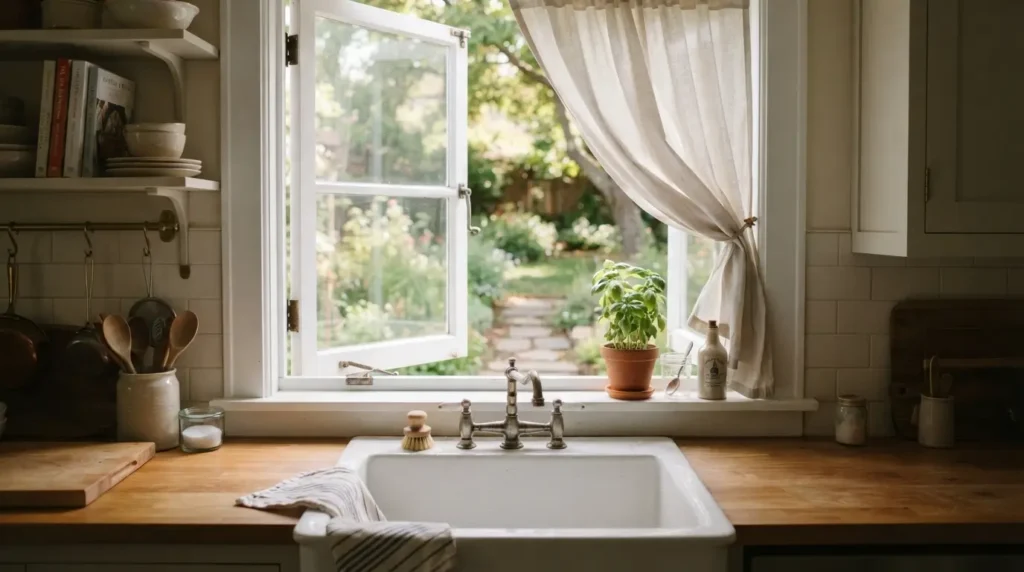
Kitchens, especially above the sink, benefit from the crank handle. You can reach over a counter and still open it easily.This pairing is especially common in farmhouse windows design, where black or white framed casements above the sink are a signature look.
Bathrooms often use frosted or textured glass for privacy, while still clearing steam through strong airflow.
Living rooms and sunrooms benefit from the unobstructed view, especially facing a garden or scenic backyard.
Bedrooms and upper floors gain both security and controlled airflow, thanks to multi point locking.
Real Cost Breakdown
Prices vary by material, size, and installation complexity. Vinyl options typically start lower. Wood and aluminum push costs upward, especially in premium finishes.
Several factors drive the final price:
- Material. Vinyl generally costs the least. Wood costs more due to labor and finishing. Aluminum sits in the middle.
- Glazing. Double pane glass costs less than triple pane. Triple pane insulates better in colder climates.
- Size and configuration. A double frame with two sashes costs more than a single unit of the same width.
- Installation type. New construction tends to cost less than replacement work, since old frames and trim need removal.
- Hardware. Motorized cranks, upgraded locks, or custom finishes all add to the base price.
Are casement windows more expensive overall? Sometimes, yes, compared to basic vinyl double hung options. But the tighter seal and added security often offset that through lower energy bills. Ask any installer for a written cost breakdown before comparing quotes.
Maintenance and Common Fixes
Most problems trace back to two sources. Either the crank wears down, or the seal fails.
Lubricate the crank once or twice a year. A dry crank often feels stiff or spins without moving the sash. A small amount of silicone lubricant on the gear track usually fixes this.
Check the weatherstripping for cracks or flattened sections. A draft near a closed window often points here first, not the frame itself. Replacement strips are cheap and easy to install yourself.
If the sash won’t close fully, check the track for debris first. Still stuck? The hinges may need tightening.
Condensation between the panes usually signals a failed seal inside the glass unit. This type needs full glass replacement, not a simple wipe down.
Removing a sash for cleaning or repair is often possible without pulling the whole frame. Most models let you release the hinge pin. Others let you slide out an arm bracket. Do this once the window sits fully open. Methods vary by brand, so check your manual first.
Call a professional if the frame has shifted. The same goes for water damage in the wall, or a lock that fails internally.
How to Choose the Right Window for Your Home
Three simple questions guide this decision.
What room is this for? A kitchen or bathroom benefits from strong airflow and easy reach. A bedroom benefits more from security and a tight seal.
What matters most? Airflow as top priority points toward a wide opening style. Security matters more? Check multi point lock ratings closely. Tight budget? Vinyl offers the best value per dollar.
What’s your climate? In wetter or windier regions, weigh weather exposure carefully. A sheltered double hung or angled awning option may suit you better.
Once answered, ask any installer for real performance numbers. A reputable company shares U factor, SHGC, and air infiltration ratings without hesitation.
Frequently Asked Questions
What is a casement windows?
It’s a window hinged on one side. It opens outward, usually with a crank handle. A tight seal forms when it closes, which makes it popular for energy savings.
Are casement windows more energy efficient than double hung windows?
Generally, yes. The compression seal limits air leakage better than sliding tracks do. This holds true based on typical NFRC performance data.
Are these windows secure?
This style ranks among the more secure operable options. Multi point locks spread pressure across several contact points. That makes forcing them open much harder than with a single latch.
How much do they cost?
Cost depends on material, size, and glazing. Vinyl typically costs the least. Wood and larger custom sizes push the price higher. Always request a written quote.
What is a casement picture window?
It’s a large, fixed panel styled the same way. It has no hinge or crank. It maximizes light and view, often paired with smaller operable units beside it.
What’s the difference between a casement and an awning window?
One hinges on the side and swings out like a door. The other hinges at the top. It swings out from the bottom instead, so you can keep it open slightly during light rain.
How do you remove a sash from this type of window?
Most models let you free the hinge pin, or slide out an arm bracket. Do this while the window sits fully open. Cleaning or repair becomes possible without removing the whole frame. Check your manufacturer’s instructions first.
Is a casement different from a regular window?
Not exactly. Casement describes the opening method, not a separate category. It can use the same materials, glass, and finishes as any other window style.
Final Thoughts
A casement windows offers a tight seal, strong ventilation, and a clear view. One simple hinge and crank design makes this possible. It isn’t right for every home. Tight walkways, very windy climates, and strict budgets all matter here.
Compare your priorities honestly. Look at real cost breakdowns, not marketing claims. Ask your installer for actual performance numbers before you commit. Choose it for the right room and the right reasons. A casement window can genuinely improve comfort and energy use for decades.

About HomeFixStyle
HomeFixStyle is a home improvement blog dedicated to helping readers create better, more comfortable, and stylish homes. We share practical ideas, helpful guides, home decor inspiration, renovation tips, and simple solutions for everyday home projects. Our goal is to make home improvement easier to understand and apply, whether you are updating one room or improving your entire home.