A hinged door is the door most people picture when they hear the word door. It attaches to a frame with two or three hinges and swings open on one side. This guide covers how it works. You will learn the main hinge types, real cost ranges, and how it compares to sliding and pivot doors. You will also see which style fits each room, and whether you can install one yourself.
What Is a Hinged Door?
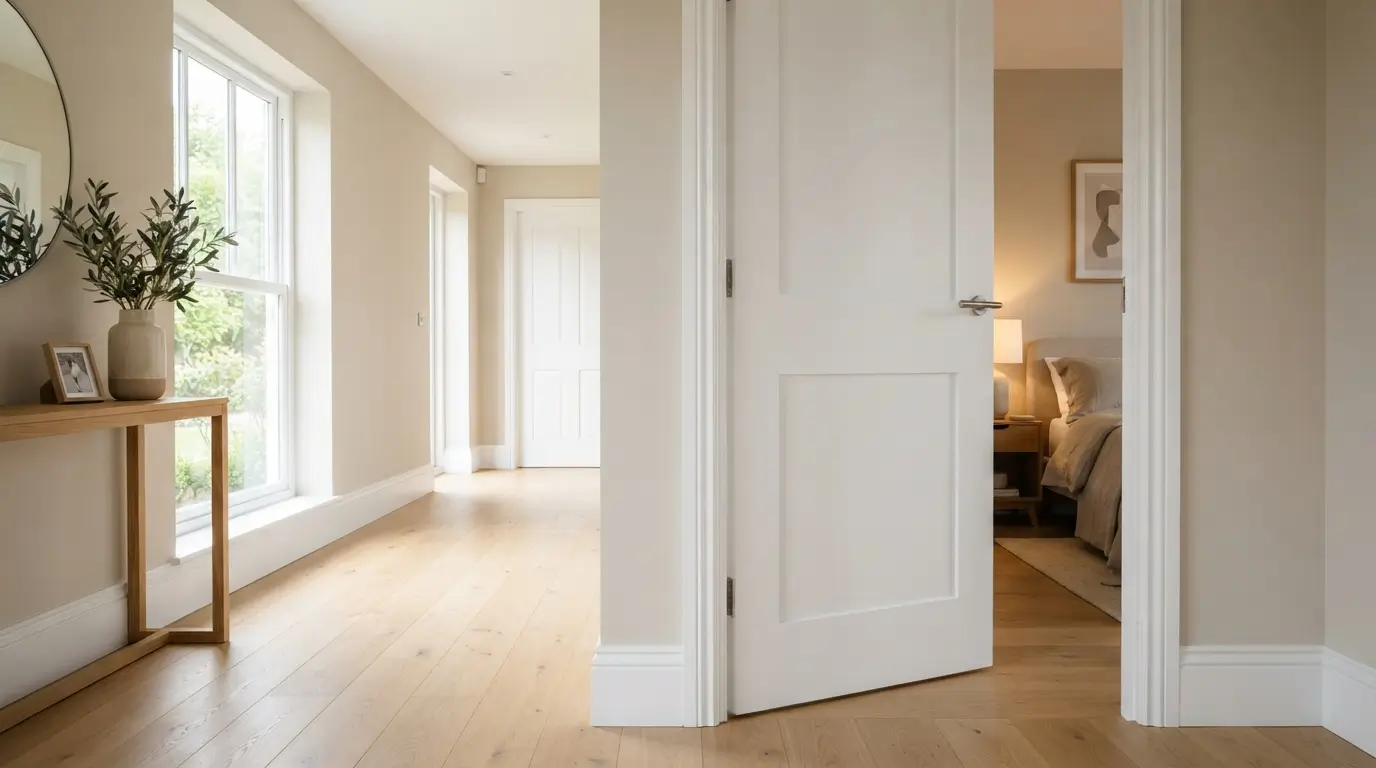
A hinged door attaches to its frame with hinges mounted on one vertical edge. The door swings open from the opposite, unattached side. Two or three hinges hold the weight and control the swing.
This is one of the oldest door designs still in use. Builders have used it for centuries. It works well and costs less than newer alternatives.
Most homes use this style for bedrooms, bathrooms, closets, and front entries. It stays the default choice for a simple reason. It is reliable, affordable, and easy to repair.
Inswing vs Outswing Hinged Doors
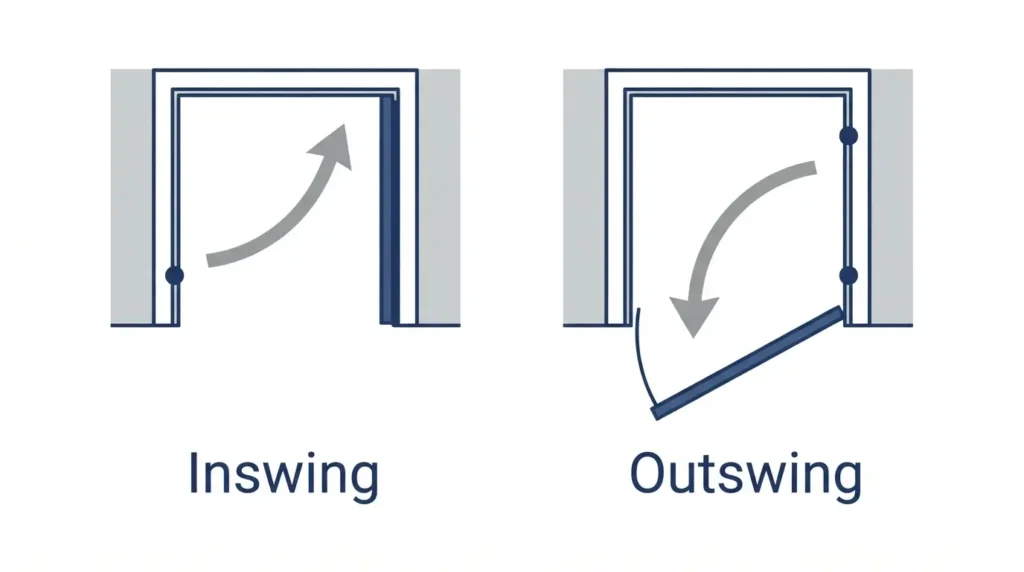
An inswing door opens into the room. An outswing door opens away from the room, toward the outside or a hallway.
Exterior entry doors in the US often swing inward for security. A door that opens outward is harder to force open. The hinges sit on the outside face, and the frame resists pressure from inside. Some regions still prefer inswing doors for weather protection, since wind can catch an outswing panel.
Interior doors usually swing into the smaller or less-used space. A bathroom door often swings out, so it clears the sink or tub.
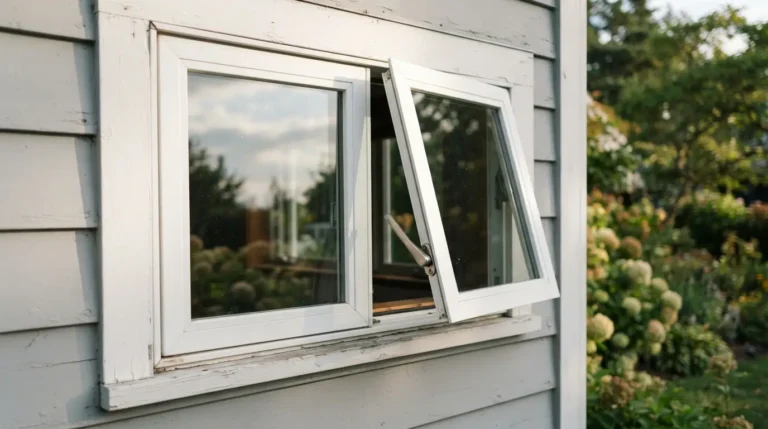
Hinge placement also sets the handing. A left-hand door has hinges on the left when you face it from the swing side. A right-hand door has hinges on the right. Installers need this detail correct before ordering a replacement.Windows use the same inswing and outswing logic. Windows use this same inswing and outswing logic when you’re choosing hinged windows for a room.
How the Door Carries Weight
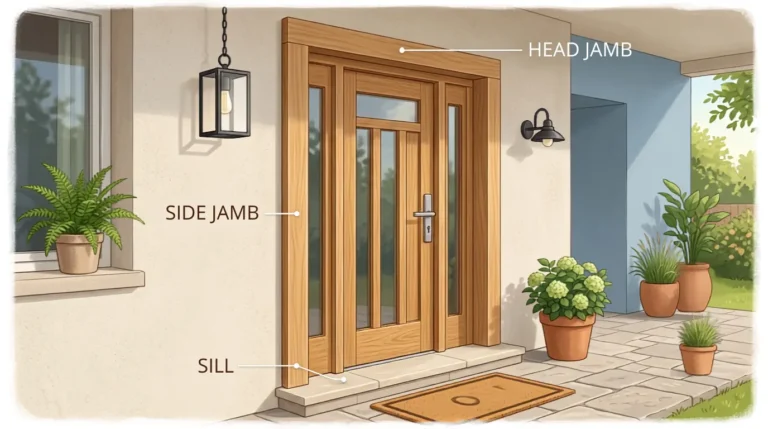
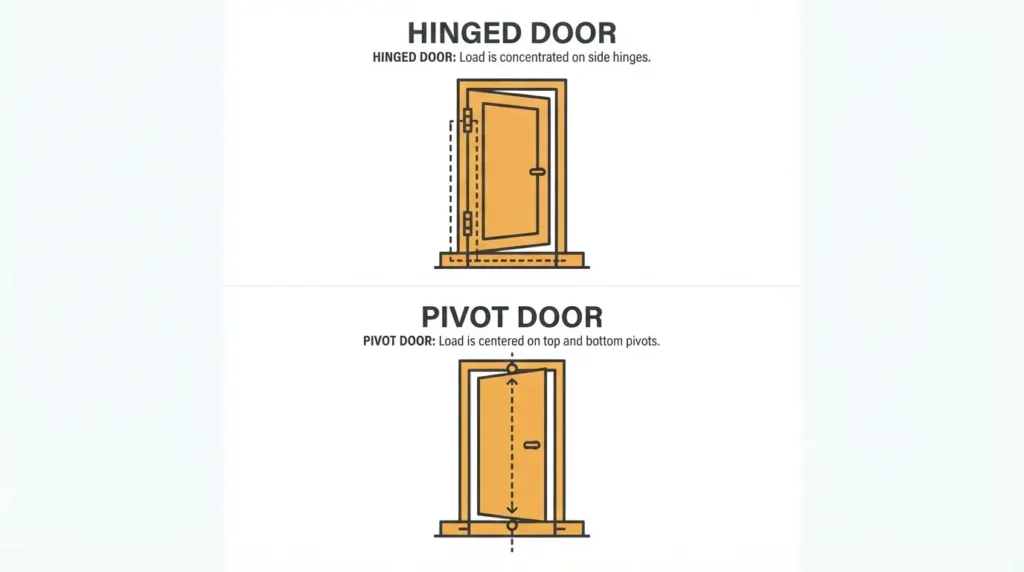
This door transfers its full weight through the hinges on one side. The hinges pull against the frame, called the jamb, every time the door opens.
This side-loaded design differs from a pivot door. A pivot door balances weight through points at the top and bottom of the slab, not one edge. That difference explains why heavy doors need more hinges, thicker hinge gauge, or ball bearing hinges. Without enough support, a heavy door sags over time and drags on the floor.
The American National Standards Institute sets hinge rules with the Builders Hardware Manufacturers Association. Their joint standard, ANSI/BHMA A156.1, covers hinge sizing and strength. Under this standard, doors up to 60 inches tall need two hinges. Taller or heavier doors need a third hinge, sometimes a fourth.
Pros and Cons at a Glance
Every door style has trade-offs. Here is a fair look at both sides.
Advantages
- Full-width opening. The door opens to its complete width, so large furniture passes through easily.
- More style choices. More materials, panel designs, and finishes exist than for sliding or pivot doors.
- Lower cost. Hardware and installation cost less than track-based systems.
- Simple maintenance. Fewer moving parts mean fewer failures. A worn hinge is cheap and quick to swap.
- DIY friendly. A homeowner with basic tools can often hang or repair a standard interior door.
Disadvantages
- Needs swing space. The door needs open floor room to swing through. This can be a problem in small bathrooms or tight hallways.
- Wind exposure. An unrestrained exterior door can catch wind and slam or swing hard.
- Hinge wear over time. High-traffic doors stress hinges, which may loosen or squeak and need adjustment.
- Safety risk if left open. A door left ajar in a walkway is a trip or collision hazard, especially for kids.
How Much Do They Cost?
Cost depends on the door type, material, and whether it sits inside or outside.
A basic interior hollow-core door costs $150 to $350 installed. A solid-core version runs higher, often $400 to $800 installed. It needs sturdier hinges and more labor.
Exterior versions cost more, since they face weather and security demands. A steel entry door runs $300 to $800 installed. A fiberglass entry door costs $500 to $1,500. A solid wood entry door often costs $700 to $3,000 or more.
Interior French doors, a pair of hinged panels, typically cost $250 to $500 in labor alone, on top of materials. Exterior French doors run much higher, often $2,000 to $5,000 installed, due to size and weatherproofing needs.
Hardware itself costs less. A basic hinge runs about $3 to $8. Heavier ball bearing or security hinges cost more, often $15 to $50 each. Replacing hinges alone, without a new door, usually costs $55 to $115 per opening in parts and labor.
A hinged door generally costs less than a comparable sliding or pivot door of the same size and material. That gap widens as size and custom features increase.
Types of Door Hinges
Different hinges suit different weights and locations. Here are the most common hinge types used on a hinged door today.
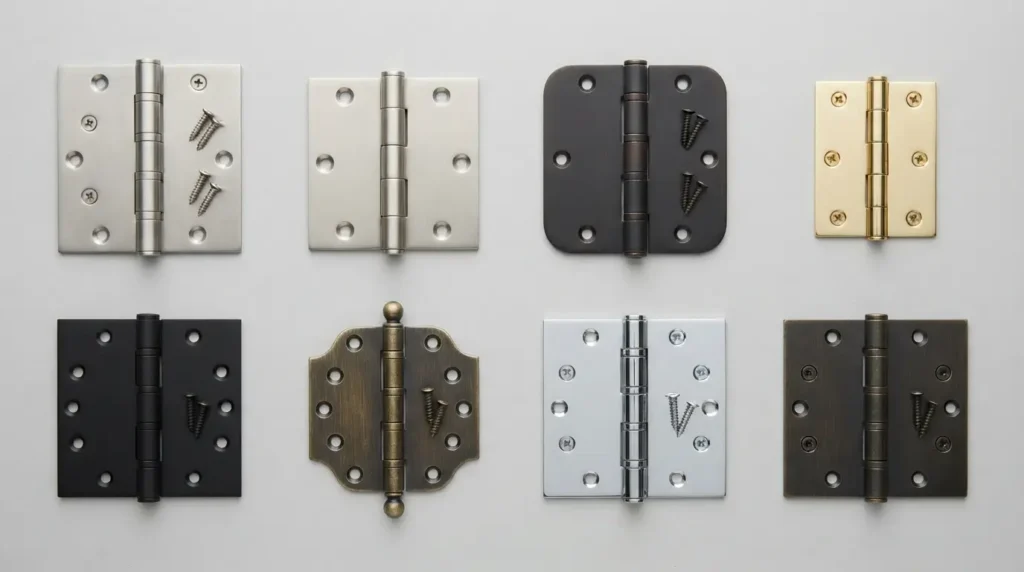
Butt Hinge
The butt hinge is the standard residential hinge. Two matching metal plates meet in the middle, joined by a pin. One plate mounts to the door, the other to the frame. Most interior doors use this type.
Ball Bearing Hinge
A ball bearing hinge is a butt hinge with bearings inside the joint. The bearings cut friction, so the door swings smoother and quieter. This type suits heavy entry doors and high-traffic commercial openings.
Concealed Hinge
A concealed hinge sits inside a recess, hidden from view when the door is closed. It gives a clean look and adds security, since no one can access it from outside. Many concealed hinges also allow fine adjustment after install.
Security Hinge
A security hinge resists tampering. It often includes non-removable pins and hardened screws. Builders use these on exterior doors where forced entry is a real risk.
Spring Loaded Hinge
A spring loaded hinge has built-in tension that closes the door on its own. Installers can set the tension to control closing speed. These are common on screen doors and self-closing interior doors.
Piano Hinge
A piano hinge, also called a continuous hinge, runs the full length of the door edge. It spreads weight evenly across the whole line instead of a few points. This makes it a strong choice for heavy or oversized panels. Many fire-door codes require it for that reason.
Pivot Hinge
A pivot hinge sits at the top and bottom of a door rather than the side. It lets the door rotate around a vertical axis near its center. This is a different mechanical system from a standard side-hung door, covered in more detail below.
Strap Hinge
A strap hinge uses one or two long plates joined by a barrel and pin. It adds strength and a decorative, often rustic, look. Builders use it on barn-style doors and heavy gates.
Offset Hinge
An offset hinge shifts the door away from the frame when open. This widens the usable opening by up to two inches, which helps in tight doorways needing wheelchair clearance.
Double-Action Hinge
A double-action hinge lets a door swing in both directions, then return to center. Restaurants use these on kitchen doors so staff can pass through both ways without stopping.
T-Hinge
A T-hinge combines a rectangular plate with a strap-style plate. It mixes a butt hinge and a strap hinge, often used on sheds, gates, and utility doors.
Mortise Hinges vs Surface Hinges
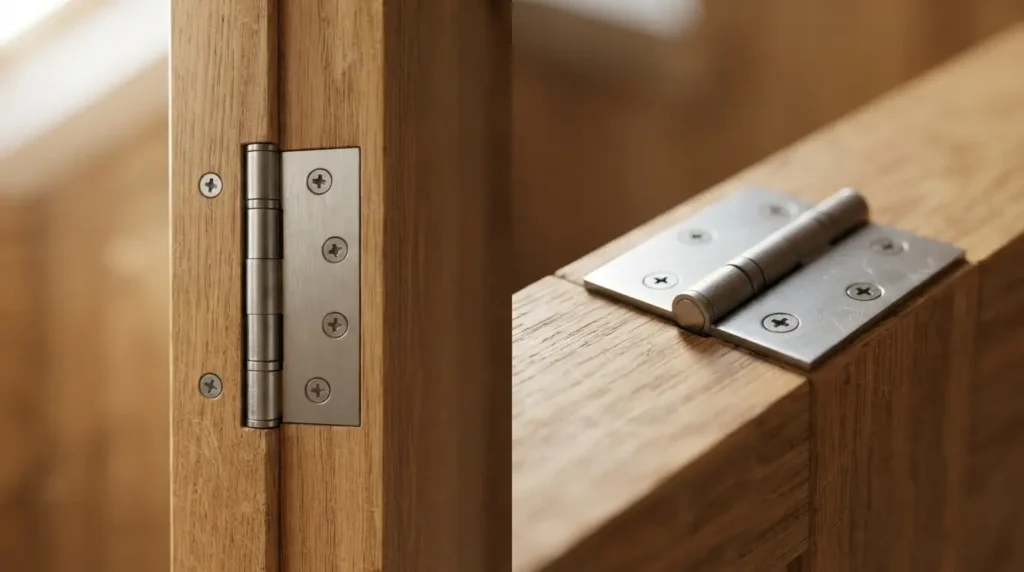
Hinges also split into two mounting methods. A mortise hinge sits recessed into a groove cut in the door and frame. This creates a flush, stable joint that suits heavier doors.
A surface hinge, sometimes called a non-mortise hinge, mounts directly on top of the door and frame. No cutting is required. It installs faster but offers less strength, so it fits lighter interior doors and cabinets better than heavy entry doors.
For a very heavy hinged door, a full mortise ball bearing hinge or a continuous piano hinge usually performs best. Both spread load more evenly than a light surface-mounted hinge.
Common Styles and Where They Work
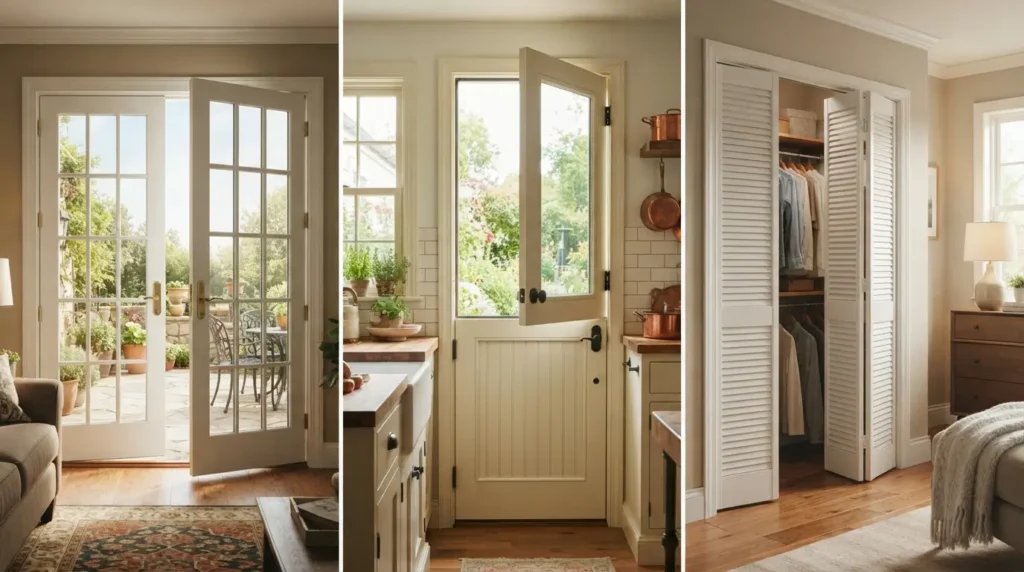
French Doors
French doors are a pair of panels that meet in the middle, often with glass. They suit patios, dining rooms, and home offices where natural light matters.
Dutch Door
A Dutch door splits horizontally, so the top and bottom halves open on their own. It suits kitchens, mudrooms, and homes with pets or small children. The bottom can stay shut while the top stays open.
Folding Doors
Folding doors, also called bifold doors, use hinges between panels plus a track. They fold in half as they open, saving floor space. Closets and laundry rooms often use this style.
Entry Doors
Most home entry doors use this design. Builders favor mortise hinges here for added security. They often pair them with ball bearing or security hinges on heavier wood or fiberglass slabs.
Interior Doors
Standard interior doors almost always use butt hinges. This keeps cost low and repairs simple across bedrooms, offices, and hallways.
Shower Doors
A glass shower door swings on wall-mounted or pivot-style hinges. It needs hardware rated for constant moisture, usually stainless steel or solid brass to resist corrosion.
Cabinet Doors
Cabinet doors use small, specialized hinges built for lighter loads. Concealed cabinet hinges are common today. They hide from view and let the door close softly.
Comparing to a Sliding Door
A hinged door opens to its full width, while a sliding door only opens about half. One sliding panel always stays fixed in place. That is why this style remains more common, despite needing more floor space.
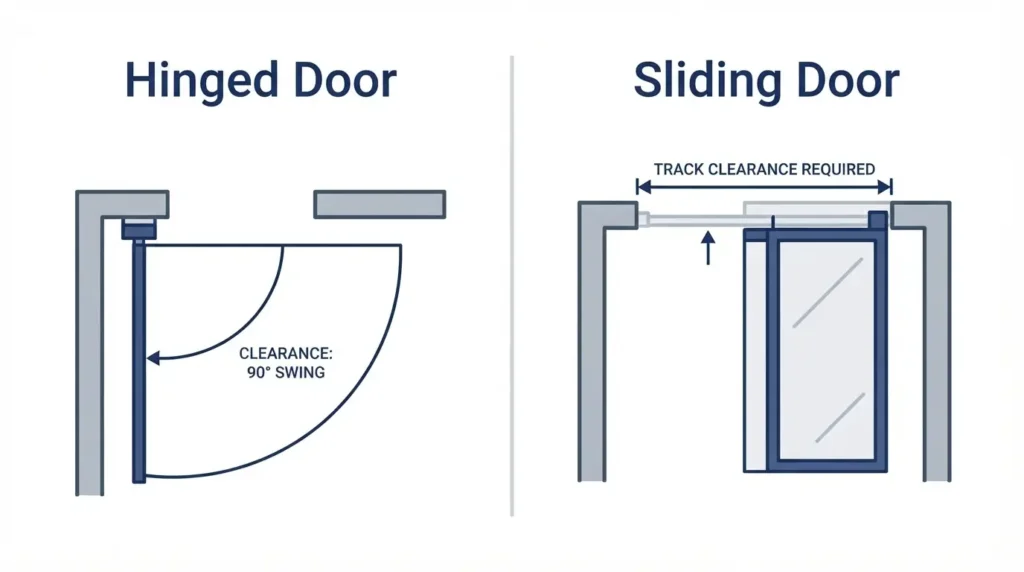
| Factor | Swing Door | Sliding Door |
| Floor space needed | Needs swing clearance | Needs none, moves along wall |
| Full opening width | Yes, full width | No, about half |
| Typical cost | Lower | Higher |
| Weather sealing | Generally tighter | Prone to air leaks over time |
| Style range | Wide variety | Fewer options, modern look |
| Best for | Traditional style, full access | Small rooms, contemporary look |
Pick this style when you move large items through often. It also fits when a traditional look matters more than saving space. Pick a sliding door for tight rooms or patios where floor space is limited.
For patios specifically, French doors give a fully open threshold with no center frame. Sliding glass doors save space but never fully open at once.
Comparing to a Pivot Door
A hinged door and a pivot door look similar but work differently. One carries weight through side hinges bolted to the jamb. The other carries weight through points at the top and bottom, sending the load straight down into the floor.
| Factor | Swing Door | Pivot Door |
| Weight transfer | Through side hinges | Through top and bottom points |
| Maximum size | Standard sizes | Can be much larger and heavier |
| Cost | Lower | Higher, often $1,000 to $5,000 or more |
| Installation | Simple, standard | Complex, needs precise engineering |
| Look | Traditional to modern | Bold, architectural statement |
Neither wins in every case. A pivot door suits oversized entries where a builder wants a dramatic look. A standard swing door suits most homes, budgets, and everyday use.
Best Choices by Room
Closets: A standard swing door gives full access to see everything inside. A bifold door works well in a tight walk-in closet , where floor space matters more.
Bathrooms and showers: Choose corrosion-resistant hinges for moisture-heavy rooms. Solid wood can warp in humidity, so composite or solid-core panels often perform better.
Patios and exteriors: French doors give a wide, open threshold. Weigh that benefit against the extra floor clearance needed to swing.
Interior rooms: A standard butt-hinge door remains the default and cheapest choice for bedrooms, offices, and hallways.
Entry doors: Prioritize security hinges and mortise mounting here. This door faces the most forced entry attempts.
DIY or Call a Pro?
A confident DIYer can usually replace a pre-hung interior door in a few hours with basic tools. Swapping hinges alone is simpler and often takes under an hour per opening.
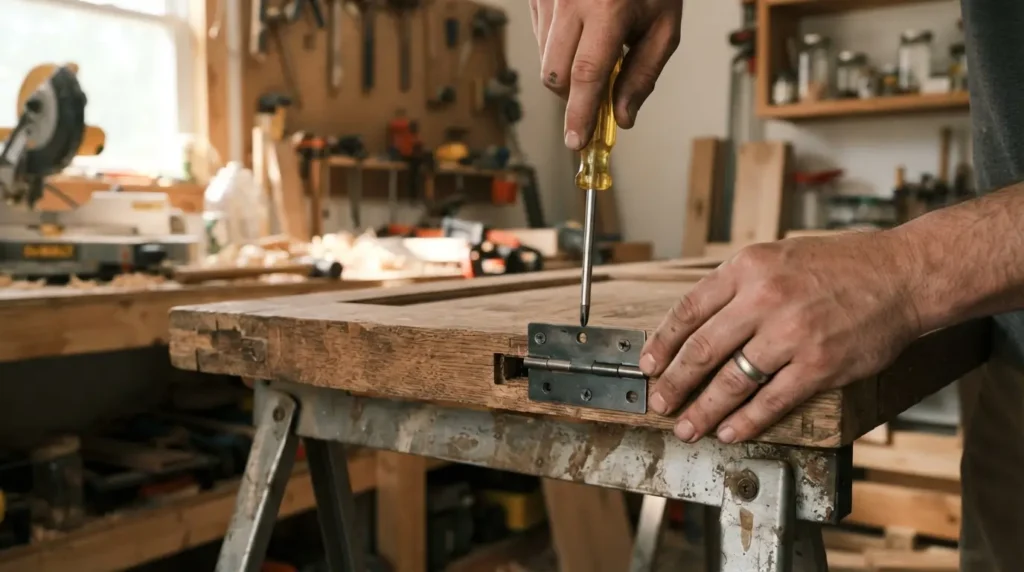
Call a professional for load-bearing exterior doors, fire-rated doors, or any job that involves reframing the opening. These jobs carry structural and code requirements beyond a basic swap.
If you lack a router for cutting new hinge mortises, a sharp chisel and a steady hand still work. Many DIYers use a chisel-only method on standard residential doors, working slowly and checking depth often.
Choosing the Right Door for Your Home
A hinged door remains the most common, most affordable, and easiest door to repair. Pick your hinge type based on weight and location. Choose materials suited to moisture or weather exposure. Confirm swing clearance before you commit to a style. That combination gets you a door that performs well for years.
Frequently Asked Questions
What are the most popular door materials?
Wood, steel, fiberglass, aluminum, and MDF are the most common choices. Wood suits interior style. Steel and fiberglass suit exterior security and durability.
What are the best options for closets?
Standard swing doors give full access but need swing space. Bifold doors save floor space but show less of the closet at once.
Are hinged patio doors or sliding patio doors better?
French doors give a fully open threshold and a traditional look. Sliding patio doors save floor space and suit smaller patios or contemporary homes.
What are center-hinged doors called?
These are usually called pivot doors, since they rotate around a central axis instead of a side edge.
What is this type of door called?
It is often called a swing door, named after the hinge type most commonly used.
What’s the biggest advantage of hinged doors over sliding doors?
Full-width opening. A swing door opens completely, while sliding doors only expose about half their total opening at once.
Do solid core doors need three hinges?
Most solid core doors taller than 60 inches need three hinges under standard hardware guidelines. Extra-tall or heavy doors may need a fourth.
How much does it cost to replace hinges?
Replacing hinges alone typically costs $55 to $115 per opening. Price depends on hinge type and door weight.
Why are door knobs positioned far from the hinges?
Placing the knob far from the hinge gives more leverage. This makes the door easier to push or pull with less force.
Which side does a hinge go on?
The hinge goes on the side the door swings away from. Standing on the side it opens toward tells you if it is left-hand or right-hand hung.
What are the best non-mortise hinges for heavy doors?
Heavy-duty surface-mounted ball bearing hinges work well when mortising is not possible. A full mortise hinge still performs better under constant heavy use.
How do mortise and non-mortise hinges compare?
Mortise hinges sit flush and recessed, offering more strength and stability. Non-mortise hinges mount on the surface, installing faster but suiting lighter doors best.
What types of hinges work best for outdoor doors?
Stainless steel or corrosion-resistant security hinges hold up best outdoors, since they resist rust and rough weather exposure.
What are the best hinge types for cabinets?
Concealed cabinet hinges are the most popular choice today. They stay hidden and often include soft-close features.
What’s the main difference from a pivot door?
It swings on side hinges bolted to the frame. A pivot door rotates on points at the top and bottom, sending weight straight down instead of sideways.

About HomeFixStyle
HomeFixStyle is a home improvement blog dedicated to helping readers create better, more comfortable, and stylish homes. We share practical ideas, helpful guides, home decor inspiration, renovation tips, and simple solutions for everyday home projects. Our goal is to make home improvement easier to understand and apply, whether you are updating one room or improving your entire home.