Picking a floor feels risky when you do not know the terms. This guide breaks down every type of laminate flooring in plain words. You will learn what laminate is made of, how AC ratings work, and which finish fits your room. We cover thickness, water resistance, and the look of wood or tile. You will also see how laminate compares to vinyl and engineered wood. By the end, you can choose the right floor with confidence. No jargon, no sales pitch, just clear answers for your home project.
Key Takeaways
- The AC rating is the first spec to check on any laminate flooring. It shows how much wear a floor can take, from AC1 for light use to AC5 for heavy commercial use.
- Water-resistant handles spills you wipe up fast. Waterproof uses a sealed core for stronger protection in kitchens and baths.
- Thicker planks, from 10mm to 12mm, feel solid, absorb sound, and hide small subfloor bumps.
- Matte finishes hide scratches well. High-gloss looks sleek but shows every scuff and footprint.
Laminate flooring is an affordable, durable floor that mimics real wood or stone. It costs less, resists scratches well, and installs easily without glue.
What Is Laminate Flooring Made Of?
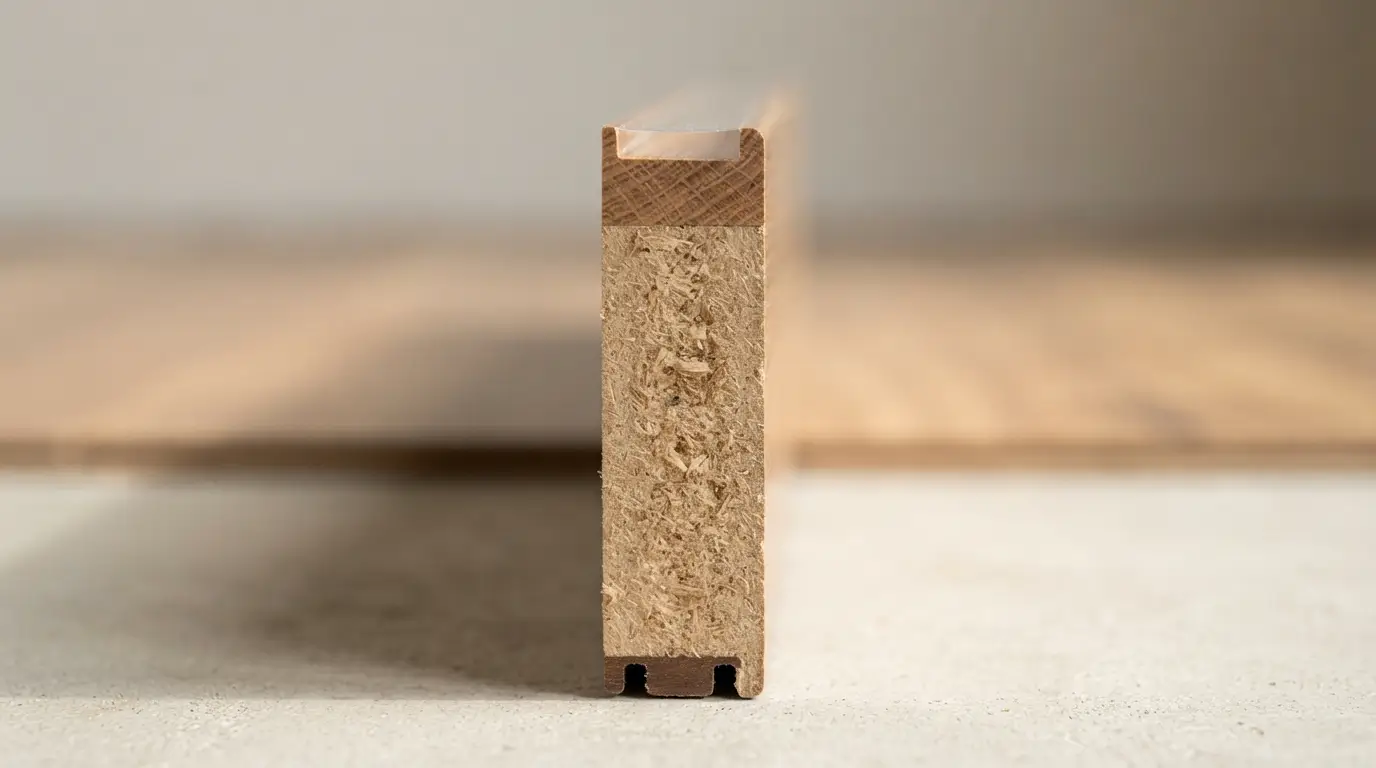
Laminate is a floor built from four pressed layers. Each layer does one job. A clear wear layer resists scratches on top. A printed decor layer shows the wood or stone look. An HDF core adds strength. A backing layer blocks moisture. Together they mimic real wood at a lower price.
The wear layer sits on top. This clear coat resists scratches, stains, and fading from sunlight. Below it, the decor layer holds a high-resolution photo of wood or tile. That photo gives the floor its look. The core layer comes next, made of high-density fiberboard, or HDF. This dense middle gives the plank its strength and dent resistance. The backing layer seals the bottom and blocks moisture from below.
Knowing these layers helps you judge quality. A thick wear layer and a solid HDF core signal a floor that lasts.
Is Laminate Flooring Durable?
Yes, and that is why families pick laminate flooring. The tough wear layer shrugs off pet claws, dropped toys, and daily foot traffic. Most people cannot tell high-quality laminate from real hardwood by sight.
Durability still varies by product. A floor rated for bedrooms will wear out fast in a busy hallway. That is where the AC rating comes in.
Laminate AC Ratings Explained (AC1 to AC5)
AC stands for Abrasion Class. An independent lab tests each floor for wear, impact, and stains. The result is a score from AC1 to AC5. This rating is the single best guide to laminate flooring durability.
| AC Rating | Use Level | Best For |
| AC1 | Light use | Bedrooms, closets |
| AC2 | Moderate use | Living rooms, dining rooms |
| AC3 | Heavy home use | Whole home, hallways |
| AC4 | Light commercial | Busy homes with kids and pets |
| AC5 | Heavy commercial | Stores, offices |
For most homes, AC3 covers daily life well. Pick AC4 if you have big dogs or heavy traffic. You rarely need AC5 at home.
Types of Laminate Flooring by Appearance
The look of your laminate flooring is where most people start. Modern printing makes the surface photo sharp and real. You can match almost any style.
Wood-Look Laminate Flooring
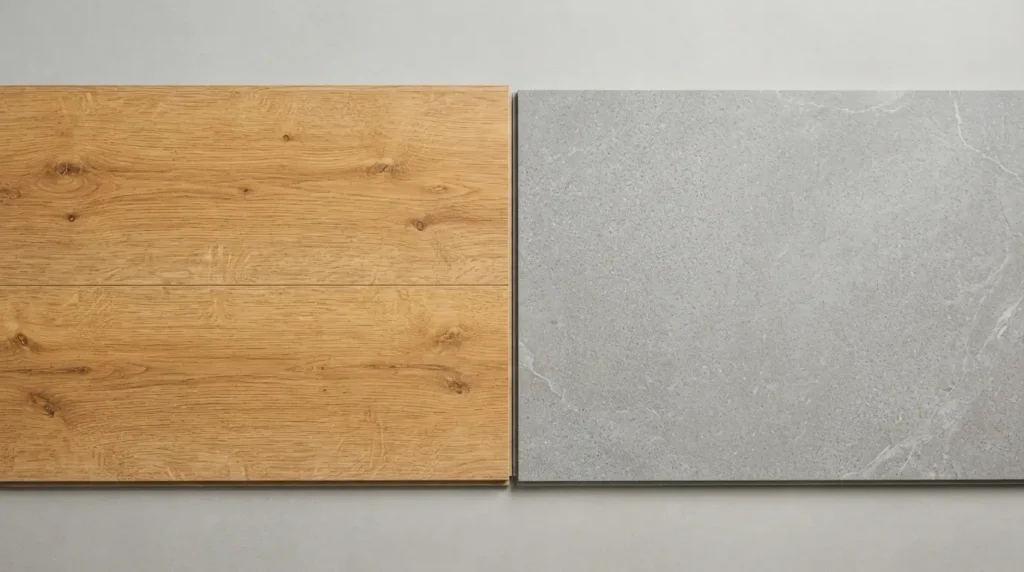
Wood look laminate flooring is the top seller by far. It copies the grain, knots, and color of real timber. Many shoppers call it fake wood or imitation timber flooring, but the effect is convincing. Wood grain laminate flooring comes in oak, maple, hickory, and walnut tones. Random plank lengths add to the natural feel. Lighter oak tones brighten a room. Darker walnut adds warmth and depth. The more plank variation a product has, the more real it looks.
Tile-Look and Stone-Look Laminate Flooring
Want the look of stone without the cold or cost? Laminate flooring that looks like tile solves that. A photo layer copies ceramic, slate, or porcelain. Tile look laminate suits kitchens and entryways. It gives you the tile style at a friendlier price and warmer feel underfoot.
Other Styles and Colors
Trends now go beyond brown wood tones. White laminate brightens small rooms and modern spaces. You can also find gray, whitewashed, and painted looks. Muted shades like grey green laminate flooring suit calm, nature-inspired rooms.
Laminate Plank Patterns and Layouts
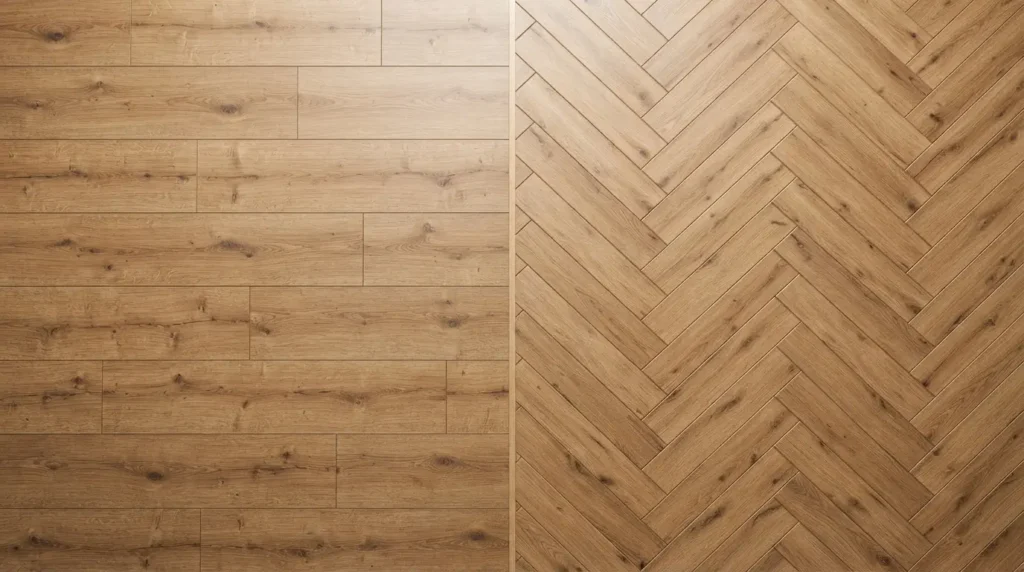
Pattern shapes the whole room. Wide planks feel open and modern. Narrow planks read classic. You can lay a straight run or a herringbone pattern for extra style. Mixing plank lengths creates a laminate floor pattern that looks like true hardwood.
Textures and Finishes
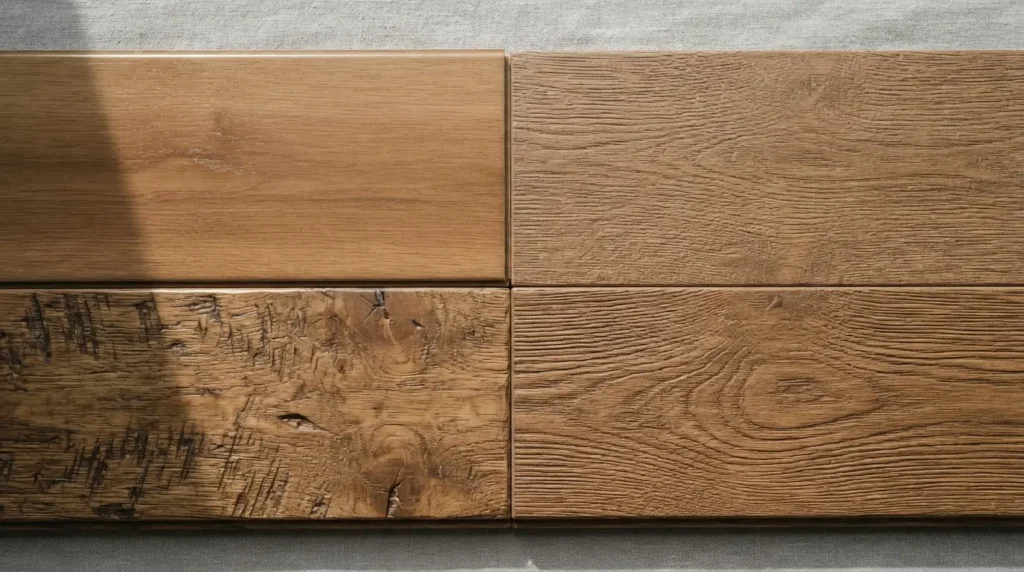
Texture is what you feel underfoot on laminate flooring. Finish is the shine level. Both change the look and the upkeep. Matte hides scratches. High-gloss shines but shows dust and scuffs.
Smooth Finish
Smooth has no grain texture. It gives a clean, polished look. This finish suits modern kitchens and living rooms.
Embossed and Textured
Embossed adds a light grain texture you can feel. It fakes the surface of real wood well. This is a budget-friendly step up in realism.
Hand-Scraped and Distressed
Hand-scraped copies old, worn wood. The uneven surface adds charm. It fits rustic and farmhouse rooms and hides minor scuffs.
Embossed-in-Register (EIR)
EIR is the most realistic finish. The texture lines up exactly with the printed grain. What you see matches what you feel. This closes the gap between laminate and real wood.
Laminate Flooring Thickness Explained (6mm to 12mm)
Laminate flooring planks range from 6mm to 12mm thick. Thickness affects sound, comfort, and how the floor hides subfloor flaws.
Thin 6mm to 7mm planks cost less. They work in low-traffic bedrooms. Thicker 8mm to 12mm planks feel solid and quiet. They forgive small bumps in an uneven subfloor. For most rooms, 8mm to 10mm gives the best balance of price and feel.
Waterproof vs. Water-Resistant Laminate Flooring
Water is laminate flooring’s weak spot. The HDF core can swell if water sits too long. Two upgrades fix this in different ways.
Water-Resistant Laminate Flooring
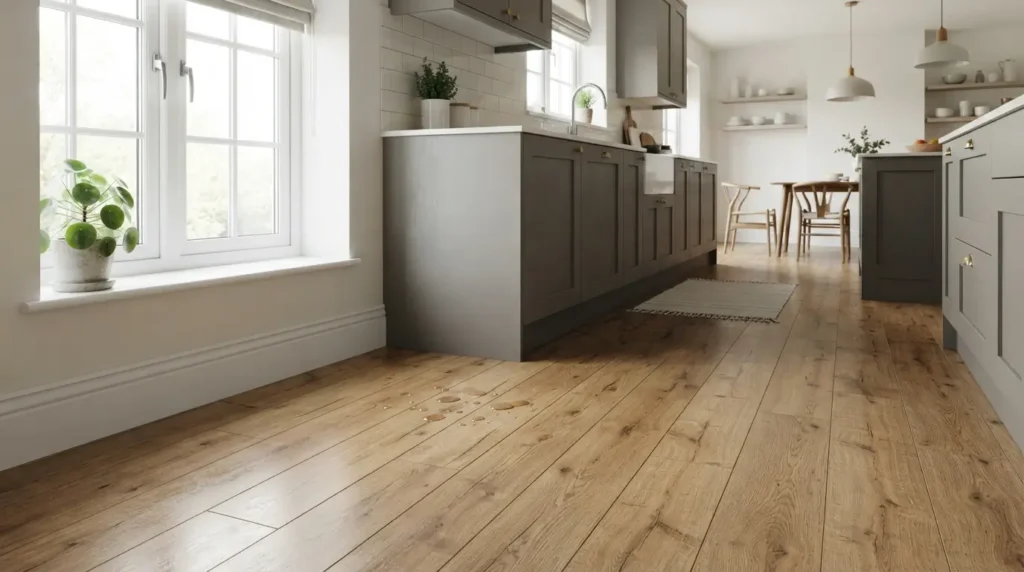
Water-resistant laminate handles quick spills. A tighter surface and joints buy you time. Wipe up juice or water fast and the floor stays fine. It suits living rooms and dining rooms well.
Waterproof Laminate Flooring
Waterproof laminate flooring goes further, using a sealed core, a water-repelling top, and watertight joints to keep moisture out completely.This makes it a safe choice for kitchen floors, bathrooms, and busy family spaces.
How Laminate Compares to Other Flooring
Buyers almost always weigh laminate flooring against two rivals. Here is how it stacks up.
Laminate vs. Vinyl Flooring
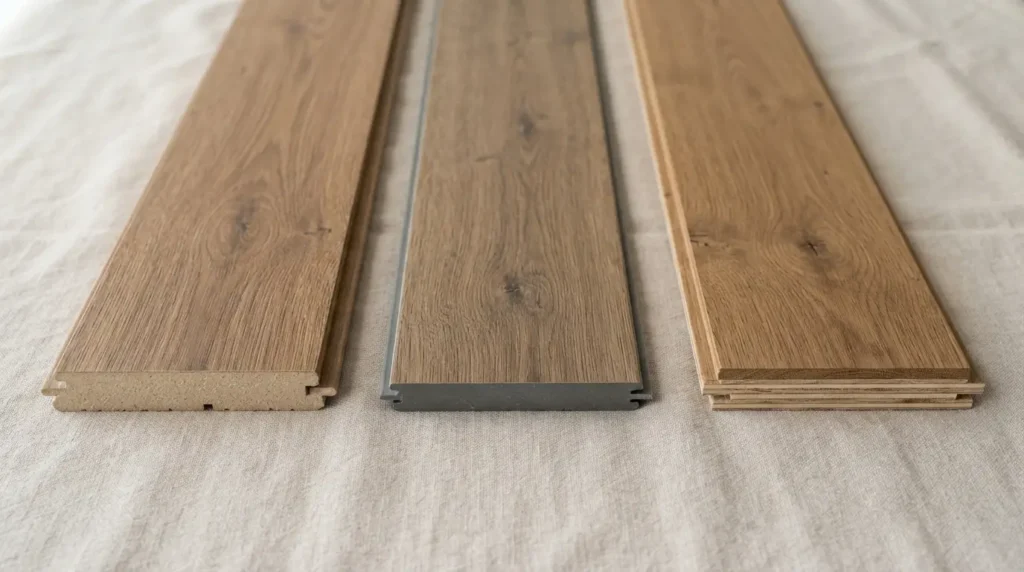
Vinyl, including luxury vinyl plank, or LVP, is fully waterproof by nature. Laminate feels warmer and more like real wood underfoot. Pergo and other laminate brands offer richer texture. When you compare laminate vs vinyl flooring, vinyl wins in wet rooms while laminate wins on the authentic wood feel. Waterproof laminate now narrows that gap in kitchens.
Laminate vs. Engineered Wood
Engineered wood has a real hardwood veneer on top. Laminate uses a photo layer instead. Engineered wood can be sanded once or twice. Laminate cannot. But laminate resists scratches better and costs less. Choose engineered wood for resale value. Choose laminate for durability on a budget.
Laminate Flooring Installation Options
How your laminate flooring connects affects your install day. Most types snap together with no glue.
Click-Lock and Floating Floors
Over two-thirds of laminate uses click-lock. Planks snap together with a tongue-and-groove edge. The floor floats over the subfloor with no nails or glue. This makes it a strong DIY project.
Glued and Pre-Glued Laminate
Glued laminate needs adhesive at each joint. It makes a strong floor but takes longer. Pre-glued planks have adhesive already applied. You just moisten it to bond.
Underlayment and Vapor Barrier
Every floating floor needs underlayment. This thin pad softens each step and cuts noise. Some laminate with the pad already attached saves a step. On concrete or below grade, add a vapor barrier first to block moisture.
Can You Install Laminate Over Tile?
Yes, in most cases. Laminate on tile works if the tile is flat and clean. Fill deep grout lines first for a level base. The floating design lays right on top.
Best Laminate Flooring by Room
Match the floor to the room and it lasts longer. Traffic and moisture guide the choice.
High-Traffic Areas
Hallways and entryways need AC3 or higher. Pair a high rating with a 10mm to 12mm plank. This handles wear and stays quiet.
Kitchens and Bathrooms
These rooms see spills and steam. Standard laminate is not built for them. Choose waterproof laminate here for real peace of mind.
Basements
Basements hold hidden moisture. Use waterproof planks with a vapor barrier below. This protects the floor from damp concrete.
Bedrooms and Living Rooms
These low-traffic rooms allow more choice. AC1 or AC2 works fine. A thicker core adds comfort and quiet where you relax.
Best Laminate Flooring for Pets and Kids
Pets and kids test any floor. Their claws and spills need a tough surface. Pick AC4 for the best scratch resistance. Add a waterproof core for accidents and messes. A matte, textured finish hides marks between cleanings. This combo keeps the floor looking new for years.
How Much Does Laminate Flooring Cost?
Price depends on thickness, AC rating, and water protection. Basic 7mm laminate runs about one to two dollars per square foot. Mid-grade 8mm to 10mm sits near two to four dollars. Waterproof and thick 12mm planks reach four to six dollars. Install adds two to five dollars per square foot if you hire a pro. Doing it yourself saves that labor cost.
Is Laminate Flooring Safe?
Modern laminate is safe for homes and families. Older floors sometimes released formaldehyde from the core. Today, trusted brands meet strict emission limits. Look for GreenGuard Gold certification on the label. This proves the floor passed low-emission testing.
Benefits of Laminate Flooring
Laminate brings real value to a home project. It costs far less than hardwood or stone. It resists scratches, dents, and daily wear. Cleaning takes only a damp mop. Installation is fast enough for a weekend. The click-lock design suits most DIY skill levels. You get the beauty of wood without the upkeep. That mix of price, looks, and toughness explains its popularity.
How to Maintain and Care for Laminate Floors
Laminate flooring care is simple and quick. Sweep or dust mop for daily dirt. Use a damp mop, never a soaking wet one. Wipe spills right away so water cannot seep in. Cover furniture legs with felt pads to stop scratches. Fill small nicks with matching putty. Skip wax and harsh cleaners.
How to Choose the Right Laminate Flooring
Work through four questions and the choice gets clear. First, how busy is the room? High traffic needs AC3 or more. Second, how much moisture? Wet rooms need waterproof. Third, what style fits your decor? Pick wood, tile, or a color. Fourth, what is your budget? Thicker and waterproof planks cost more.
Avoid the biggest mistakes. Do not pick a low AC grade for a busy room. Never skip underlayment. Always leave an expansion gap at the walls. And never wet-mop the floor.
Final Thoughts
Choosing a floor gets easy once you know the four dials. Check the AC rating for durability. Match water protection to the room. Pick a thickness that feels right. Then choose a look you love. Wood-look stays the favorite for warmth and style. Tile-look brings a stone feel to wet spaces. Waterproof cores now open kitchens and baths to more homes. The right type of laminate flooring gives you the beauty of real wood at a fraction of the price. Measure your space, set your budget, and buy with confidence. Your new floor should serve your home for many years.
Frequently Asked Questions
What is laminate flooring made of?
It has four layers: a clear wear layer, a printed decor layer, an HDF core, and a backing layer.
Is laminate flooring durable?
Yes. The wear layer resists scratches, dents, and daily traffic. Higher AC ratings last longer.
What types of laminate flooring are available?
Types split by look, finish, thickness, and water resistance. Wood-look and tile-look are most common.
Which laminate flooring is best?
The best depends on the room. AC3 suits most homes. Waterproof fits kitchens and baths.
What is the highest grade laminate flooring?
AC5 is the highest grade. It is rated for heavy commercial traffic and rarely needed at home.
What are the different grades of laminate?
Grades run from AC1 to AC5. The number shows how much wear and traffic the floor can take.
What is the best thickness for laminate flooring?
For most rooms, 8mm to 10mm balances price, comfort, and sound. Choose 12mm for the most solid feel.
What is the most popular laminate floor?
Wood-look laminate in oak and gray tones is the top choice for modern homes.
How can you tell if laminate flooring is good quality?
Check the AC rating, wear layer thickness, and core density. High quality laminate has higher numbers across all three.
What are the downsides of laminate flooring?
It cannot be refinished. Standing water can damage the core. It feels harder than some floors.
Can I mop laminate floors?
Yes, with a damp mop only. Avoid soaking the floor, since standing water harms the seams.
Is laminate flooring easy to maintain?
Very. A quick sweep and damp mop keep it clean. No wax or special polish needed.
Where can laminate flooring be installed?
Almost any room. Use waterproof types in kitchens, baths, and basements for safety.
Can you install laminate over tile?
Yes. The tile must be flat and clean. Fill deep grout lines for a smooth base first.

About HomeFixStyle
HomeFixStyle is a home improvement blog dedicated to helping readers create better, more comfortable, and stylish homes. We share practical ideas, helpful guides, home decor inspiration, renovation tips, and simple solutions for everyday home projects. Our goal is to make home improvement easier to understand and apply, whether you are updating one room or improving your entire home.