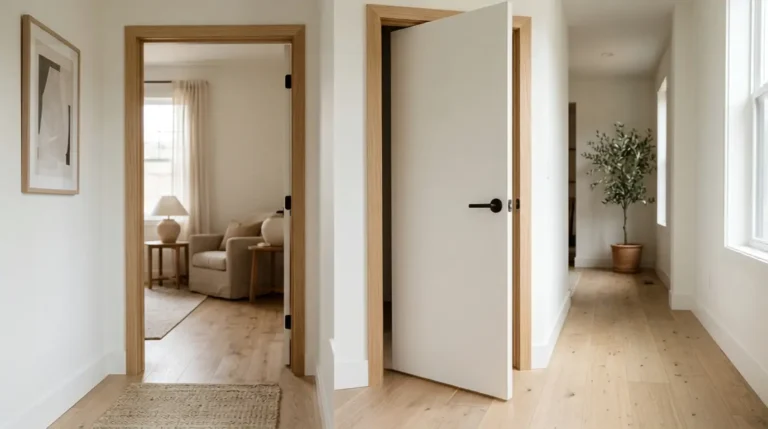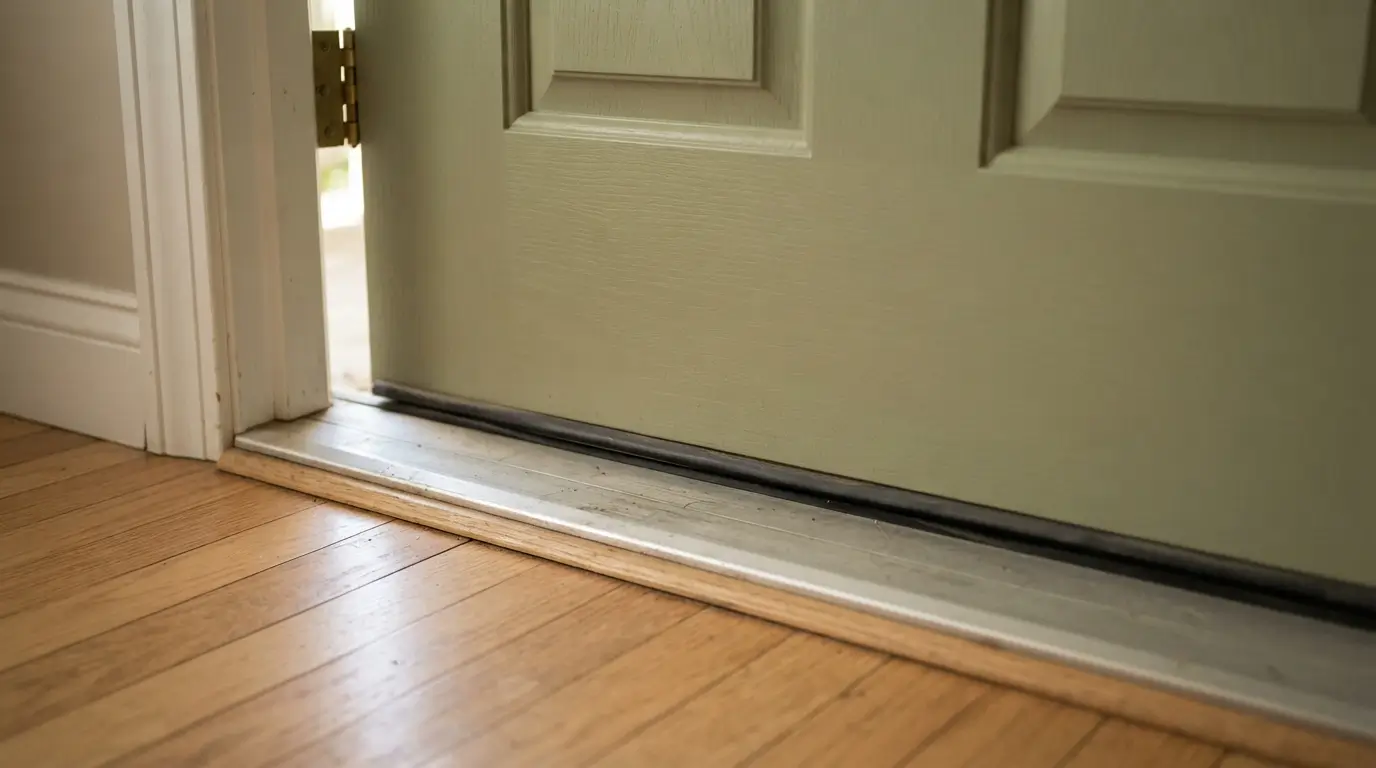
You step over your door threshold every day without a second thought. But that small strip at the bottom of your door does a lot of work. It blocks drafts, stops rain, and keeps bugs out of your home.
A threshold is easy to ignore until it fails. Then you feel the cold air on your ankles or spot a water stain on the floor. This guide explains what a threshold is, the main types, and how to pick the right one.
What Is a Door Threshold?
A door threshold is the horizontal strip at the bottom of a doorway. It fills the gap between the door and the floor. You will find it on both interior and exterior doors.
The threshold connects the floor on one side of the door to the floor on the other side. It sits right under the door when the door is closed. On an exterior door, it seals the space where water and air try to sneak in.
Think of it as the finished cap at the base of your entry. It takes the daily beating from foot traffic and weather. That is why it is one of the hardest-working parts of any door.
Threshold vs. Door Sill: What Is the Difference?
People often use these two words as if they mean the same thing. They do not. A threshold and a sill sit in almost the same spot but do different jobs.
The sill is the structural base of the door frame. It rests on the foundation, subfloor, or slab. It supports the frame and the weight of the door.
The threshold sits on top of the sill, between the door jambs. It seals the gap under the door and takes the wear. A simple way to picture it: the sill is the plate, and the threshold is the cap on top.
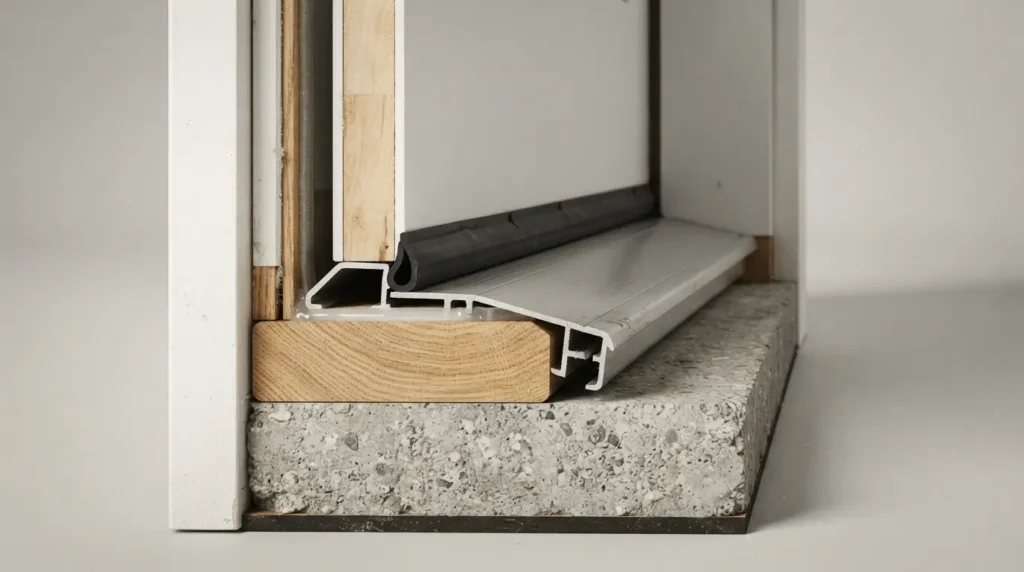
This matters when something breaks. The threshold is built to wear out and be replaced. Swapping a threshold is a quick, low-cost fix. Replacing a rotted sill is a much bigger job for a pro.
What Does a Threshold Do?
A threshold handles three main jobs around the clock. Each one affects your comfort and your energy bills.
First, it seals. On an exterior door, the threshold blocks drafts, rain, and pests at floor level.Weatherstripping and a tight threshold help stop these air leaks.ENERGY STAR says sealing air leaks and adding insulation can save up to 10% on energy bills.
Second, it creates a smooth transition. Where tile meets carpet or hardwood, the threshold covers the seam. Without it, you get an ugly gap and a trip hazard.
Third, it acts as a shield. The threshold takes the scuffs and impacts so the sill below stays safe. In short, it absorbs the damage so the frame does not have to.
Types of Door Thresholds
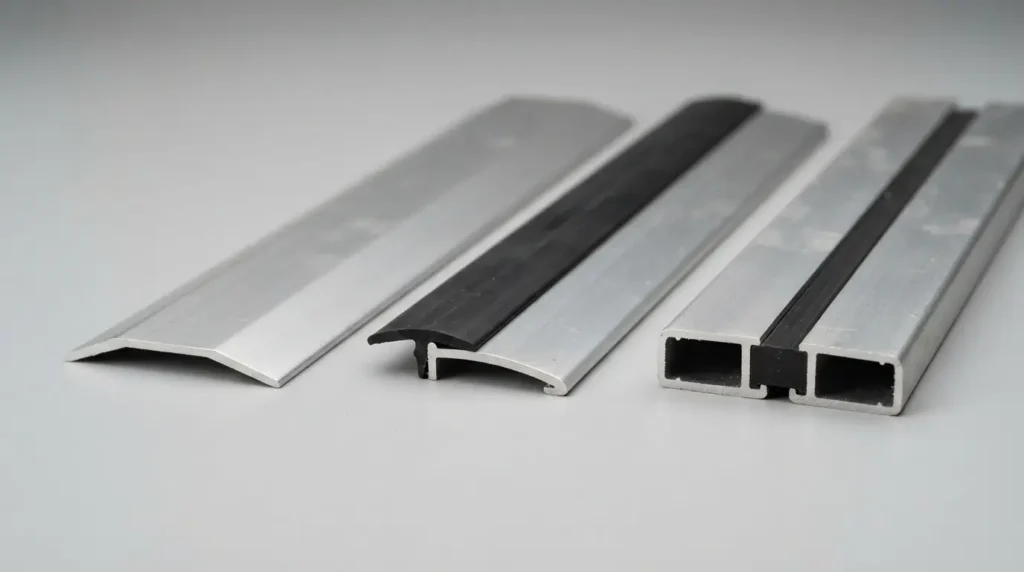
Not all thresholds are the same. The right one depends on your door, your floor, and your climate. Here are the common types.
Saddle Threshold
This is the simplest and most common type. It is a smooth, low strip of metal that sits under the door. Saddle thresholds work well for exterior doors in mild climates. They give you a sturdy, reliable transition.
Bumper Seal Threshold
This type has a flexible vinyl or rubber fin on top. The fin presses against the bottom of the closed door. That contact creates a tight seal against air and rain. Pick this one if drafts and leaks are your main problem.
Thermal Break Threshold
This threshold has a plastic divider in the middle. The divider stops cold from passing through the metal into your home. It also helps prevent frost and condensation on the inside. Choose this type if you live somewhere with harsh winters.
Heavy-Duty Threshold
Heavy-duty thresholds use thicker metal for tough spots. They hold up under carts, heavy foot traffic, or vehicles. You see them most often at busy commercial entries.
Interior Thresholds and Transition Strips
Interior thresholds focus on looks and smooth transitions. They bridge two rooms or two floor heights. A carpet divider is one example. It joins carpet to tile or hardwood and protects the flooring edges.
Door Threshold Materials
The material you pick affects the look, the upkeep, and how long it lasts. Each option has its own trade-offs.
Aluminum
Aluminum is the top choice for durability. It will not rust, crack, or warp. That makes it a strong pick for a busy exterior door bottom.
Wood
Wood gives you a warm, classic look. You can stain or paint it to match your trim or floor. The catch is upkeep. Wood needs a sealant or paint to keep moisture out and prevent rot. Use it in dry spots, not wet areas.
Composite and Vinyl
Composite and vinyl blend the best of both worlds. They look clean, resist moisture, and need little care. Many homeowners like them as a set-it-and-forget-it option.
Bronze and Stainless Steel
Bronze and brass are the most durable and the most upscale. Their color will not rub off under heavy foot traffic. Stainless steel resists rust and holds up in tough spots. Both cost more than aluminum.
Stone and Marble
Stone or marble thresholds are strong and water-resistant. Builders often use them at main entries and bathroom doorways. They also act as a clean divider between two floor types.
What Is an Adjustable Door Threshold?
Most thresholds installed in recent decades are adjustable. A row of screws along the top lets you raise or lower the cap.
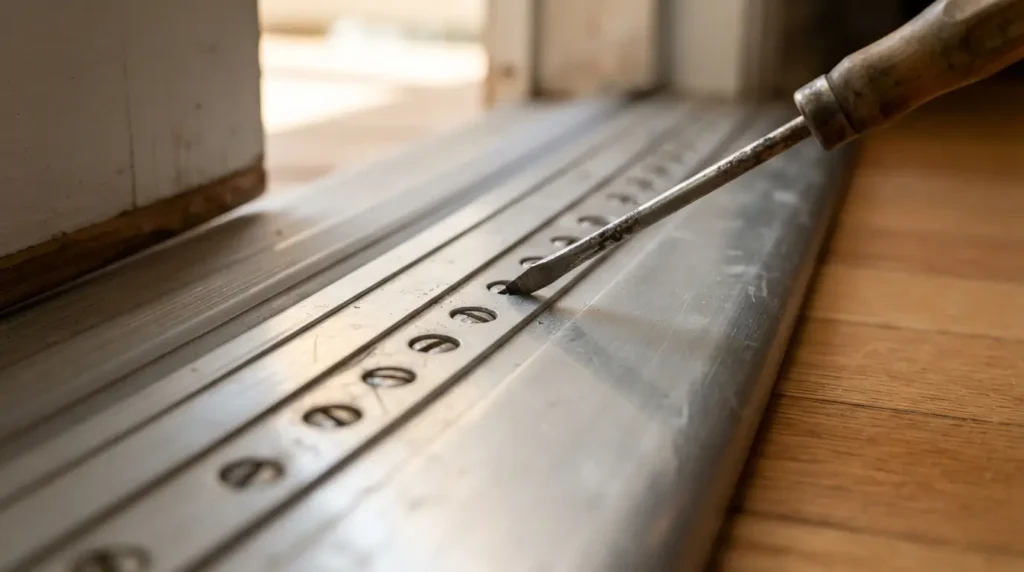
Over time, the door settles and the seal loosens. Turning the screws lifts the cap back into contact with the door sweep. It is often a five-minute fix with a screwdriver.
Try this before you assume a draft means a new door. Set too low, the threshold leaks air. Set too high, the door drags and scrapes.
Standard Door Threshold Sizes
Threshold length usually matches your door size. For example, a 36 inch door uses a 36 inch threshold.
Width and height vary by type and by the gap you need to cover. Saddle heights can run from about 1/4 inch up to 1 inch or more. You can often cut and notch a threshold to fit around the frame.
Signs Your Threshold Is Failing
A worn threshold is a common cause of drafts and high bills. The good news is that the checks are simple and free.
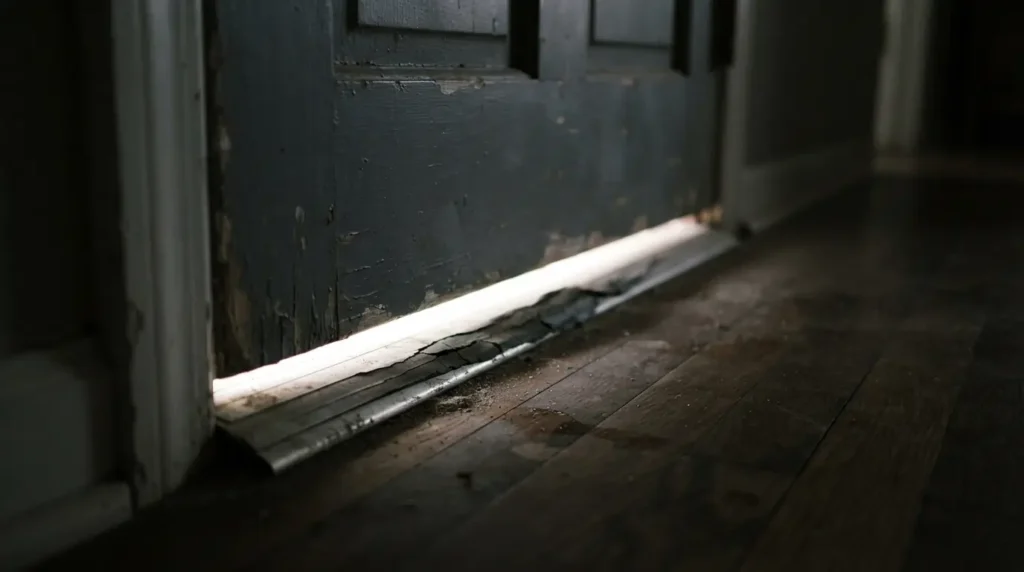
- Do the daylight test. Turn off the lights at night and look at the door bottom. A line of light means a gap.
- Check the seal. Look at the rubber or vinyl insert. Cracked, brittle, or missing means it needs replacing.
- Look for water stains. Damp or stained floors just inside the door point to a leak.
- Feel for drafts. Run your hand along the bottom on a windy day.
- Watch for scraping. If the door catches on the threshold, the cap is set too high.
If you spot rot in the wood below the metal, call a pro. Soft, spongy wood means the sill may be damaged.
ADA Door Threshold Height Rules
If you want an accessible entry, height matters. The U.S. Access Board sets clear limits under the ADA Standards.
In new construction, a threshold can be no more than 1/2 inch tall. Any rise above 1/4 inch must be beveled with a gentle slope. A low, beveled threshold helps wheelchairs and walkers pass without a trip hazard.
How to Choose the Right Threshold
The best choice comes down to a few simple questions. Match the threshold to how and where you will use it.
- Location: Exterior doors need weather-resistant metal or composite. Interior doors can use wood or vinyl.
- Climate: Cold regions benefit from a thermal break type. Wet regions need a strong seal.
- Flooring: Match the height and style to your floor. Wood pairs well with hardwood; metal suits steel or fiberglass doors.
- Traffic: Busy entries need aluminum, bronze, or heavy-duty builds.
Pick the right type and material, and your door will seal better and last longer.
Final Thoughts
A door threshold looks small, but it protects your home every day. It seals out drafts, rain, and pests at the base of your door. It also gives you a smooth, safe step between rooms.
The right pick depends on your climate, your floor, and your traffic. Check yours with the quick daylight test tonight. If you feel a draft, try the adjustment screws first. A simple fix here makes for a warmer, drier, and more comfortable home.
Frequently Asked Questions
What is the purpose of a door threshold?
It seals the gap under a door. It blocks drafts, water, dust, and pests. It also creates a smooth transition between two floors.
What is the difference between a threshold and a door sill?
The sill is the structural base of the frame. The threshold sits on top and seals the door. The threshold is easier and cheaper to replace.
Are thresholds necessary?
Yes. They improve comfort, protect against water and drafts, and give a clean finish between rooms.
Can I replace a threshold myself?
Often, yes. Many thresholds have a replaceable insert or adjustment screws. A full swap takes about an hour with basic tools.
How do I maintain a threshold?
Wipe it clean and check the seal a few times a year. Replace the rubber insert when it cracks. Tighten the screws if you feel a draft.

About HomeFixStyle
HomeFixStyle is a home improvement blog dedicated to helping readers create better, more comfortable, and stylish homes. We share practical ideas, helpful guides, home decor inspiration, renovation tips, and simple solutions for everyday home projects. Our goal is to make home improvement easier to understand and apply, whether you are updating one room or improving your entire home.