
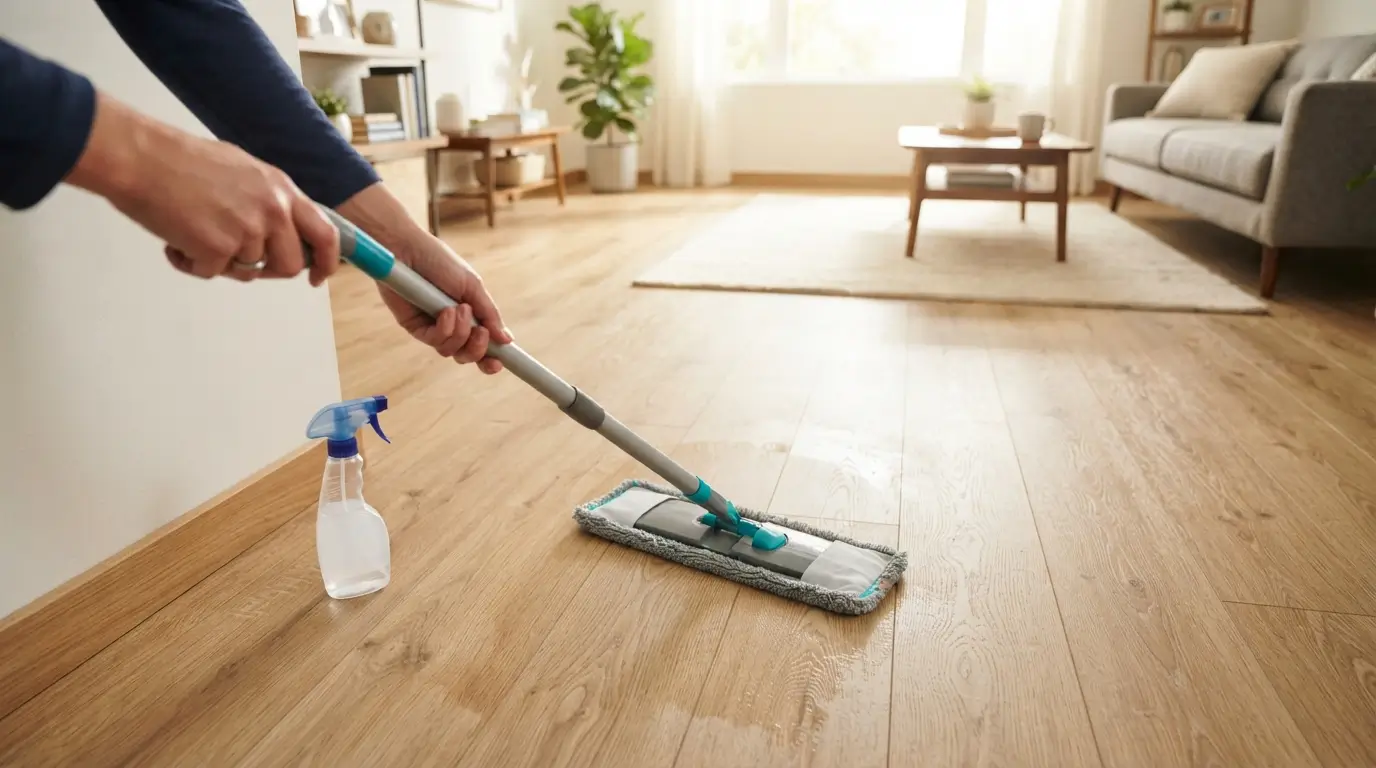
Laminate floors look like wood, but don’t let that fool you into cleaning them like wood. That mismatch is where most of the damage starts. Water is the real problem. Left sitting too long, it works its way into the planks and makes them swell, bubble, or pull apart at the seams, and none of that comes back once it happens. This guide walks you through how to clean laminate floors properly, with the goal of protecting the finish rather than just making the floor look shiny for a day.
Here’s the short version, if you’re in a hurry. Sweep or vacuum first. Mop with a barely damp microfiber pad, never a wet one. Use a pH neutral cleaner instead of vinegar, bleach, or a heavy dose of dish soap. Dry the floor as soon as you finish. NALFA, the industry’s certification body, puts it bluntly: never use a cleaner that depends on excessive liquid or steam. Keep reading and you’ll see exactly why that rule holds up, and how to follow it without turning floor cleaning into a chore you dread.
Confirm You Actually Have Laminate Flooring
Before you grab any cleaner, make sure you’re actually looking at laminate. Laminate and engineered hardwood can look nearly identical from across a room, and mixing them up is more common than you’d think.
Here’s the difference. Laminate is a printed image layer sealed under a clear plastic wear layer. Engineered hardwood has an actual thin slice of real wood on top. A quick way to check: scratch a hidden corner gently with a fingernail. Real wood grain feels slightly textured and warm. A perfectly smooth, glossy surface with a pattern that repeats every few planks is almost always laminate.
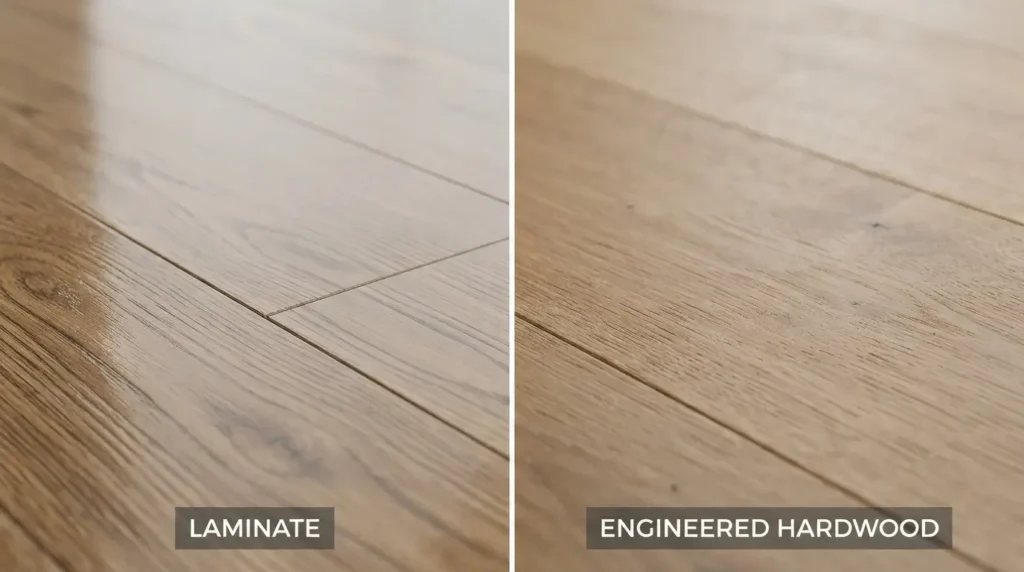
It’s worth getting right. Oil soap and other wood-specific cleaners can leave a haze on laminate that won’t wipe off, no matter how hard you scrub afterward.
What You Need Before You Start
Good news: the supply list is shorter than you’d think.
- A soft bristle broom, or an angled broom for corners
- A vacuum with a hard floor setting and a soft brush attachment
- A microfiber flat mop or dust mop
- A laminate-safe floor cleaner, or a mild dish soap solution
- Two microfiber cloths, one damp and one dry
- A spray bottle, for misting instead of soaking
Skip string mops and sponge mops. They hold far more water than they release evenly, and that extra liquid tends to end up exactly where you don’t want it, pooled in the seams between planks. Doesn’t matter if you call it laminate flooring, laminate wood floors, or laminate hardwood floors. It’s the same material under different names, and searching how to clean laminate flooring turns up the same short list either way.
Daily and Weekly Cleaning Steps
Here’s the part nobody wants to hear: the boring, routine stuff is what actually protects your floor, not the occasional deep clean.
Sweeping and Vacuuming
Sweep or vacuum in the same direction as the planks. That clears dust out of the grooves between boards, where it tends to settle and act like fine sandpaper underfoot. If you’re vacuuming, use the hard floor setting so the beater brush isn’t spinning against the surface.
How often you need to do this depends on your household. Daily sweeping works well for high-traffic spots like kitchens and entryways. Vacuum the whole floor two or three times a week, more often if you have pets or live somewhere sandy. And spills get wiped up the moment they happen, no exceptions. A wet paper towel handles almost everything, and speed matters more than technique here.
Using a Robot Vacuum on Laminate
If you use a robot vacuum, keep the mop function’s water output on its lowest setting, or skip mopping with it altogether on laminate.
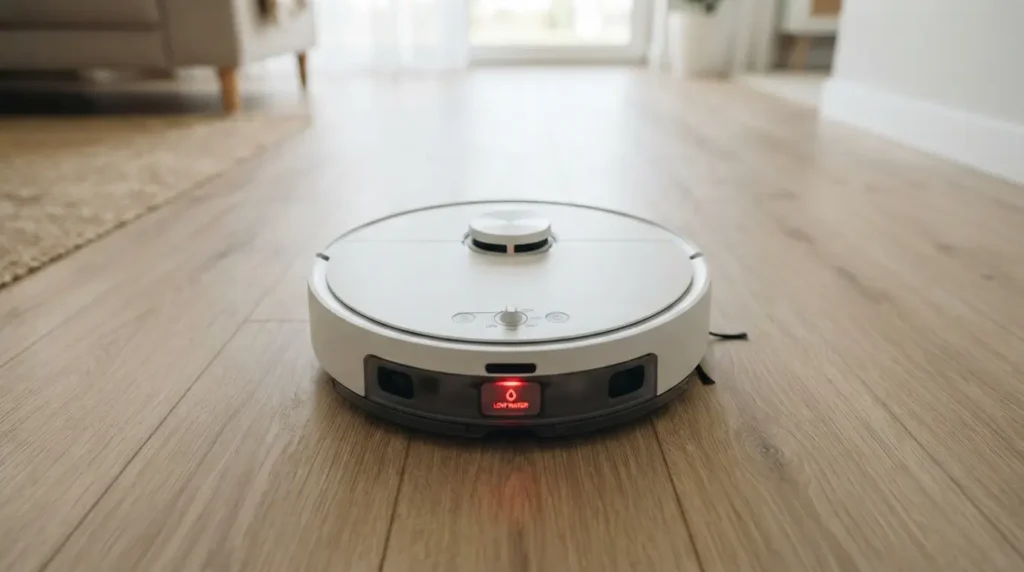
Using too much water with a robot mop can eventually cause moisture to work into the seams and lead to swelling. Dry robot vacuuming on its own is completely fine, so don’t feel like you need to give it up.
Here’s the whole routine at a glance, since it’s easy to lose track of what happens how often:
| Task | How often |
| Sweep or dry vacuum | Daily in high-traffic rooms, 2 to 3 times a week elsewhere |
| Wipe up spills | Immediately, every time |
| Damp mop | Once every 1 to 2 weeks |
| Deep clean for heavy dirt | As needed, not on a fixed schedule |
| Robot mop with water | Lowest setting only, or dry mode only |
How to Mop Laminate Floors the Right Way
This is where people usually run into trouble. Laminate floors don’t need much water to get clean. In fact, using too much is one of the easiest ways to damage them.
The process itself is simple:
- Sweep or vacuum first so you’re not grinding grit into the surface as you mop.
- Fill a spray bottle with laminate-safe cleaner, or lightly dampen a microfiber mop.
- Mist a light layer just ahead of the mop rather than pouring liquid onto the floor directly.
- Work with the grain of the planks, and don’t let liquid sit or pool anywhere.
- Follow immediately with a dry cloth to catch anything left behind.
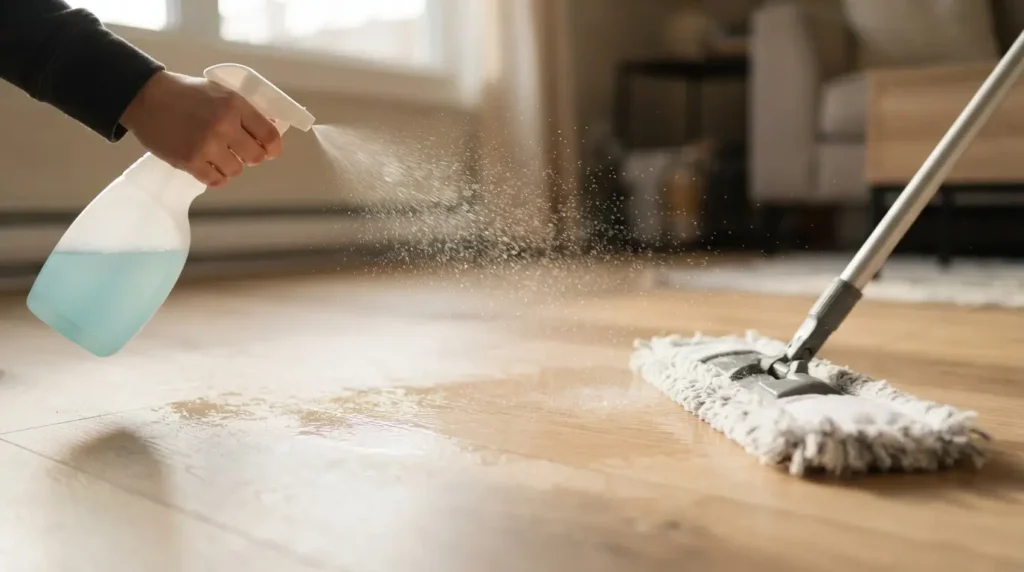
A properly wrung mop should feel barely damp against your skin, not wet. Here’s a useful test: the floor should look dry to the touch within 30 to 60 seconds of mopping a section. If it is still visibly wet after a minute, you used too much water. Most homes only need this level of mopping once every one to two weeks. Daily dry sweeping does the rest, and honestly, that combination is the best way to clean laminate wood floors without wearing down the finish over time.
Best Cleaner for Laminate Flooring
Picking the right product matters just as much as your technique. It’s also what keeps floors from streaking, which is half the battle when you’re trying to make a room look put together.
Look for something labeled pH neutral, ideally in the 6.5 to 7.5 range. Cleaners well above 8 or below 6 tend to dull or etch the wear layer with repeated use, even when the damage isn’t obvious right away.
| Use this | Avoid this | Why |
| A cleaner made specifically for laminate flooring | Bleach or ammonia-based cleaners | Strips the protective wear layer over time |
| A mild dish soap solution, one teaspoon per gallon of water, used sparingly | Oil soaps, wax polishes, or hardwood-specific products | Leaves a greasy film that dulls the finish and attracts dirt |
| A microfiber mop pad | String mops, sponge mops, or steel wool | Holds too much water or scratches the surface |
| A soft, barely damp cloth for spot cleaning | Abrasive scrub pads or scouring powders | Leaves permanent micro-scratches in the wear layer |
Is Vinegar Safe for Laminate?
This is where the industry genuinely disagrees, and I’d rather tell you that than pretend there’s one right answer. Some manufacturers list a very diluted vinegar solution as an acceptable occasional cleaner. Others, NALFA included, warn that regular use gradually dulls the finish. Neither side has definitively won this argument. The safe move is to treat vinegar as an occasional exception rather than your go-to, and check your specific floor’s warranty language before relying on it.
What About Dish Soap?
Dish soap gets a similar mixed verdict. Most manufacturer guides accept a small, well-diluted amount for routine or spot cleaning, though a few brands would rather you stick to their own product line. When in doubt, whatever came with your flooring’s care instructions wins.
How to Clean Very Dirty Laminate Floors
Move-in cleanups, months of neglect, muddy paw prints tracked in from the yard: sometimes routine mopping just isn’t enough, and this is what to use to clean laminate floors when it isn’t.
- Vacuum thoroughly, including corners and baseboards where debris collects.
- Mix a laminate cleaner at the dilution the label recommends for heavier dirt.
- Mop in small sections, roughly three feet by three feet at a time.
- For anything caked on, let the cleaner sit for thirty seconds to loosen it before wiping. Don’t scrub.
- Dry each section completely before moving to the next.
- Scuff marks respond well to a pencil eraser, or a little baking soda paste on a damp cloth. Test the baking soda on a hidden spot first, since it’s a mild abrasive and can dull glossy finishes if overused.
The instinct to flood a dirty floor with extra water works against you. Smaller sections, more patience, and less liquid get better results than brute force ever will.
Can You Steam Clean Laminate Floors?
This question comes up constantly, and it deserves a straight answer instead of a maybe. It depends entirely on which laminate you own.
Standard laminate has a wood-fiber core, and that core absorbs heat and moisture easily. NALFA advises against any cleaning method built around steam, and several major manufacturers, including Pergo and Mohawk, exclude steam mop damage from their warranty coverage outright. Heat and moisture work their way into the seams and swell the core from the inside, sometimes without any visible sign on the surface right after cleaning.
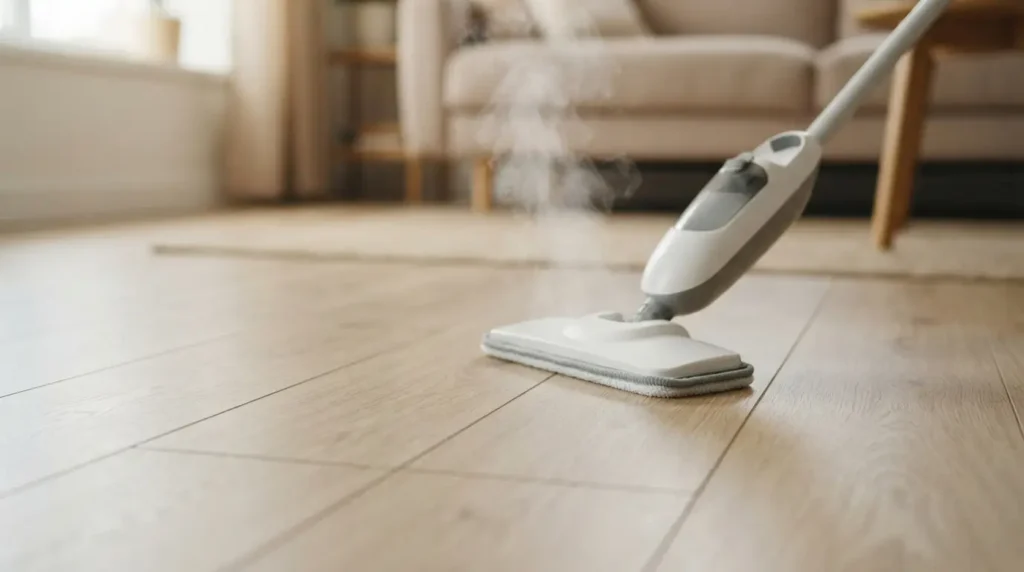
There’s one exception worth knowing about. Laminate specifically rated as waterproof or steam-mop safe has a core built to resist moisture in the first place, and Floor & Decor’s official care guide confirms this type can handle a steam mop on its lowest setting. If nothing in your flooring’s documentation mentions water resistance, play it safe and assume it’s standard laminate.
Waterproof and water-resistant laminate are just two of several types of laminate flooring on the market, and knowing which one you have makes a real difference in how you clean it.
For a deeper clean without the steam, go over stubborn spots twice with a laminate-safe cleaner instead. The very dirty floor method above works just as well, minus the risk.
Protecting the Seams: Why Water Damage Starts at the Joints
Here’s something most people never think about: almost none of the damage on a laminate floor happens on the flat, open part of a plank. It happens at the seams, where two boards click together.
A lot of laminate and engineered flooring uses a locking system called Uniclic, developed by Unilin, which lets planks snap into place without glue or nails.
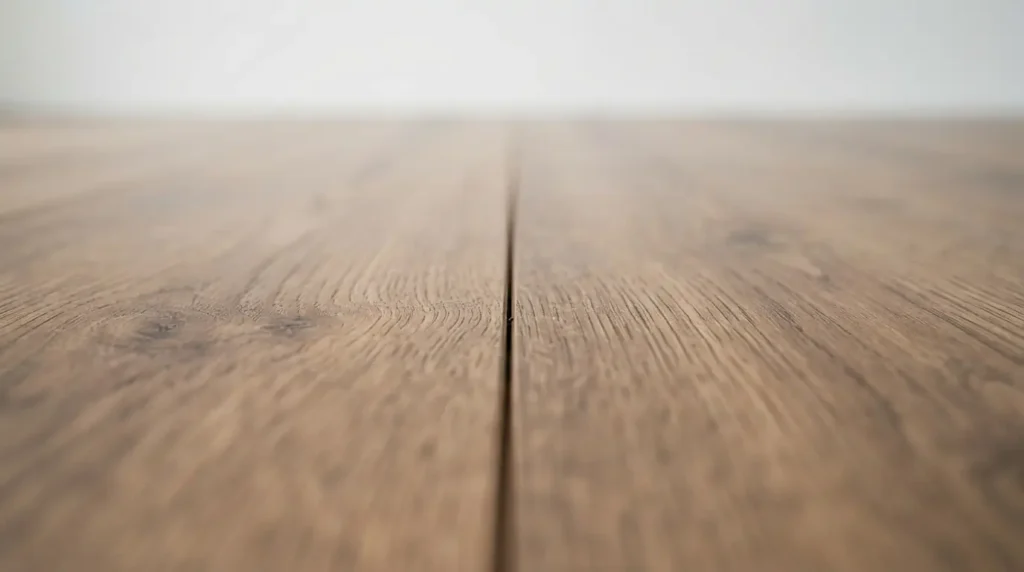
It’s a genuinely tight, gap-free connection when installed correctly. But that joint is still the weak point for moisture. Once water works past the surface layer and into a seam, the fiberboard core underneath swells, and that swelling doesn’t reverse itself, no matter what you try afterward.
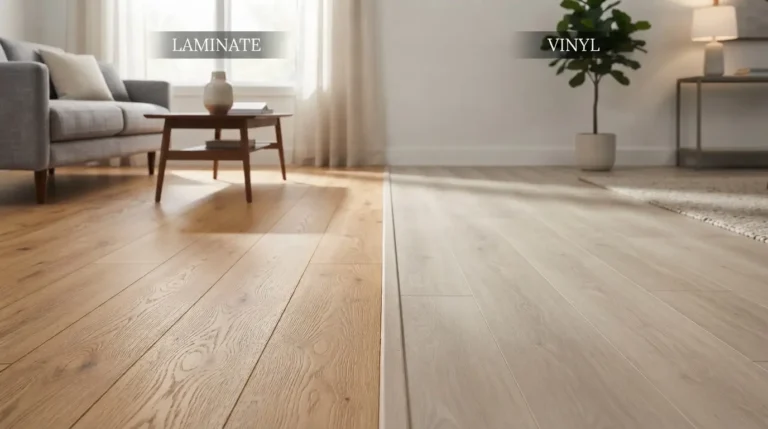
So every rule in this guide loops back to the same underlying point. Control the water, and the floor takes care of the rest. The basic rule is pretty simple, use less water and dry the floor quickly. That gives the seams much less chance to absorb moisture. If you’re weighing laminate against another material for a different room, especially one prone to moisture, our laminate vs vinyl flooring comparison breaks down which handles water better.
Kitchens specifically come up a lot in this debate, since spills and moisture are part of daily life there. If you’re renovating that room, best flooring for kitchen walks through how laminate stacks up against the other options.
A Few Habits That Protect Your Floor Long Term
Cleaning technique only covers part of the picture. A handful of everyday habits do just as much to keep laminate looking new for years, and none of them take extra effort once they’re routine.
Put mats down at every entry point, and skip anything with a rubber or latex backing. Rubber traps moisture against the floor and can leave a permanent discoloration where it sits, so look for felt or woven backing instead. Felt pads under furniture legs matter more than most people realize too. Chairs and tables scrape the wear layer every time they move, and a worn or missing pad turns that into a scratch.
If you have pets, trimmed nails go a long way toward preventing the fine surface scratches that build up over months of normal foot traffic. And indoor humidity matters more than most homeowners expect. The National Wood Flooring Association recommends keeping relative humidity between 35 and 55 percent for wood based flooring, laminate included, since air that’s too dry or too damp puts stress on the fiberboard core even without any water touching the surface directly.
None of these habits are dramatic on their own, but together they cut down on how often you need to deep clean in the first place.
Common Mistakes That Damage Laminate Floors
- Mopping with a soaking wet mop or letting water pool on the surface
- Cleaning with vinegar, bleach, or ammonia as a routine habit
- Skipping the dry pass after mopping
- Vacuuming with the beater brush engaged
- Running a robot mop at high water settings
- Putting rugs or furniture back before the floor is fully dry
- Letting spills sit until they dry into stains
None of these mistakes are dramatic on their own. It’s the repetition that adds up to real damage.
Final Thoughts
None of this requires special skills or expensive equipment. Cleaning laminate floors properly really comes down to one habit, repeated consistently: less water, used more often, and dried quickly every time. Sweep daily, mop lightly every week or two, and treat spills like they’re already causing damage, because they are the moment they reach the seams. Skip the steam mop, skip the harsh chemicals, and a laminate floor installed today can reasonably outlast the furniture sitting on it.
Frequently Asked Questions
What is the best way to clean laminate floors?
Sweep or vacuum first to clear grit, then mop with a barely damp microfiber pad and a laminate-safe cleaner, drying the floor right after. This is also the answer to how to clean laminate wood floors and how to clean laminate hardwood floors, since both terms just describe laminate by another name.
How do you wash laminate flooring without damaging it?
Use a lightly misted microfiber mop rather than a bucket and string mop. Work in small sections, keep water from pooling, and follow up with a dry cloth. Less moisture, more often, beats a heavy soak once a month.
Can you steam clean laminate floors?
Not standard laminate. The heat and moisture can swell the core right at the seams, and NALFA along with most manufacturers advise against it. Laminate rated waterproof or steam-safe is the exception, and even then only on a low setting.
What should you use to clean laminate floors?
A cleaner made for laminate specifically is the safest bet. A weak dish soap solution works fine too for routine and spot cleaning. Skip vinegar as a daily habit, along with bleach, ammonia, and anything oil-based.
How do you clean very dirty laminate floors?
Vacuum thoroughly, then mop in small sections with a laminate cleaner, drying as you go instead of waiting until the end. Let stubborn grime sit for a moment before wiping rather than scrubbing it out by force.

About HomeFixStyle
HomeFixStyle is a home improvement blog dedicated to helping readers create better, more comfortable, and stylish homes. We share practical ideas, helpful guides, home decor inspiration, renovation tips, and simple solutions for everyday home projects. Our goal is to make home improvement easier to understand and apply, whether you are updating one room or improving your entire home.