
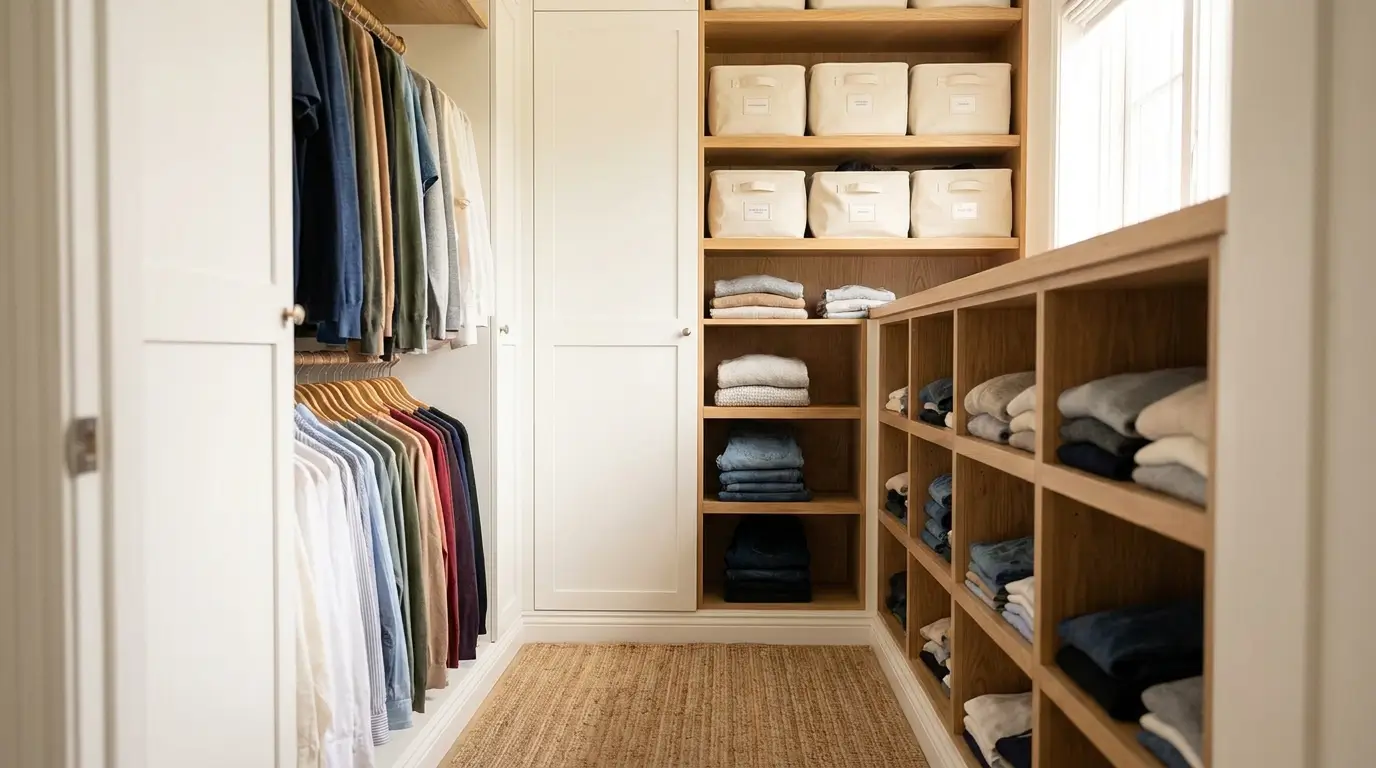
A messy walk-in closet wastes space you already paid for. Walk-in closet organization fixes that problem without a full remodel. This guide covers sorting by category, assigning storage by frequency of use, budget priorities, common mistakes, and daily maintenance. You will learn how to declutter first and organize what you keep. You will also learn how to maintain the system long term. Whether you rent or own, these tips apply to closets of every size and budget.
How to Organize a Walk-In Closet
Good walk-in closet organization starts before you buy a single bin. Skipping this step is why so many closets look great for a month, then slide back into chaos.
Sort What You Keep Before You Store It
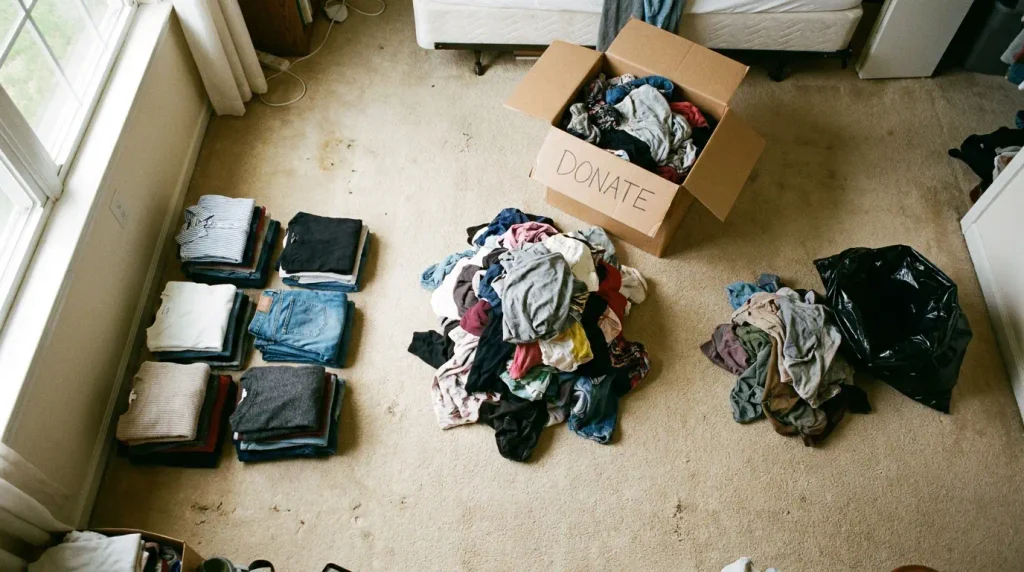
Decluttering is step one of any closet project. Pull everything out and handle each item once. Keep it, donate it, or toss it, then move on. Once your keep pile is set
Separate what remains into rough groups. Everyday items, occasional items, and rarely used items each deserve different placement. This grouping step is what most people skip. It is why storage that looked good on day one stops working by week three.
Match Groups to the Space You Have
Start by knowing your actual walk-in closet dimensions, since every zone below depends on that footprint. Once you know your space, assign each group a zone. Hanging items, folded items, shoes, and accessories each need a different kind of home within that footprint.
Review Walk In Closet Organization Design Principles
Group similar items together before finalizing your plan. Keep everyday clothes within easy reach. Store seasonal items higher up or further back. Plan for accessibility, not just capacity.
Think about who uses the closet. A shared closet needs separate zones for each person. A single user can build the whole system around one wardrobe and one routine.
Organize Around Your Existing Layout
Your layout sets the outer limits of your organization plan. A single-wall closet holds less than an L-shaped or U-shaped one. Your sorting system needs to fit the space you have, not the space you wish you had.
If you have not settled on a layout yet, wall width and ceiling height decide what will actually fit. Once your shelves and rods are in place, the tips below help you use every section well
Walk-In Closet Organization by Storage Type
This is the core of walk-in closet organization. The goal is not choosing new shelving or drawers. It is assigning what you already own to the storage you already have, so nothing sits without a home.
Assign Shelves by Frequency of Use
Give your most-worn items the shelves you reach without effort. Save high shelves for luggage, off-season clothing, and anything you grab a few times a year. This single habit cuts daily digging more than any new product.
Sort Into Drawers by Category, Not Convenience
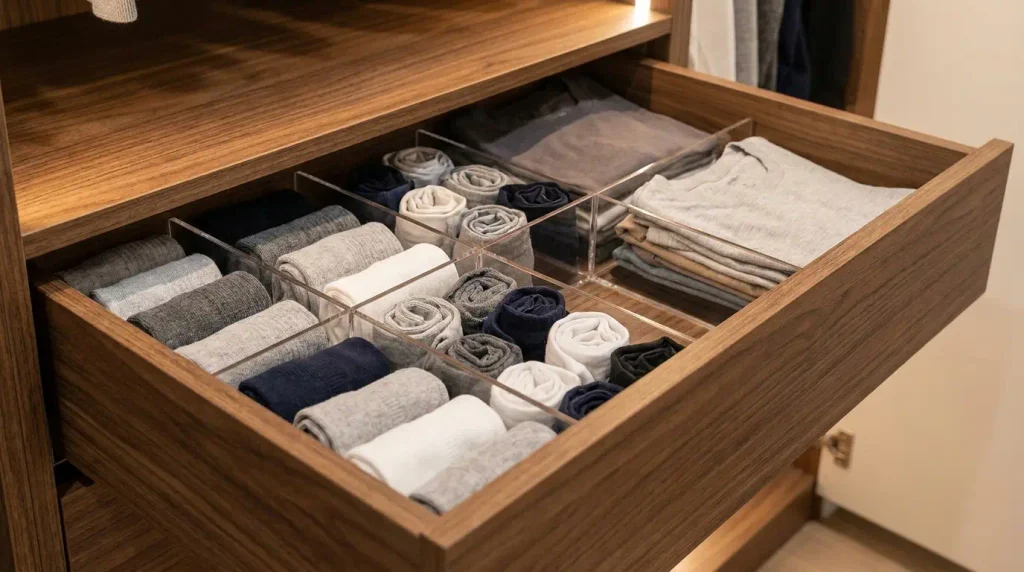
Drawers work best when each one has a single job. One drawer for socks, one for undergarments, one for folded shirts. Add dividers to stop items from sliding into a pile. If you toss random items into whichever drawer is open, the system falls apart within a week.
Give Vertical Space a Real Purpose
Empty upper shelves are not wasted space if you plan what goes there before you fill them. Off-season coats, spare bedding, and rarely used bags belong up high. Keep a small step stool nearby so that space stays in regular rotation instead of becoming a dumping ground.
Use Hooks for Items That Resist Systems
Robes, bags, and tomorrow’s outfit rarely fit neatly into a drawer or on a hanger. A row of hooks near the entrance solves this. It keeps these items handy without forcing them into a system that does not suit them.
Organize by Category
Grouping items by category, not just by type of storage, keeps a walk-in closet functional long term. This is one of the most overlooked steps in walk in closet organization. Specific products and install options for each category come later. Here, the focus is where each category belongs and why.
Shoes
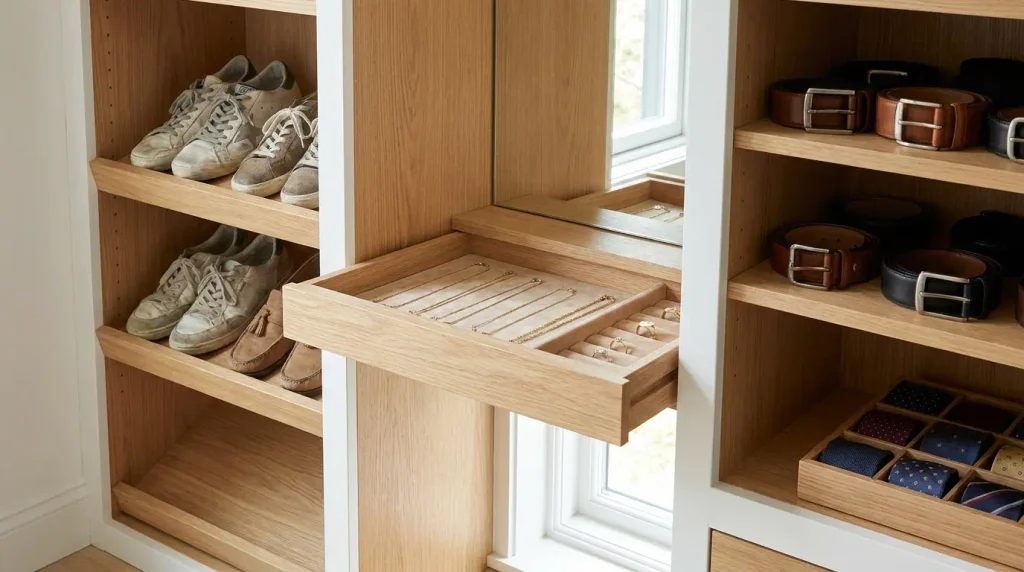
Shoes need a spot that matches how often you wear them. Daily pairs belong at floor level or on a low shelf, within easy reach. Special-occasion pairs can move higher, since you grab them less often.
Jewelry and Small Accessories
Small items get lost fastest, so give them the smallest, most specific homes. A shallow drawer near a mirror works better than a shared bin. You can see and reach each piece without digging.
Belts, Ties, and Bags
These items tangle easily when grouped loosely. Give each type its own dedicated spot rather than sharing a drawer. Bags in particular hold their shape better stored upright than stacked flat.
Smart Fixes for Hard-to-Reach and Awkward Spaces
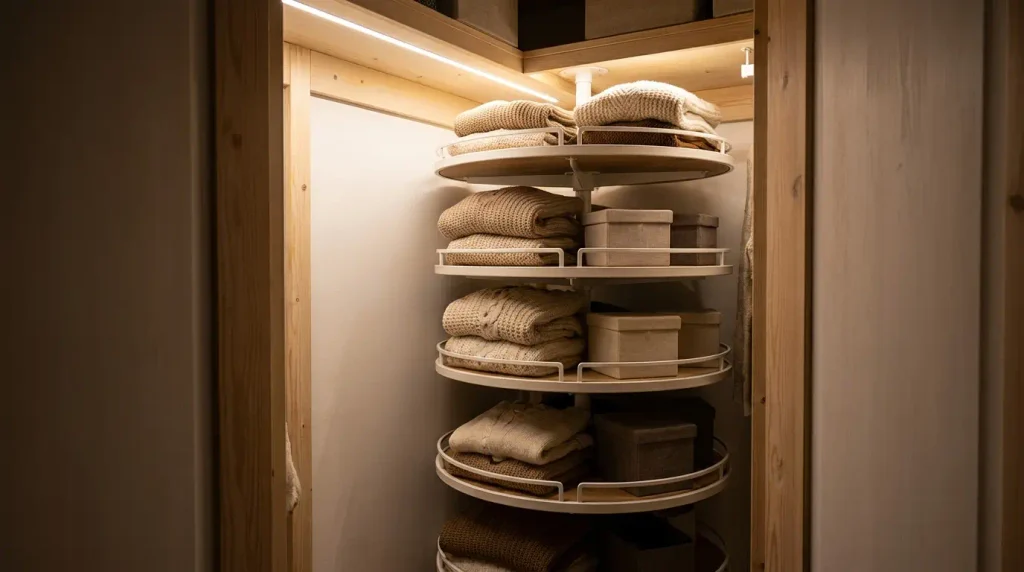
Corners are the hardest part of any walk-in closet organization project. If you already have a rotating carousel or angled shelf installed there, dedicate it to items you use often. A hard-to-reach spot filled with rarely used items just wastes the easiest-to-see storage in the room.
Awkward angles under sloped ceilings work well for off-season shoes or folded items you access less often. Standing storage does not fit there anyway, so let low clearance areas hold low-priority items.
Behind-the-door space is easy to miss but simple to use. A row of hooks there can hold bags and robes without disrupting the rest of your system. Corner units and behind-door organizers come in several install styles, from freestanding to wall-mounted
Where to Spend When Money Is Tight
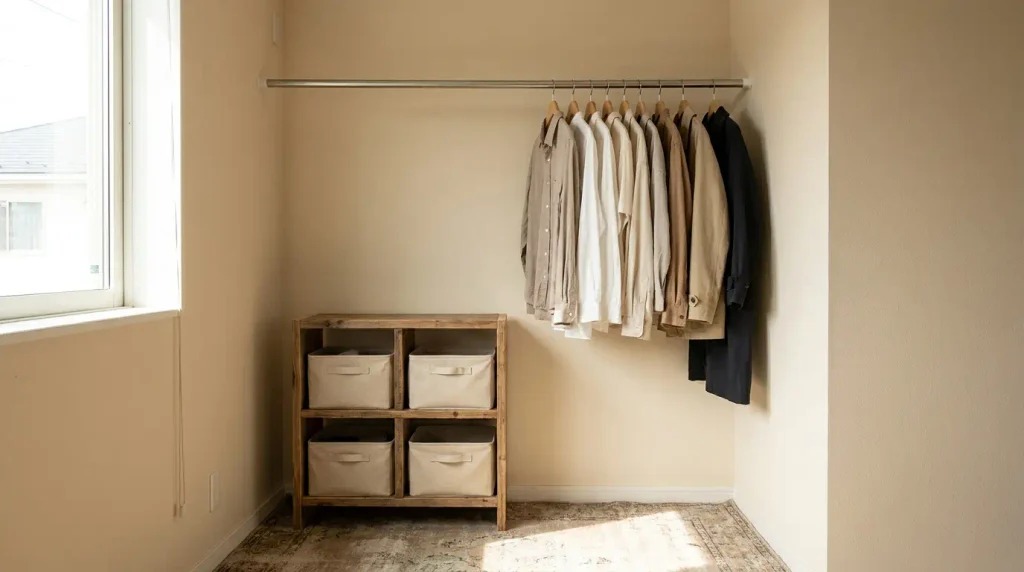
You do not need a custom-built system to get real results from walk in closet organization. If your budget only covers one purchase, spend it on drawer dividers and matching bins first. These two items do more to keep a system working than any shelf or rod upgrade.
Tension rods and modular kits work well for rentals. They matter even more in a small walk-in closet, where every dollar needs to earn its space. This section focuses on a simpler rule: sort first, buy second.
Common Walk-In Closet Organization Mistakes
Buying storage before decluttering is the most common mistake. This leads to bins and shelves built around clutter instead of an actual wardrobe.
Sorting by convenience instead of category causes daily frustration. Tossing items into whichever drawer is open defeats the purpose of having a system at all.
Mismatched bins and baskets also create visual clutter. Even a well-organized closet can look messy this way, since the eye reads inconsistency as mess.
Overfilling every shelf is a mistake too. Leave a small amount of breathing room on each shelf so items stay easy to see and remove.
Finally, skipping a maintenance routine undoes months of organizing work within a few weeks. A system only works if it gets used correctly every day.
How to Keep a Walk-In Closet Organized
Long-term walk-in closet organization needs light upkeep, not a full overhaul, to stay that way. Return items to their assigned spot right after wearing them. This single habit prevents most of the pileup that leads to clutter.
Do a seasonal check every few months, since this is where most walk-in closet organization systems slowly break down. Rotate out-of-season clothing to higher shelves and bring current-season items to easy-reach spots. Remove anything you did not wear that season and add it to a donate pile.
Reassess your system once a year. Wardrobes change, and a system that worked two years ago may not fit your current needs. Small adjustments keep the whole closet working without a full redo.
Getting these small choices right is what separates a working system from simply owning more bins.

Final Thoughts
Walk-in closet organization is not about buying more bins. It is about matching storage to what you actually own and use. Start with decluttering, then plan a layout that fits your space. Choose storage types that match your budget and wardrobe. Keep up with light maintenance. Your closet will stay functional for years, not just for the first few weeks.
Frequently Asked Questions
What is the first step to creating a functional walk-in closet?
Declutter everything first. Remove all items and sort them into keep, donate, and toss piles. Measure the empty space before buying any storage.
How much hanging space should a walk-in closet have?
Most closets need between 8 and 12 feet of hanging space for one person, depending on wardrobe size. Measure your current hanging clothes to get an exact number for your needs.
Are drawers necessary in a walk-in closet?
Drawers are not strictly necessary, but they help keep small items organized. Socks, jewelry, and folded clothing stay neater in drawers than on open shelves.
How can I make better use of vertical space?
Install floor-to-ceiling shelving and use the top shelves for items you access less often. Double hanging rods also help maximize vertical space for shorter garments.
What materials are best for a long-lasting closet system?
Solid wood and heavy-duty laminate both hold up well over time. Wire shelving costs less but does not last as long or hold as much weight as wood.
How often should a walk-in closet be reorganized?
A full reorganization once a year is usually enough. Light seasonal check-ins every few months help keep the system working between full resets.
What are some good closet organizing systems for walk-in closets?
Modular shelving systems, freestanding drawer units, and wall-mounted wood or laminate systems are common options. The right choice depends on your budget and whether you rent or own your home.
How much does a walk-in closet organizer cost?
Costs vary widely based on size and materials. Freestanding units cost far less than custom-installed wood systems. Get quotes from local providers for an accurate number specific to your closet.
How is closet organization different from closet design?
Design covers layout, materials, and style choices, like shelving type or finish. Organization covers what happens after installation, including sorting, zoning, and daily upkeep. A well-designed closet still needs an organization system to work.
How much space should I leave open in a small walk-in closet?
Aim for 36 inches of clear width, the same standard used across closet sizes. If your room cannot fit that, 24 inches is the practical floor, though movement will feel tight.

About HomeFixStyle
HomeFixStyle is a home improvement blog dedicated to helping readers create better, more comfortable, and stylish homes. We share practical ideas, helpful guides, home decor inspiration, renovation tips, and simple solutions for everyday home projects. Our goal is to make home improvement easier to understand and apply, whether you are updating one room or improving your entire home.