
Waterproof laminate flooring solves the one problem that has kept regular laminate out of kitchens and bathrooms for decades. This guide explains what it is, how it works, and where it belongs in your home. You will learn the real difference between waterproof and water-resistant laminate. You will see what the core and locking system actually do, and which rooms are a safe bet. You will also see honest cost numbers, a buying checklist, and answers to the questions homeowners ask most. By the end, you will know if this flooring fits your renovation. You will also know how to choose a product that holds up.
What Is Waterproof Laminate Flooring?
Waterproof laminate flooring is one of several types of laminate flooring, built to resist water instead of absorbing it. Standard laminate uses a wood based core that swells when it gets wet. Waterproof laminate replaces or treats that core so water cannot soak in and cause damage. The planks still look and feel like real hardwood. The difference sits underneath, in the core material and the way each plank locks to the next one.
This matters because laminate has always been popular for its price and easy installation. Homeowners loved the look but avoided it in wet rooms for good reason. It removes that limitation, at least for the rooms it was built for.
Waterproof vs Water-Resistant Laminate Flooring: What’s the Difference?
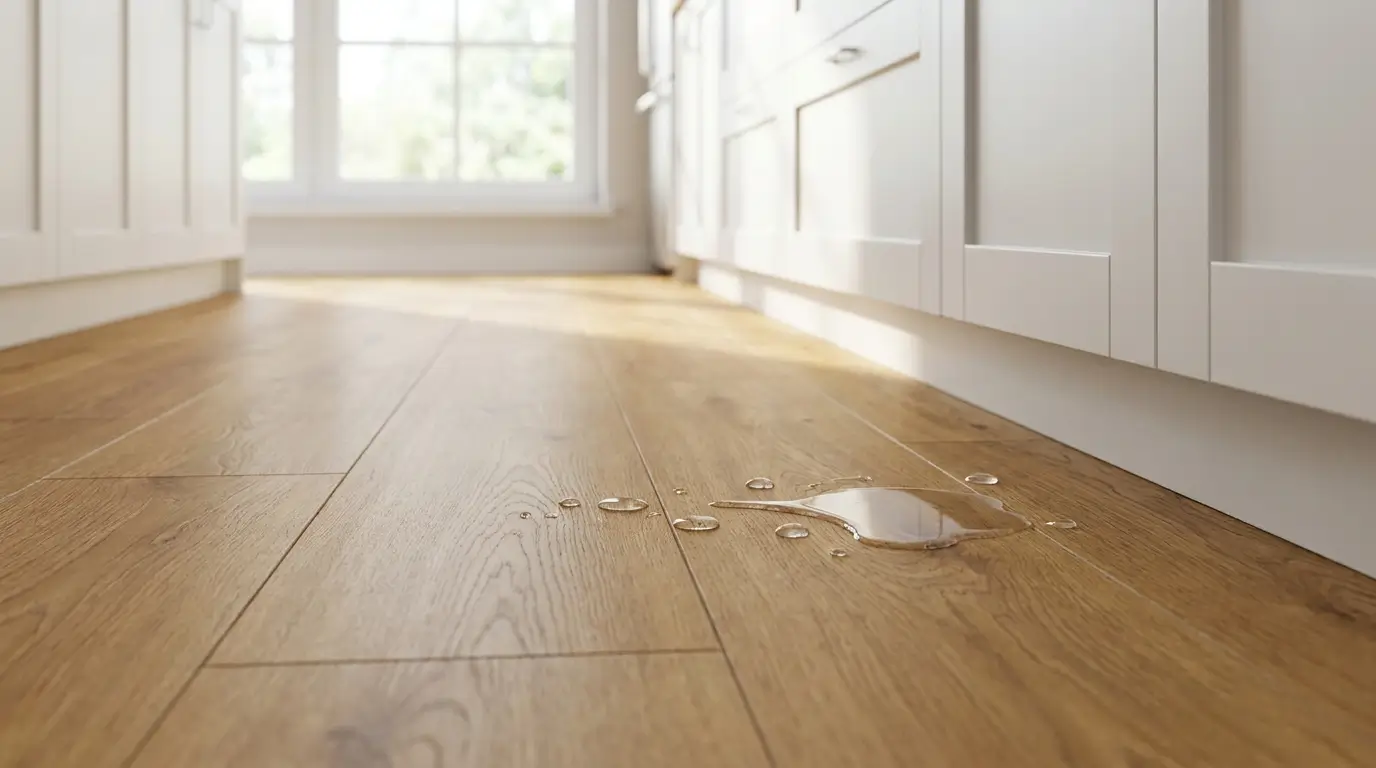
Waterproof and water-resistant laminate flooring are not the same product. Water-resistant laminate slows down moisture absorption. It can handle a quick spill if you wipe it up fast. Left standing, water will still find its way into the seams and cause swelling over time.
Waterproof laminate flooring is built to block water completely at the surface and the seams. It can sit under standing water for a set period without swelling or warping. That period often runs 24 to 72 hours, depending on the brand. That number always comes from the manufacturer’s own testing, so check the spec sheet before you buy.
Here is the difference in plain terms.
| Feature | Water-Resistant Laminate | Waterproof Laminate |
| Core material | Standard HDF with some treatment | Sealed or composite HDF core |
| Spill tolerance | Wipe up quickly | Can handle standing water short term |
| Best rooms | Living rooms, dining rooms | Kitchens, bathrooms, basements |
| Price | Lower | Higher |
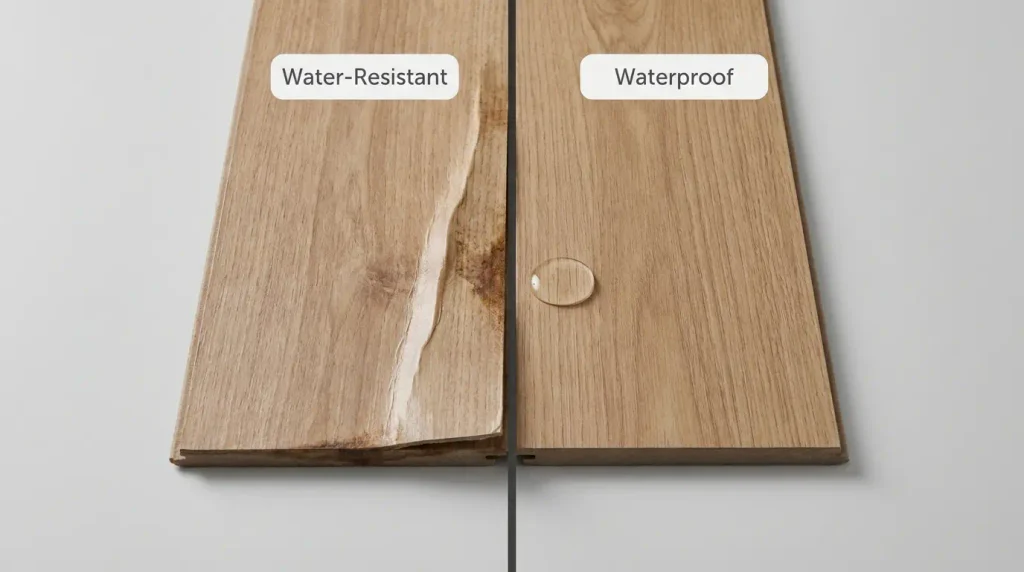
If you are flooring a mudroom, kitchen, or bathroom, waterproof laminate flooring is the safer choice. Water-resistant laminate still works well in low moisture living spaces where budget matters more than moisture protection.
What Makes Laminate Flooring Waterproof?
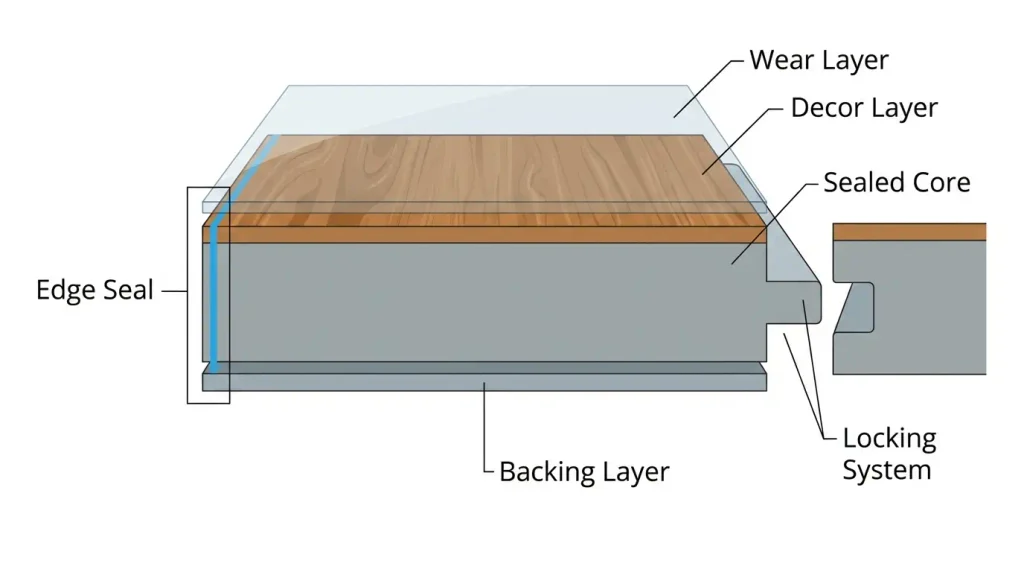
Three parts work together to keep water out. Understanding them helps you compare products without relying on marketing claims alone.
The Core Layer
The core sits under the decorative wood look layer. In standard laminate, this core is high density fiberboard, or HDF, made from compressed wood fibers. HDF absorbs water fast, which is why old laminate swells at the first sign of moisture.
Manufacturers change this core to make it watertight. They either seal the HDF with resin to block water absorption. Or they replace it with a composite core, similar to what rigid vinyl flooring uses. A sealed or composite core is the single biggest reason waterproof laminate can survive a spill. That same spill would ruin a standard laminate floor.
Edge Sealing
Water rarely soaks straight through the top of a plank. It sneaks in through the seams between planks. That is why edge sealing matters as much as the core itself.
Manufacturers apply a wax or resin coating to the edges of each plank during production. This coating blocks water from creeping into the joint where two planks meet. A floor with a strong core but weak edge sealing can still fail in a wet room. This detail is worth checking before you buy.
The Locking System
Most waterproof laminate uses a click lock installation system. Planks snap together along tongue and groove edges without glue or nails. Better locking systems create a tighter, more water resistant seam with more contact points between planks.
A loose or poorly designed locking system leaves gaps. Even a waterproof core cannot fully protect a floor if water can slip between planks through a weak seam.
Best Rooms for This Flooring Type
Not every room needs waterproof protection, but some rooms genuinely require it. Here is an honest breakdown, room by room.
Kitchens
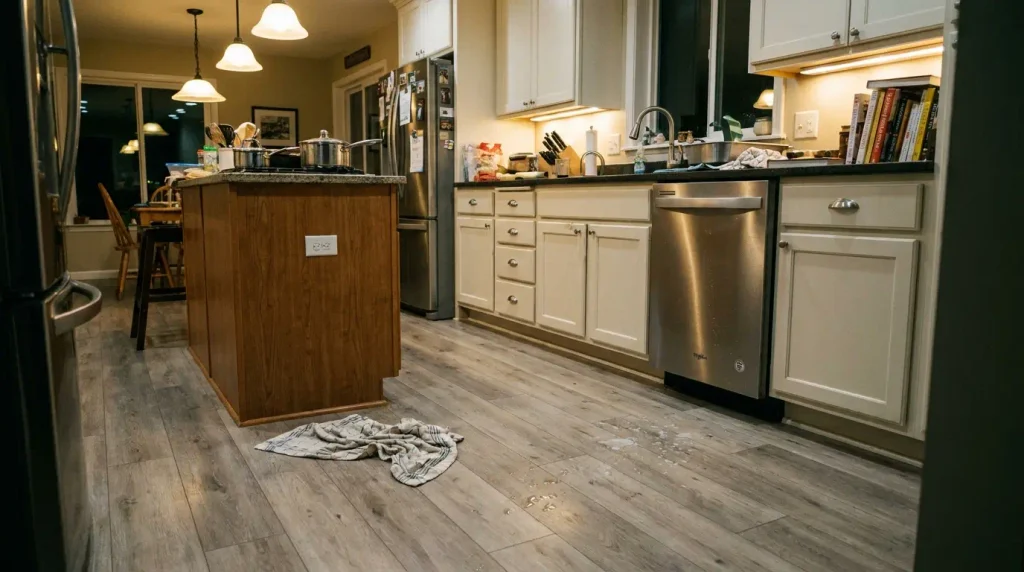
Kitchens see constant spills, from dishwater to dropped ice cubes. When homeowners search for the best flooring for kitchen spaces, waterproof laminate flooring often comes up. It handles this well. It resists staining and stands up to foot traffic. It also gives you the wood look many homeowners want, without the upkeep real hardwood needs.
Bathrooms
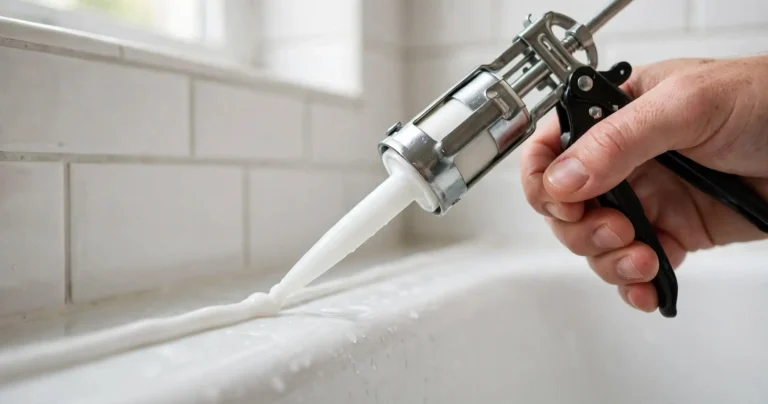
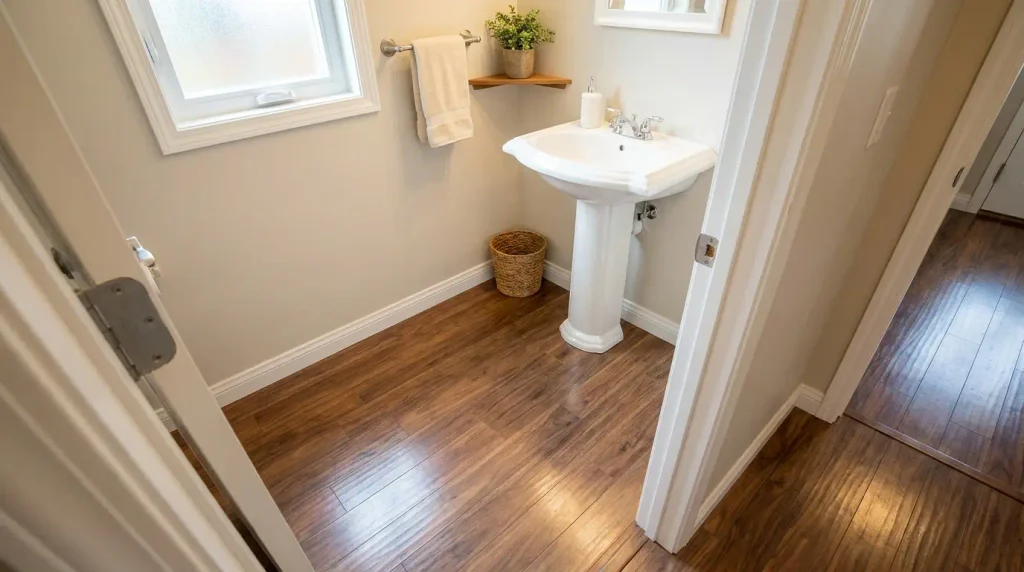
This is where things get more nuanced. Waterproof laminate flooring works fine in a powder room or half bath with light water exposure. In a full bathroom with a shower or tub, standing water and constant humidity are a tougher test. Many flooring professionals still recommend rigid core LVP for full bathrooms. It is fully synthetic and never relies on a wood based core at all. If you install it in a full bathroom, seal every seam and transition with silicone. Never let water pool on the surface.
Basements
Basements bring a different challenge: moisture from the concrete slab below, not just spills from above. This flooring can handle that challenge when it has a solid backing layer. The backing helps block moisture rising up through the subfloor. Always check that the specific product is rated for below grade installation before buying.
Mudrooms and Laundry Rooms
These rooms deal with wet shoes, dripping umbrellas, and the occasional washing machine leak. Waterproof laminate flooring is a strong match here, offering durability against daily foot traffic along with real water protection.
Waterproof Laminate Flooring vs Other Flooring Types
Choosing a floor means comparing more than just water resistance. Here is how waterproof laminate stacks up against the alternatives homeowners consider most.
Waterproof Laminate vs Water-Resistant Laminate
As covered earlier, the core construction and seam protection separate these two categories. Water-resistant laminate costs less but cannot handle standing water. Waterproof laminate flooring costs more but gives real protection in wet rooms.
Waterproof Laminate vs LVP
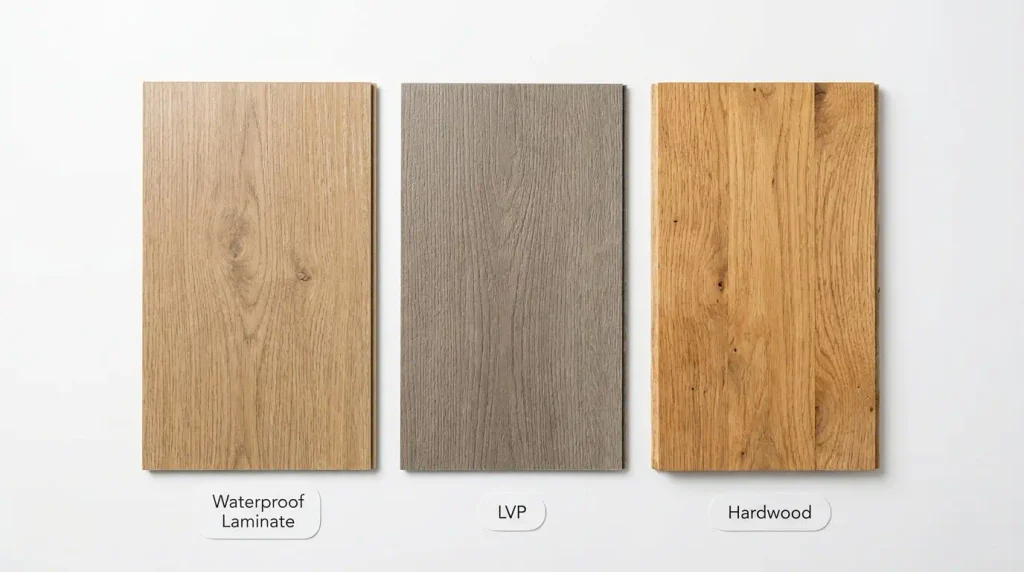
This is the closest matchup in the laminate vs vinyl flooring debate. Luxury vinyl plank, or LVP, is made entirely from synthetic materials. This makes it genuinely waterproof through and through, with no wood based core at all. This flooring usually gives a more realistic wood texture and look. It uses an actual wood grain print layer, while LVP can sometimes look more uniform. For rooms with heavy, constant water exposure, like a full bathroom, LVP often has the edge. For rooms with occasional spills and a desire for an authentic wood look, waterproof laminate flooring is a strong contender.
Waterproof Laminate vs Hardwood
Real hardwood cannot be made waterproof. Wood is a natural material that swells and warps when exposed to moisture, no matter how it is finished. Waterproof laminate flooring gives you a similar look at a lower price, with far better performance around water. It cannot be refinished the way solid hardwood can over the decades.
Pros and Cons of This Flooring Type
Every flooring choice involves trade-offs. Here is a balanced look at both sides.
Pros
- Resists spills, splashes, and short term standing water
- Costs less than hardwood or high end LVP
- Installs quickly with a click lock system
- Comes in a wide range of wood look styles and colors
- Handles pets and kids better than traditional hardwood
Cons
- Cannot be refinished like solid hardwood
- Full bathrooms with constant moisture still favor LVP in many cases
- Lower end products may have weaker edge sealing than premium lines
- Some floating floors can feel less solid underfoot than glued down options
How Much Does This Flooring Cost?
Cost depends on the brand, thickness, and where you buy it, but here is a realistic range to plan around.
Material Cost
Waterproof laminate flooring typically runs from about two dollars to five dollars per square foot for the planks alone. Higher AC ratings, thicker cores, and premium wood grain textures push the price toward the higher end of that range. Always compare price per square foot across brands rather than per box, since box coverage varies.
Installation Cost
Professional installation usually adds another two dollars to four dollars per square foot on top of material cost. DIY installation can bring your total cost down significantly. The click lock system is built for homeowners to install without special tools. Underlayment, trim, and transition strips are separate costs worth budgeting for as well.
How to Choose the Right Product
Skip the brand names for a moment and focus on these three specs. They matter more than any marketing claim.
AC Wear Rating
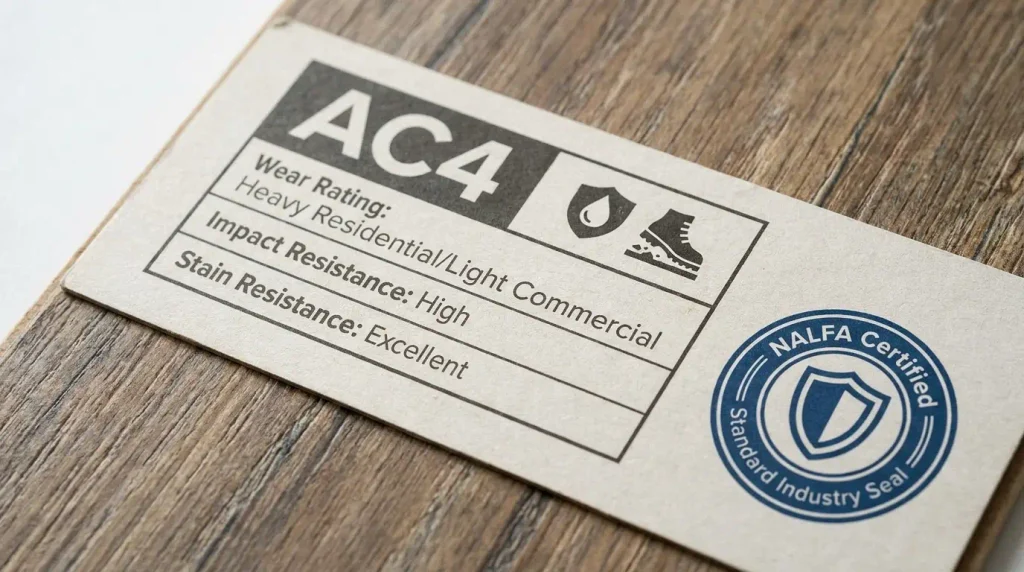
The AC rating measures how well a floor resists surface wear from daily foot traffic. Ratings run from AC1 to AC5. AC3 is a common baseline for residential rooms with normal traffic. AC4 or higher makes sense for busy kitchens or homes with large pets. The North American Laminate Flooring Association, known as NALFA, also certifies laminate flooring separately from the AC scale. Look for that certification as an added trust signal.
Core Type
Ask specifically whether the core is a sealed HDF core or a composite core similar to rigid vinyl. Composite cores tend to offer the strongest water protection. A sealed HDF core can still perform very well, but the quality of the sealing process varies between manufacturers.
Warranty Terms
Read the warranty carefully, not just the headline number of years. Check whether it actually covers water damage specifically, not just general wear and staining. A floor advertised as waterproof should have a warranty that backs up that exact claim in writing.
Installing This Flooring
Installation is one of the biggest selling points of this flooring type. A few steps still matter for long term performance.
Acclimation Before Installation
Most manufacturers recommend leaving unopened boxes in the installation room for 48 hours before laying the floor. This lets the planks adjust to the room’s temperature and humidity. Waterproof laminate flooring is more stable than standard laminate, but skipping acclimation can still lead to gaps or buckling later.
DIY vs Professional Installation
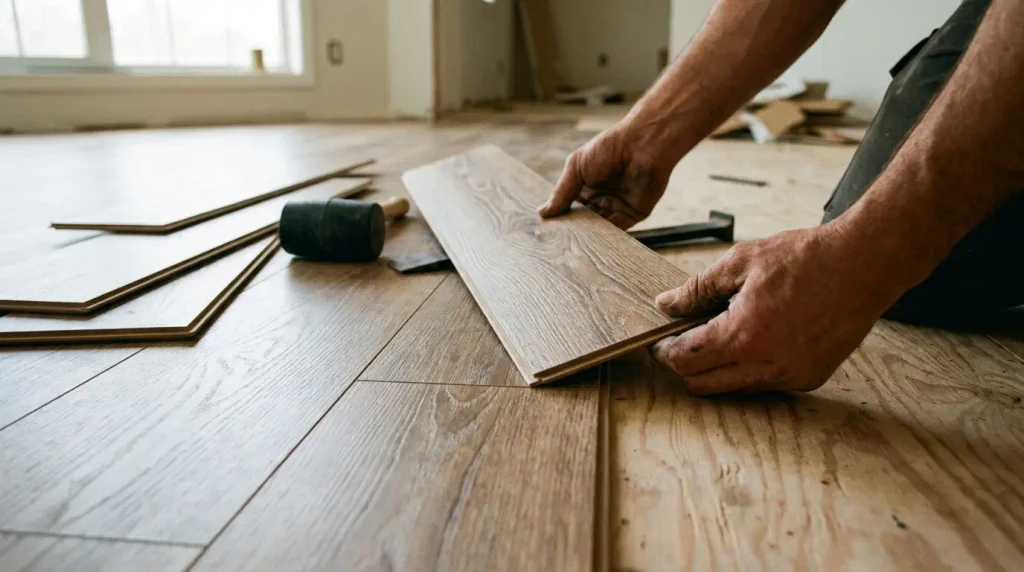
The click lock system makes this a realistic DIY project for many homeowners. You will need a few basic tools, a clean flat subfloor, and patience around doorways and corners. Large or oddly shaped rooms, stairs, and homes with uneven subfloors are usually better left to a professional installer. Mistakes there are costly to fix later.
Caring for Your New Floor
Knowing how to clean laminate floors properly keeps this investment looking new. Daily care is simple. Sweep or vacuum regularly to remove grit that can scratch the surface over time. Wipe up spills as they happen, even though the floor is built to handle them briefly. Use a damp mop with a laminate safe cleaner, never a soaking wet one. Avoid steam mops unless the manufacturer specifically allows them. Add furniture pads under heavy pieces to prevent dents, and trim pet nails regularly to reduce surface scratching.
Final Thoughts
Waterproof laminate flooring gives homeowners a real solution for rooms that used to be off limits for this flooring type. It is not a universal fix for every wet space. A full bathroom with constant standing water still deserves extra thought before you commit. For kitchens, mudrooms, basements, and most bathrooms, it offers a rare mix of real wood looks and water protection. The price fits most renovation budgets too. Choose based on core type, AC rating, and warranty terms, not just the word waterproof on the box. Do that, and this floor can serve your home well for many years.
Frequently Asked Questions
What makes laminate flooring waterproof?
A sealed or composite core, tightly sealed plank edges, and a strong locking system work together. They keep water from reaching the wood fibers inside. Remove any one of these three elements and water resistance drops sharply.
Is waterproof laminate flooring really waterproof, or is it just marketing?
Quality waterproof laminate genuinely resists standing water for a set period, often one to three days, based on manufacturer testing. It is not marketing when the core is properly sealed or composite based and the warranty explicitly covers water damage. It becomes a marketing claim when a brand uses the word loosely. There is no real core construction or matching warranty behind it. Always check the spec sheet, not just the packaging.
Can you use waterproof laminate in a bathroom?
Yes, particularly in powder rooms and half baths with light water exposure. In full bathrooms with showers or tubs, seal every seam with silicone and avoid letting water pool on the floor. Many professionals still recommend rigid core LVP for full bathrooms with heavy, constant moisture.
How long does waterproof laminate last?
With normal care, a quality waterproof laminate floor typically lasts 15 to 25 years. Lifespan depends on the AC rating, foot traffic, and how consistently spills get cleaned up rather than left sitting.
How long does it last in a bathroom specifically?
In a bathroom, expect a shorter lifespan than in a kitchen or living room, often closer to 10 to 15 years. Higher humidity and frequent water contact explain the difference. Proper seam sealing and prompt drying after showers can extend that range.
Is waterproof laminate flooring more expensive than regular laminate?
Yes, usually by one to two dollars per square foot. The sealed core, edge treatment, and stronger locking system add cost during manufacturing. Most homeowners find the price gap worth it for kitchens, bathrooms, and basements.
Does this flooring need to acclimate before installation?
Yes. Most manufacturers recommend 48 hours of acclimation in the installation room before laying the floor. Waterproof cores are more stable than standard laminate cores, but acclimation still helps.
What rooms should you avoid with this flooring?
Avoid full bathrooms with constant standing water and poor ventilation unless every seam is properly sealed. Also avoid unfinished basements with active water intrusion problems. In both cases, address the underlying moisture issue first, or choose a fully synthetic option like rigid core LVP instead.

About HomeFixStyle
HomeFixStyle is a home improvement blog dedicated to helping readers create better, more comfortable, and stylish homes. We share practical ideas, helpful guides, home decor inspiration, renovation tips, and simple solutions for everyday home projects. Our goal is to make home improvement easier to understand and apply, whether you are updating one room or improving your entire home.