New floors are a big purchase. Most homeowners get stuck between two picks. This guide explains laminate vs vinyl flooring in plain words. You will see how they differ in water resistance, cost, durability, and looks. We name the best floor for each room, from kitchens to basements. We also cover health and air quality, homes with pets, senior safety, and resale value. Vinyl usually wins in wet spaces. Laminate often wins for dry rooms and real wood texture. By the end, you will know which floor fits your home and budget.
Laminate vs Vinyl Flooring: Quick Verdict at a Glance
Here is the short answer. Vinyl is fully waterproof, so it suits kitchens, baths, and basements. Laminate looks a bit more like real wood and resists scratches well. Both cost far less than hardwood. Both click together fast as a floating floor. The best choice depends on the room and your needs.
| Factor | Laminate | Vinyl (LVP/LVT) |
| Core material | Wood-based (HDF) | Synthetic (PVC) |
| Water resistance | Water-resistant | Fully waterproof |
| Scratch resistance | Very strong | Good to strong |
| Comfort underfoot | Firmer, cooler | Softer, warmer |
| Realism | Slightly more real wood look | Wide design range |
| Cost per square foot | About $1 to $6 | About $1 to $10 |
| Lifespan | 10 to 25 years | 10 to 25 years |
| Best rooms | Bedrooms, living rooms, offices | Kitchens, baths, basements |
What Is Laminate Flooring?
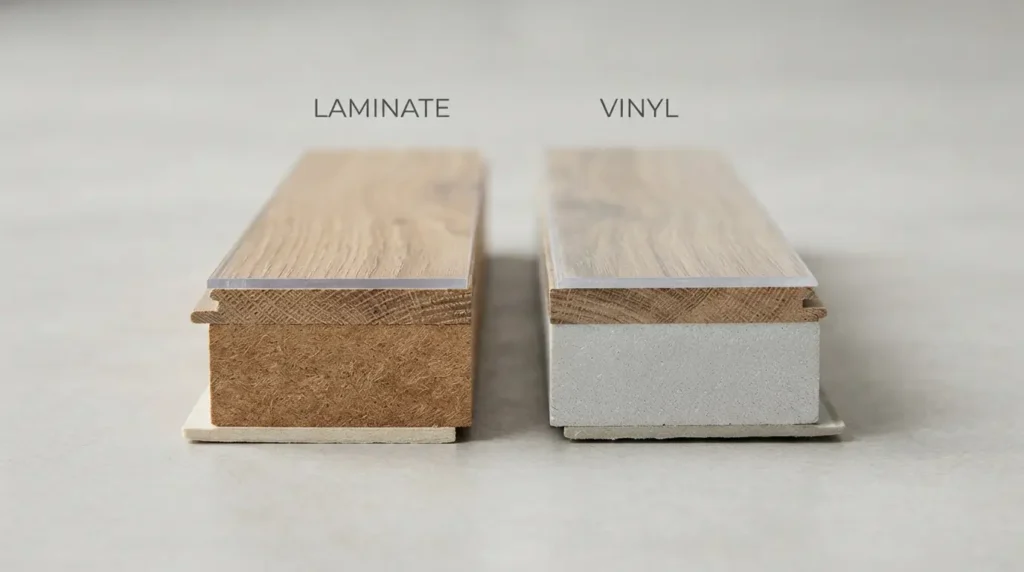
Laminate is a man-made floor that copies wood or stone. It comes in several types, and each has four layers.The top is a clear wear layer, often coated with aluminum oxide. Below sits a printed design layer that shows the wood pattern. The core is high-density fiberboard, or HDF. A backing layer finishes the plank.
The HDF core gives the floor its strength. The wear layer fights scratches, stains, and fading. Wear layers are measured in mil. A thicker wear layer lasts longer and handles more traffic.
What Is Vinyl Flooring?
Vinyl is a 100% synthetic floor made mostly from polyvinyl chloride, or PVC. It comes as planks, tiles, or sheets. Luxury vinyl plank (LVP) copies wood. Luxury vinyl tile (LVT) copies stone or ceramic. Sheet vinyl comes in wide rolls and glues down.
LVP, LVT, SPC, WPC, and EVP Explained
Vinyl types confuse many buyers. Here is a simple breakdown. Flexible LVP has a soft PVC core. Rigid-core vinyl uses stone plastic composite (SPC) or wood plastic composite (WPC). Both are 100% waterproof. Engineered vinyl plank (EVP) is another rigid-core name. Rigid cores dent less and feel sturdier.
You may also see the term hybrid flooring. That word usually means rigid-core vinyl like SPC. And “vinyl laminate” is not a real product. People say it by mistake when they mean one type or the other.
Difference between Laminate and Vinyl Flooring
Now let us compare each factor. Every part opens with a clear verdict, so you can skim fast.
Water Resistance and Waterproofing
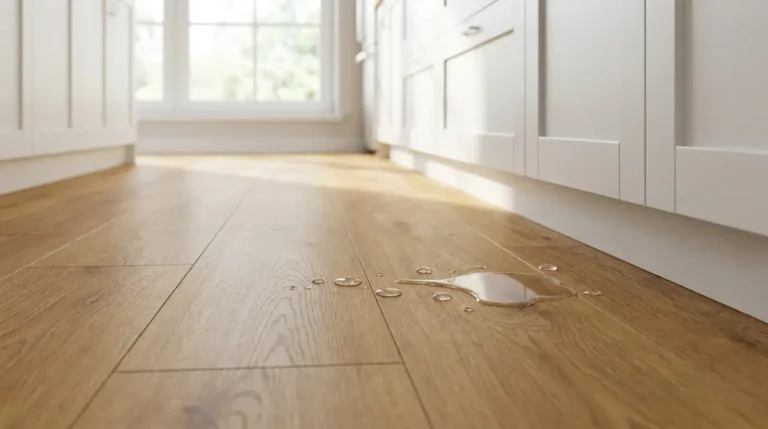
Vinyl wins by a wide margin. Vinyl does not absorb water, so spills and humidity do no harm. That makes it safe for kitchens, baths, and basements. Laminate is water-resistant, not waterproof. Its HDF core can swell if water sits on it too long. Some new lines of waterproof laminate flooring claim fully sealed cores. Still, standing water remains a risk at the seams unless the edges are properly sealed too.
Durability, Scratch, and Stain Resistance
This one is close. Laminate has a hard wear layer, so it shrugs off scratches and scuffs. That helps in busy homes with kids and pets. Vinyl handles dents, impact, and moisture better. Cheaper vinyl can show scratches faster. Both resist stains well thanks to sealed top layers.
Cost Per Square Foot
Laminate is often a little cheaper. Industry cost data shows laminate near $1 to $6 per square foot for materials.Vinyl runs about $1 to $10 per square foot. Sheet vinyl sits at the low end. Premium LVP and rigid-core vinyl sit at the high end.
Installation adds more. Labor often runs $2 to $8 per square foot. So a 200 square foot room may cost $600 to $1,800 installed. Always get local quotes, since prices shift by region and installer.
Installation and DIY Difficulty
Both suit do-it-yourself work. Laminate and LVP use a click-lock system and float over the subfloor. No glue or nails are needed. You still must clean and level the subfloor first. Leave an expansion gap around the edges so planks can move.
Vinyl is a bit more forgiving on uneven subfloors. You can cut most vinyl planks with a utility knife. Laminate needs a saw and more careful cuts. Sheet vinyl is heavy and hard to fit, so hire a pro for that.
Appearance and Realism
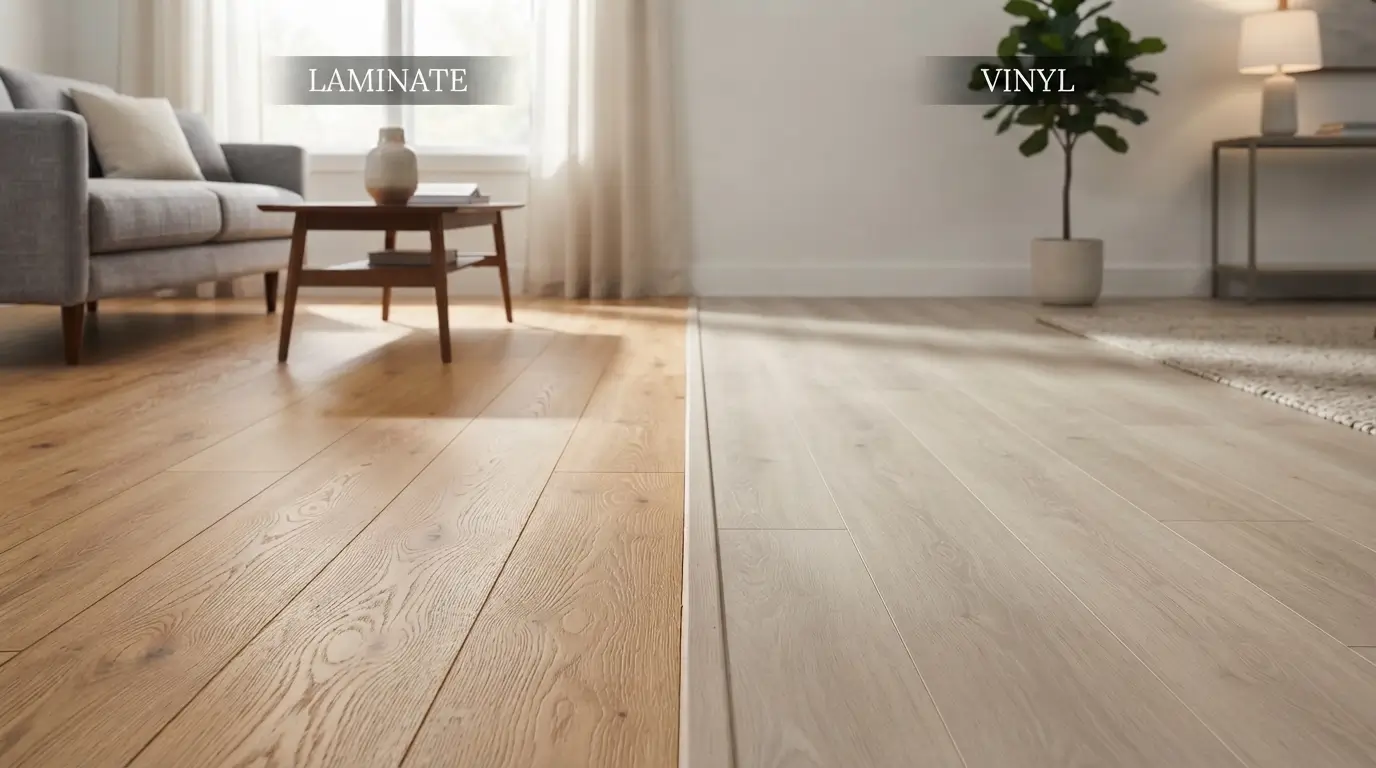
Many people ask what looks better in laminate vs vinyl flooring. Laminate often wins on realism. Its thicker build and deep embossing give a true wood feel. Vinyl offers more colors, styles, and stone looks. High-end LVP now looks very close to real wood too.
Comfort and Noise Underfoot
Vinyl feels softer and warmer to walk on. It also muffles sound better, which helps in apartments and upper floors. Laminate feels firmer and can sound hollow. A good underlayment adds cushion and cuts noise under laminate.
Heat and Radiant Heating Compatibility
Both work with radiant heat, but check the maker’s limits first. Vinyl conducts heat well and warms fast. Laminate also handles radiant heat when installed to spec. Stay within the maximum floor temperature the brand lists.
Maintenance and Cleaning
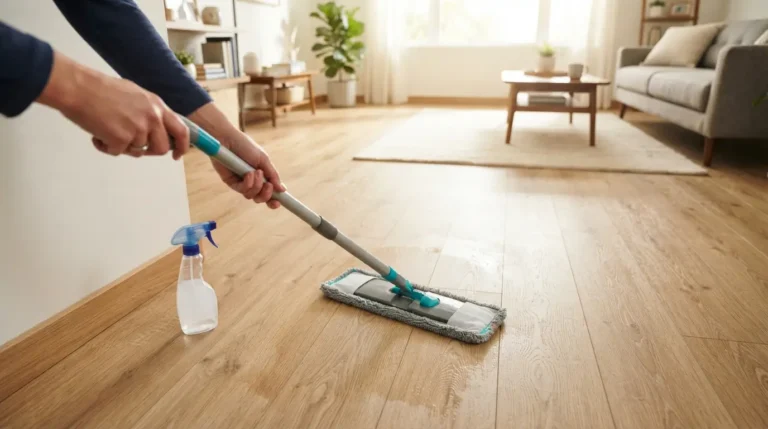
Vinyl is easier to clean. You can mop it with water and mild cleaner without worry. Laminate needs more care. Use a damp mop, never a soaking wet one, and wipe spills fast. Sweep both floors often, since grit can scratch the surface.
Lifespan and Warranty
Both last about 10 to 25 years with good care. Warranties often match that range. Vinyl holds up longer in wet or high-traffic spots. Laminate can match vinyl’s life in dry rooms. Thicker wear layers and quality cores add years to either floor.
Eco-Friendliness and Indoor Air Quality
Laminate has a smaller footprint since it uses wood byproducts. Vinyl is plastic and not biodegradable. Health-minded buyers also ask about indoor air. The US EPA notes that some indoor VOC levels run up to ten times higher than outdoors. Certain VOCs carry short-term and long-term health risks (source: epa.gov).
Look for the FloorScore label to lower this risk. FloorScore is the leading indoor air quality certification for hard-surface floors. The RFCI runs it with SCS Global Services. It tests products against strict California VOC limits (source: rfci.com). Buy phthalate-free vinyl and air the room out after install.
Resale and Home Value Impact
Neither floor adds as much value as real hardwood or tile. Both still boost appeal over old carpet or worn floors. Buyers like clean, modern, waterproof floors in wet areas. High-end homes usually feature hardwood or stone in main rooms. Still, quality laminate and LVP look great and work well in many builds.
Which Flooring Is Better for Each Room?
In the laminate vs vinyl flooring debate, your room decides the winner. Here is the best pick for each space.
Kitchen
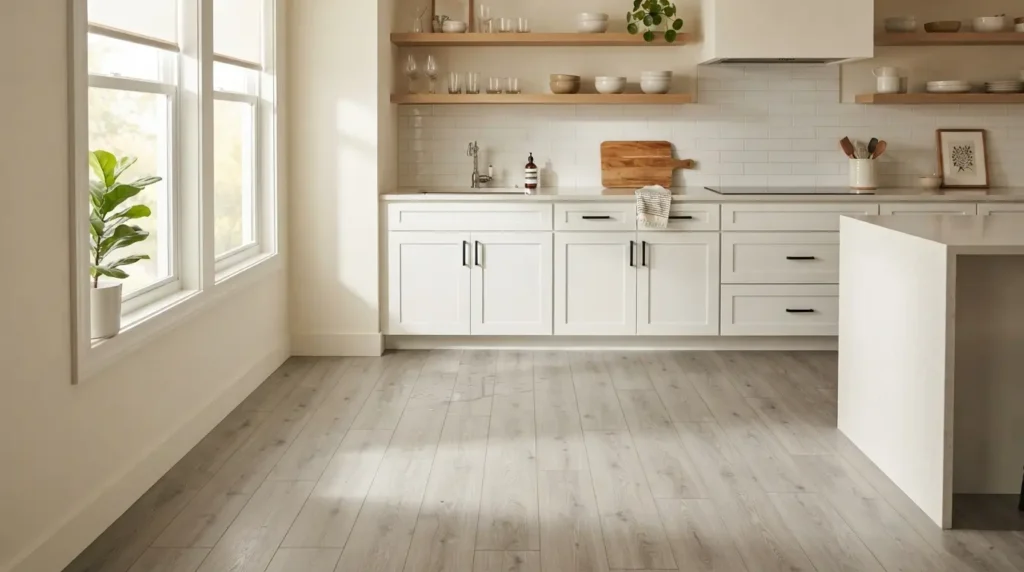
Vinyl is the smart pick for kitchens floors. Spills, drips, and mopping are constant here. LVP and rigid-core vinyl handle all of that with ease. Laminate can work only if it is a waterproof line.
Bathroom and Laundry Room
Vinyl wins again. These rooms see standing water and steam. Waterproof vinyl protects the subfloor below. Skip standard laminate in any bathroom.
Basement
Vinyl is the safe choice for basements. It installs over concrete and shrugs off damp air. Rigid-core SPC or WPC handles humidity swings best. Laminate risks warping in below-grade moisture.
Living Room, Bedroom, and Dining Room
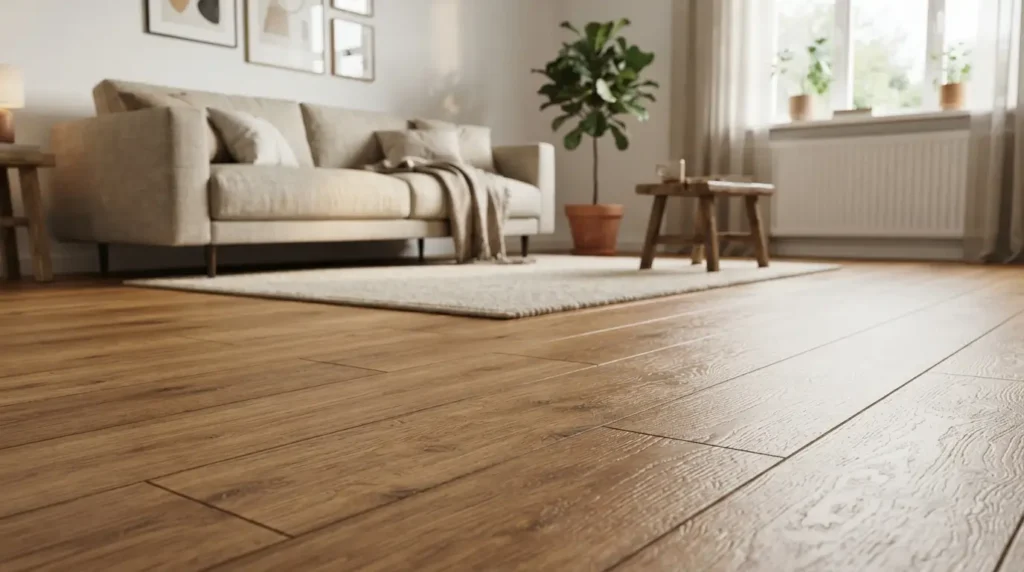
Both floors shine in dry rooms. Laminate gives the most realistic wood look for less. Vinyl adds comfort and quiet underfoot. Pick a laminate color like grey green to match your style and budget.
Hallways and Entryways
Both hold up in high-traffic zones. Laminate resists scuffs from shoes and bags. Vinyl handles wet boots and tracked-in rain. Choose a thick wear layer either way.
Best Flooring for Homes With Pets and Kids
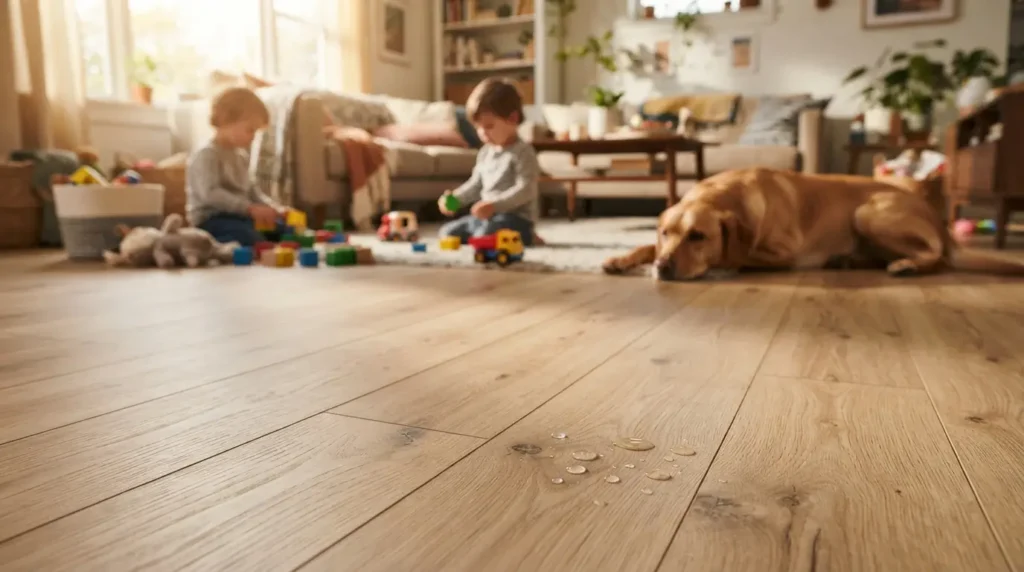
For pet owners, the laminate vs vinyl flooring choice often leans toward vinyl. It is often the better call for busy family homes. It is waterproof, so accidents and spills wipe up fast. It also feels softer under paws and knees. Laminate fights claw scratches well with its hard top layer. Still, water from bowls and potty training can harm laminate. For dogs, cats, and young kids, waterproof vinyl gives more peace of mind.
Which Flooring Is Safest for Seniors?
Vinyl tends to be the safer floor for older adults. Its softer surface is gentler on joints. It also gives more grip, which lowers slip risk. A cushioned vinyl or added underlayment softens falls. Avoid very glossy finishes, since they can feel slick. Matte, textured planks offer the best footing.
How Climate and Humidity Affect Your Choice
Where you live changes the math. Humid states like Florida and coastal areas raise moisture risk. Laminate can swell in damp air over time. Vinyl stays stable in humidity and near water. Dry climates are kinder to laminate. In wet or coastal homes, waterproof vinyl is the safer long-term bet.
How to Tell If Your Floor Is Laminate or Vinyl
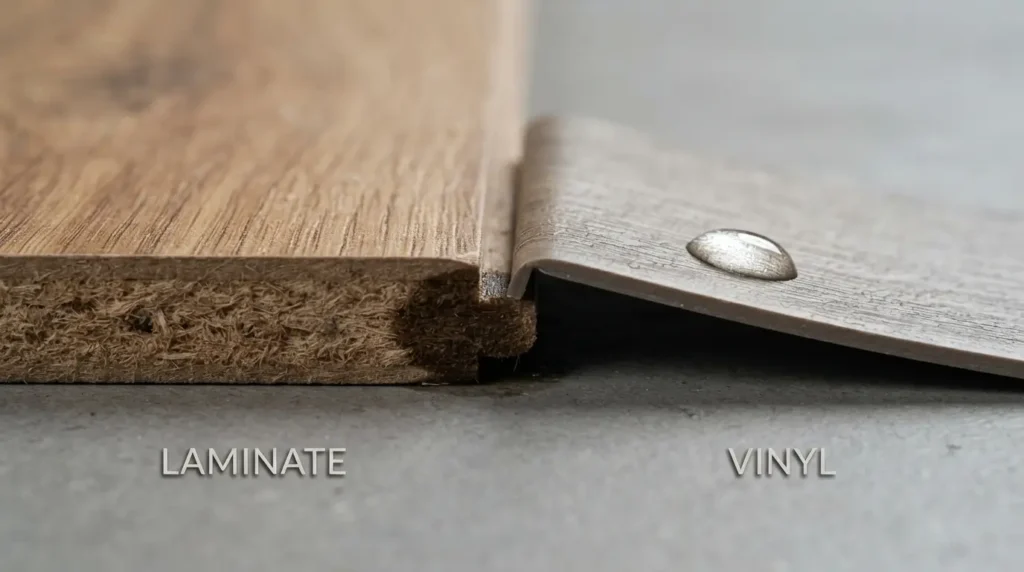
People new to laminate vs vinyl flooring often cannot tell the two apart. Use these quick checks. Look at the edges first. Laminate feels firm and looks like pressed wood at the core. Vinyl feels flexible and shows a smooth plastic edge. Tap the floor. Laminate sounds hollow, while vinyl sounds solid. A small drop of water beads on vinyl but may soak into laminate seams.
Common Mistakes and Flooring Regrets to Avoid
Most laminate vs vinyl flooring regrets come from a few errors. Learn from them before you buy.
- Putting standard laminate in a kitchen, bath, or basement.
- Choosing a thin wear layer to save money, then seeing early wear.
- Skipping subfloor prep, which leads to gaps and squeaks.
- Trying to DIY heavy sheet vinyl without the right tools.
- Ignoring the warranty fine print on water damage.
Laminate Flooring: Pros and Cons
Pros
- Very realistic wood look and texture.
- Strong scratch and fade resistance.
- Often cheaper than vinyl.
- Uses wood byproducts, so it is more eco-friendly.
- Easy click-lock DIY install.
Cons
- Not fully waterproof, so moisture is a risk.
- Damaged planks cannot be repaired, only replaced.
- Feels harder and cooler underfoot.
- Can sound hollow without good underlayment.
- Adds less resale value than hardwood.
Vinyl Flooring: Pros and Cons
Pros
- Fully waterproof and great for wet rooms.
- Softer and quieter to walk on.
- Very easy to clean and maintain.
- Handles pets, kids, and high traffic well.
- Many styles, including stone and wood looks.
Cons
- Made from PVC plastic, so it is less eco-friendly.
- Lower-quality vinyl can scratch or dent.
- Some products may release VOCs, so choose FloorScore lines.
- Can fade in strong, direct sunlight.
- Premium rigid-core vinyl can cost more than laminate.
Which Is Better: Vinyl or Laminate Flooring?
There is no single winner. The best floor is the one that fits your room and life. Use this quick guide to decide.
The Final Word on Laminate vs Vinyl Flooring
Choose vinyl flooring (LVP or LVT) if:
- You need a waterproof floor for a kitchen, bath, or basement.
- You have pets or young kids.
- You want softer, quieter steps.
- You live in a humid or coastal climate.
Choose laminate flooring if:
- You want the most realistic wood look for less.
- Your rooms stay dry, like bedrooms and offices.
- Scratch resistance is your top concern.
- You prefer a wood-based, more eco-friendly core.
Final Thoughts
Both floors are strong, stylish, and budget-friendly. The laminate vs vinyl flooring choice comes down to your rooms and your goals. Pick waterproof vinyl for kitchens, baths, basements, and pet homes. Pick laminate for dry rooms where real wood texture and scratch resistance matter most. Match the floor to the space, and you will enjoy years of easy, good-looking results.
Frequently Asked Questions
Is laminate the same as vinyl flooring?
No. They are different products. Laminate has a wood-based HDF core. Vinyl is made from PVC plastic. Vinyl is fully waterproof, while laminate is only water-resistant. Both copy the look of real wood at a lower price.
What is the downside of laminate flooring?
The main downside is moisture. Water can seep into the seams and swell the HDF core. Laminate also cannot be repaired once scratched or chipped. You must replace the damaged plank instead. It can feel hard and sound hollow underfoot too.
Why do people avoid vinyl flooring?
Some buyers avoid vinyl because it is plastic and not biodegradable. Lower-quality vinyl may also release VOCs when new. You can lower this risk by choosing FloorScore-certified and phthalate-free products. Cheaper vinyl can dent or fade over time as well.
What is the healthiest flooring for a home?
Any floor with low VOC emissions is a healthier pick. Look for the FloorScore label on hard-surface floors. It certifies low VOC output under strict California limits. Airing out a room after install also helps improve indoor air quality.
What lasts longer, vinyl or laminate flooring?
Both last about 10 to 25 years with proper care. Vinyl often lasts longer in wet or high-traffic areas. Laminate can match that life in dry rooms. Thicker wear layers and quality cores extend the life of either floor.
What looks better, laminate or vinyl flooring?
Laminate usually looks a bit more like real wood. Its thicker build and deep embossing add a natural feel. Vinyl offers more colors, patterns, and stone looks. High-end LVP now comes very close to real wood too.
What is the best flooring for the money?
In laminate vs vinyl flooring, laminate often gives the best value in dry rooms. It delivers a real wood look at a low price. For wet rooms, waterproof vinyl is the smarter spend. It prevents costly water damage down the road.
Which is better for dogs, vinyl or laminate?
Vinyl is usually better for dogs. It is waterproof, so accidents and water bowls cause no damage. It also feels softer under paws. Laminate resists claw scratches well but can swell if it gets wet often.
What flooring is safest for seniors?
Vinyl is often safest for seniors. Its softer surface is easier on joints and cushions falls. Textured, matte planks also add grip and lower slip risk. Avoid high-gloss floors, which can feel slick.
Do high-end homes use laminate flooring?
High-end homes usually use hardwood or stone in main rooms. Still, premium laminate and LVP appear in many quality builds. They look great and cost far less. Buyers rarely reject a home over well-installed laminate.
Is laminate or vinyl cheaper?
Laminate is often slightly cheaper, especially at the budget end. Sheet vinyl can cost even less than laminate. Premium rigid-core vinyl usually costs the most. Installation and room size affect the final price too.
Is LVP better than laminate flooring?
It depends on the room. LVP is better for wet spaces since it is fully waterproof. Laminate is better for dry rooms where a real wood look matters most. Both install easily and last a long time.
Can you install vinyl or laminate without a contractor?
Yes, most click-lock LVP and laminate suit DIY installs. You need basic tools and a clean, level subfloor. Sheet vinyl and glue-down jobs are harder. For those, hiring a pro is the safer choice.

About HomeFixStyle
HomeFixStyle is a home improvement blog dedicated to helping readers create better, more comfortable, and stylish homes. We share practical ideas, helpful guides, home decor inspiration, renovation tips, and simple solutions for everyday home projects. Our goal is to make home improvement easier to understand and apply, whether you are updating one room or improving your entire home.