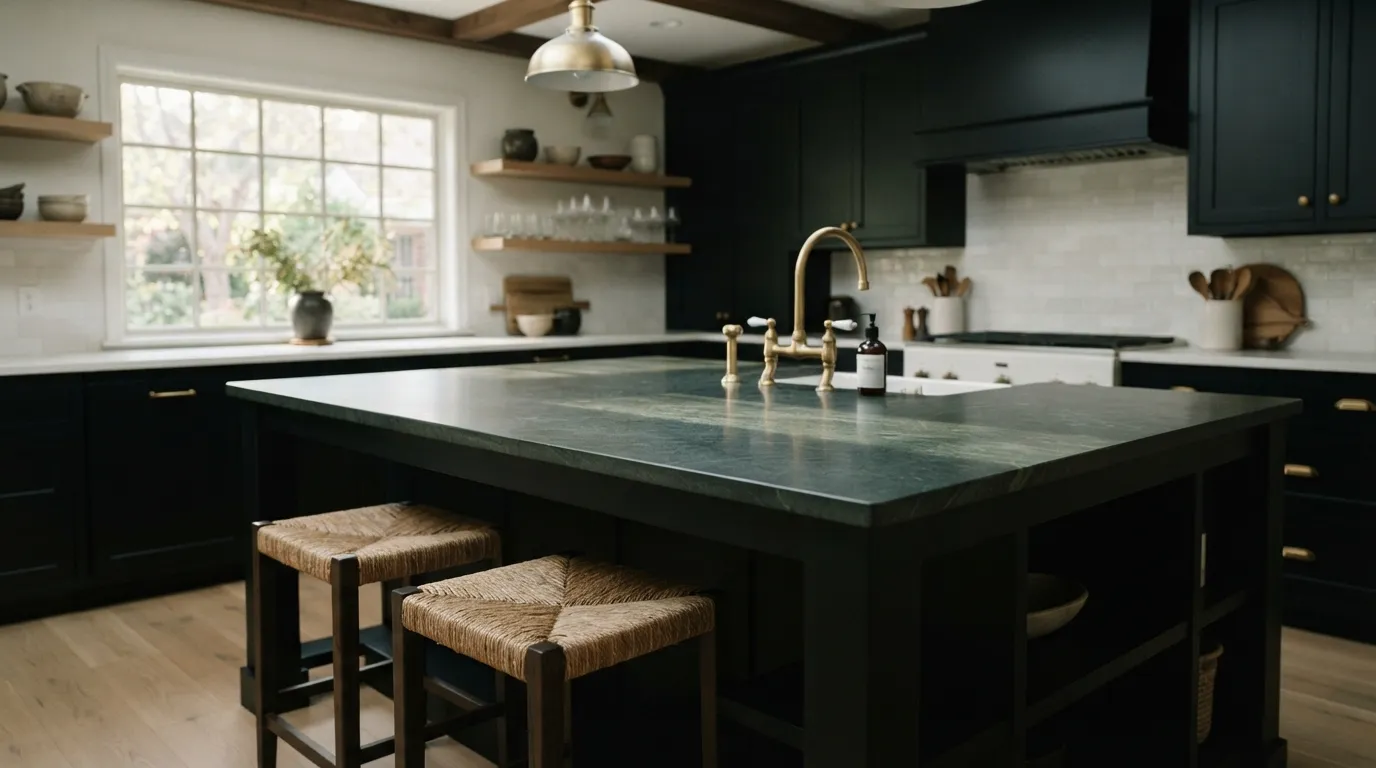
Soapstone is one of the most forgiving countertops you can own. It resists stains, shrugs off heat, and never needs sealing. This complete care guide covers how to clean soapstone countertops, from daily wipe downs to stain removal, scratch repair, and mineral oil care. You will also learn what to avoid. We cover how soapstone compares to granite and marble, plus common homeowner questions. By the end, cleaning and maintaining your soapstone will feel simple, not stressful.
What Is Soapstone? (Quick Primer)
What Soapstone Is Made Of
Soapstone is a metamorphic rock formed deep in the earth under heat and pressure. It gets its name from its soft, soapy feel. The stone is made mostly of talc, along with magnesite, chlorite, and other minerals. Talc content determines how soft the stone is. Countertop grade soapstone runs harder than the soft, carving grade material sold in craft stores. On the Mohs hardness scale, most countertop soapstone rates between 2.5 and 3.5. That makes it softer than granite, which rates 6 to 7, but tough enough for daily kitchen use.
Why Soapstone Is Non-Porous and What That Means for Cleaning
Soapstone has almost no porosity. Water, oil, and juice cannot soak into the stone the way they can with granite or marble. This is why soapstone never needs a sealer. Use Natural Stone, an industry education group, points to soapstone’s near zero absorbency. This makes it naturally resistant to bacteria and staining. That single trait is why cleaning soapstone is so much easier than cleaning most other natural stone. It’s the main reason learning how to clean soapstone countertops takes so little effort.
Pros and Cons of Soapstone Countertops
Soapstone has real strengths and a few tradeoffs. Knowing them helps as you learn how to care for soapstone countertops long term.
Pros
- Never needs sealing
- Resists stains, bacteria, and heat
- Scratches sand out instead of becoming permanent
- Develops a rich, deepening patina over time
Cons
- Softer than granite or quartz, so it scratches more easily
- Limited to grey, black, and green tones
- Needs occasional mineral oil to keep the color even
- Can chip at edges if struck hard
Knowing these tradeoffs sets the right expectations. Soapstone is not fragile. It is a material that shows its use, and that is part of its charm.Soapstone’s charcoal tones also pair well with bold kitchen features like a statement range hood, especially in farmhouse or industrial style kitchens.
What You Need to Clean Soapstone Countertops
Gather a few simple supplies before you start. Nothing on this list is expensive or hard to find.
- Mild dish soap, such as Dawn or Palmolive
- A soft microfiber cloth or non-abrasive sponge
- A spray bottle or small bowl for the soap solution
- Clean, dry cotton towels
- Food grade mineral oil, if you plan to oil the stone
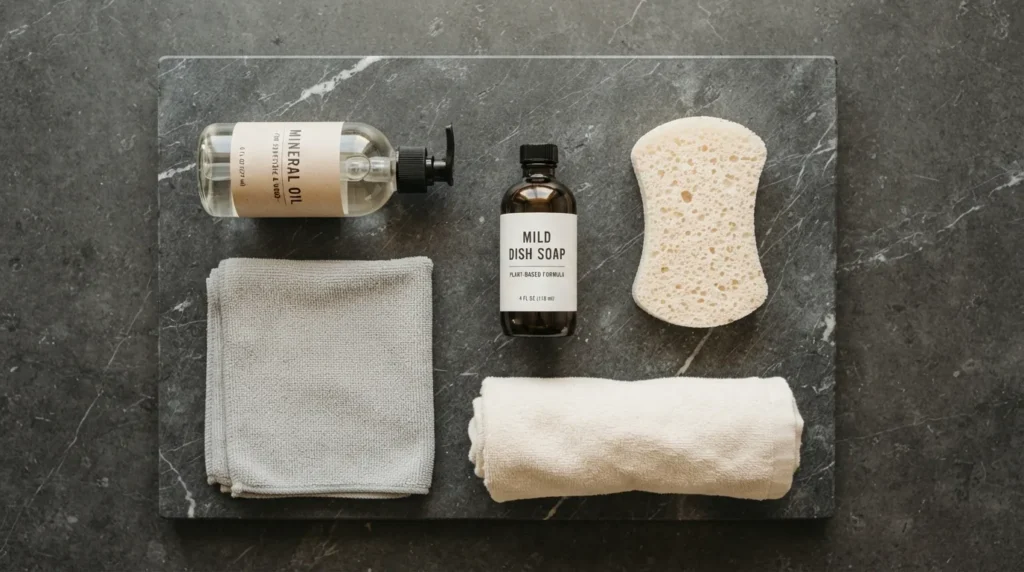
That covers the entire list. Basic soapstone cleaning does not call for special stone cleaners or store bought kits.
How to Clean Soapstone Countertops Step by Step
Prepare the Surface
Clear the counter of dishes, crumbs, and clutter first. Use a dry microfiber cloth to sweep away loose debris. This step keeps grit from scratching the stone once you add water.
Daily Cleaning Routine
Wipe the counter with a damp cloth after each use. For light grease or food residue, mix a few drops of mild dish soap into warm water. Wipe the surface in small circles. Rinse the cloth and go over the counter again with clean water. Dry the surface with a cotton towel. This last step matters, since standing water can leave faint marks on unoiled stone.
Weekly Deep Clean
Once a week, give the counter a more thorough wipe down. Pay attention to corners, seams, and the area around the sink. A soft bristle brush works well for tight edges. Rinse and dry the same way you do daily. This routine keeps soapstone looking even and stops buildup near the sink and stove.
Soapstone Maintenance Schedule at a Glance
This table breaks down how to clean soapstone countertops and keep them oiled, at a glance.
| Task | How Often |
| Wipe down with a damp cloth | After each use |
| Deep clean with soap and water | Once a week |
| Apply mineral oil | Every 4 to 8 weeks, or as needed |
| Check for scratches | Monthly |
| Full oil saturation check | Every 6 months |
What Not to Use on Soapstone Countertops
A few products can dull or damage soapstone over time. Skip these:
- Bar Keepers Friend and other abrasive powders
- Magic Erasers, which are mildly abrasive foam
- Scotch-Brite pads and steel wool
- Bleach and ammonia based cleaners
- Strong degreasers
These products will not destroy the stone outright. Repeated use dulls the honed finish and strips mineral oil faster than normal. Stick with mild soap for regular cleaning.
Can You Use Vinegar or Baking Soda on Soapstone Countertops?
This is one of the most searched questions about soapstone care, and the answer needs a little nuance.
Soapstone is classified as a siliceous stone, made mostly of silicate minerals rather than calcium carbonate. According to a care guide from the Natural Stone Institute, siliceous stones like soapstone and granite resist kitchen acids far better than calcareous stones like marble. That means an occasional splash of vinegar will not eat through soapstone the way it would eat through marble.
Even so, frequent contact with vinegar or citrus juice can dull the surface over time. It can also interfere with the oil layer. The safer habit is to wipe up acidic ingredients quickly rather than using vinegar as a regular cleaner.
Baking soda is gentler. A light paste of baking soda and water can lift stuck on grime without scratching. Just rub gently and rinse well. Between the two, baking soda is the better everyday choice. Vinegar is fine for the occasional cleanup, not for daily use. Understanding this distinction is a key part of learning how to clean soapstone countertops without dulling the finish.
How to Remove Stains from Soapstone Countertops
How to Clean Soapstone Countertops With Grease and Oil Stains
Grease stains are the most common complaint with soapstone. Because the stone absorbs mineral oil on purpose, it can also pick up cooking oil if it sits too long. To treat a grease stain, wipe up the excess oil first. Then clean the spot with dish soap and warm water. If the stain lingers, rub a small amount of fresh mineral oil into the area. This often blends the stain into the surrounding patina instead of removing it, which is usually the easiest fix.
Water Rings and Food Stains
Water rings usually fade on their own within a day or two as the stone dries evenly. If a ring stays visible, wipe the whole section with a damp cloth. This evens out the moisture. Let it air dry. Food stains from berries, wine, or coffee respond well to the same dish soap method. Because soapstone is non-porous, these stains sit on the surface rather than soaking in. That makes them lift more easily than stains on marble or limestone.
Stubborn Stains That Won’t Lift
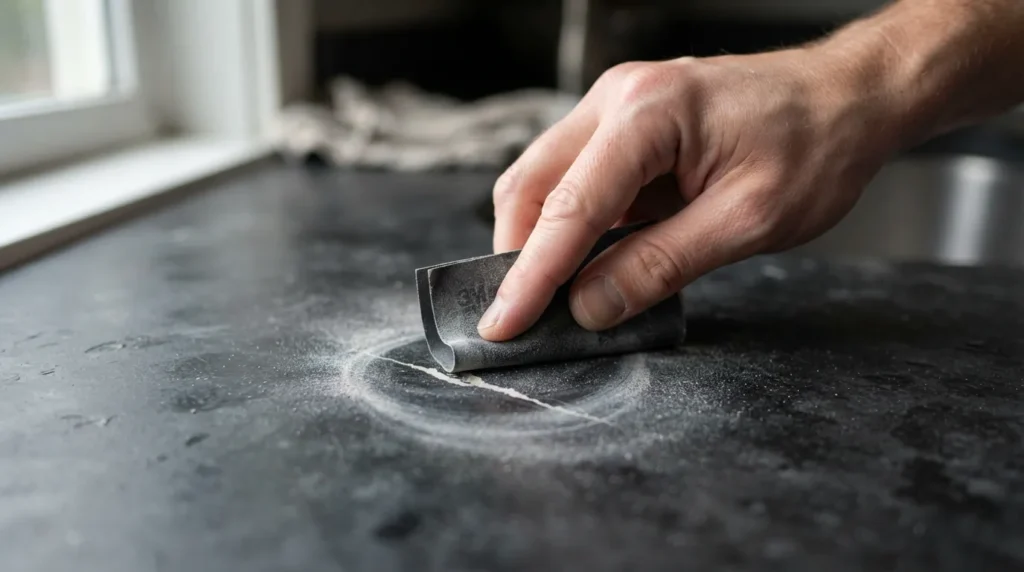
For a stain that will not budge, light sanding is the last resort. Use fine grit sandpaper, around 220 to 320, and sand gently in a circular motion. Wipe away the dust and apply a fresh coat of mineral oil to blend the spot back in.
How to Remove Scratches from Soapstone Countertops
Light Scratches: Mineral Oil Method
Soapstone scratches more easily than granite because it is softer. Most light scratches are shallow and only affect the top layer of oil, not the stone itself. Rub a little mineral oil directly onto the scratch with a soft cloth. Buff in small circles. In many cases, the scratch blends in within seconds.
Deep Scratches: Sanding Method
For deeper scratches, sanding is the fix. Start with 80 grit sandpaper for a heavy pass. Move to 220 grit next, then finish with 300 to 400 grit for a smooth result. Sand in the same direction as the surrounding finish. Wipe away dust and reapply mineral oil to match the color. It may take a few oil applications before the sanded spot matches the rest of the counter.
How to Restore or Refresh Soapstone Countertops
Homeowners often search for ways to restore or refresh soapstone that looks patchy or dull. This usually comes down to uneven oiling, not real damage.
Start by cleaning the entire surface with dish soap and water. Let it dry fully. Then apply a fresh, even coat of mineral oil across the whole countertop, not just the faded spots. Uneven color almost always fixes itself once the entire surface has the same number of oil coats.
A common myth is that any cooking oil works for this job. Olive oil and other food oils can turn rancid on the surface, leaving a faint odor and a sticky film. Stick with mineral oil or a mineral oil product made specifically for stone. It stays odorless and does not spoil.
If you are choosing between oil and wax, oil is the better long-term option for most kitchens. Wax sealers can darken soapstone and hold that color for a few years, but they wear unevenly with daily use. Mineral oil is simpler to maintain and easier to touch up in one spot without redoing the whole counter.
How to Oil Soapstone Countertops
How Often to Oil Soapstone Countertops
New soapstone benefits from oiling once a month for the first year. This builds an even, deep patina faster. After that, most counters only need oiling every 4 to 8 weeks. Oil sooner if the color looks uneven or streaky.
How to Apply Mineral Oil Step by Step
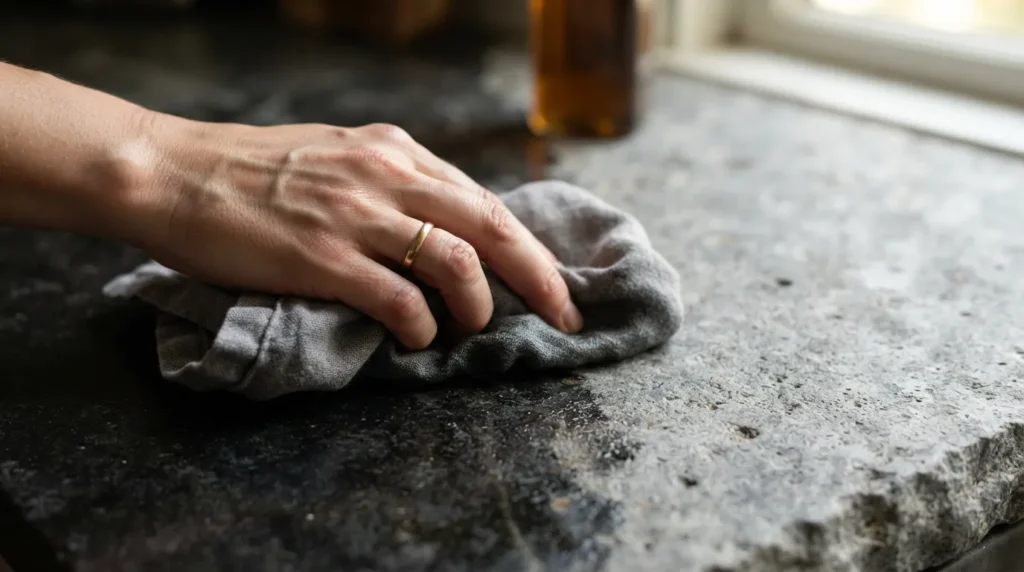
Clean and fully dry the counter first. Pour a small amount of mineral oil onto a section of the stone. Rub it in with a low lint cloth using even, overlapping strokes. Let it sit for a few minutes, then wipe away any oil that has not absorbed. Work in sections until the entire counter is covered.
Understanding Soapstone’s Natural Patina
Soapstone was light gray when it left the quarry. Exposure to oil, water, and daily use slowly darkens it through a natural process similar to oxidation. Mineral oil simply speeds up a change that would happen anyway with regular use. Over months and years, the color deepens and evens out until it holds a rich charcoal tone with little upkeep.
Do You Need to Seal Soapstone Countertops?
No. Sealing is a step designed for porous stones like granite and marble. Sealer fills tiny surface pores to block staining. Soapstone barely has any pores to fill. The Natural Stone Institute advises that proper stone care starts with understanding your stone’s composition. Non-porous stones like soapstone simply do not behave like the calcareous and siliceous stones that call for regular sealing.
Some companies sell color enhancing sealers that mimic the look of oiled soapstone and last longer between applications. These are optional, not required. If your goal is simple, low effort care, plain mineral oil does the job without an extra product.
Preventing Damage: Daily Habits That Protect Soapstone
A few small habits go a long way toward keeping soapstone looking its best.
- Use a cutting board. Soapstone is heat resistant but still soft enough to scratch under a knife.
- Use trivets under very hot pots, especially cast iron.
- Wipe up oil and wine spills within a day to protect the top oil layer.
- Avoid setting rough or gritty objects directly on the counter.
- Skip dishwasher detergent as a countertop cleaner. It is too harsh for daily use.
None of these habits are complicated. They simply stretch out the time between deep cleans and oil touch ups. Pair them with knowing how to clean soapstone countertops properly, and the stone will look good for decades.A well kept countertop also sets the tone for the rest of the kitchen, right down to how you style the space above your cabinets.
Soapstone vs. Granite vs. Marble vs. Quartz: Which Is Easier to Clean?
| Material | Needs Sealing | Stain Resistance | Scratch Resistance | Cleaning Effort |
| Soapstone | No | Excellent | Low to Moderate | Low |
| Granite | Yes | Good | High | Moderate |
| Marble | Yes | Poor, etches easily | Moderate | High |
| Quartz | No | Excellent | High | Low |
Soapstone and quartz both skip the sealing step. Soapstone offers something quartz cannot, though: real stone texture and a patina that deepens with age. Granite needs regular sealing to stay stain resistant. Marble is the highest maintenance material of the group, since it etches easily from acidic foods. For homeowners who want low effort care with natural stone character, soapstone is hard to beat.
Frequently Asked Questions
What is the best cleaner for soapstone countertops?
Mild dish soap and warm water work best for daily cleaning. No special stone cleaner is required.
What should you not use on soapstone?
Avoid Bar Keepers Friend, Magic Erasers, Scotch-Brite pads, bleach, and ammonia based cleaners. These can dull the finish over time.
Can I use vinegar on soapstone?
Occasional contact will not damage soapstone, since it resists acids better than marble. Frequent use can dull the finish, so it is not recommended as a daily cleaner.
Can you use baking soda on soapstone?
Yes. A gentle baking soda paste can lift grime without scratching the surface when you rinse it well afterward.
Can I use olive oil on soapstone?
It is not recommended. Olive oil and other food oils can turn rancid and leave a sticky residue. Use mineral oil instead.
Is oil or wax better for soapstone?
Mineral oil is easier to maintain and touch up. Wax or color enhancing sealers last longer but wear unevenly over time.
Does soapstone leave water marks?
Rarely. Any marks that do appear usually fade within a day or two as the stone dries evenly.
Is soapstone high maintenance?
No. Soapstone is one of the lowest maintenance natural stones. It never needs sealing and resists stains well.
How long do soapstone countertops last?
With basic care, soapstone can last for decades. Many soapstone counters installed in the 1800s and 1900s are still in daily use today.
Does soapstone change color over time?
Yes. It darkens naturally from light gray toward charcoal or black as it is exposed to oil, water, and daily use.
Final Thoughts
Soapstone rewards simple care. Now that you know how to clean soapstone countertops the right way, upkeep is easy. A weekly wipe down and an occasional coat of mineral oil are really all it takes. Skip the harsh chemicals, keep a soft cloth handy, and let the stone develop its patina naturally. Few countertop materials offer this much durability with this little effort.

About HomeFixStyle
HomeFixStyle is a home improvement blog dedicated to helping readers create better, more comfortable, and stylish homes. We share practical ideas, helpful guides, home decor inspiration, renovation tips, and simple solutions for everyday home projects. Our goal is to make home improvement easier to understand and apply, whether you are updating one room or improving your entire home.