
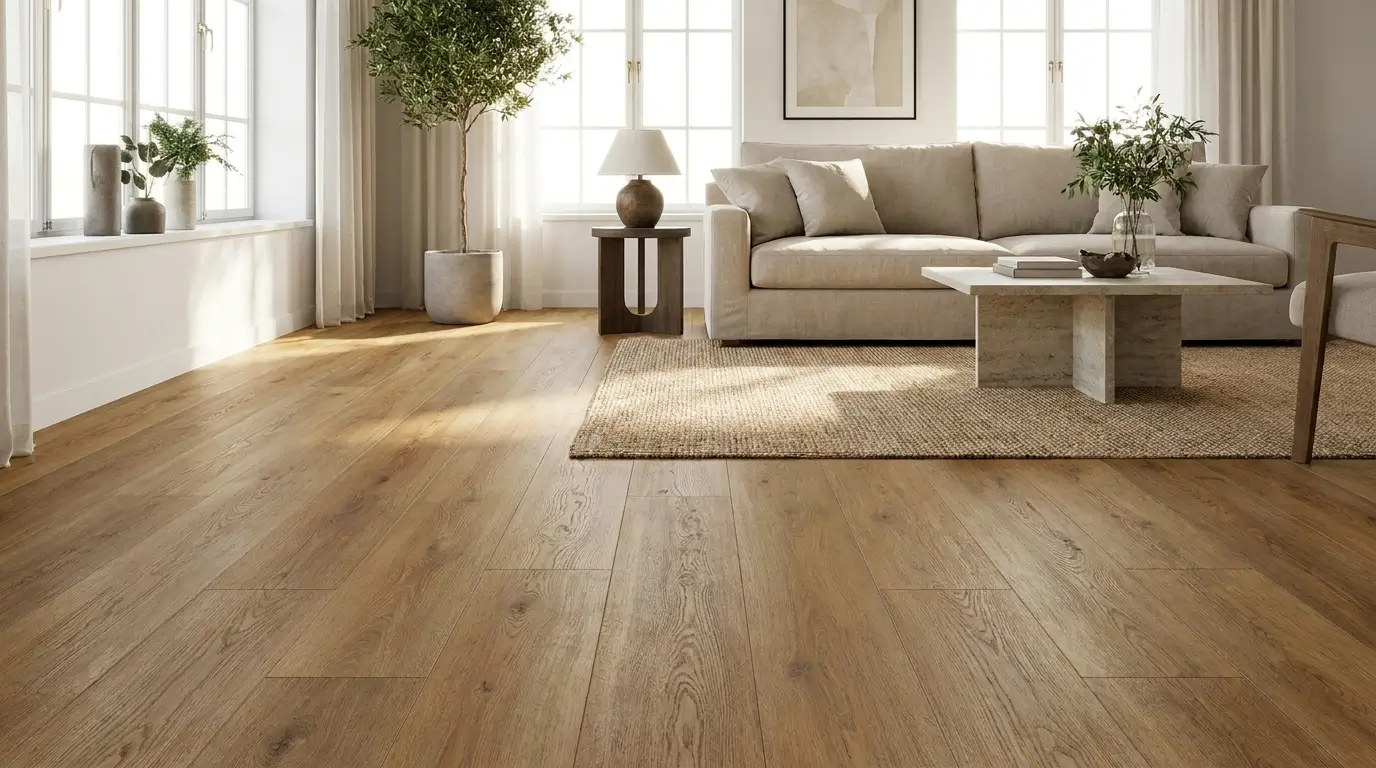
Shaw, Mohawk, COREtec, LifeProof, and Karndean lead the best vinyl plank flooring brands for US homeowners in 2026. Each one wins for a different reason. No single brand beats every other brand at everything. Shaw and COREtec offer the strongest all around durability for busy households. LifeProof and SMARTCORE give you real value on a tighter budget. Karndean leads the premium tier for realistic wood looks. NuCore stands out for quiet, comfortable floors in bedrooms and upstairs rooms.
This guide breaks down what separates a good vinyl plank floor from a bad one. You will learn what wear layer thickness you need. You will learn what core type fits your room. You will see which brand fits your budget and your household. You will also see real pricing, real warranty terms, and where each brand is sold. By the end, you will know exactly which brand to ask for in a store. No more guessing from marketing language on a box.
What to Look For in a Vinyl Plank Flooring Brand
When people search for the best vinyl flooring brands, brand names get most of the attention. Specs actually decide how your floor performs. Two floors from the same brand can behave very differently. This happens when their wear layer or core type differs. Check the numbers below before you check the name on the box.
What Wear Layer Thickness Do You Actually Need?
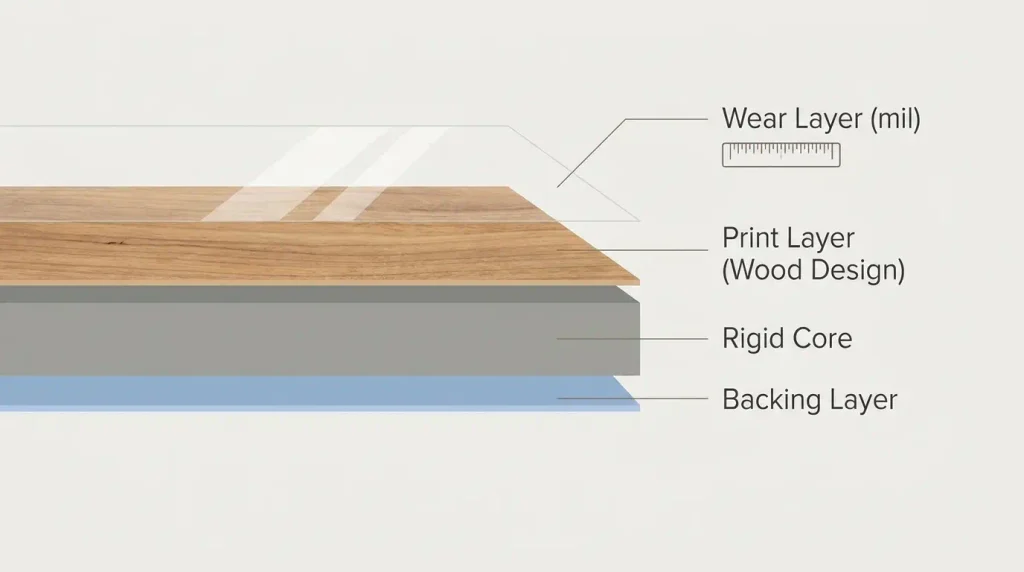
The wear layer is the clear top coating that protects your floor. It guards against scratches and stains. It is measured in mils. One mil equals one thousandth of an inch. A thin wear layer wears through fast. A thick one lasts for years.
For a quiet bedroom or home office, 12 mil is enough. For a living room, kitchen, or entryway, choose 20 mil or higher. Do you have large dogs, toddlers, or heavy foot traffic all day? Look for 22 mil or more. Skimping here is the most common mistake homeowners make. A thin wear layer can show wear within a year or two under real use.
SPC vs WPC Core: Which One Fits Your Room?
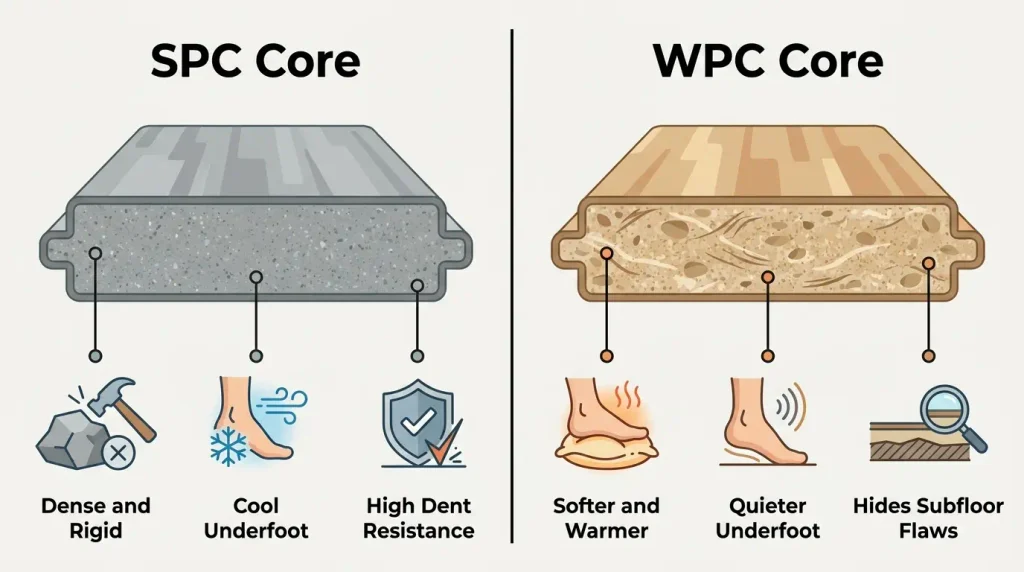
The core is the rigid layer under the surface. It gives the plank its structure. SPC stands for stone plastic composite. It is dense, hard, and highly resistant to dents from furniture. It feels firm and slightly cool underfoot.
WPC stands for wood plastic composite. It contains a foaming agent. This makes it softer, warmer, and quieter to walk on. It also hides small subfloor imperfections better than SPC. The tradeoff is that WPC dents more easily under heavy weight.
Choose SPC for kitchens, entryways, and high traffic areas. Choose WPC for bedrooms and home offices. Pick WPC anywhere comfort underfoot matters more than maximum rigidity. Both are rigid core products. Both install as floating floors without needing a perfectly flat subfloor.
What Does the AC Rating Mean for Vinyl Plank Flooring?
AC rating started as a laminate flooring standard. Many vinyl plank brands now reference it too. The scale runs from AC1 to AC5. AC1 and AC2 suit light residential use. AC3 handles moderate residential traffic. AC4 and AC5 are built for heavy residential and light commercial use.
Not every vinyl plank brand publishes an AC rating. Treat wear layer thickness as your primary number instead. Use the AC rating as a secondary check when a brand does provide it.
What Is EIR Texture and Why It Matters
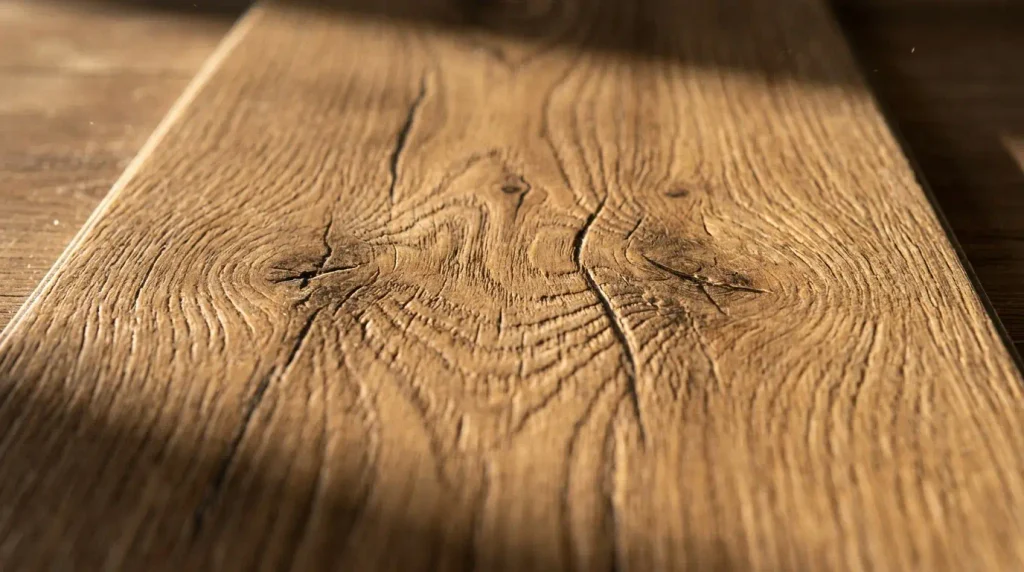
EIR stands for embossed in register. It is a manufacturing process. It lines up the surface texture with the printed wood grain image underneath. A plank without EIR can look real in a photo. It can still feel flat and plastic under your hand. A plank with EIR feels different. It feels like real grain, knots, and grooves sit exactly where your eye expects them.
If realistic looks matter as much as durability to you, prioritize collections that specifically advertise EIR texturing.
Waterproof vs Water Resistant: What Is the Real Difference?
Nearly every modern vinyl plank product markets itself as waterproof. For the most part, this claim is accurate at the plank level. The core material does not absorb water or swell like wood or laminate can.
The real risk sits at the seams between planks, not inside the plank itself. A tight, well engineered locking system keeps water from reaching the subfloor during a spill. A loose or poorly made locking system can let water seep through over time. This can happen even with a fully waterproof plank. Installation quality matters as much as the waterproof claim on the box.
Click Lock, Glue Down, or Loose Lay: Which Installation Method Fits Your Project?
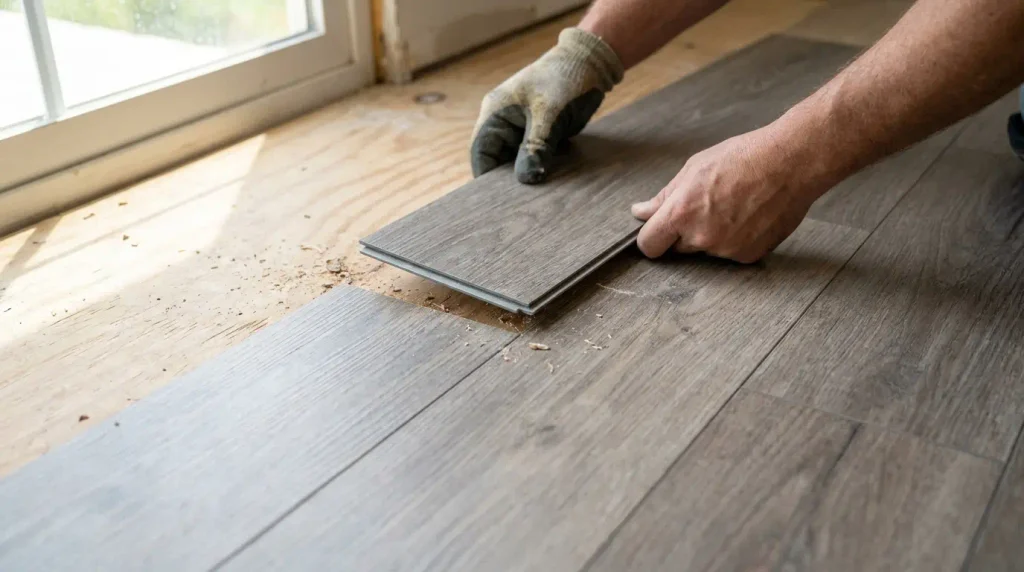
Click lock planks snap together at an angle and float over the subfloor. This is the easiest method for a DIY homeowner. It is also the most common choice for rigid core vinyl plank.
Glue down installation uses adhesive to bond planks to the subfloor. It creates a more permanent, stable surface. It holds up well in commercial settings or rooms with heavy rolling loads. It takes more skill and time to install correctly, though.
Stairs need special handling that none of these three methods cover on their own. Glue down is usually the safer choice there, paired with a stair nosing piece at each edge. Installing vinyl plank flooring on stairs comes with extra steps that flat rooms do not need, so review those before you buy.
Loose lay planks rely on weight, friction, and a heavy backing to stay in place. There is no glue and no locking mechanism involved. This method works well for quick updates or rentals. It also suits spaces where you may want to remove the flooring later.
Warranty Length and Certifications Worth Checking
A longer warranty usually signals a manufacturer’s real confidence. It is not just marketing. Entry level lines with thin wear layers often carry warranties of 10 to 15 years. Premium lines with thicker wear layers frequently carry lifetime residential coverage.
Beyond warranty length, look for two certifications. FloorScore certification comes from SCS Global Services. It confirms a product meets strict indoor air quality standards. GREENGUARD Gold certification comes from UL Solutions. It sets an even stricter emissions standard. This matters most if anyone in your home has allergies or asthma. Both certifications appear on a brand’s official spec sheet. Check there directly, not in the marketing copy.
Every brand recommendation in this guide had to clear all six checks. Only then did it make the list below.
How We Evaluated the Best Vinyl Plank Flooring Brands
Every brand in this guide was checked against the same set of criteria. We compared wear layer thickness across published spec sheets, not marketing claims. We checked core type, warranty length, and current certifications like FloorScore and GREENGUARD Gold. We cross referenced pricing across multiple retailers to confirm real ranges, not a single promotional price. This is how we narrowed down the best vinyl plank flooring brands. Only names that earn their spot made this list.
Best Vinyl Plank Flooring Brands by Use Case
There is no single best vinyl plank flooring brand for every home. The right pick depends on your room, your budget, and who lives in your house. Here is how the top brands actually stack up by real world use case.
Best Overall: Shaw Floorte and Floorte Pro
Shaw offers one of the widest ranges of wear layers on the market. Options run from 12 mil up to 30 mil depending on the collection. The Floorte Pro line uses an SPC core. It delivers realistic wood and stone visuals with strong scratch resistance. Many Floorte lines carry lifetime residential warranties and FloorScore certification.
The tradeoff is price. Shaw sits at the higher end of the market. Expect $3.75 to $9.00 per square foot depending on the collection. Budget shoppers may want to look elsewhere first.
Best for Pets and High Traffic Homes: Mohawk SolidTech
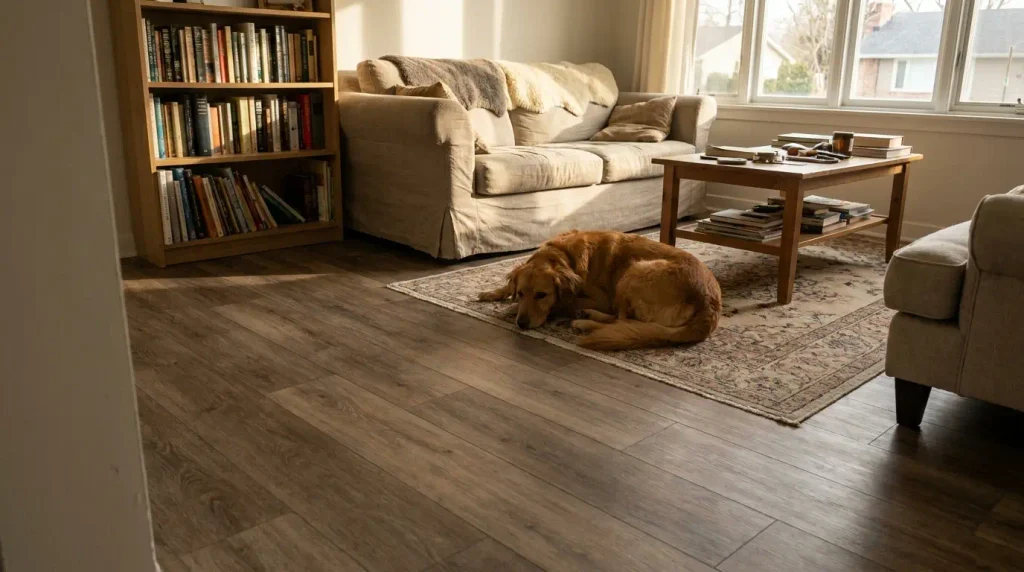
Mohawk built its SolidTech line around scratch and stain resistance for busy households. The SPC core resists denting from furniture and pet claws. The UniClic locking system creates a tight, secure seal between planks. Wear layers across the SolidTech line typically run from 12 to 22 mil. Pricing spans roughly $3.50 to $8.00 per square foot.
The catch with Mohawk is its enormous catalog. Not every Mohawk product matches SolidTech quality. Always confirm the collection name and mil rating before you buy. Do not rely on the brand name on the sample alone.
Best for Bathrooms and Basements: COREtec Plus and Pro
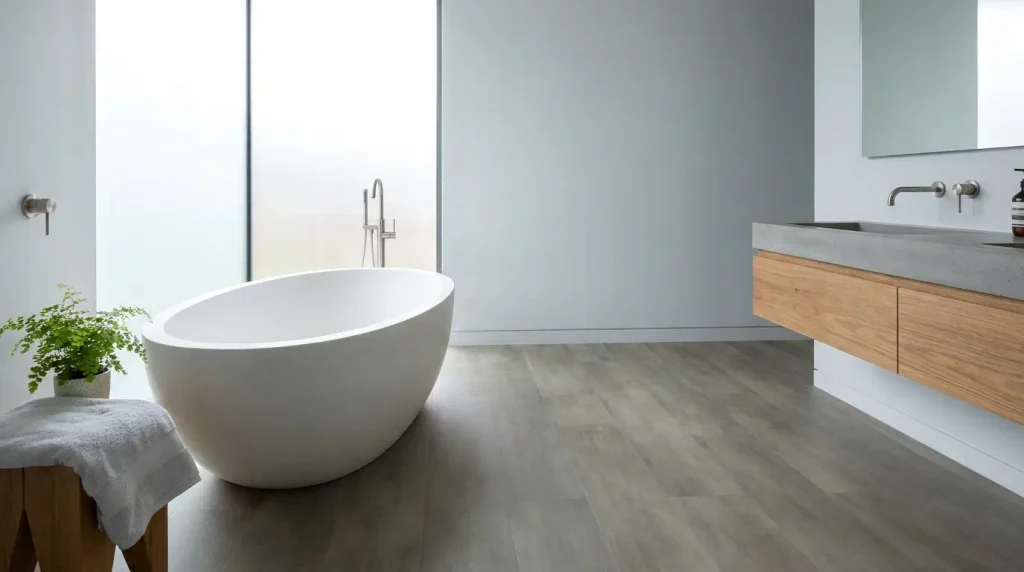
COREtec pioneered the WPC waterproof core category. Its Plus and Pro collections remain some of the most moisture resistant options available. Every COREtec product ships with an attached cork underlayment. This adds comfort and sound dampening on top of the waterproof core. Wear layers run 20 mil on the Plus line. They go up to 30 mil on the Pro line. Prices run from about $5.00 to $10.00 per square foot.
COREtec costs more than most competitors. For a basement or bathroom, moisture exposure is a real daily concern. The extra cost buys real peace of mind there.
Best for Garages and Utility Spaces: NuCore Waterproof
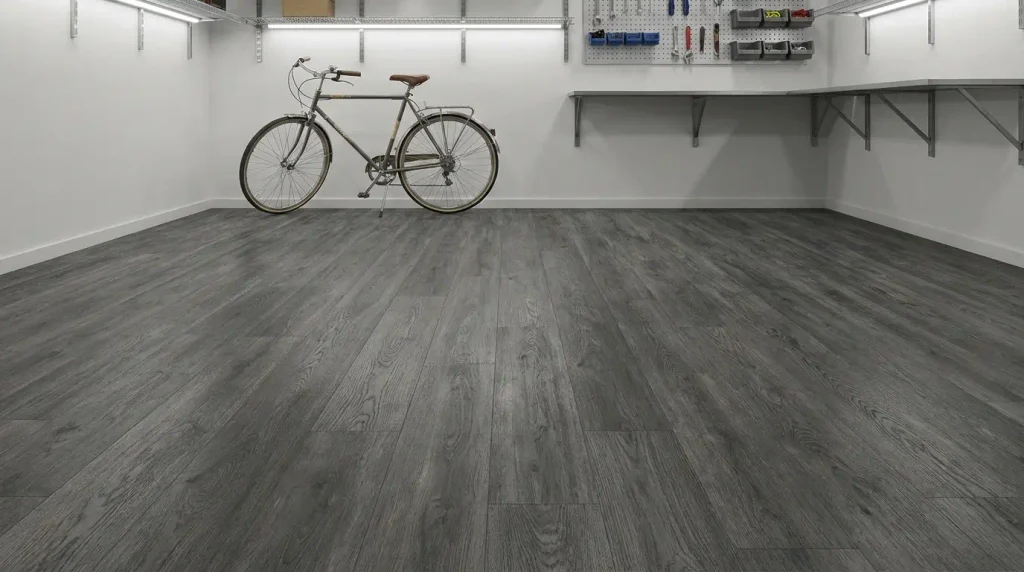
NuCore combines an SPC core with an attached cork pad. This gives it strong impact resistance along with better comfort than a bare SPC product. Wear layers typically range from 20 to 30 mil. That holds up well against dropped tools and vehicle traffic. It also handles the temperature swings common in a garage. NuCore is sold through Floor & Decor and LL Flooring. Prices run roughly $2.50 to $4.50 per square foot.
Best Budget Option: SMARTCORE and LifeProof
SMARTCORE sells exclusively at Lowe’s. LifeProof sells exclusively at Home Depot. Both deliver genuinely waterproof, DIY friendly flooring at accessible prices. SMARTCORE runs about $2.50 to $4.50 per square foot with wear layers from 12 to 20 mil. LifeProof spans a wider range, from $2.50 to $6.00 per square foot. Its wear layer varies enormously by collection, anywhere from 6 mil to 30 mil.
This wide variance is the real trap with both budget brands. An entry level box can sit right next to a pro grade box on the same shelf. Only the fine print on the spec sheet tells you which one you are actually buying.
Best Luxury Option: Karndean
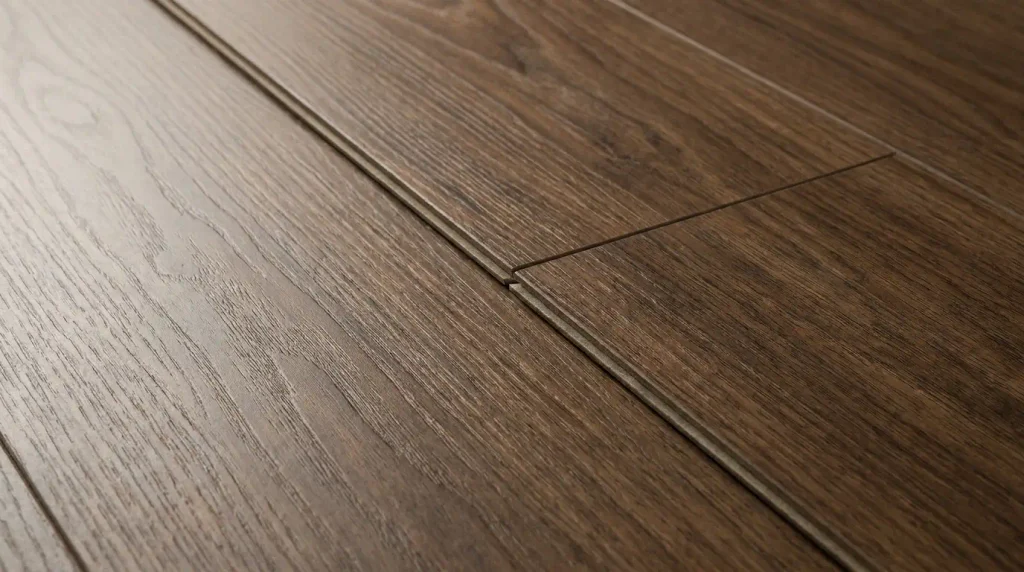
Karndean built its reputation in the UK over four decades. It now operates three US showrooms out of its Pittsburgh headquarters. Its Art Select collection tops out with a 30 mil wear layer. Commercial warranties on some lines run up to 20 years. Collections range widely in price. Knight Tile starts around $3.00 to $4.50 per square foot. Art Select runs $5.50 to $7.00 per square foot.
Karndean is not a brand for stretching a tight renovation budget. It is the right call when realistic visuals and long term durability matter more than upfront cost.
Best for DIY Installation: SMARTCORE, LifeProof, and Mohawk SolidTech
All three of these brands use straightforward click lock systems. They are designed for a first time installer. Planks snap together without glue, and tools stay minimal. Most projects need only a tape measure, a utility knife, a rubber mallet, and spacers for the expansion gap. A single room of about 200 square feet typically takes a weekend for a first time installer. That covers measuring, cutting, and laying every plank. Most collections float directly over an existing hard surface floor, which cuts out a full day of demolition.
Best Vinyl Plank Flooring Brands Comparison Table
| Brand | Best For | Wear Layer (mil) | Core Type | Price Range (per sq ft) | Warranty | Where Sold |
| Shaw Floorte / Floorte Pro | Best overall | 12 to 30 | SPC and WPC | $3.75 to $9.00 | Lifetime residential (varies by line) | Flooring retailers nationwide |
| Mohawk SolidTech | Pets and high traffic | 12 to 22 | SPC | $3.50 to $8.00 | Lifetime residential (varies by line) | Flooring retailers nationwide |
| COREtec Plus / Pro | Bathrooms and basements | 20 to 30 | WPC and SPC | $5.00 to $10.00 | Lifetime residential | Flooring retailers nationwide |
| NuCore | Garages and utility rooms | 20 to 30 | SPC with cork | $2.50 to $4.50 | Lifetime residential | Floor & Decor, LL Flooring |
| SMARTCORE | Budget DIY | 12 to 20 | SPC | $2.50 to $4.50 | Limited lifetime residential | Lowe’s |
| LifeProof | Budget DIY | 6 to 30 | SPC | $2.50 to $6.00 | 10 to 15 years residential | Home Depot |
| Karndean | Luxury tier | Up to 30 | Rigid core / LVT | $3.00 to $7.00 | Up to 20 years commercial | Karndean showrooms, specialty retailers |
Prices and specs change by collection and by season. Confirm the current spec sheet for the exact product before you buy.
Where Is Each Brand Sold? Retailer Exclusivity Guide
This vinyl plank flooring brand comparison would not be complete without a word on retailers. Several top brands lock to a single one. This surprises a lot of first time buyers. LifeProof sells exclusively through Home Depot. SMARTCORE sells exclusively through Lowe’s. NuCore sells through Floor & Decor and LL Flooring. Shaw, Mohawk, COREtec, and Karndean sell through a broader network. You can usually find them through multiple flooring specialty retailers in most metro areas.
Knowing this before you shop saves you a wasted trip. If a friend recommends LifeProof, you are heading to Home Depot, not Lowe’s.
Common Mistakes When Choosing a Vinyl Plank Flooring Brand
Among the top vinyl flooring brands, one mistake costs buyers the most money. They trust the brand name instead of checking the actual collection spec. A single brand like Mohawk or Armstrong sells dozens of product lines. Wear layers within one brand can range from a thin 6 mil to a commercial grade 30 mil. Always check the specific collection’s spec sheet. Never trust the brand name alone.
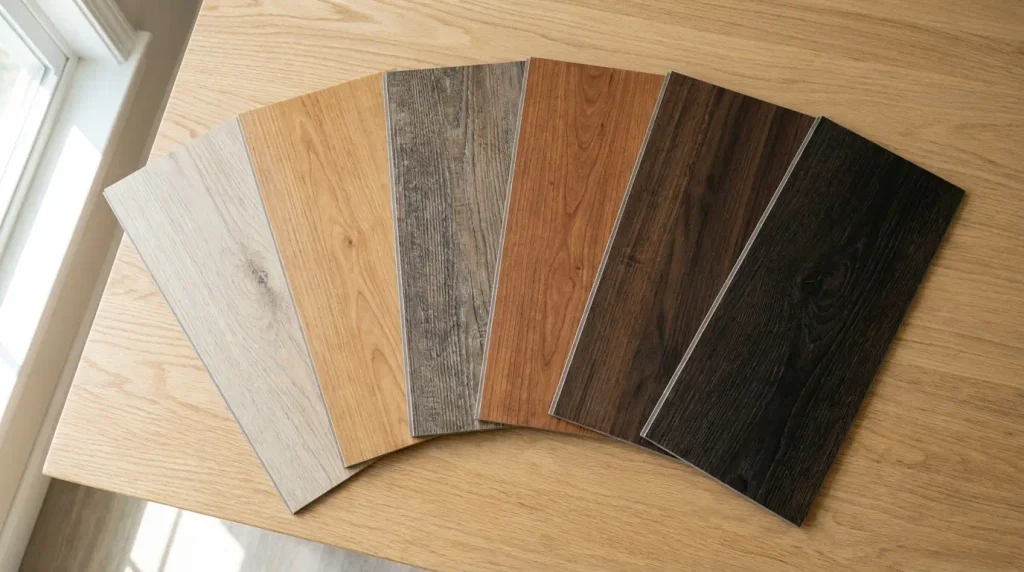
Skipping samples is the second common mistake. Colors and finishes look different under your home’s lighting. Store lighting and screens rarely match your actual room. Order two or three real samples. View them in the actual room before you commit to a full order.
Ignoring total installed cost is the third mistake. The price per square foot on the box rarely includes underlayment or moisture barrier. It often skips trim and transition strips too. These extras can add real money to a project. Ask for a full itemized quote before you compare brands on price alone.
Confusing water resistant with fully waterproof is the fourth mistake. Read the actual product label carefully. A water resistant product can still swell or stain under standing water. A fully waterproof product will not.
How to Choose the Right Vinyl Plank Brand for Your Project
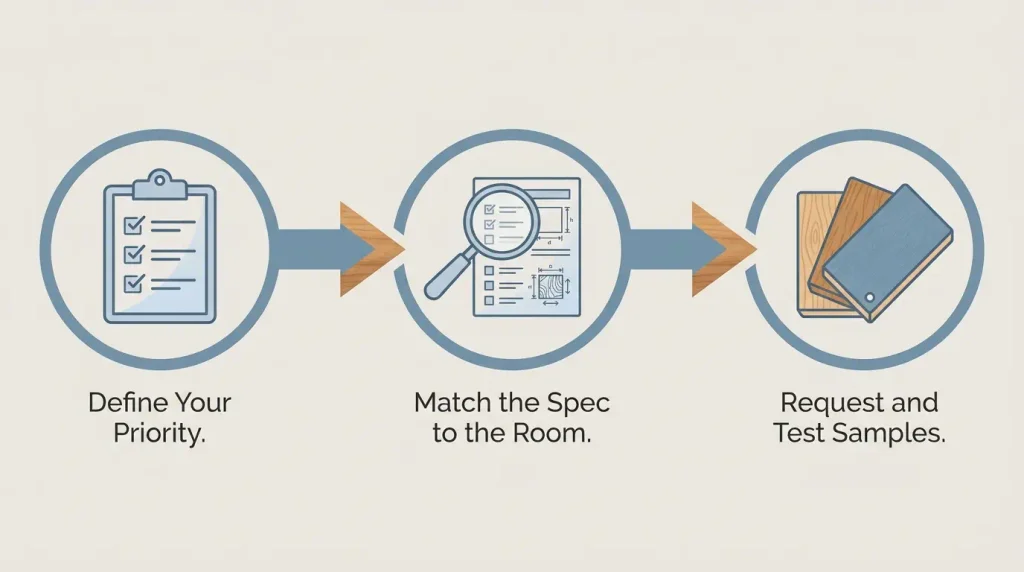
Step 1: Define Your Priority
Not every leading vinyl plank flooring brand fits every room. Decide what matters most for this specific room. A mudroom with dogs needs scratch resistance above all else. A basement needs waterproofing above all else. A bedroom needs quiet comfort above all else. Your priority should drive every decision that follows.
Step 2: Match the Spec to the Room
Once you know your priority, filter by the number that matches it. High traffic rooms need 20 mil or higher and an SPC core. Quiet rooms benefit from a WPC core or a cork backed product. Wet areas need a confirmed fully waterproof product. The locking system needs to be tight, not just labeled waterproof on the box.
Room lighting changes how vinyl plank flooring colors look too, so check swatches under your own bulbs, not the showroom’s.
Step 3: Request and Test Real Samples
Order samples from your top two or three choices. Place them in the actual room, in daylight and at night. Set them next to your existing furniture and trim. Walk on them barefoot to judge comfort. This ten minute step prevents the most common flooring regret homeowners report.
Final Thoughts
Choosing among the best vinyl plank flooring brands comes down to matching real specs to your real room. It is not about chasing the biggest name on the shelf. Shaw and COREtec lead on all around durability. SMARTCORE and LifeProof deliver genuine value if you check the collection carefully first. Karndean earns its premium price with unmatched realism. Whichever brand you choose, confirm the wear layer, core type, and warranty on the actual spec sheet. Then test a real sample in your own home before you buy.
Frequently Asked Questions
Which vinyl plank flooring brand is most durable?
Wear layer thickness is the strongest durability signal. Shaw Floorte Pro and COREtec Pro both top out near 30 mil. The real difference between them comes down to core type. Shaw’s SPC core resists dents better under heavy furniture. COREtec’s WPC core with attached cork absorbs impact better in rooms where comfort matters too. Pick based on which tradeoff fits your room, not the brand name alone.
What is the difference between SPC and WPC cores?
SPC cores use a stone based composite. They are dense, rigid, and highly resistant to denting. WPC cores use a wood based composite with a foaming agent. This makes them softer, warmer, and quieter underfoot. Both are fully waterproof and install as floating floors.
Is a thicker vinyl plank always better quality?
No. Total plank thickness affects comfort and how well the floor hides subfloor imperfections. It does not determine durability on its own. A thinner plank with a 22 mil wear layer will outlast a thicker plank with only a 12 mil wear layer. This holds true even in daily, heavy use.
What is the best vinyl plank flooring for homes with pets?
Wear layer matters most against claws, but the locking system matters just as much against accidents. Look for a tight click lock seam with a wear layer of at least 20 mil. COREtec’s attached cork underlayment also cuts down on the click and echo of nails on hard flooring. That matters more in a multi-pet home than raw wear layer numbers alone.
Do all vinyl plank brands need an underlayment?
No. Many collections, including COREtec, NuCore, and SMARTCORE, ship with an attached underlayment pad already built in. Always check the product spec sheet first. Adding a separate underlayment on top of a pre attached pad can prevent the locking system from engaging correctly. It may also void your warranty.
How much does vinyl plank flooring cost installed?
Most homeowners pay between $3 and $10 per square foot installed. The final cost depends on the brand, wear layer, and installation method. Professional installation typically adds $2 to $5 per square foot on top of material cost. Always request a full itemized quote before comparing brands.
Is vinyl plank flooring good quality?
Yes, when you choose the right wear layer and core type for your room. Quality vinyl plank flooring from an established brand can last 15 to 25 years under normal residential use. Performance still depends heavily on the specific collection and the quality of the installation.
Is vinyl plank flooring good for a garage?
Yes, with two extra checks a living room floor does not need. Confirm the product tolerates the temperature swings of an unheated garage. Some cores can stiffen or contract in extreme cold. Also confirm the wear layer rating against chemical exposure. Garages see oil, gasoline, and de-icing salt that a bathroom or bedroom never will.
About HomeFixStyle
HomeFixStyle is a home improvement blog dedicated to helping readers create better, more comfortable, and stylish homes. We share practical ideas, helpful guides, home decor inspiration, renovation tips, and simple solutions for everyday home projects. Our goal is to make home improvement easier to understand and apply, whether you are updating one room or improving your entire home.