
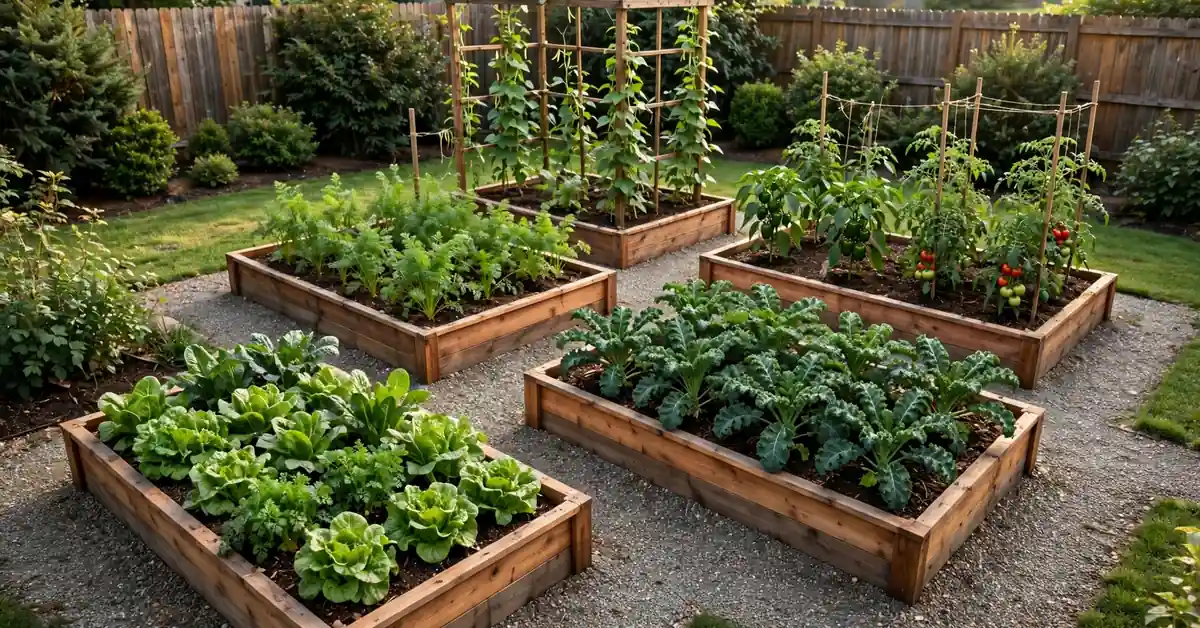
A good vegetable garden design turns a sunny part of your yard into an easy place to grow food. Start by choosing a spot with enough light, measuring your space, and planning paths you can use comfortably. Then decide whether raised beds, planting rows, containers, or trellises suit your home. The 15 ideas below include five measured plans, crop placement advice, affordable materials, and common mistakes to avoid.
How to Plan a Vegetable Garden Design That Fits Your Yard
Before choosing a style, check your yard’s growing conditions. A beautiful arrangement won’t help if plants sit in deep shade or wet soil. Sketch the available area on paper and mark the water source, fences, and nearby trees. This gives your vegetable garden design a practical foundation before you buy anything.
Choose a Sunny Location
Most vegetables need at least six hours of direct sunlight each day. Tomatoes, peppers, and squash usually do better with more. Lettuce and other leafy greens can tolerate some shade, especially during hot weather. Watch the site during morning and afternoon hours, not just at noon. The University of Maryland Extension recommends full sun, convenient water access, and room to work. Avoid locations where tree roots compete with vegetables or rainwater pools for hours.
Measure Beds and Walking Space
Mark your proposed garden with stakes and string. Beds three to four feet wide work well when you can reach them from both sides. Make a bed narrower if a fence blocks one side. A 4×8-foot raised bed gives you 32 square feet of planting space. Its surrounding paths need extra room. A useful vegetable garden design includes space for a bucket, hose, and the person doing the gardening.
Plan Water, Soil, and Drainage
Locate the garden near a hose connection if possible. For larger beds, consider drip irrigation or soaker hoses. Soil should drain after rain rather than remain waterlogged. Test in-ground soil before adding fertilizer; the results can help you choose amendments. Where older paint, fill, or past land use raises contamination concerns, request appropriate soil testing. Raised beds may help manage unsuitable ground, but you still need clean growing soil and safe materials.
Match Crops to Your Climate
Choose vegetables your household eats and your growing season can support. Bush beans, lettuce, radishes, carrots, and many herbs suit modest spaces. Zucchini and sprawling winter squash need much more room. Growing schedules vary across the USA. Minnesota gardeners must work around shorter frost-free seasons; Florida gardeners often plant cool-season vegetables in fall or winter. Local cooperative extension calendars are more useful for planting dates than hardiness zones alone.
15 Vegetable Garden Design Ideas for Different Yards
The best vegetable garden design is one you can reach, water, and enjoy looking at. These options range from compact backyard beds to larger planting areas. Each solves a different space or style problem, so choose the features that fit your property.
1. Raised Beds for a Neat Backyard
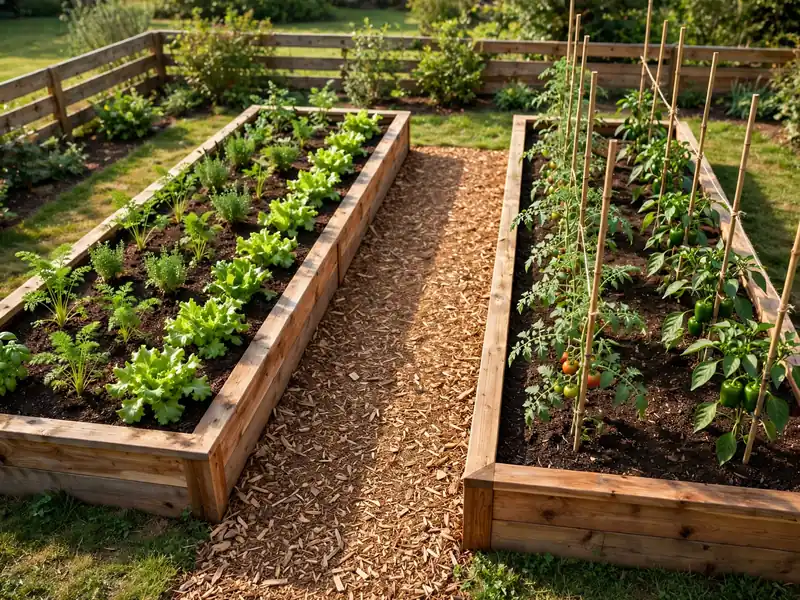
Place two rectangular raised beds parallel to each other with a clear path between them. A 4×8-foot bed is a useful starting size for mixed vegetables. Cedar gives a warm appearance, while suitable metal beds create a more modern look. Grow lettuce and carrots near accessible edges. Give tomatoes or peppers enough space for their mature growth. This vegetable garden design keeps feet off the growing soil. However, you must buy frame materials and fill the beds.
2. Narrow Beds for a Small Backyard
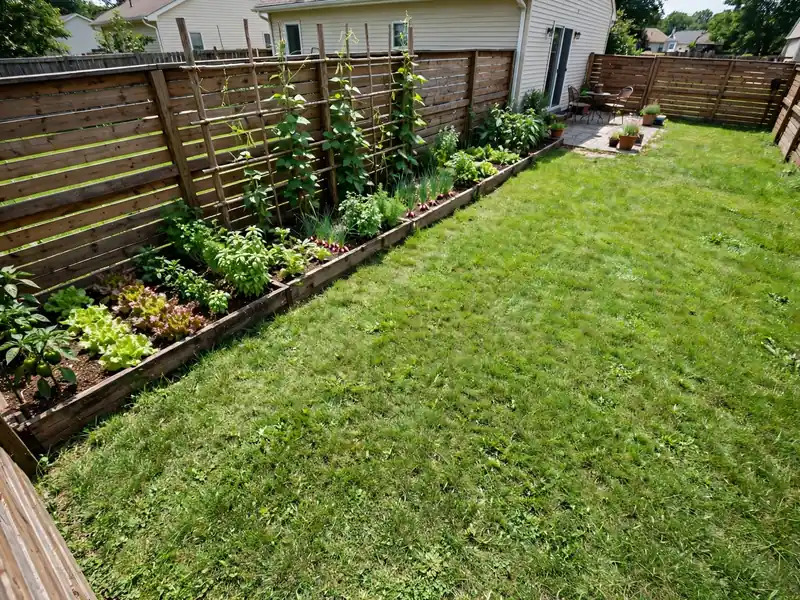
Keep the center of a small yard open by placing a narrow bed along a sunny boundary. Use a freestanding trellis for climbing beans or cucumbers instead of letting vines spread across the lawn. Leave enough room to walk and work beside the fence. Compact crop varieties help, but don’t overcrowd them. Other gardening ideas can help you arrange flowers and herbs around a small edible space.
3. Square Foot Garden for First-Time Growers
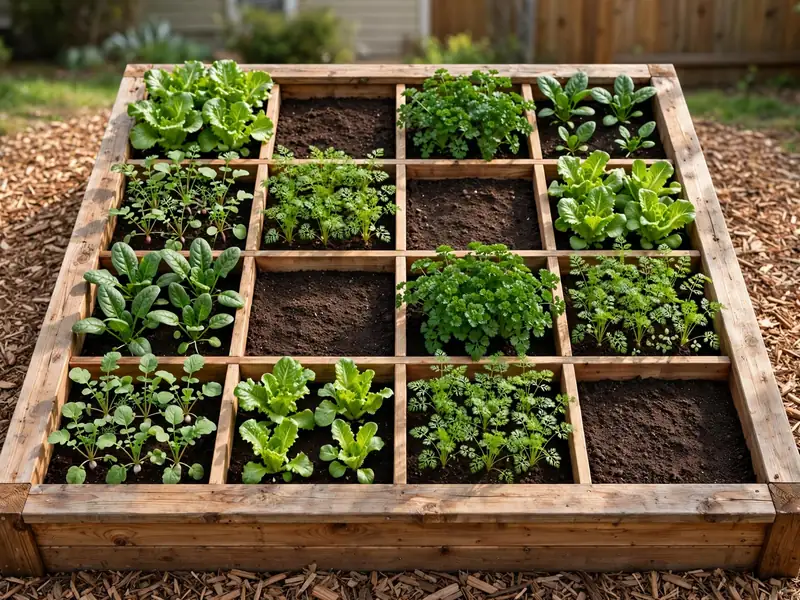
Divide a 4×4-foot bed into sixteen one-foot squares with string or thin wooden strips. Plant each square according to the crop’s mature spacing. Some compact lettuce varieties fit four per square; small radishes may fit sixteen. Larger plants often need one square or more. Check seed packets before setting the grid. This vegetable garden design is easy to map, especially when you want to grow several crops in one bed.
4. Four Square Garden With Crossing Paths
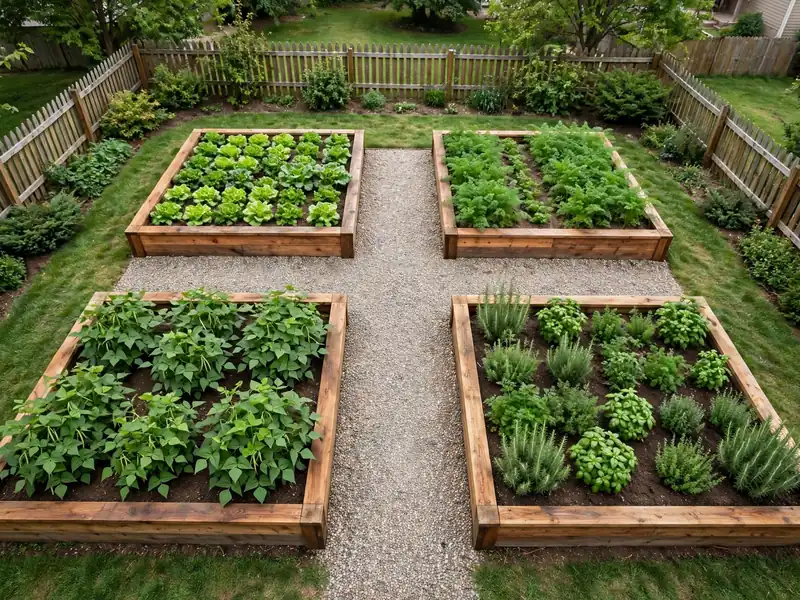
Arrange four small beds around two paths that meet in the center. Matching frames give the space a balanced appearance and make each section easy to reach. Use the beds for different crop groups or planting seasons. A low planter at the center can look attractive, but it must not block the walkway. This layout suits square garden spaces. Remember that its crossing paths take up ground that could otherwise grow food.
5. Traditional Rows for a Larger Plot
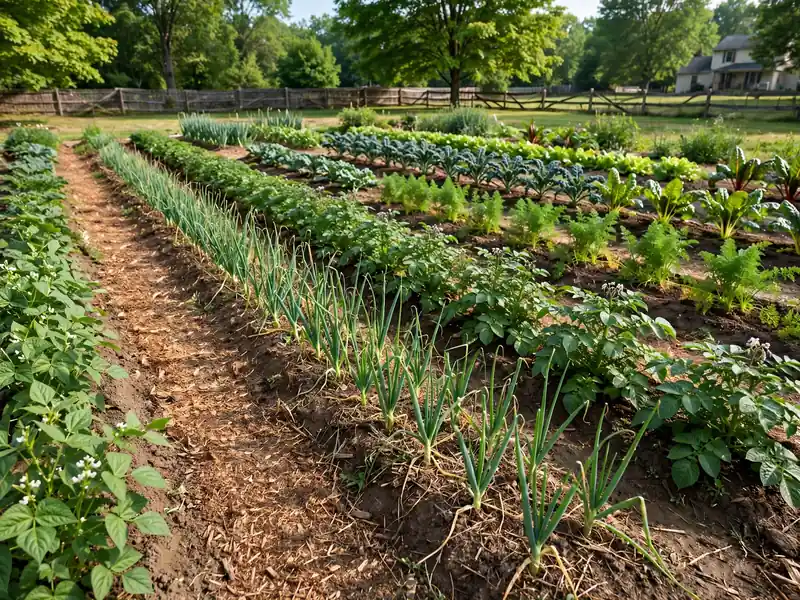
Straight planting rows suit a yard with generous open space. Use string to mark rows, then allow enough room for walking and crop growth. Potatoes, onions, beans, and other vegetables can grow in rows. Mulch the aisles to limit weeds and mud. A row-based vegetable garden design can make a larger harvest easier to organize. It may use more space than wide beds, so plan around your actual equipment and crops.
6. Block Planting for Efficient Growing Space

Block planting groups crops in a broad bed instead of widely separated rows. It works for carrots, beets, lettuce, and bush beans when spacing is correct. Sweet corn also benefits from blocks because wind moves pollen between plants. Keep the block narrow enough to reach from the sides. Avoid packing seedlings together just to fit more plants. Airflow, water, and mature leaf size still matter.
7. Vertical Garden With Strong Trellises
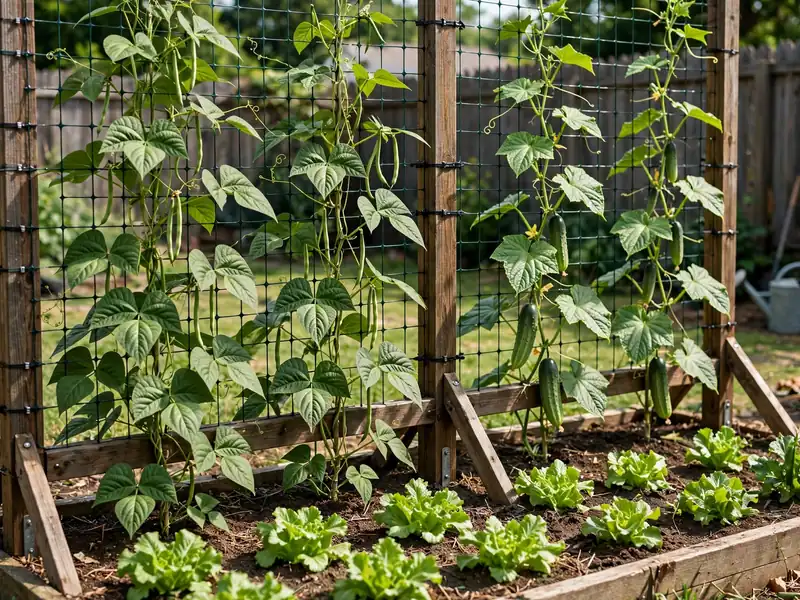
Use upright supports for pole beans, peas, and climbing cucumber varieties. Secure posts well before the vines become heavy. Place tall supports where they won’t shade sun-loving crops. The north side often works well in US gardens. Nearby buildings may change the best position. A vertical vegetable garden design makes hanging fruit easier to spot and frees ground space for smaller plants. Check the support’s strength after storms.
8. U-Shaped Beds Around a Central Work Area
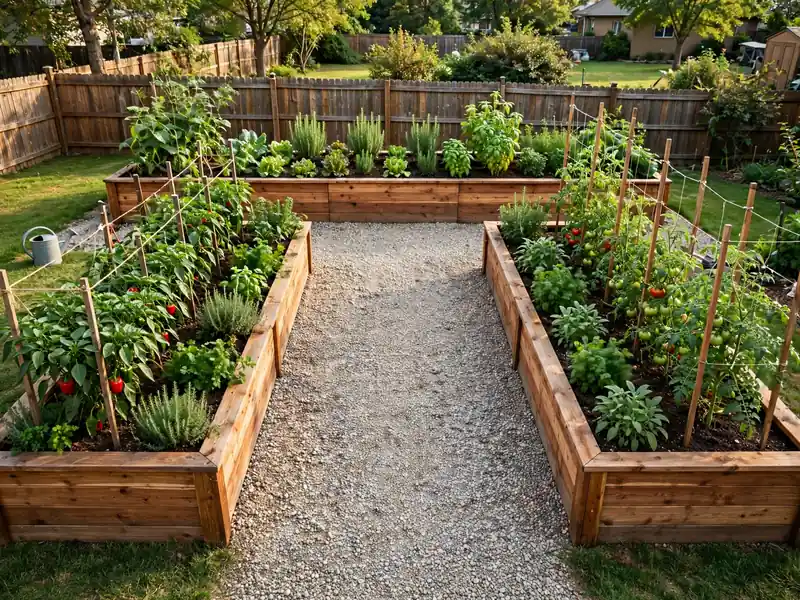
Three growing sections can form a U around an open center. Make the central space wide enough to carry tools and reach each bed. Build separate rectangular frames to avoid hard-to-reach corners. Taller crops can sit toward the back when sunlight allows. This arrangement helps define a garden within a medium-sized yard. Measure carefully before building, since an attractive U shape is still frustrating if its opening is too narrow.
9. L-Shaped Garden in a Sunny Corner
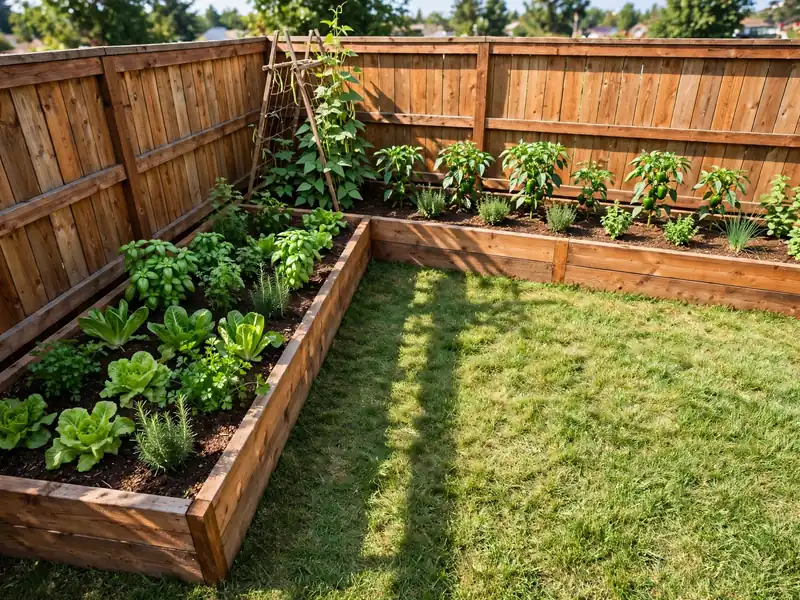
Run two narrow beds along adjoining sides of a yard. This uses a corner without taking over the lawn. Place low greens and herbs close to the walking edge. Reserve suitable spots for supported tomatoes or beans. Before choosing the corner, check shade from both fences. An L-shaped vegetable garden design works best when every part remains reachable without stepping into the soil.
10. Container Garden for a Patio
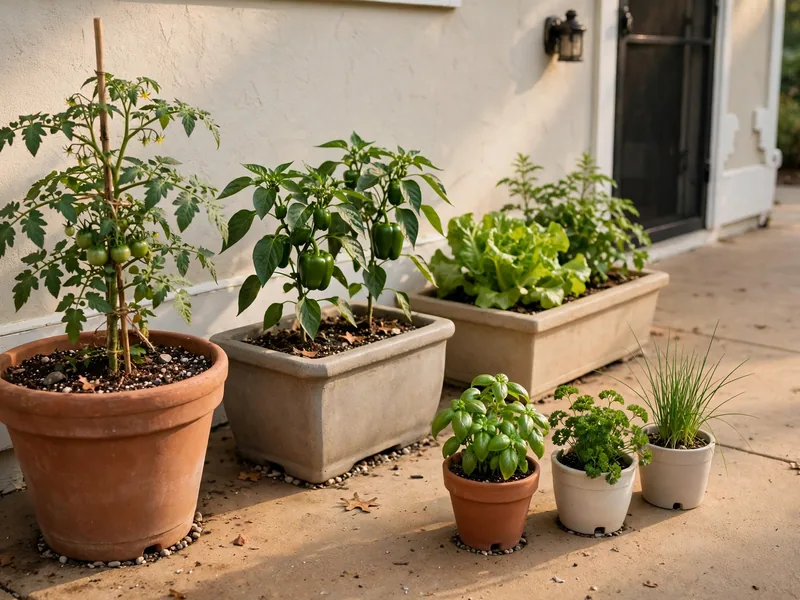
Grow vegetables in pots when digging a permanent bed isn’t possible. Choose containers with drainage holes and enough room for mature roots. Herbs, lettuce, compact peppers, and patio tomato varieties are useful choices. Fill pots with container potting mix, not dense yard soil. Group them near a water source and leave clear walking space. Containers dry quickly during hot weather, so check moisture often. Matching pots help a patio look organized. If you’re working with limited outdoor space, these small garden design ideas offer more inspiration for compact patios, narrow yards, and vertical planting.
11. Kitchen Garden Near the House
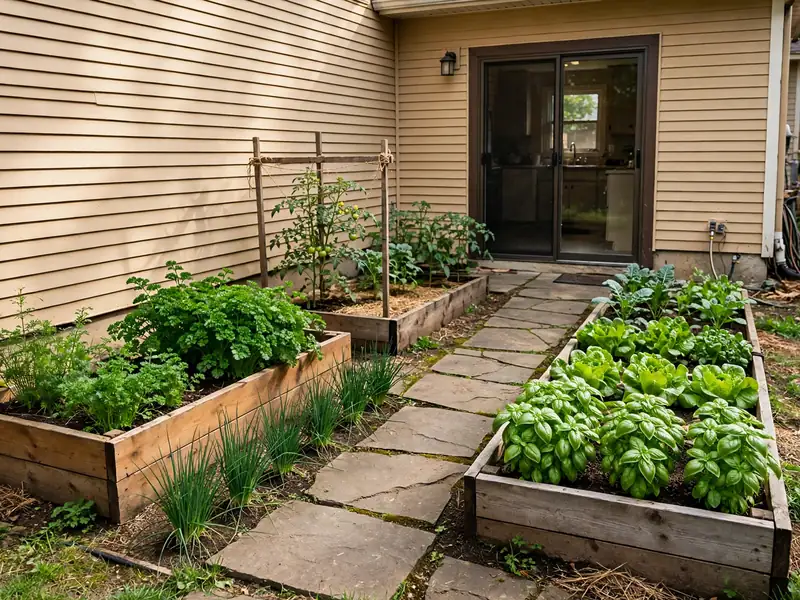
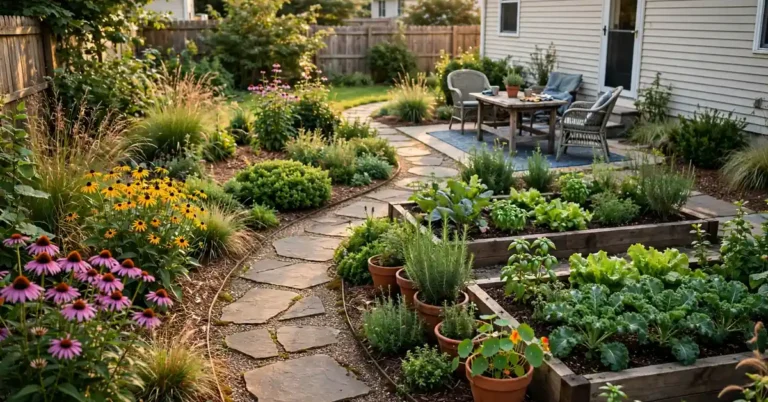
Keep frequently picked herbs and vegetables near a convenient door. Arrange small beds or containers along a short, sunny path. Grow basil, parsley, chives, lettuce, and other ingredients you actually cook with. Put regularly harvested plants near the front and taller crops farther back. A kitchen vegetable garden design makes harvesting convenient while connecting food growing with the patio or outdoor dining area.
12. Cottage Garden With Edible Plants and Flowers
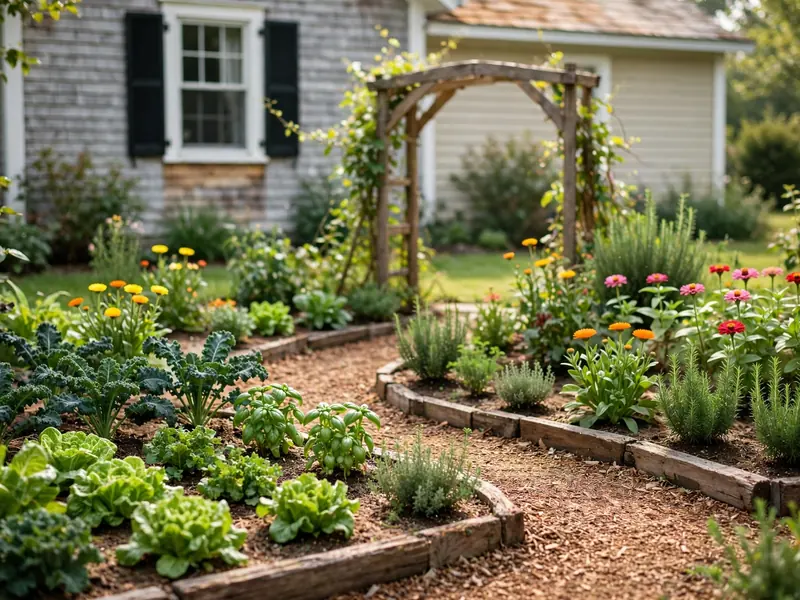
Mix vegetables, herbs, and suitable annual flowers for a softer, informal appearance. Calendula and zinnias add color and offer resources for pollinators. Keep enough room between plants for light and airflow. Simple wooden edging and curved paths suit this look. Thoughtful Garden design ideas can help connect edible beds with ornamental borders. Avoid putting tall flowers directly in front of sun-loving vegetables.
13. Modern Beds With Gravel Walkways

Use repeated rectangles, matching materials, and tidy routes for a modern garden. Metal or cedar beds can complement contemporary patios. Gravel paths look orderly but need edging and weed management. Keep the hose connection easy to reach even if you hide it from view. Coordinated landscape designs can make the beds feel part of the whole yard. This vegetable garden design values clean lines without making maintenance difficult.
14. Front Yard Beds With Decorative Borders

A sunny front yard may grow vegetables better than a shaded backyard. Use defined beds and low borders to create a tidy appearance. Keep plants away from intersections, sidewalks, and driveway sightlines. Check local rules and any homeowners association restrictions first. Test soil if old paint, fill, or previous land use raises concerns. A front-yard vegetable garden design can look welcoming while providing food, but it needs regular upkeep.
15. Large Garden With Separate Growing Zones
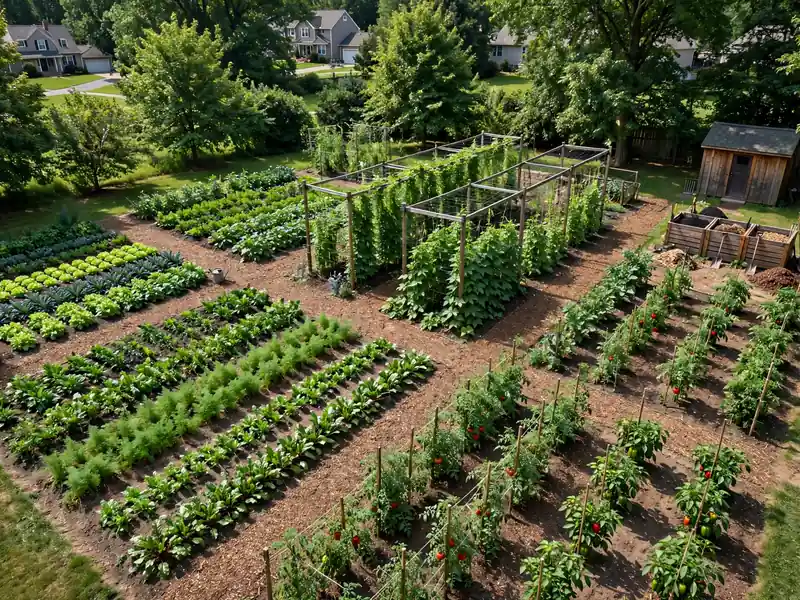
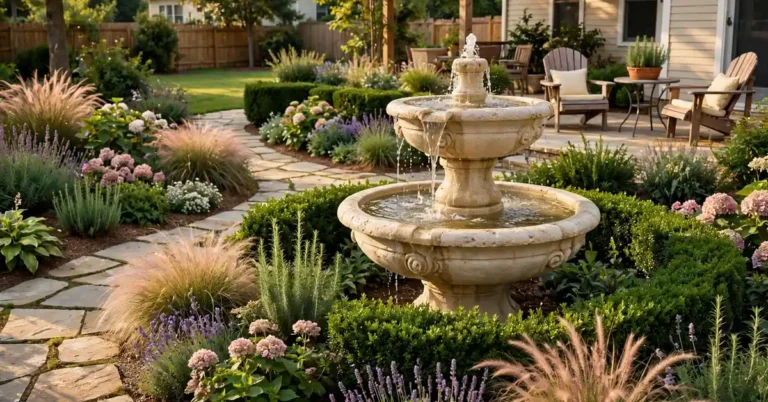
Divide a large space into zones for greens, root crops, climbing plants, and longer-season vegetables. Place tools, compost, and water where they are convenient. Keep asparagus or other perennial crops outside areas you dig each season. Allow wide access routes for hauling mulch. A nearby seating area may suit small fountain ideas, but keep decorative water separate from food growing. Start with fewer beds than you think you need.
Vegetable Garden Design Plans by Size
The plans below show how growing beds and paths can fit inside measured spaces. Numbers describe a proposed footprint, not the number of vegetables it will produce. Verify plant spacing for each variety before filling a bed. For a safer vegetable garden design, check that gates and accessible routes fit your actual needs. For layouts that also include flowers, pathways, and seating areas, explore these Garden Design Plans before deciding on your final arrangement.
4×4-Foot Starter Bed
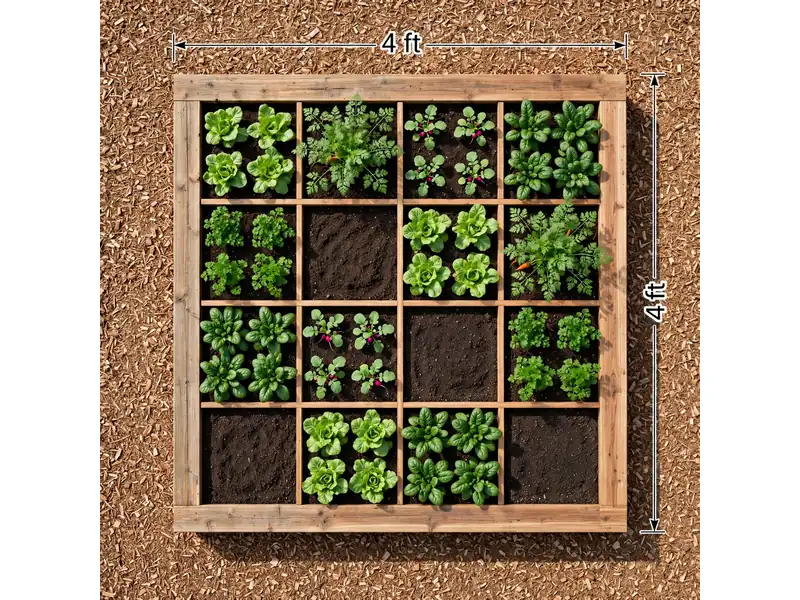
This single bed provides 16 square feet of growing area. Divide it into sixteen one-foot squares for a simple planting grid. Use suitable squares for leafy greens, radishes, herbs, and carrots. Leave room outside all four edges so you can reach the middle. The 4×4-foot measurement covers only the bed, not its surrounding access space.
4×8-Foot Raised Bed
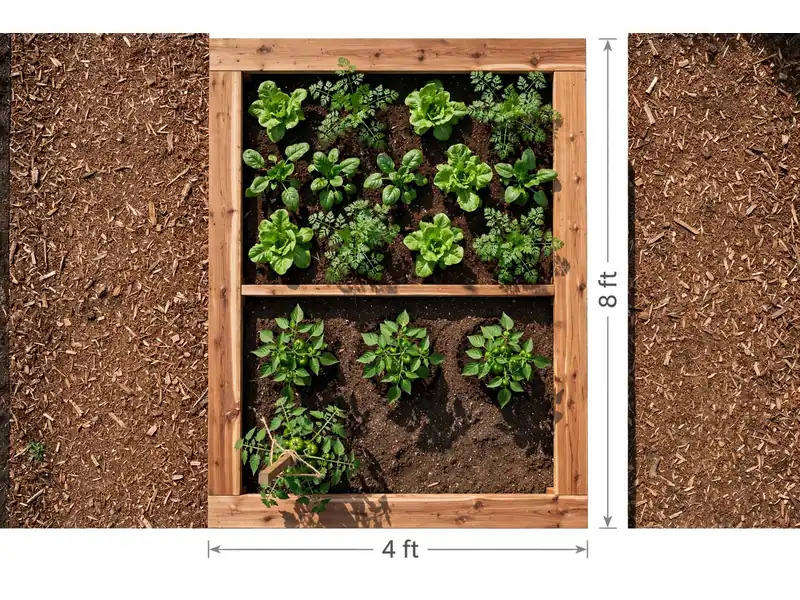
This bed provides 32 square feet of growing area. Reserve one section for compact greens and roots. Use the rest for suitable peppers or a supported tomato, based on mature spacing. Reach the bed from both long sides. The surrounding path lies outside the stated 4×8-foot footprint. This vegetable garden design offers a sensible first project without needing several beds.
8×8-Foot Garden With a Central Path
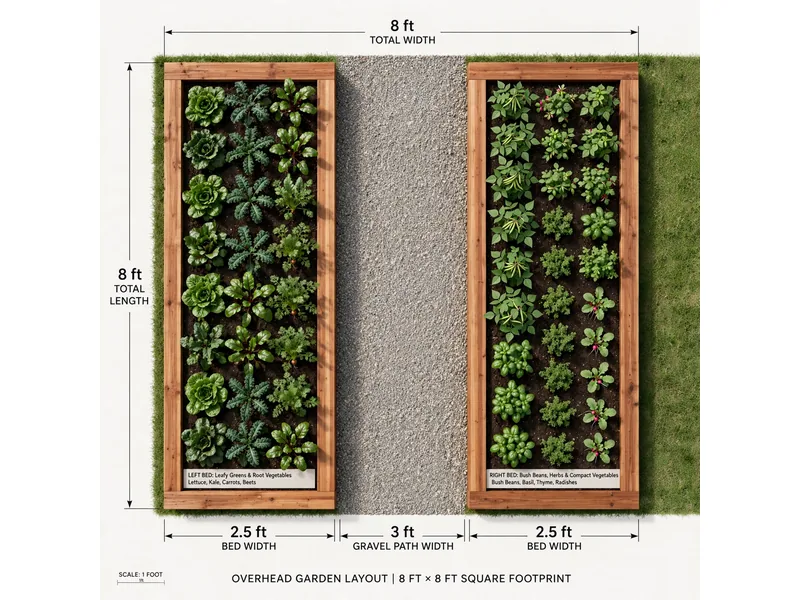
Fit two 2.5×8-foot beds inside an 8×8-foot footprint. Put a three-foot path between them. The width adds up exactly: 2.5 + 3 + 2.5 = 8 feet. The beds provide 40 square feet of growing space; the path takes 24. Access the outer edges from outside the garden as needed. These dimensions assume no extra border inside the footprint.
10×10-Foot Four-Bed Plan
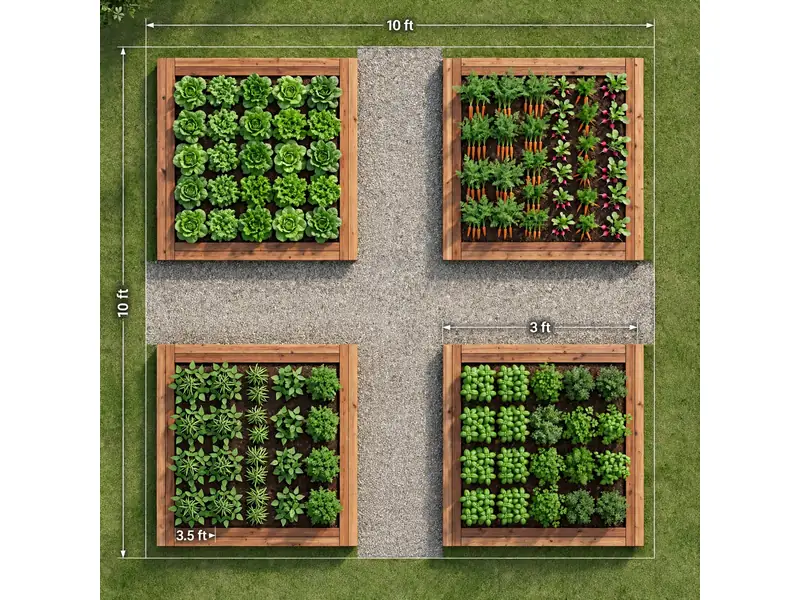
Arrange four 3.5×3.5-foot beds in a square. Leave a three-foot crossing path between them in both directions. The garden includes 49 square feet of beds and 51 square feet of paths. Each side measures 3.5 + 3 + 3.5 = 10 feet. Grow greens, roots, bush beans, or other suitable crops in separate sections. Plan any gate or outside access beyond this footprint.
10×20-Foot Garden With Four Large Beds
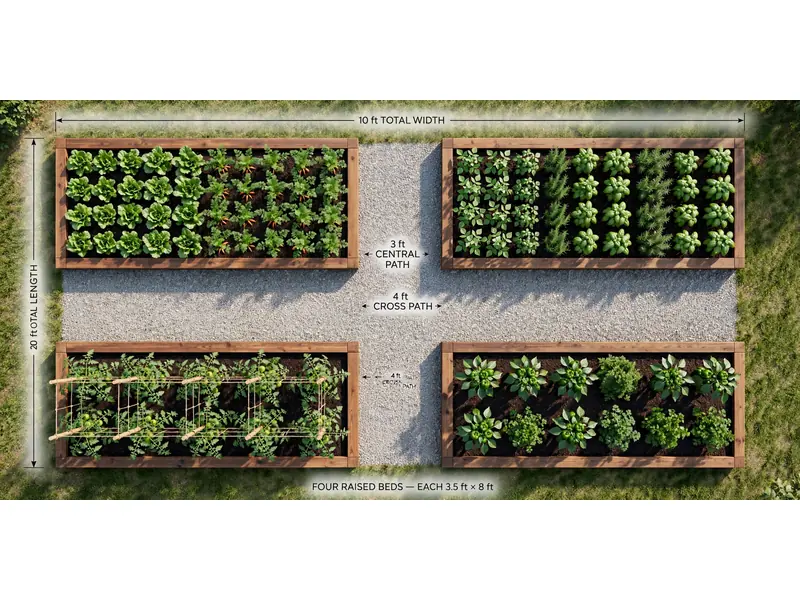
Place four 3.5×8-foot beds in two pairs. Leave a three-foot lengthwise path and a four-foot cross path between pairs. The width is 3.5 + 3 + 3.5 = 10 feet. The length is 8 + 4 + 8 = 20 feet. Beds occupy 112 square feet, leaving 88 for paths. This vegetable garden design supports several crop groups without losing access. Put tall trellises where their shade causes the least trouble.
How to Arrange Vegetables for Healthy Growth
A vegetable garden design should account for plants at full size, not just the seedlings you bring home. Arrange crops by sunlight needs, height, and harvest timing. Careful placement makes everyday tasks easier and helps avoid crowded beds.
Give Plants Their Full Growing Room
Follow the seed packet or transplant label for each variety. A small zucchini seedling can become a wide plant. Tomatoes may need cages, stakes, or sturdy trellises. Thin direct-seeded carrots and radishes when necessary. Leave enough space to reach plants without breaking stems or trampling soil.
Keep Tall Plants From Shading Short Ones
Place supported tomatoes, pole beans, and other tall crops toward the north side when practical. That position often limits shade over lower plants. Nearby trees, houses, and fences can change the best layout. Observe your own yard rather than relying on one compass rule. Install supports early and secure them against wind.
Interplant With Care
Quick-growing radishes may finish before a nearby slower crop needs more room. Flowers can provide pollen and nectar for helpful insects. But companion planting does not guarantee pest control. Match neighboring plants by moisture needs, sun, and mature size. The University of Florida IFAS Extension offers planting arrangement and interplanting advice.
Plant Another Crop After Harvest
Succession planting means filling a cleared space with a crop suited to the remaining season. Spring lettuce may be followed by warm-season vegetables. Some areas can support fall greens after summer harvests. Check local planting calendars first. Add compost when appropriate, and keep a record of what occupied each bed.
Rotate Crop Families When Possible
Tomatoes, peppers, and eggplants belong to the same plant family. Changing their location between seasons can help manage some disease risks. Rotation is harder in tiny gardens and won’t eliminate every soilborne problem. Use healthy plants, sound watering practices, and resistant varieties where available. Keep notes so you know what grew in each bed last year.
How to Make Your Vegetable Garden Look Beautiful
A good vegetable garden design can match the rest of your home without becoming hard to manage. Repeat a few materials, keep paths clear, and use flowers where they fit the growing conditions. Appearance should work with the garden’s daily needs.
Choose Suitable Bed Materials
Cedar offers a natural look and resists decay better than many untreated softwoods. Metal raised beds can complement modern garden design, especially when paired with clean pathways and simple planting arrangements. Stone borders can define in-ground plots. Avoid unknown reclaimed wood where chemical treatment is uncertain. Pick materials that are suitable for edible gardening and your local weather.
Give Paths a Clear Purpose
Wood chips suit casual gardens and can help reduce mud. Gravel needs edging and occasional weed removal. Firm pavers may be easier to walk on when installed correctly. Paths should remain usable after rain. If a gardener uses mobility equipment, plan access for that equipment rather than assuming a standard path will work.
Add Flowers, Herbs, and Simple Supports
Use basil or parsley near accessible edges. Add calendula or zinnias where they won’t crowd vegetables. A sturdy arch can hold climbing beans and mark an entrance. Keep structures tall and wide enough for comfortable access. Limit the number of materials so the garden feels connected to the yard.
Vegetable Garden Design Costs and Practical Savings
The cost of a vegetable garden design depends on size, soil needs, and materials. In-ground beds often cost less to build than raised beds. Containers offer flexibility but need potting mix and watering attention. Compare the whole project cost, not just the price of lumber.
Compare Common Garden Types
| Garden type | Main costs | What to consider |
| In-ground beds | Soil testing, compost, mulch | Existing soil quality matters |
| Raised beds | Frame, soil, compost | Filling the beds can be costly |
| Containers | Pots, potting mix, plants | Pots dry out faster |
| Vertical beds | Posts, mesh, fasteners | Supports must hold mature plants |
| Decorative beds | Paths, edging, finishes | Extra features raise the budget |
A 4×8-foot bed filled 12 inches deep needs 32 cubic feet of material. That equals sixteen two-cubic-foot bags. At an illustrative $10 per bag, the fill costs $160 before tax or delivery. This is not a current store quote. Compare local bulk and bagged prices before buying. Existing soil below an open-bottom bed may affect how much imported mix you need.
Save Money Without Cutting Essentials
Start with one bed and expand later. Compare seeds with transplants based on the crop and season. Use suitable mulch for paths and clean, food-safe containers when possible. Spend first on clean soil, safe materials, and dependable water access. Expensive decoration can wait until the garden is producing food.
Common Vegetable Garden Design Mistakes to Avoid
Most problems begin before planting. A vegetable garden design that ignores reach, sunlight, and drainage can become tiring to maintain. Check these issues while the layout is still on paper.
Beds Too Wide to Reach
A bed wider than you can comfortably reach encourages stepping on soil. That can compact the growing area. Keep most beds around four feet wide with access from both sides. Use a narrower bed beside a fence.
Crops or Vines Blocking Paths
Cucumber and squash vines can spread into walking areas. Tomatoes and beans can grow much taller than expected. Plan for mature size, not seedling size. Support climbing crops and keep paths open for harvesting.
Too Little Sun or Poor Drainage
A shady or waterlogged site can limit harvests despite good soil and fertilizer. Watch sun patterns and check drainage after heavy rain. Resolve serious drainage issues before building permanent beds. Choose shade-tolerant crops only where conditions suit them.
More Beds Than You Can Maintain
A large garden takes regular time for watering, pest checks, weeding, and harvesting. Start small if you’re learning. The University of Maryland Extension suggests 25 to 50 square feet as a useful beginner range. Expand when you know how much work fits your routine.
Frequently Asked Questions
What Is the Best Vegetable Garden Layout for Beginners?
One 4×8-foot raised bed works for many beginners. It offers 32 square feet of growing area with straightforward access. In-ground beds and containers can also be good choices, depending on budget and soil.
How Much Room Do You Need?
You can begin with a sunny container or a 4×4-foot bed. The right size depends on crop choice, access, and time. Allow walking room outside any measured bed footprint.
Should Vegetable Rows Run North to South?
North-to-south rows can distribute sunlight well in some settings. But tree shade, slopes, and nearby buildings also affect placement. Position tall crops so shorter ones get suitable light.
Can Vegetables Grow in Partial Shade?
Some leafy greens tolerate partial shade, especially during hot periods. Tomatoes, peppers, and squash usually need more direct sun for strong production. Check actual sunlight before choosing crops.
Are Raised Beds Better Than In-Ground Beds?
Neither method wins in every yard. Raised beds offer defined soil areas and may help with difficult ground. In-ground beds often need fewer materials. Compare soil, drainage, cost, and accessibility.
Will a Vegetable Garden Attract Rats or Chipmunks?
Gardens can attract wildlife when food, shelter, or easy access is available. Harvest ripe produce promptly and remove fallen fruit. Keep stored seed secure and avoid leaving pet food nearby. Use appropriate fencing or barriers for recurring animal damage. Identify the animal before choosing a control method.
How Do I Build a Simple Vertical Garden Frame?
Use sturdy posts and outdoor-rated mesh or trellis panels. Anchor the frame against wind and mature vine weight. Keep access open for harvesting and place it where nearby crops won’t lose essential sunlight.
Final Thoughts
A successful vegetable garden design starts with a sunny spot, reachable beds, and crops your household will eat. Choose a layout that fits your yard and your available time. Give plants room to mature, keep paths clear, and plan for regular watering. A small garden you can maintain is a better starting point than a large one you can’t.

About Author
Mia Anderson is a gardening writer at HomeFixStyle with a keen interest in plants, garden design, and outdoor living. Her work focuses on small-space gardening, plant care, and practical landscaping ideas. She enjoys sharing simple, well-researched advice that helps homeowners create beautiful gardens suited to their space, budget, and lifestyle.