A cathedral ceiling follows the roofline on both sides. A vaulted ceiling does not have to. That is the short answer to vaulted ceiling vs cathedral ceiling. But the full answer matters more once you start planning a room, a budget, or a renovation.
This guide covers what each ceiling type actually is. It covers cost, energy use, noise, and which rooms suit each style. It also covers the questions most guides skip, like resale value, conversion cost, and what happens to your heating bill. By the end, you will know exactly which ceiling fits your home and your budget.
Cathedral Ceiling vs Vaulted Ceiling: Quick Comparison
Use this table as a fast reference before you read the full breakdown.
| Feature | Cathedral Ceiling | Vaulted Ceiling |
| Symmetry | Always symmetrical | Can be symmetrical or not |
| Follows roof pitch | Yes, exactly | No, sits below the roofline |
| Attic space above | None | Often present |
| Framing | Scissor trusses or stick framing | Varies by style, simple to complex |
| Typical cost premium | Moderate | Low to high, depends on style |
| Insulation method | Spray foam or rigid foam | Batt often works if space allows |
| Best rooms | Great rooms, formal living spaces | Open floor plans, entries, bedrooms |
| Design style fit | Traditional, craftsman, transitional | Modern, rustic, Scandinavian |
What Is a Cathedral Ceiling?
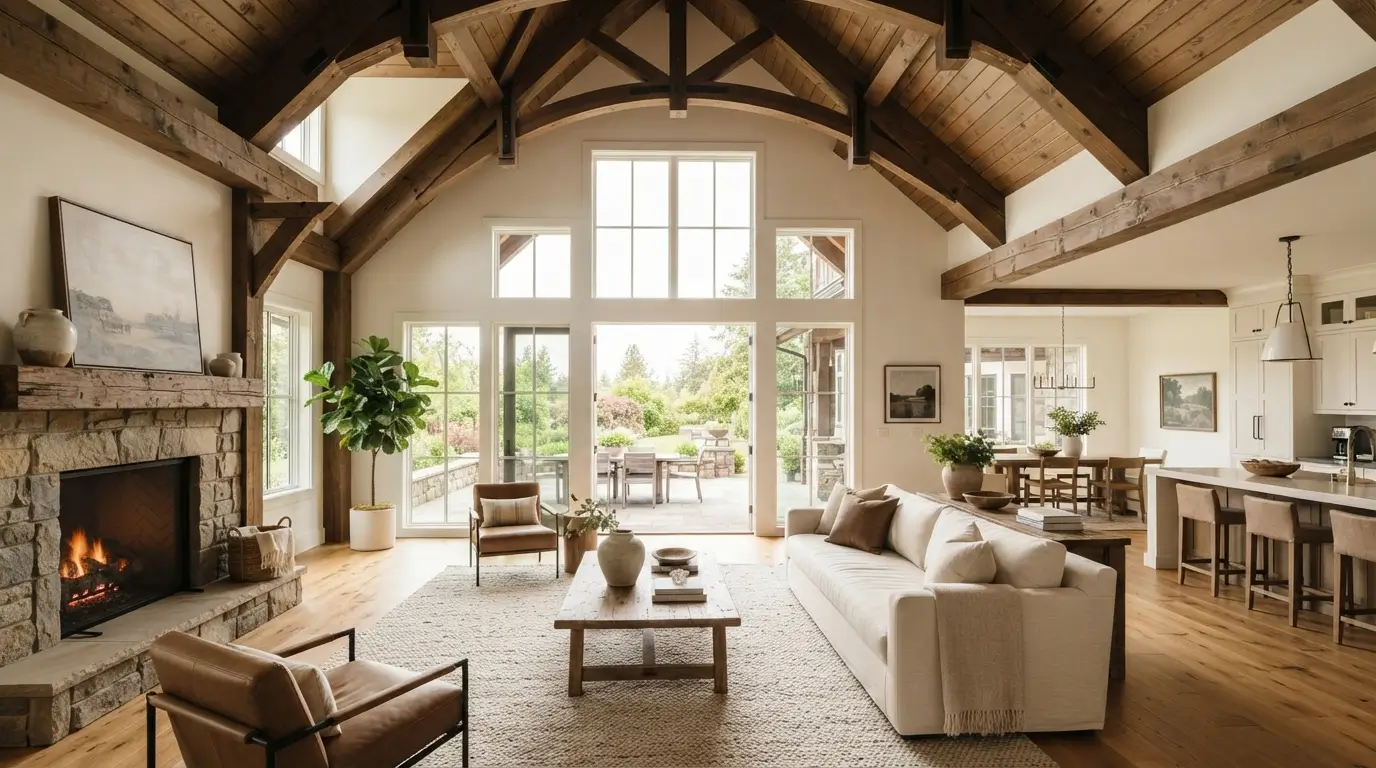
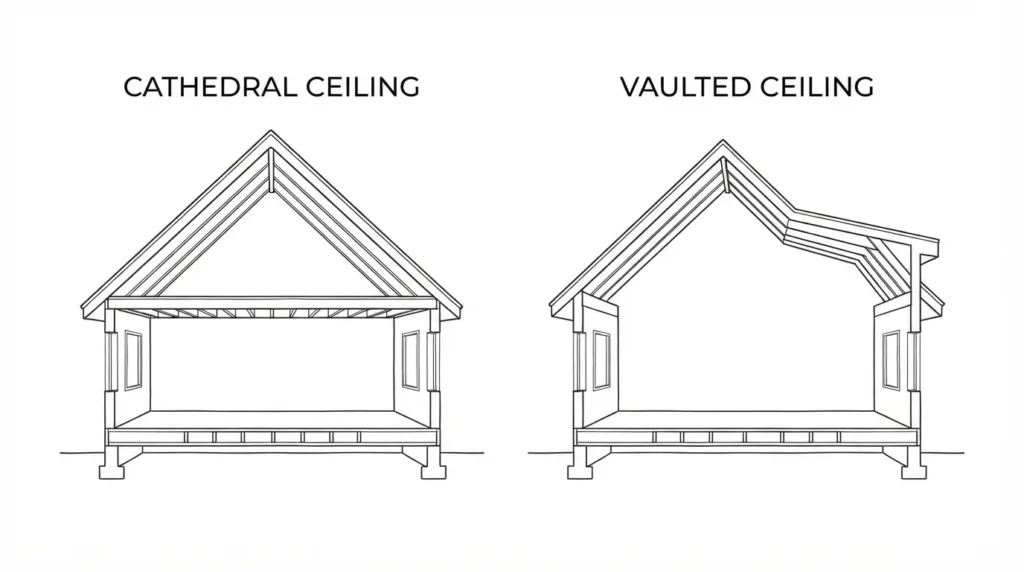
A cathedral ceiling rises from both walls and meets at a center ridge. Both sides slope at the same angle. The slope matches the pitch of the roof above it. There is no attic space between the ceiling and the roof deck.
This same influence shows up in Gothic style houses, where steep rooflines and dramatic interior height are a defining feature. That same shape now shows up in homes, especially in great rooms and formal living areas.
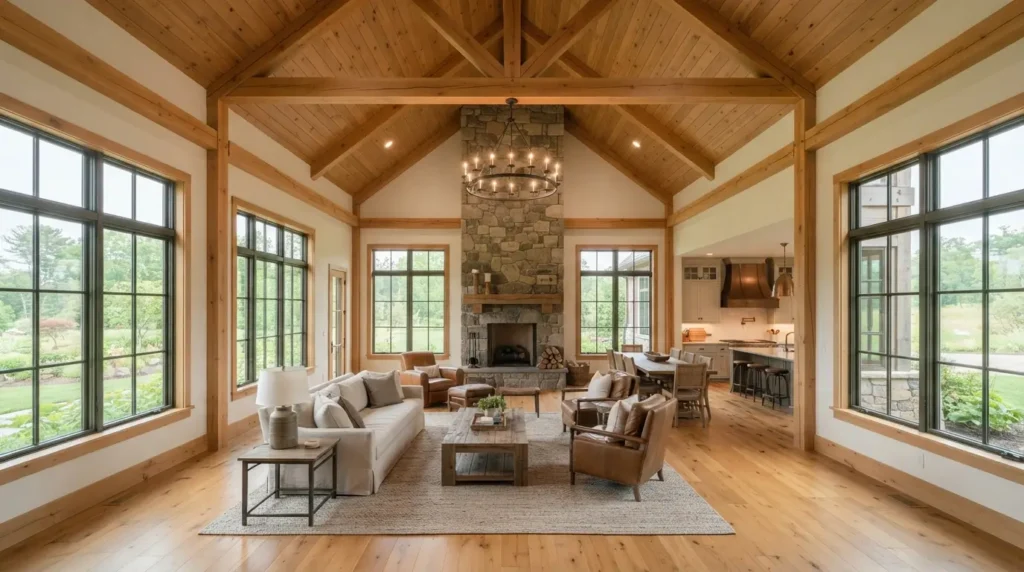
Key Structural Features
A cathedral ceiling needs specific framing. Standard attic trusses will not work. Builders use scissor trusses or site built rafters instead. This adds labor and material cost compared to a flat ceiling.
The ridge runs the length of the room. It becomes the visual centerpiece. Light fixtures, beams, and skylights often follow this line.
Best Rooms for a Cathedral Ceiling
Cathedral ceilings work best in large, open rooms. Great rooms, primary bedrooms, and formal dining rooms all suit this style. The symmetry reads best when the roofline outside is already steep.
Homes with a strong exterior pitch benefit the most. The interior height reflects the exterior shape. This creates a sense that the design was planned, not added later.
What Is a Vaulted Ceiling?
A vaulted ceiling is any ceiling raised above the standard flat plane. It does not need to follow the roof pitch. It does not need to be symmetrical. It sits below the roof structure rather than matching it exactly.
This is the broader term. Every cathedral ceiling is technically a vaulted ceiling. Not every vaulted ceiling is a cathedral ceiling. That single rule explains most of the confusion around these two terms.
Types of Vaulted Ceilings
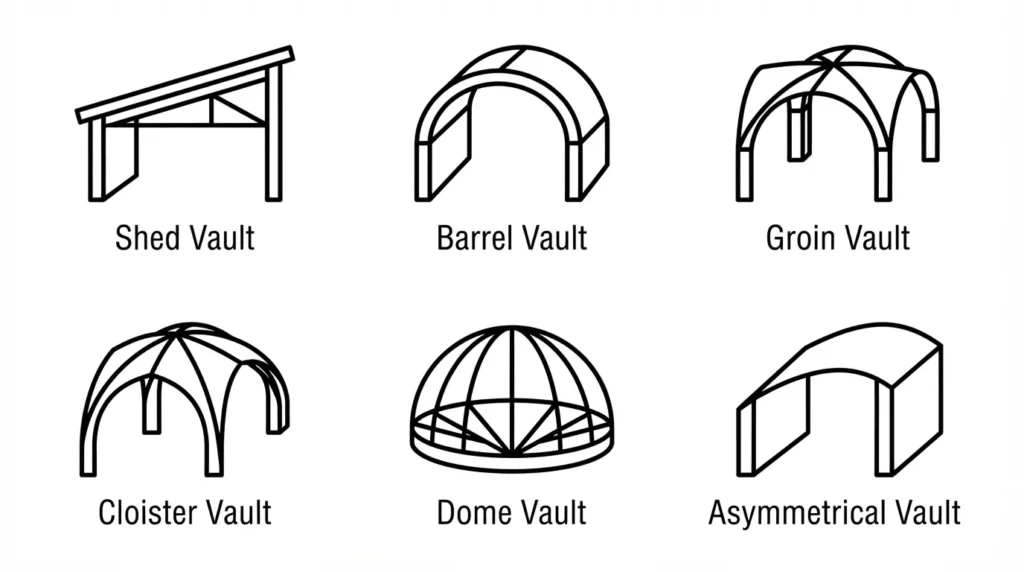
Vaulted ceilings come in several shapes. Each one changes the feel of a room.
Shed vault. One side rises higher than the other. This works well in modern homes. It pairs nicely with tall windows on the high wall.
Barrel vault. A rounded arch runs the length of the ceiling. This style suits hallways, entries, and dining rooms. It adds a formal, curved look.
Groin vault. Two barrel vaults cross at right angles. This is complex to build. It shows up more in commercial spaces than homes.
Cloister vault. Four curved surfaces rise from the walls toward the center. This style adds elegance to large rooms like living rooms or wide foyers.
Dome vault. A rounded, spherical shape covers the ceiling. This works well above a staircase or in a formal bedroom.
Asymmetrical vault. One slope is steeper or taller than the other. This gives designers more freedom. It works well in open floor plans where different zones need their own feel.If your walls meet the ceiling with a smooth curve instead of a sharp angle, you may be looking at a coved ceiling instead.
Vaulted Ceiling vs Cathedral Ceiling: What Actually Makes Them Different
The difference comes down to two things: symmetry and roof pitch.
A cathedral ceiling always matches the roof pitch exactly. Both sides slope the same amount. A vaulted ceiling does not have this rule. It can be uneven. It can curve. It can rise on one side only.
Think of cathedral ceilings as one specific type inside the larger vaulted ceiling category. This is the same relationship a square has with a rectangle. Every square is a rectangle. Not every rectangle is a square.
Many people use the two terms interchangeably in everyday conversation. Interior designers confirm this happens often, even though the terms describe different structures. Knowing the real distinction still helps you talk to a builder or read a listing accurately.
Cost Comparison: What You Will Actually Pay
Cost is often the deciding factor. Here is what typically drives the price up or down for each type.
| Cost Factor | Cathedral Ceiling | Simple Vaulted Ceiling | Complex Vaulted Ceiling |
| Framing labor | Moderate premium | Low to moderate premium | High premium |
| Truss or rafter cost | Scissor trusses add cost | Standard framing often works | Custom engineering required |
| Insulation | Spray foam adds real cost | Batt insulation often enough | Spray foam usually needed |
| Drywall labor | Premium for angled surfaces | Moderate premium | Significant premium |
| HVAC resizing | Usually required | Often required | Almost always required |
As a general national range, expect to add roughly 15 to 30 percent more per square foot for the ceiling area compared to a standard flat ceiling. This is often the real gap that decides a vaulted ceiling vs cathedral ceiling choice for budget conscious homeowners. Complex vaults like groin or dome styles land at the higher end. Simple shed vaults often sit near the lower end. Get a real quote from a licensed contractor before setting your budget. Regional labor rates and material costs shift these numbers significantly.
Converting an Existing Flat Ceiling
Converting a flat ceiling is a different project depending on which style you choose. Your existing roof framing often decides the real cost, not just your style preference.
Adding a vaulted or cathedral ceiling to an existing home is a bigger job than most homeowners expect. The type of framing already in your attic decides how hard this project will be.
If your home uses open rafters, conversion is often possible. If your home uses standard trusses, those trusses usually need full replacement. That step alone raises the cost significantly, since it touches your entire roof structure.
Always get a structural engineer involved before committing to this project. A contractor can tell you what is possible. An engineer confirms what is safe.
Energy Efficiency and Insulation
This is the part most guides skip, and it matters more than paint color or beam style.
Both ceiling types make insulation harder than a flat ceiling with an open attic above it. Heat rises. In a tall room, warm air gathers near the ceiling and cool air settles near the floor. This is called stratification, and it happens in every home with high ceilings.
Why Insulation Gets Harder
In a flat ceiling, insulation sits loose in the attic with no depth limit. In a cathedral ceiling, insulation must fit inside the rafter cavity. A standard rafter cavity limits how much insulation you can pack in.
The U.S. Department of Energy recommends higher insulation levels for colder climate zones, often in the R-49 to R-60 range for ceilings. A rafter cavity filled with standard batt insulation often falls short of that target. This gap is why cathedral ceilings usually need a different insulation approach than flat ceilings.
Insulation Options Compared
Closed cell spray foam delivers the highest R-value per inch. It also seals air leaks at the same time. This option costs more upfront but performs the best in tight rafter spaces.
Batt insulation costs less but needs more depth to hit the same R-value. It works well in vaulted ceilings that have room between the ceiling and the roof deck, since that extra depth is often available.
Hybrid assemblies combine batt insulation with a layer of rigid foam board. This reduces thermal bridging through the framing while keeping cost lower than full spray foam.
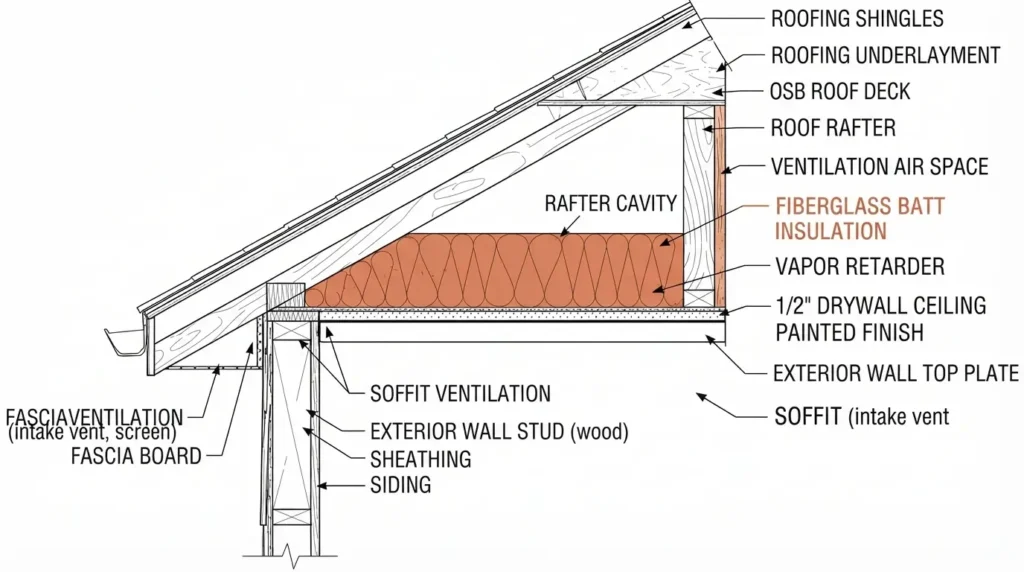
A vaulted ceiling often has more room to work with than a cathedral ceiling. That space between the ceiling and the roof deck gives insulation more depth to work in, which usually makes it easier and cheaper to hit a strong R-value. This single detail is one of the most overlooked factors in a vaulted ceiling vs cathedral ceiling decision, yet it can shift your heating bill for decades.
Ceiling Fans and Warm Air
A ceiling fan running in reverse during winter pushes warm air back down into the room. This single fix reduces the effect of stratification without any construction work. Most builders recommend blocking for a ceiling fan during framing, even if you plan to add one later.
Vapor Barriers and Ice Dams
In cold climates, moisture control matters as much as R-value. Warm, moist indoor air can move into the roof assembly and condense against the cold roof deck. A proper vapor retarder stops this.
Ice dams form when heat escapes through a poorly insulated roof, melts snow, and that meltwater refreezes at the colder eaves. A well insulated and properly vented cathedral or vaulted ceiling reduces this risk. This detail rarely comes up in basic buying guides, but it protects your roof for decades.
Acoustic Performance
High ceilings change how sound moves through a room. This detail is often ignored until move in day, and it rarely comes up when people first weigh a vaulted vs cathedral ceiling choice.
Cathedral Ceilings and Sound
A cathedral ceiling reflects sound evenly off both symmetrical slopes. In large open rooms with hard floors, this can create a slight echo. Rugs, upholstered furniture, and exposed wood beams all help break up that reflection.
Vaulted Ceilings and Sound
Vaulted ceilings behave less predictably. A barrel vault can focus sound toward one point in the room, which is sometimes a problem and sometimes a feature, depending on the room’s use. An asymmetrical vault tends to scatter sound more randomly, which usually feels less noticeable day to day.
If the room will double as a media space or home office, ask your designer about acoustic panels built into the ceiling design early, before drywall goes up.
Which Rooms and Home Styles Fit Each Type
Ceiling type and home style work best when chosen together. This is often where a cathedral vs vaulted ceiling decision really gets made, since the roofline and the room’s purpose usually point toward one style over the other.
Cathedral ceilings suit traditional, craftsman, and transitional homes. The symmetry supports classic proportions and detailed trim work. They also pair naturally with steep exterior rooflines and lake or waterfront homes, where height and light matter most.
Vaulted ceilings suit modern, contemporary, and Scandinavian style homes. For more
on this direction, see our complete guide to modern house design.Shed vaults are especially common in Nordic inspired design. Asymmetrical vaults work well in open floor plans, where different ceiling heights help define separate living zones without adding walls.
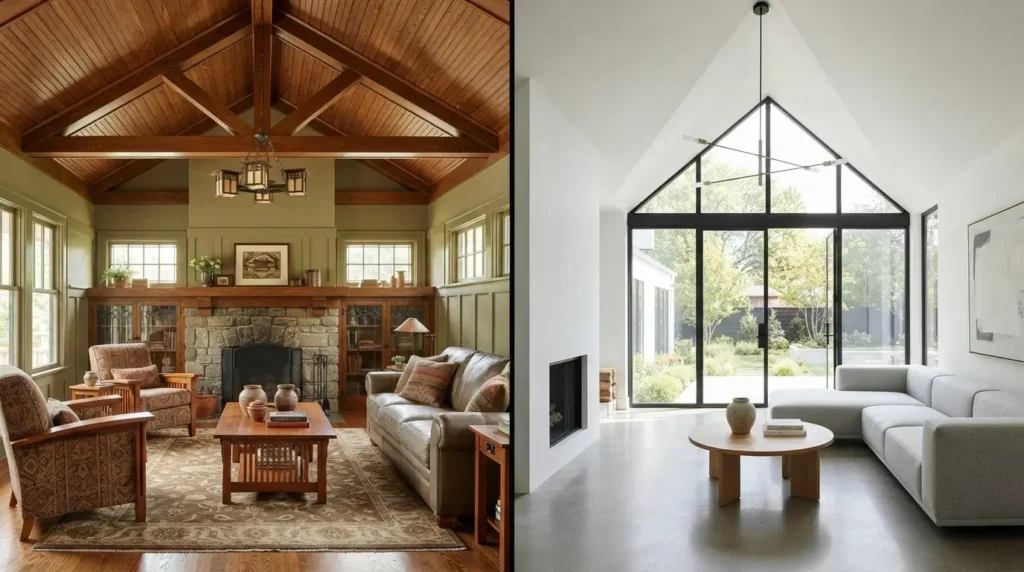
A few room specific ideas worth considering:
A dining room with a cathedral ceiling and a chandelier creates a formal, elevated feel. A kitchen with exposed beams under a vaulted ceiling adds warmth and a rustic touch. A grand entry with a barrel vault gives guests a strong first impression the moment they walk in.
Does a Vaulted or Cathedral Ceiling Add Home Value?
High ceilings consistently rank among the features buyers respond to well in listing photos and walkthroughs. A cathedral vs vaulted ceiling comparison rarely changes this. Rooms with a well built cathedral or vaulted ceiling tend to photograph better and draw more attention during showings.
That said, the value only holds if the ceiling is built and insulated correctly. A dramatic ceiling with a poor insulation job can quietly become a drawback. Buyers or their inspectors often notice high heating bills tied to a cold, drafty ceiling.
Buyer preference also is not universal. Some buyers, including many who follow feng shui principles, avoid exposed ceiling beams, believing they disrupt the energy of a room. This is a real consideration in some markets and worth a mention if you plan to sell later.
Vaulted or Cathedral Ceiling vs Flat Ceiling
Some buyers are not choosing between vaulted and cathedral. They are choosing between a vaulted style and a standard flat ceiling. It helps to address that comparison directly.
A flat ceiling costs less to build, insulate, and heat. It is easier to access for maintenance. A vaulted or cathedral ceiling adds visual drama and can make a small room feel larger. Neither option is objectively better. The right choice depends on your budget, your climate, and how much you value the open, airy feeling a taller ceiling creates.
Many homeowners who live with a vaulted ceiling say the tradeoff is worth it. Lightbulb access is a common concern going in, but long lasting LED bulbs and simple reach tools make this a smaller issue than most people expect.
Vaulted or Cathedral Ceiling vs Tray and Coffered Ceilings
These two styles are not the only high impact ceiling options. A tray ceiling steps up in the center, usually just a few inches, and adds trim detail without changing the roof structure at all. A coffered ceiling uses a grid of recessed panels, usually in formal dining rooms or studies.
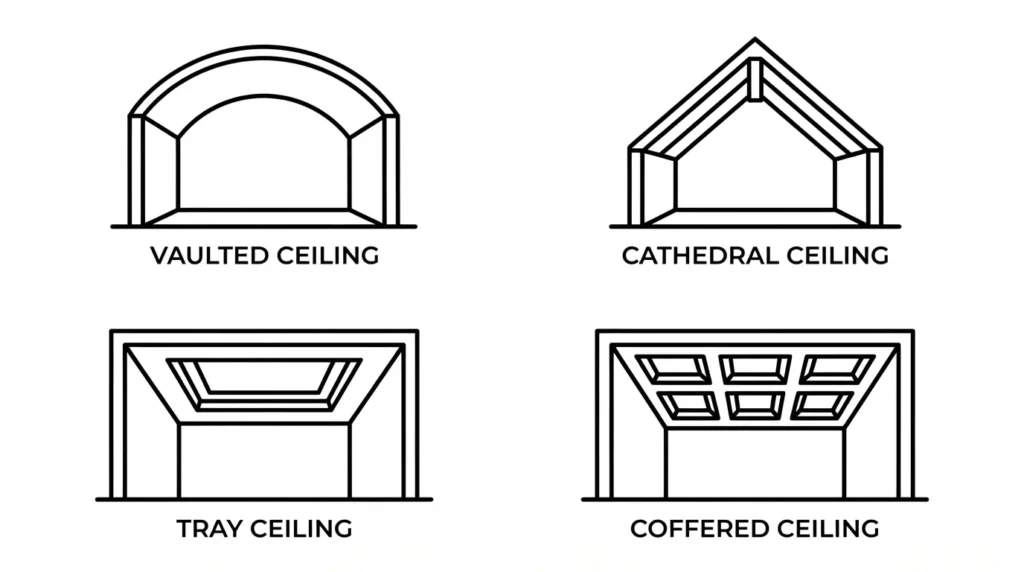
Both options cost less than a true vaulted or cathedral ceiling, since neither one touches your roof framing. If your goal is visual interest without the structural cost, these styles are worth comparing before you commit to a full vault.
Questions to Ask Your Contractor Before You Commit
Bring these questions to your first meeting with a builder or contractor.
What insulation assembly are you specifying, and what R-value does it hit? Get a specific answer, not a general one. Ask which product and how many inches.
How does this ceiling height change my HVAC sizing? Your contractor should run a Manual J load calculation based on the actual volume of the room, not just the floor area.
Where will my light fixtures go, and how will I reach them for maintenance? Plan this before framing, not after drywall goes up.
Does this design require engineered trusses or custom framing? Know this cost up front, since it affects your total budget significantly.
How does this ceiling affect the room above or beside it? In a two story home, a tall ceiling downstairs takes space from the floor plan upstairs. Confirm this tradeoff is intentional.
Frequently Asked Questions:
Is a cathedral ceiling the same as a vaulted ceiling?
No. A cathedral ceiling is always symmetrical and follows the roof pitch exactly. A vaulted ceiling is the broader category and can take many shapes, symmetrical or not.
Which is more expensive, a cathedral or vaulted ceiling?
A cathedral ceiling usually costs less than a complex vault like a groin or dome style. A simple shed vault often costs about the same as a cathedral ceiling. Complex vaulted designs cost the most of all three.
Which ceiling type is more energy efficient?
Neither type is automatically more efficient. Performance depends on insulation, air sealing, and climate. A vaulted ceiling often has more usable depth for insulation, which can make it easier to hit a strong R-value.
Do vaulted or cathedral ceilings add resale value?
They often help a home show better and can support a stronger asking price when built and insulated correctly. A poorly insulated version can hurt long term value through high energy bills.
Can I convert a flat ceiling to vaulted or cathedral?
Yes, but only if your framing allows it. Homes with open rafters convert more easily. Homes with standard trusses usually need a full truss replacement, which raises the cost significantly.
What insulation is best for a vaulted or cathedral ceiling?
Closed cell spray foam performs best in tight rafter cavities. Batt insulation works well when there is enough depth, which is more common in vaulted designs than cathedral ones.
Which ceiling type works best for a small room?
A shed style vaulted ceiling often works better than a cathedral ceiling in a small room, since it avoids the fully symmetrical, more imposing feel of a full cathedral design.
Are vaulted or cathedral ceilings hard to maintain?
Changing bulbs and cleaning fan blades takes more effort at height. Long lasting LED bulbs and simple extension tools reduce this hassle significantly for most homeowners.
Which One Should You Choose?
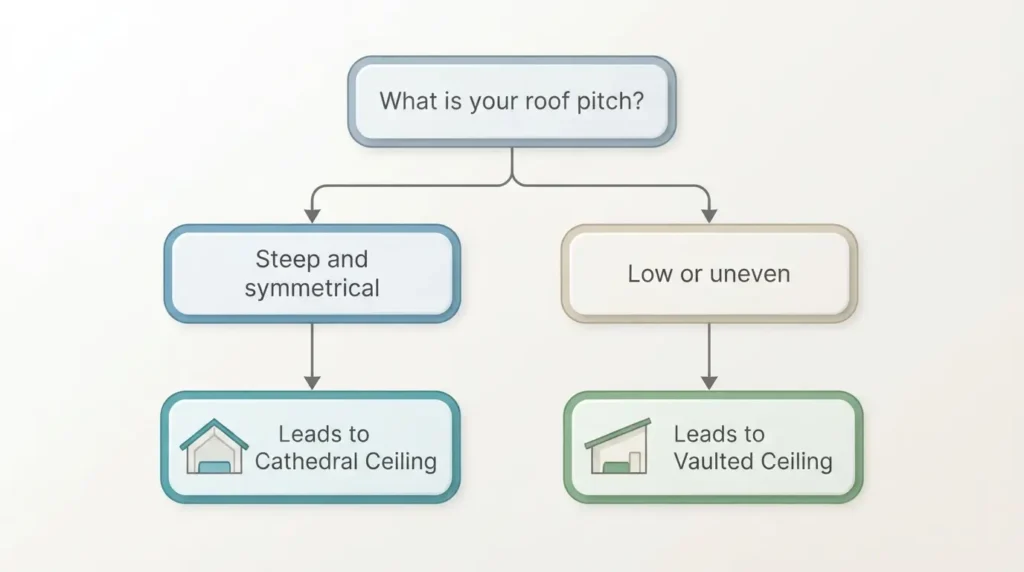
Choose a cathedral ceiling if your home already has a steep roofline, your style leans traditional, and you want a formal, symmetrical look in a large room.
Choose a vaulted ceiling if you want more design freedom, your home has a modern or open layout, or your roof pitch is lower and cannot support a true cathedral shape.
Both styles can add real value to a home when built and insulated correctly. The vaulted ceiling vs cathedral ceiling decision ultimately comes down to your roofline, your budget, and the feeling you want when you walk into the room. Talk through these details with a licensed contractor before you finalize your floor plan. That single conversation can save you from an expensive change once framing begins.

About Author
Hello there. I am Lathen Reed, a home improvement and interior design enthusiast. With a passion for creating beautiful, practical, and comfortable spaces, I share helpful ideas and inspiration related to home improvement, home decor, interior design, and home styling. Through HomeFixStyle, my goal is to make home improvement simple, inspiring, and accessible for everyone.