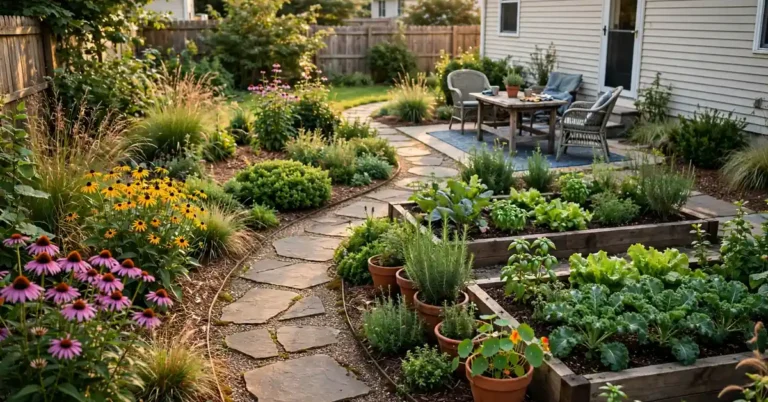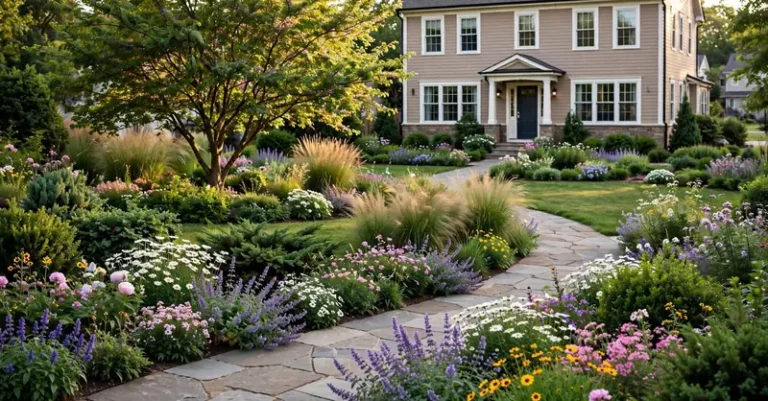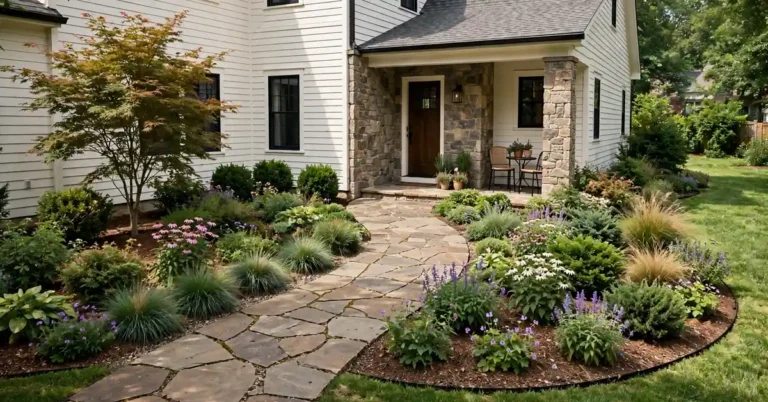

Looking for fountain ideas that fit your home, space, and budget? A tiered fountain can suit a traditional garden, while bubbling rocks blend into natural landscaping. Small patios can accommodate wall fountains, ceramic urns, or simple water bowls. You can also make a water feature using flowerpots, barrels, or other garden containers.
The right choice depends on your available space, preferred water sound, and maintenance needs. Below are 30 designs, followed by practical advice on materials, costs, placement, and fountain care.
Backyard Fountain Ideas for Gardens and Outdoor Spaces
A fountain can become the center of a flower bed or sit quietly beside a garden path. The trick is choosing a design that fits your yard without overwhelming the plants. These eight designs suit different garden sizes, from narrow borders to open lawns.
1. Classic Tiered Garden Fountain

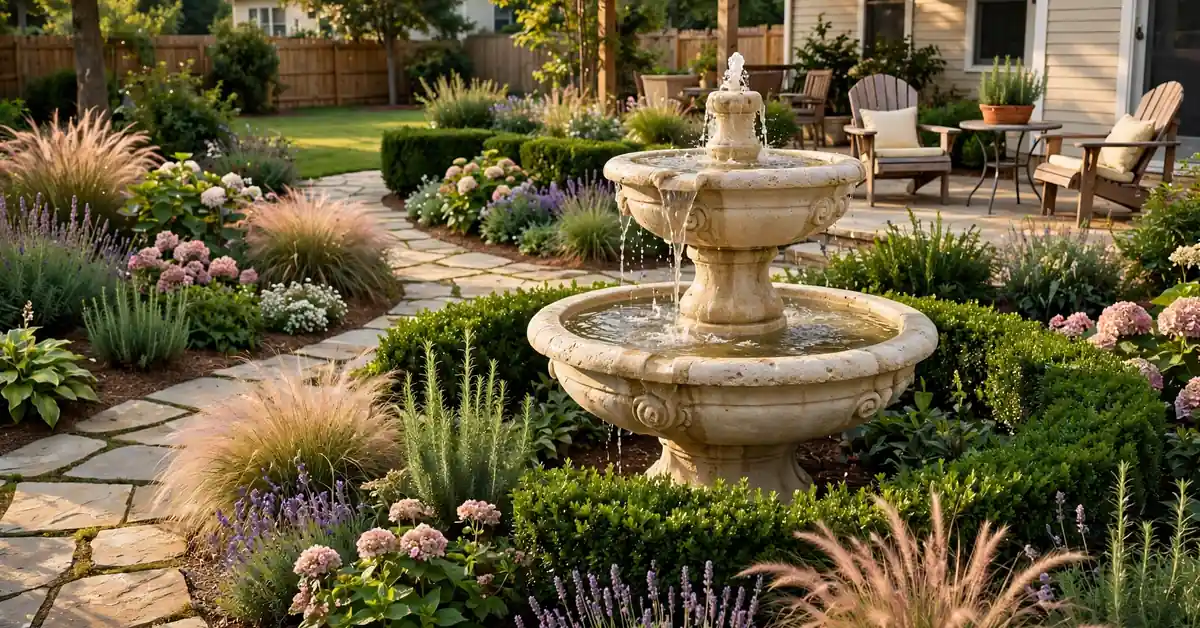
A tiered fountain has two or more bowls stacked above one another. Water spills from the upper bowl into the wider basins below. This traditional design looks especially good in formal gardens and open courtyards.
Place a three-tier fountain at the center of a circular flower bed. Low boxwood hedges, roses, or seasonal flowers can frame its base. If your garden is small, choose a two-tier version with a narrower basin.
Best for: Traditional gardens, courtyards, and spacious front yards.
Consider: Large stone fountains need stable foundations and enough room for water splashing.
2. Natural Stone Fountain

A natural stone fountain looks like it belongs among the plants. Rough surfaces, uneven edges, and earthy colors help it blend into garden surroundings. Granite and other suitable stones can create attractive outdoor water features.
Place one beside a gravel path or among shade-loving plants. Ferns and hostas can soften the edges in suitable growing conditions. Other gardening ideas for the surrounding area include ground covers, ornamental grasses, and low border plants.
Best for: Woodland gardens, rustic yards, and natural planting beds.
Consider: Solid stone can be heavy, so check the foundation and installation access first.
3. Bubbling Rock Fountain

A bubbling rock fountain uses a small pump to push water through a hole in the stone. Water rises through the opening, spreads across the surface, and returns to a hidden reservoir. The movement looks natural, especially when you surround the rock with smooth pebbles.
Choose one large rock for a simple design, or arrange three rocks at different heights. Both options work well in planting beds and gravel gardens. Keep the water flow gentle to reduce splashing outside the reservoir.
Best for: Rock gardens, entryways, and small backyard corners.
Consider: Strong water flow can create unwanted splashing around the base.
4. Disappearing Fountain With a Hidden Basin

A disappearing fountain has a reservoir concealed beneath gravel or decorative stones. Water flows over a stone, urn, or column before returning through the covered basin. The hidden water storage keeps the design neat without requiring an exposed pond.
This makes it suitable for a narrow garden border or beside a walkway. Use river rocks around the fountain to conceal the basin cover. Leave an access point for cleaning the pump and checking the water level.
Best for: Contemporary gardens, small yards, and landscaped walkways.
Consider: The reservoir cover must safely support the stones and other expected loads.
5. Garden Waterfall Fountain
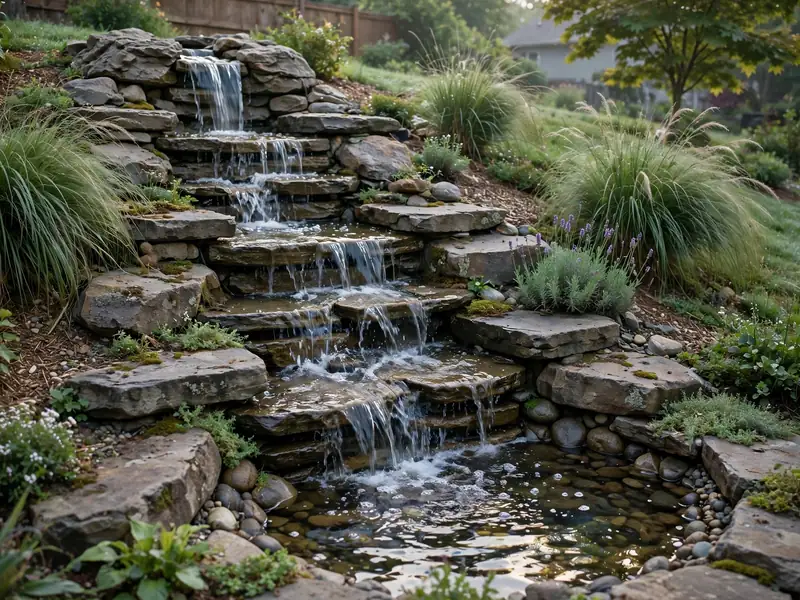
A waterfall fountain sends water down a series of rocks or shaped surfaces. You can create short drops between flat stones or use a ready-made cascading design. This works particularly well in a sloped backyard.
Place the upper section among plants and let water flow toward a lower reservoir. Ornamental grasses and small shrubs can frame the edges without hiding the water. In sloped yards, landscape designs that use natural stone and layered planting beds can help the fountain fit its surroundings.
Best for: Sloped gardens, natural landscaping, and larger backyards.
Consider: Higher drops can create more sound and splashing.
6. Birdbath Fountain for a Wildlife Garden
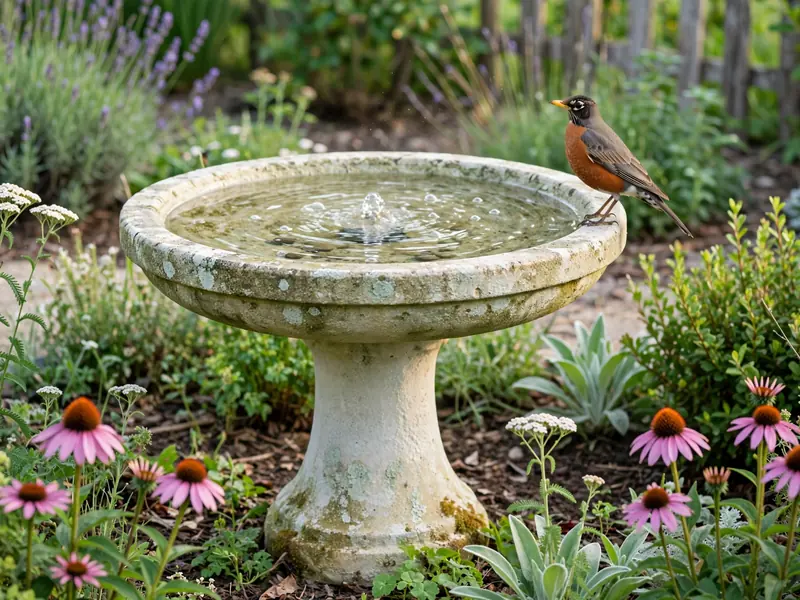
A birdbath fountain adds moving water to a shallow basin. Choose a gentle bubbling attachment rather than a strong spray. Birds need a safe place to stand and drink, so avoid designs with deep or slippery edges.
Position the birdbath where you can watch it from a window or patio. Nearby shrubs can offer cover, but leave clear sight lines around the basin. A simple stone or ceramic birdbath works well among flowering plants.
Best for: Wildlife gardens, cottage gardens, and compact yards.
Consider: Clean the basin frequently and replace its water regularly.
7. Rustic Barrel Fountain
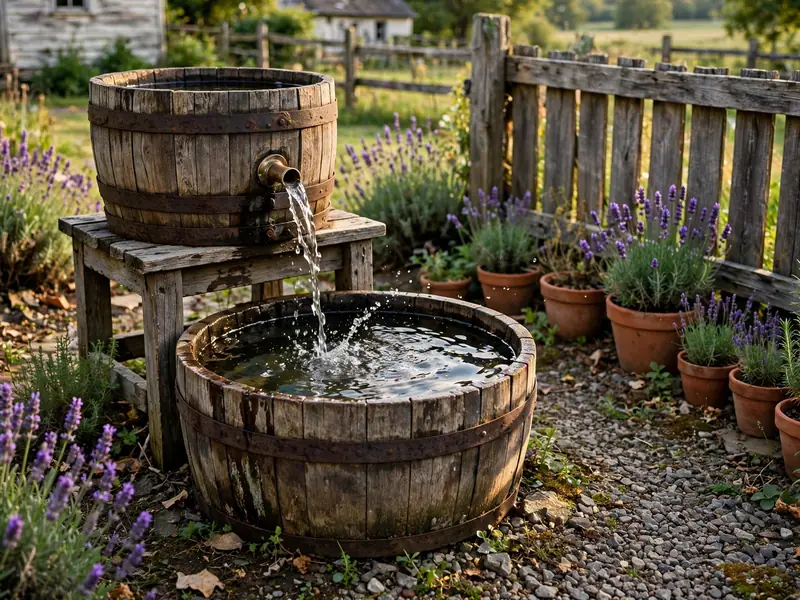
A wooden barrel fountain adds a country-style detail to a garden. Use a half barrel as the lower basin, or place a smaller container above it. Water can spill from the upper container into the barrel below, creating a simple cascading effect.
Set it near a wooden fence, garden bench, or raised planting bed. Terracotta pots and lavender can complement its weathered appearance where growing conditions suit them. Use a watertight liner when needed, and check wooden parts for moisture damage.
Best for: Farmhouse gardens, cottage yards, and rustic patios.
Consider: Wood and liners need regular inspection for leaks or damage.
8. Freestanding Pedestal Fountain

A pedestal fountain raises a decorative water bowl above the surrounding plants. Its narrow support keeps the basin visible without covering much ground. A round bowl works well in traditional gardens, while a square basin complements structured landscaping.
Place the fountain at the end of a garden path or between two planting beds. Keep nearby flowers low enough to leave the water visible. Secure the base properly, especially in areas exposed to strong winds.
Best for: Garden entrances, front yards, and formal planting beds.
Consider: The fountain needs a stable base and suitable support.
Small Fountain Ideas for Patios and Courtyards
Small patios need fountains that leave room for seating and movement. Wall-mounted designs, compact bowls, and narrow upright fountains can add water without occupying the center of the space. Measure your available area before choosing a model. For ways to arrange plants and seating around your water feature, these small garden design ideas offer practical layouts for compact outdoor spaces.
9. Wall-Mounted Fountain
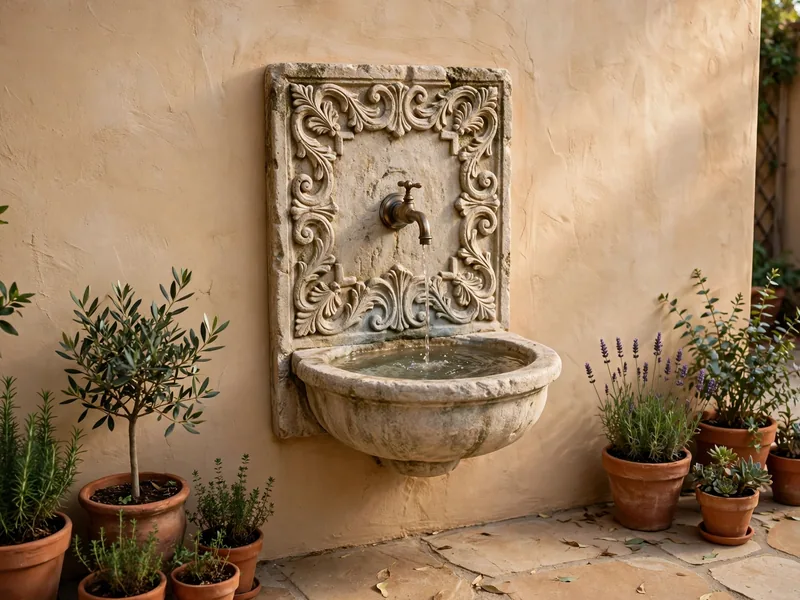
A wall-mounted fountain uses vertical space instead of taking up the patio floor. Water flows from a decorative spout into a basin attached to the wall. Choose a carved stone finish for a traditional courtyard, or use smooth concrete for a modern patio.
Place the fountain where you can enjoy the sound while sitting outside. Potted plants on either side can frame the basin without hiding its shape. Make sure the wall can support the fountain and its water-filled weight.
Best for: Narrow courtyards, small patios, and enclosed gardens.
Consider: Wall strength, mounting hardware, and splash protection matter.
10. Glazed Ceramic Urn Fountain
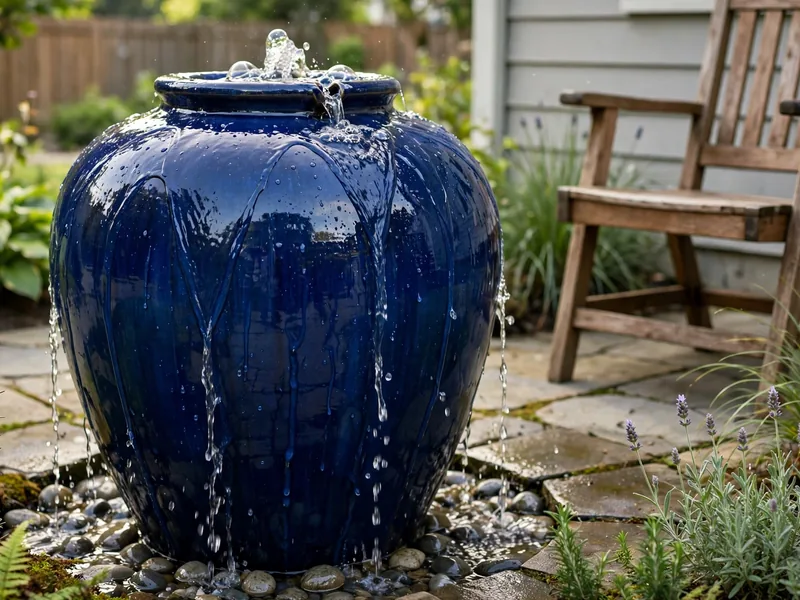
A glazed ceramic urn has a rounded body with water bubbling from its top. The water moves down the curved sides before returning to the reservoir. Blue, green, and earth-toned finishes work well with neutral patio paving.
Place the urn beside a chair, near a garden path, or against a low planting bed. A few small plants around the base can soften the arrangement. Check whether the ceramic can withstand freezing temperatures before leaving it outdoors all year.
Best for: Small patios, Mediterranean-style gardens, and courtyards.
Consider: Some ceramic finishes need protection during freezing weather.
11. Small Tabletop Fountain
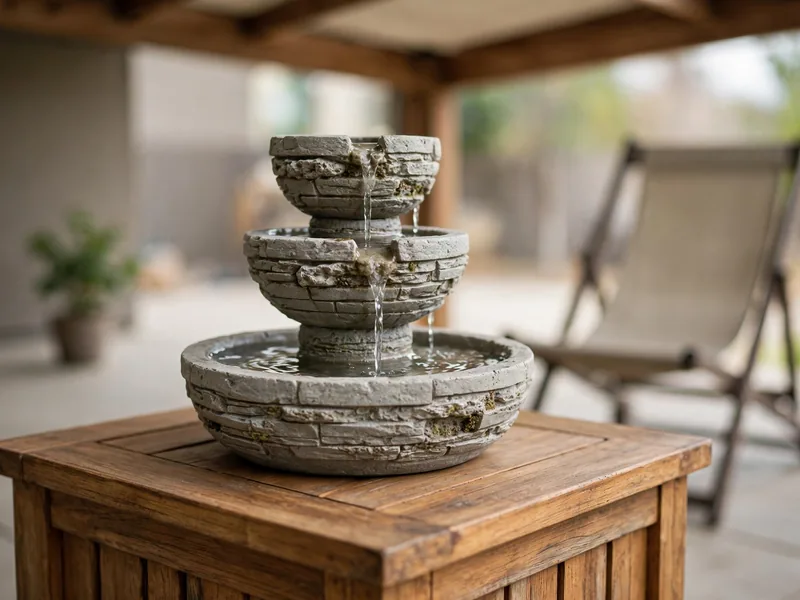
A tabletop fountain is a practical choice when floor space is limited. Compact models may feature stacked stones, shallow bowls, or small water spouts. Place one on a sturdy outdoor side table or a wide garden shelf.
Choose a model with controlled water flow to prevent splashing onto nearby furniture. A simple ceramic design can match wooden furniture and potted plants. Small reservoirs often need frequent refilling, especially during hot weather.
Best for: Covered patios, small terraces, and compact outdoor seating areas.
Consider: Check the reservoir regularly because smaller fountains may lose water quickly.
12. Corner Fountain for a Narrow Patio
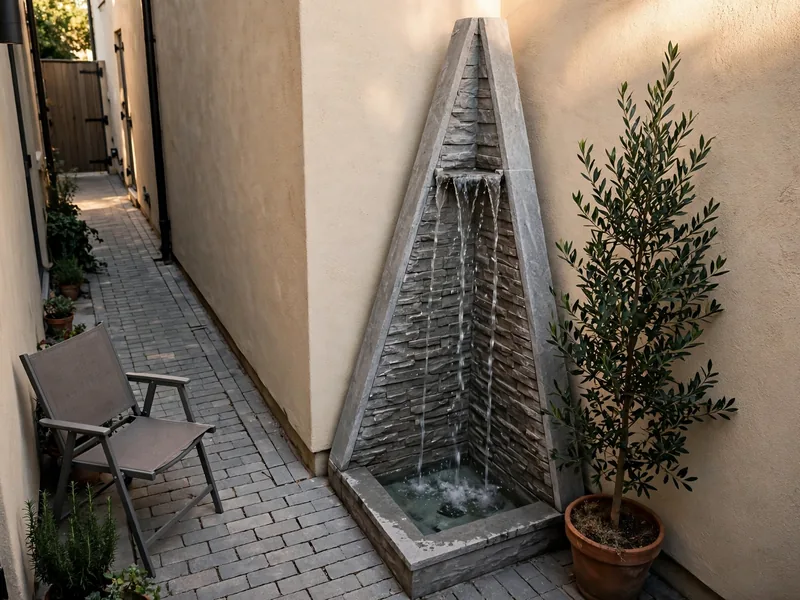
An unused patio corner can hold a tall, narrow fountain. Choose a compact upright design or a basin shaped to fit between two walls. A vertical fountain draws the eye upward without blocking the walking area.
Place one beside a small seating arrangement or at the end of a narrow courtyard. Use a single large planter nearby instead of crowding the corner. Leave enough space to reach the pump and clean the basin.
Best for: Townhouse patios, narrow courtyards, and small outdoor rooms.
Consider: Measure the corner carefully and keep maintenance access clear.
13. Vertical Water Wall
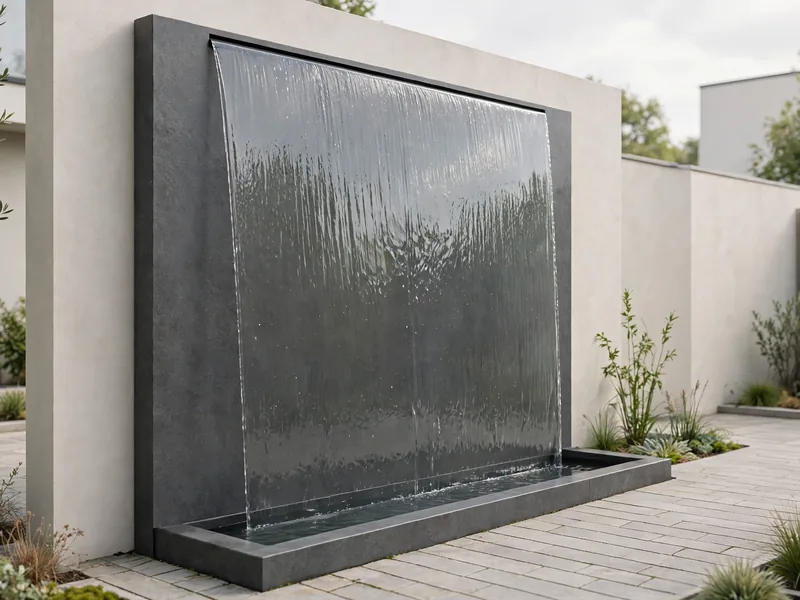
A vertical water wall sends a thin sheet of water across a flat surface. The panel may use stone, glass, or metal. Its straight lines work well with modern furniture and rectangular paving.
Place the feature against a suitable wall where the flowing water remains visible. A darker panel can make the water easier to notice during daylight. Confirm the wall support, waterproofing, and maintenance access requirements before installation.
Best for: Modern patios, privacy walls, and narrow outdoor spaces.
Consider: Proper waterproofing and secure installation are important.
14. Shallow Bowl Fountain
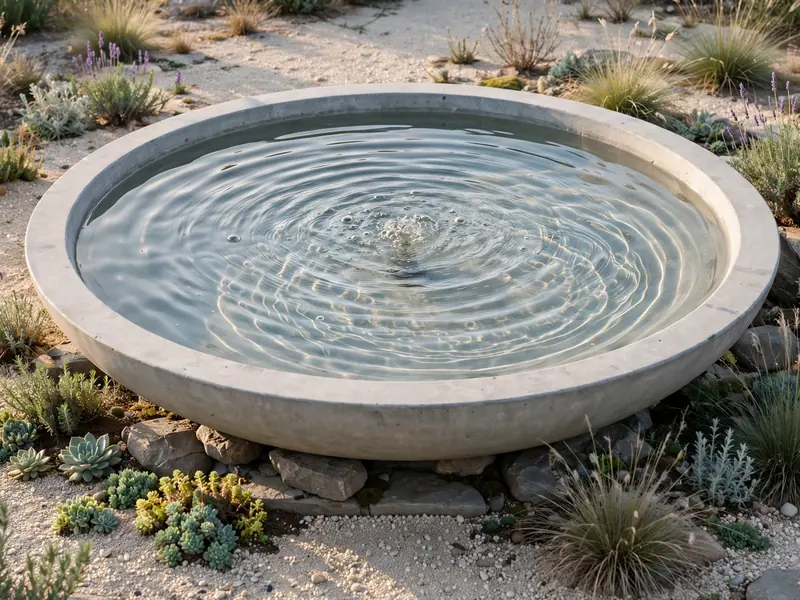
A shallow bowl fountain creates gentle water movement close to the ground. Water may bubble from the middle or flow over the rim into a lower reservoir. Choose a concrete bowl for a simple modern look, or use glazed ceramic to add color.
Place the bowl on a low stand or inside a decorative gravel bed. Keep nearby plants short enough to leave the water visible. Open bowls can collect leaves and lose water quickly in hot or windy weather.
Best for: Small patios, low planting beds, and minimalist gardens.
Consider: Open basins need regular debris removal and water checks.
Modern and Decorative Fountain Designs
Modern fountains often use simple shapes, smooth materials, and controlled water flow. Some make a strong visual statement, while others blend into the surrounding architecture. Choose a style that works with your home rather than competing with it.
15. Geometric Concrete Fountain
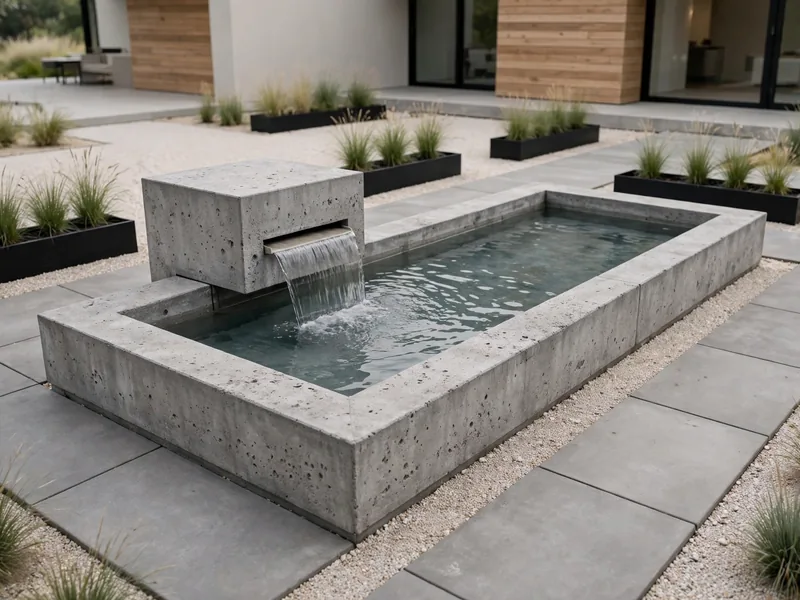
A geometric concrete fountain uses square, rectangular, or cube-shaped forms. Its straight edges complement the clean lines and simple materials used in modern garden design. Choose a low rectangular basin beside a seating area, or place a taller square fountain near an entrance.
Gray concrete pairs well with black planters and ornamental grasses. You can also surround the fountain with pale gravel to create contrast. Remember that concrete fountains can be heavy and may require surface sealing.
Best for: Modern homes, structured gardens, and contemporary courtyards.
Consider: Check the fountain’s weight, foundation, and sealing requirements.
16. Minimalist Sphere Fountain

A sphere fountain features a round ball with water flowing over its surface. The water usually emerges from the top and moves down the curved sides. Its simple shape works well in gardens with clean lines and limited decoration.
Place the sphere on a bed of decorative gravel. A dark stone ball creates contrast against light pebbles, while pale stone suits darker planting beds. Keep surrounding plants low enough to show the fountain’s shape.
Best for: Modern entryways, small courtyards, and minimalist landscaping.
Consider: Smooth surfaces may show mineral deposits as water evaporates.
17. Basalt Column Fountain
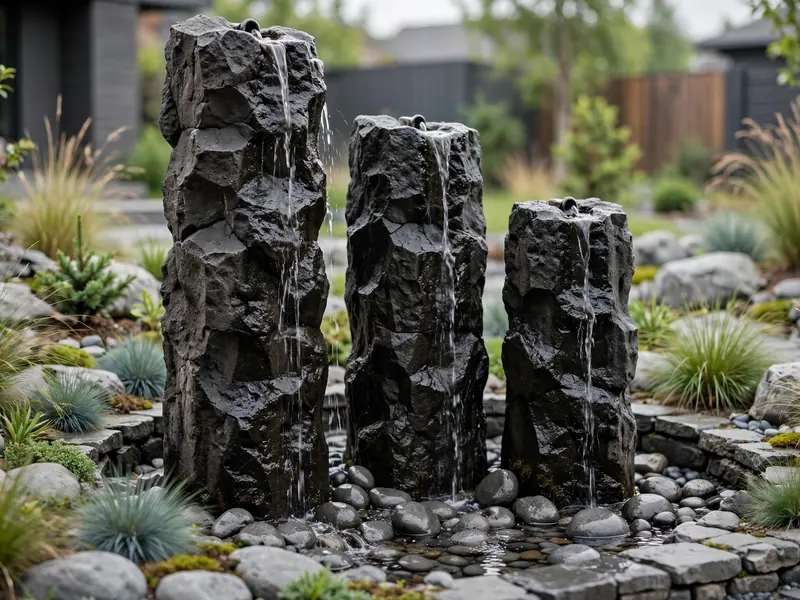
A basalt fountain uses upright columns of dark volcanic stone. Water emerges from the top of each column and runs down the sides. Three columns at different heights create an attractive arrangement.
Set the columns inside a bed of smooth river rocks. The dark stone looks good beside ornamental grasses and green shrubs. Since basalt is heavy, use a suitable foundation and reservoir system.
Best for: Rock gardens, modern landscaping, and natural garden borders.
Consider: The installation requires proper support for the stone’s weight.
18. Stainless Steel Fountain
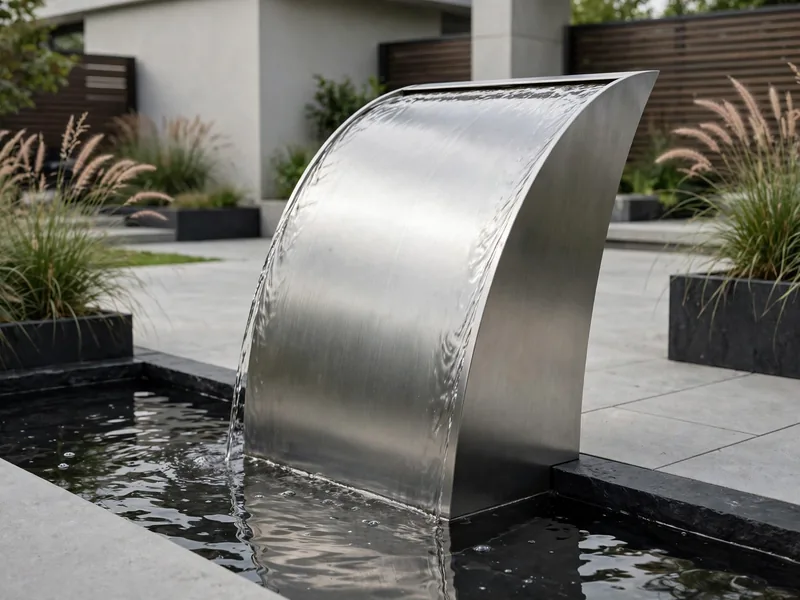
A stainless steel fountain brings a clean metal finish to an outdoor area. Common shapes include upright cylinders, curved panels, and flat water channels. The reflective surface can complement stone paving and modern garden furniture.
Place a narrow fountain against a wall or inside a simple gravel bed. Choose a finish suitable for outdoor exposure in your local climate. Polished surfaces can show fingerprints and mineral deposits, so regular wiping may be necessary.
Best for: Contemporary patios and modern garden layouts.
Consider: Surface cleaning and local weather conditions affect maintenance.
19. Mediterranean Tile Fountain

A tiled fountain adds pattern and color to a courtyard. Many designs feature painted tiles around a wall spout or shallow basin. Blue and white patterns work well with terracotta pots and warm-colored paving.
Place the fountain against a stucco wall or near an outdoor seating area. Keep surrounding decorations simple when the tiles already have detailed patterns. Choose materials and waterproofing suitable for outdoor water exposure.
Best for: Spanish-style homes, enclosed courtyards, and Mediterranean gardens.
Consider: Exterior tiles, grout, and waterproofing need proper installation.
20. Japanese-Inspired Bamboo Fountain
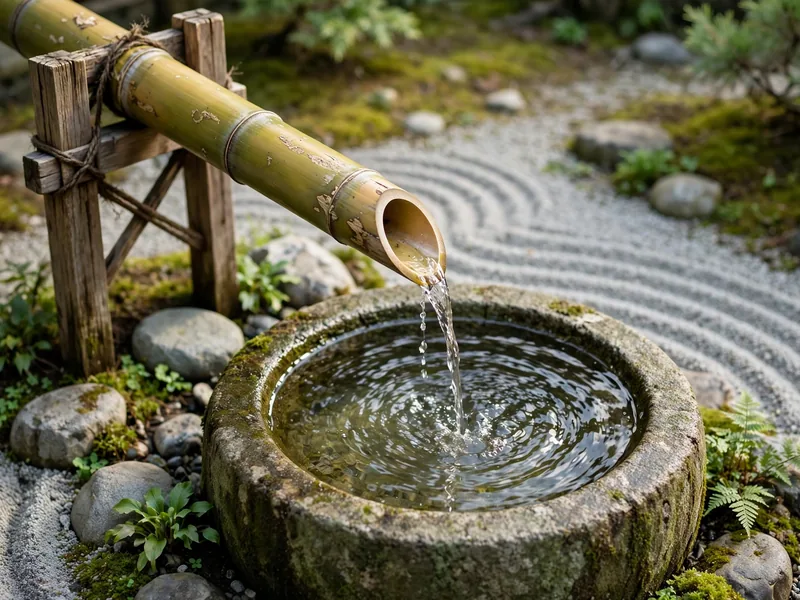
A bamboo fountain directs water through a narrow spout into a stone basin. Some designs use a moving bamboo tube that tips after filling with water. The simple materials work well with gravel, rocks, and carefully arranged plants.
Place one near a garden bench or quiet seating area. Use plants suited to your growing region rather than copying another climate’s landscape. Natural bamboo can split or deteriorate over time, so inspect it regularly.
Best for: Japanese-inspired gardens, compact courtyards, and quiet outdoor corners.
Consider: Bamboo may need occasional replacement as it weathers.
21. Fountain With Underwater LED Lighting
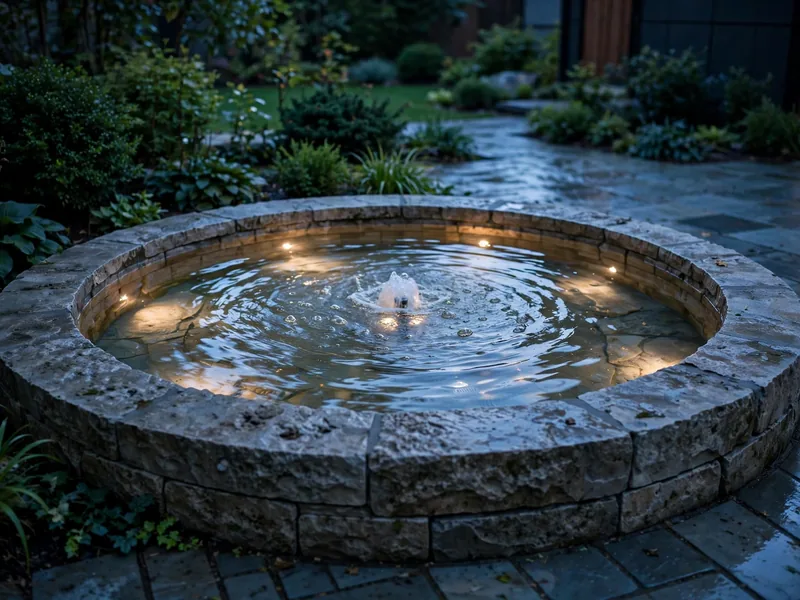
Underwater lighting can make moving water visible after sunset. Small waterproof LED fixtures can illuminate a bubbling stone, basin, or water stream. Warm white lighting looks good with traditional stone fountains, while simple white lights suit modern designs.
Position the lights where they illuminate the water without shining into someone’s eyes. Use lighting and electrical equipment specifically rated for the installation. Check the connections and fixtures according to the manufacturer’s instructions.
Best for: Patios used in the evening and garden seating areas.
Consider: Electrical equipment must be suitable for outdoor water features.
22. Sculptural Bronze Fountain
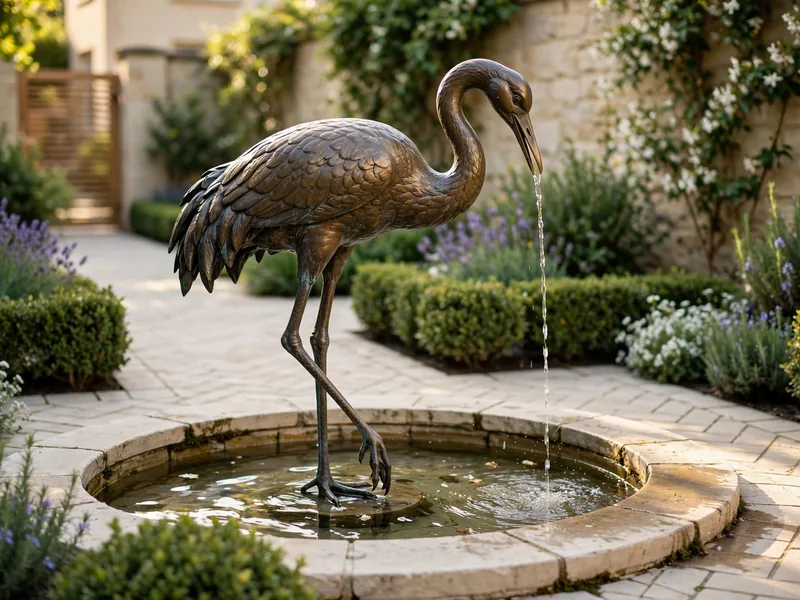
A bronze fountain combines a decorative sculpture with flowing water. Popular designs include birds, traditional figures, and abstract shapes. A well-placed sculpture can become the main feature in an open garden.
Place a bronze fountain in a formal courtyard or planting bed. Low flowers and neat shrubs can frame its base without hiding the sculpture. Bronze develops a surface patina over time, so follow the recommended care for its finish.
Best for: Formal gardens, artistic landscapes, and front-yard entrances.
Consider: Bronze fountains can be expensive and require appropriate finish care.
Affordable and DIY Fountain Ideas for Every Budget
You can make a small water feature without buying a large stone fountain. Many simple projects use garden containers, tubing, and a recirculating pump. Choose a design that matches your DIY skills and available tools.
23. Stacked Flowerpot Fountain

Stacked flowerpots can create a small cascading fountain. Choose two or three sturdy pots in different sizes and arrange them so water moves between each level. A suitable pump returns the water to the top.
Terracotta finishes look good beside herb gardens and rustic outdoor furniture. You can also use glazed pots for a more colorful arrangement. Secure the containers and use waterproof materials around the pump connections.
Best for: Small patios, garden corners, and simple DIY projects.
Consider: The pots need secure support and reliable waterproofing.
24. Solar Birdbath Fountain Ideas for Sunny Gardens
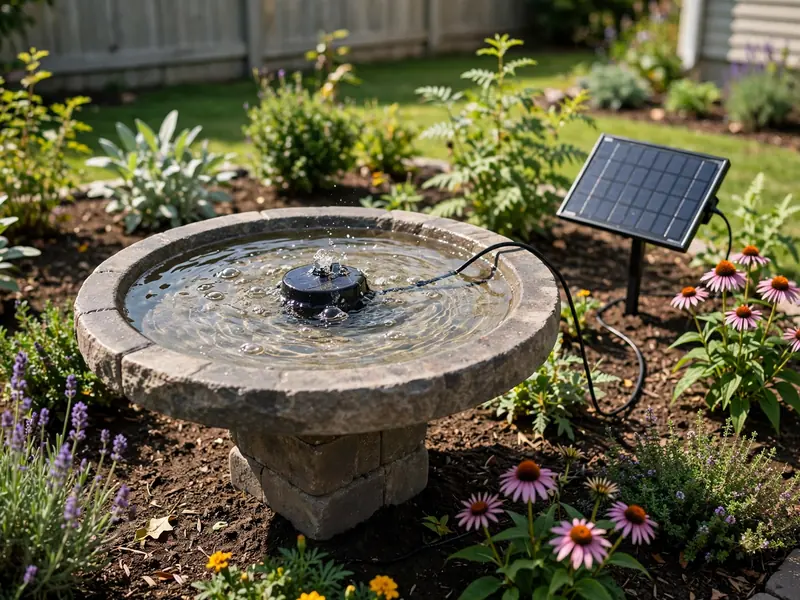
A solar birdbath fountain uses sunlight to power a small water pump. Some models work mainly in direct sunlight, while battery-supported models may operate when sunlight decreases. Choose a stable basin with shallow water and a gentle bubbling attachment.
Place the solar panel where it receives suitable sunlight. Keep the basin accessible for cleaning and refilling. Avoid strong sprays that empty the basin or make it difficult for birds to drink.
Best for: Sunny gardens without a convenient outdoor electrical outlet.
Consider: Solar performance depends on sunlight, pump design, and battery storage.
25. Repurposed Watering Can Fountain
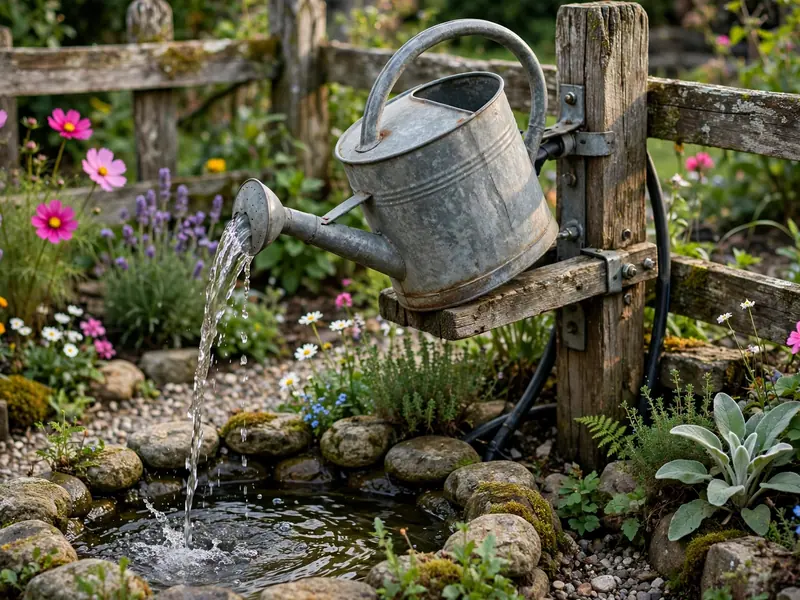
A metal watering can can become a decorative fountain for a cottage garden. Water flows through the spout into a basin below, while a small pump sends it back to the can. This creates a simple water feature using familiar garden materials.
Mount the watering can securely above a watertight container. Place it near a wooden fence, flower bed, or rustic garden shelf. Make sure the tubing and supports can handle continuous water movement.
Best for: Cottage gardens and creative DIY projects.
Consider: The watering can needs stable support and properly connected tubing.
26. Galvanized Tub Fountain
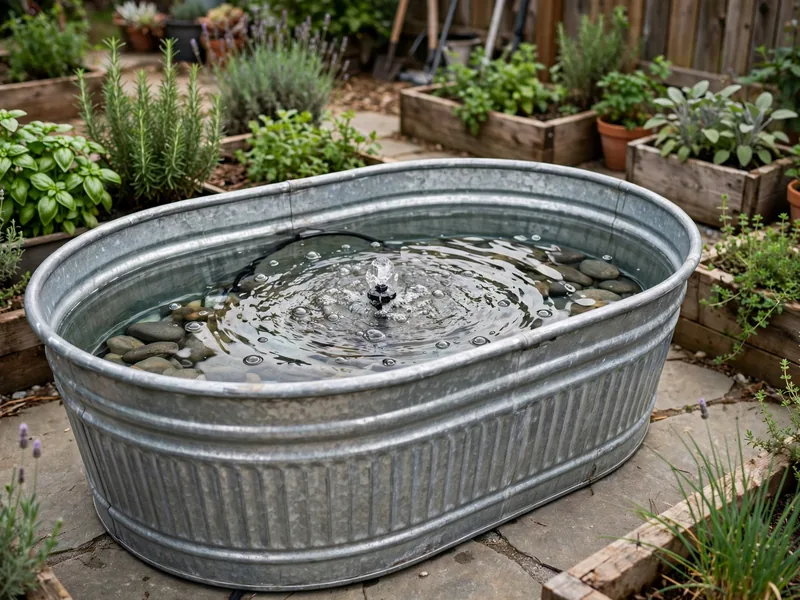
A galvanized tub can serve as a wide basin for a small fountain. Place a suitable pump inside and add smooth stones around the equipment. A low bubbling attachment creates gentle water movement without a complicated setup.
Set the tub near raised garden beds or against a wooden fence. The metal finish suits farmhouse furniture and rustic planters. Monitor the water temperature and level during hot weather, and use a suitable liner when needed.
Best for: Country gardens, farmhouse patios, and relaxed outdoor spaces.
Consider: Metal containers can heat up in sunlight and may need a watertight liner.
27. DIY Pebble Fountain
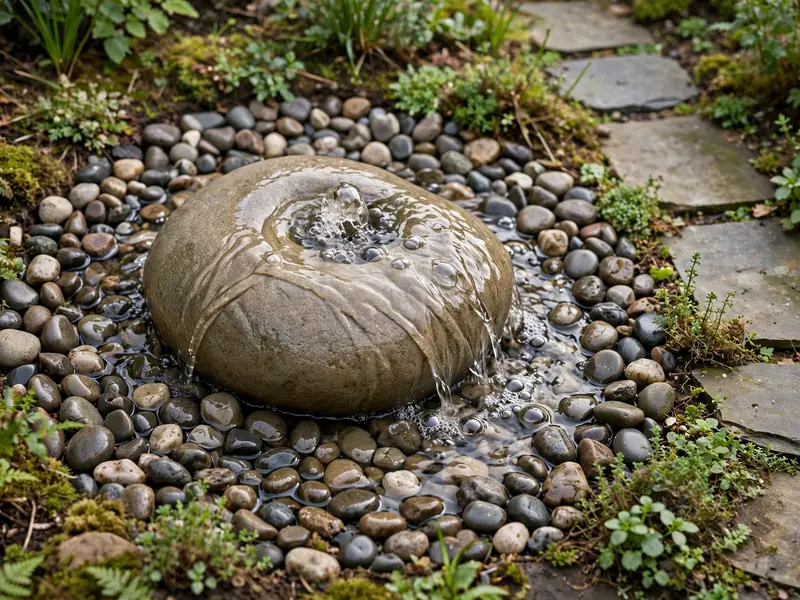
A pebble fountain uses small decorative stones to cover the water reservoir. Water emerges through a central stone or pipe and returns beneath the gravel. The low design works well when you want moving water without a visible basin.
Choose rounded pebbles that complement your patio or garden path. A single bubbling stone keeps the appearance simple. The reservoir cover must support the stones while allowing access to the pump.
Best for: Small rock gardens and low-profile outdoor features.
Consider: Use a suitable reservoir cover and keep maintenance access available.
28. Whiskey Barrel Fountain
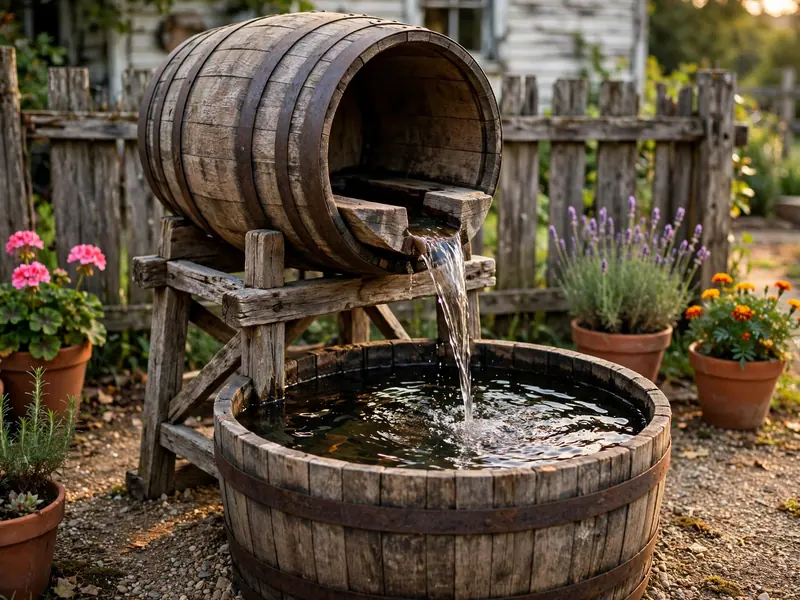
A whiskey barrel fountain adds a rustic look to a garden. Use one half barrel as a basin or arrange two barrels at different heights. A pump moves water between the containers to create a gentle cascading effect.
Place the fountain beside a wooden fence or near a garden bench. Terracotta pots and flowering plants can complete the arrangement. Check the liner and wood regularly for leaks or damage.
Best for: Farmhouse gardens, cottage yards, and rustic patios.
Consider: Wooden barrels and waterproof liners require periodic inspection.
29. Container Fountain With a Submersible Pump
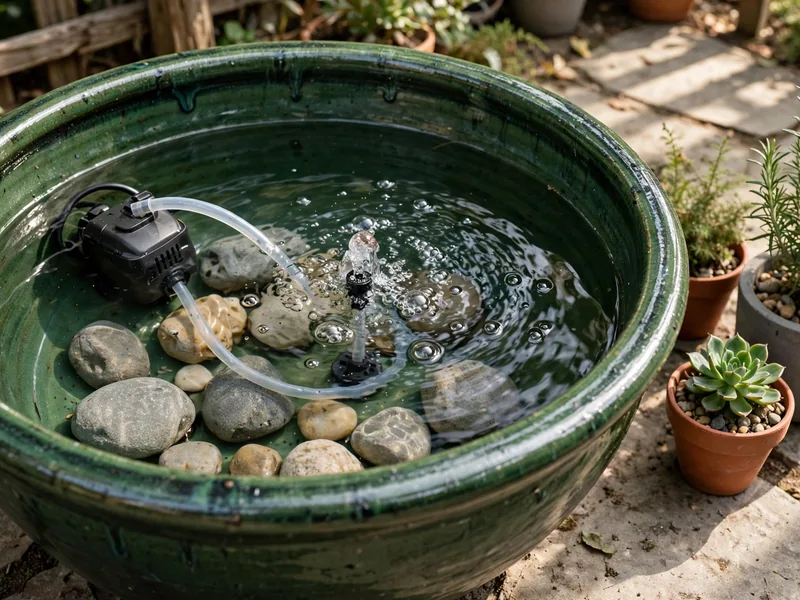
A container fountain offers plenty of design choices. Start with a waterproof ceramic, stone, or resin container. Install a pump suited to the basin’s size and water depth.
You can add pebbles around the equipment or keep the basin open. A deep urn creates a different appearance from a wide shallow bowl. Follow the manufacturer’s pump requirements and keep the equipment accessible.
Best for: Beginners, small patios, and homeowners wanting a flexible design.
Consider: Pump size, water depth, and maintenance access affect performance.
30. DIY Pondless Stream Fountain
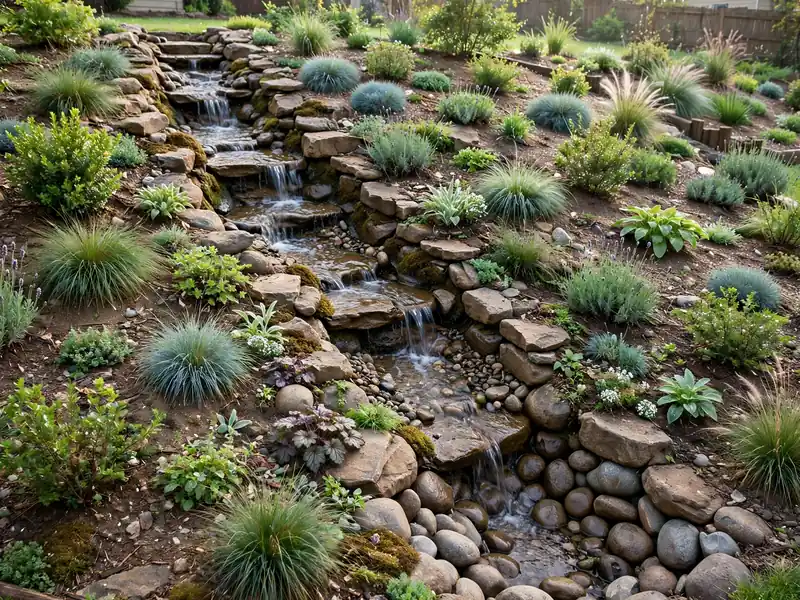
A pondless stream creates flowing water without a large exposed pond. Water travels through a shallow stone channel into a hidden reservoir. A pump returns it to the upper end of the stream.
This design works well along a sloped garden border. Use rocks of different sizes to create short drops and changes in water movement. Excavation, drainage, reservoir capacity, and pump selection need careful planning.
Best for: Sloped yards and homeowners comfortable with landscaping projects.
Consider: Larger projects may require professional installation.
How to Choose the Right Fountain for Your Space
After comparing the different designs, narrow your options by size, material, sound, and power source. A fountain should fit comfortably in your yard and remain easy to clean.
Match Fountain Size to Your Yard or Patio
Measure the available width, depth, and height before buying. Leave room for walking, seating, and accessing the pump. A compact bubbling urn can sit beside a patio chair, while a large tiered fountain needs open space around its basin.
For narrow courtyards, consider wall fountains or tall designs with small footprints. Check the fountain’s weight when filled with water, especially on decks or balconies.
Compare Stone, Concrete, Ceramic, Resin, and Metal
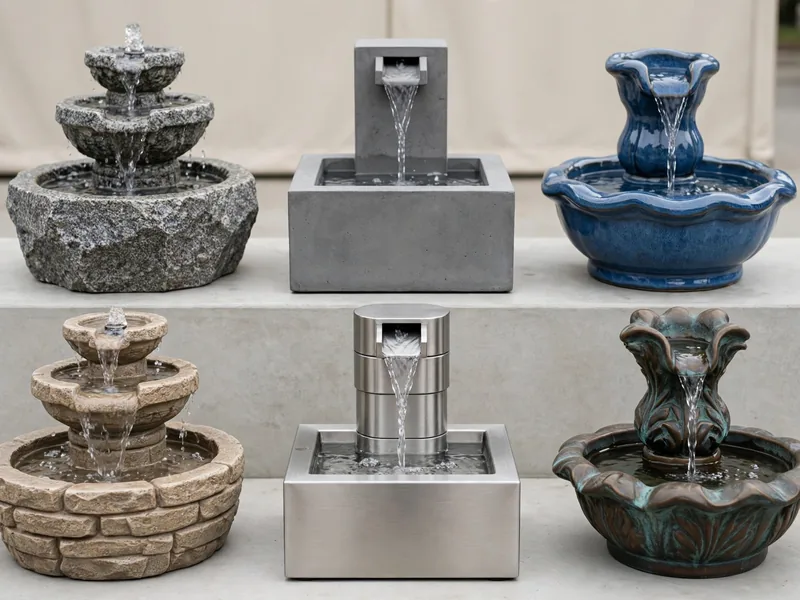
Different materials affect the fountain’s appearance, weight, durability, and cleaning needs. Natural stone and concrete offer substantial designs, while resin is often lighter and easier to move. Ceramic adds color, and metal works well with modern landscaping.
| Material | Main advantage | What to consider |
| Natural stone | Distinctive texture and substantial appearance | Heavy weight and installation requirements |
| Concrete | Many shapes and traditional styles | Weight, sealing, and surface maintenance |
| Ceramic | Colorful finishes and compact designs | Breakage and freezing temperatures |
| Resin | Often lighter and easier to move | Weather exposure and finish durability |
| Stainless steel | Simple modern appearance | Water spots and surface cleaning |
| Bronze | Decorative detail and natural patina | Weight, price, and finish care |
Choose materials rated for outdoor use in your climate. Check the manufacturer’s instructions before leaving a fountain outdoors during winter.
Choose Between Bubbling, Trickling, and Cascading Water
Water movement affects both appearance and sound. Bubbling fountains usually create gentle movement near the water’s surface, while trickling designs move water across stone, ceramic, or metal. Cascading fountains send water over ledges or between bowls.
Larger drops can make the water sound more noticeable, but pump flow and basin shape also matter. If possible, listen to a fountain before purchasing. This helps you decide whether the sound suits your outdoor seating area.
Compare Solar and Electric Fountain Pumps
Solar fountains can work in gardens without nearby electrical outlets. Direct-sun models may slow down or stop when clouds cover the panel. Some solar systems include battery storage for more flexible operation.
Electric fountains need suitable outdoor electrical access. Compare water flow, maximum lift height, energy requirements, and cleaning access before choosing a pump. For complicated electrical installations, consult a qualified electrician.
How Much Does a Garden Fountain Cost?
Fountain prices vary with size, material, installation work, and equipment. A small portable fountain generally requires less site preparation than a large stone installation.
According to Angi’s September 2026 outdoor fountain cost report, the average professional installation costs $2,730. Angi reports a typical national range of $925 to $4,784, based on 601 verified projects. These figures describe installation projects, not prices for every tabletop or portable fountain.
DIY Fountain Costs
DIY projects can reduce labor expenses. Angi lists DIY fountain installation costs from $300 to $2,500, depending on the project. A small container design may need a waterproof basin, pump, tubing, stones, and suitable electrical equipment.
Larger projects can require excavation, foundation materials, and additional tools. Check the complete materials list before deciding whether DIY will save money.
Ready-Made Fountain Prices
Ready-made fountains come in many sizes and materials. Lightweight resin models may cost less to transport and install than large stone fountains. Angi’s 2026 report lists material-related project costs across several categories.
| Material | Reported cost range |
| Resin | $300 to $1,200 |
| Fiberglass | $400 to $1,500 |
| Concrete | $500 to $2,500 |
| Ceramic | $700 to $2,200 |
| Natural stone | $1,000 to $5,000 |
These are reported project cost ranges, not guaranteed retail prices. Before purchasing, confirm whether the pump, basin, delivery, and installation are included.
Installation and Running Costs
Professional installation can involve site preparation, foundation work, plumbing, or electrical connections. Heavy fountains may require additional structural support. A recirculating pump also uses electricity while operating.
To estimate electricity consumption, multiply the pump’s wattage by its daily operating hours. Divide that number by 1,000 to calculate daily kilowatt-hours. Then multiply by your local electricity rate.
Add expected expenses for water refills, cleaning, and replacement parts. For complex installations, compare written quotes from local contractors.
Where to Place a Fountain in Your Yard
Good placement helps a fountain look natural and makes maintenance easier. Consider your home’s architecture, seating areas, nearby plants, and access to power.
Position a Fountain Near a Patio or Seating Area

A fountain near a patio lets you enjoy the water while sitting outside. Choose a gentle bubbler if you prefer quieter background sound. A cascading design may suit a larger seating area where you want more noticeable water movement.
Keep the basin far enough from furniture to prevent splashing. Check the view from your windows before choosing a permanent location.
Make a Fountain the Center of a Front Yard Garden
A fountain can serve as the main feature in a front yard planting bed. If you’re planning the surrounding flower beds and pathways, these Garden Design Plans can help you organize the layout around your fountain. Traditional tiered designs look good with symmetrical paths and clipped hedges. Modern homes may suit a geometric concrete fountain or a single bubbling stone.
Place it where it doesn’t obstruct walkways, driveways, or sight lines. Allow room for planting and maintenance around the base.
Pair a Fountain With Plants, Gravel, and Garden Paths
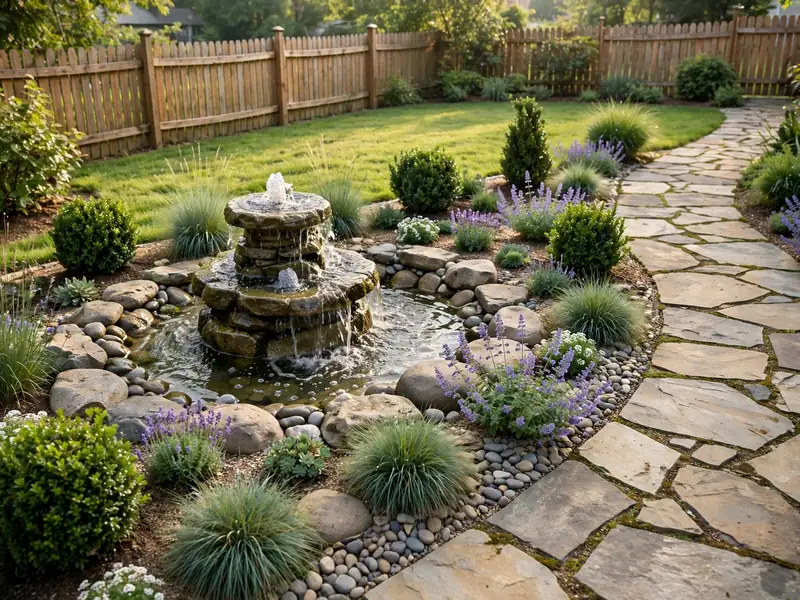
The right landscaping helps a fountain fit its surroundings. Garden design ideas that combine stone, planting beds, and pathways can create a more balanced arrangement.
Use river rocks around a bubbling fountain. Ornamental grasses work well beside concrete and basalt designs. For traditional fountains, try compact shrubs or seasonal flowers.
Choose plants suited to your local sunlight, soil, and climate. Keep heavy leaf fall and aggressive roots away from the reservoir when possible.
Avoid Common Placement Mistakes
A fountain needs more than an attractive location. Check the foundation, water flow, electrical access, and maintenance requirements before installing one.
- Uneven ground: The fountain may tilt or become unstable.
- Poor electrical access: Outdoor equipment needs suitable connections and protection.
- Excessive splashing: Water can reach furniture, walls, or walking surfaces.
- Falling leaves: Debris can clog the pump and increase cleaning.
- Limited access: Pumps and reservoirs need regular inspection.
- Excessive weight: Large fountains require appropriate structural support.
The Electrical Safety Foundation International provides electrical safety resources for homeowners. Use equipment rated for outdoor and wet-location use. Follow applicable GFCI requirements and manufacturer instructions.
How to Keep an Outdoor Fountain Clean and Running
A fountain needs regular attention to keep the water moving properly. Cleaning frequency depends on the basin, surrounding environment, and pump design.
Clean the Basin and Prevent Algae Buildup
Leaves, dust, and other debris collect in outdoor water features. Remove debris before it blocks the pump, and clean the basin using methods approved for its material. Sunlight and nutrients can encourage algae growth.
Avoid adding household chemicals without confirming their safety for the fountain. This matters especially when birds or pets may drink the water.
Maintain Water Levels and Protect the Pump
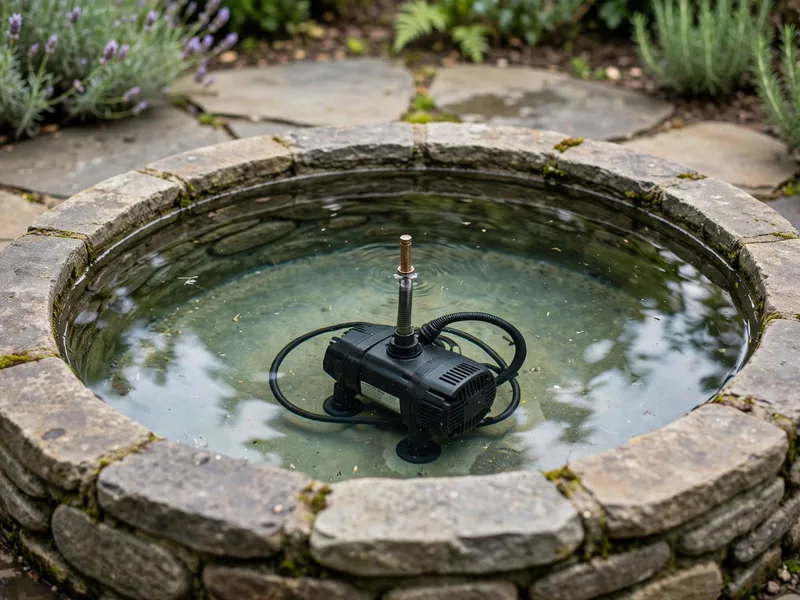
Most decorative fountains circulate water through a pump and reservoir. They still lose water through evaporation and splashing. Check the water level regularly during hot or windy weather.
Keep enough water in the reservoir for the pump to operate safely. Turn off and disconnect the equipment before maintenance, following the manufacturer’s instructions. Inspect tubing and connections if the water flow becomes weak.
Reduce Mosquito Problems
Mosquitoes can breed in water that remains in containers. Moving water may help reduce suitable breeding areas, but circulation alone isn’t a complete solution.
The CDC recommends emptying and scrubbing birdbaths and other water-holding containers at least once a week. Remove debris and keep fountain basins clean.
For large systems that cannot be emptied easily, seek advice from your local mosquito control agency. Avoid treatments that could harm birds, pets, or other wildlife.
Prepare Your Fountain for Freezing Weather
Freezing water can damage some fountain basins, pipes, and pumps. Follow the manufacturer’s winter care instructions. Some fountains need draining before temperatures fall below freezing, while others require pump removal or protective storage.
Ceramic and certain decorative finishes may need additional protection. In hot, dry regions, pay closer attention to evaporation and mineral deposits. Local weather conditions should guide your maintenance routine.
Frequently Asked Questions
What Type of Fountain Is Best for a Small Garden?
A bubbling rock, ceramic urn, or wall-mounted fountain can work well in a small garden. Choose a design that leaves enough room for plants, walking, and cleaning.
Can You Have a Fountain Without an Electrical Outlet?
Yes. Solar-powered fountains can operate without a nearby electrical outlet. Their performance depends on sunlight, pump design, and available battery storage.
What Is the Easiest Outdoor Fountain to Maintain?
A simple fountain with an accessible pump and smooth basin is often easier to clean. Avoid complicated shapes if you want fewer areas where debris can collect.
Can You Put a Fountain on a Deck or Balcony?
Yes, if the structure can safely support the complete water-filled weight. Check drainage, building rules, and waterproofing. Ask a qualified professional if you’re unsure about the deck or balcony’s load capacity.
Do Garden Fountains Use a Lot of Water?
Many fountains recirculate the same water through a pump. They still need refilling because of evaporation, splashing, and cleaning. Water use depends on the fountain’s size, flow, and local weather.
Final Thoughts
The right fountain should fit your space, match your home’s style, and be manageable to maintain. A tiered fountain can suit a formal garden, while a bubbling rock or ceramic urn may work better in a smaller yard.
If you’re working with a limited budget, start with a simple container or solar-powered design. These fountain ideas offer different ways to add moving water to your home. Choose a design you can enjoy without taking on more upkeep than you want.

About Author
Mia Anderson is a gardening writer at HomeFixStyle with a keen interest in plants, garden design, and outdoor living. Her work focuses on small-space gardening, plant care, and practical landscaping ideas. She enjoys sharing simple, well-researched advice that helps homeowners create beautiful gardens suited to their space, budget, and lifestyle.