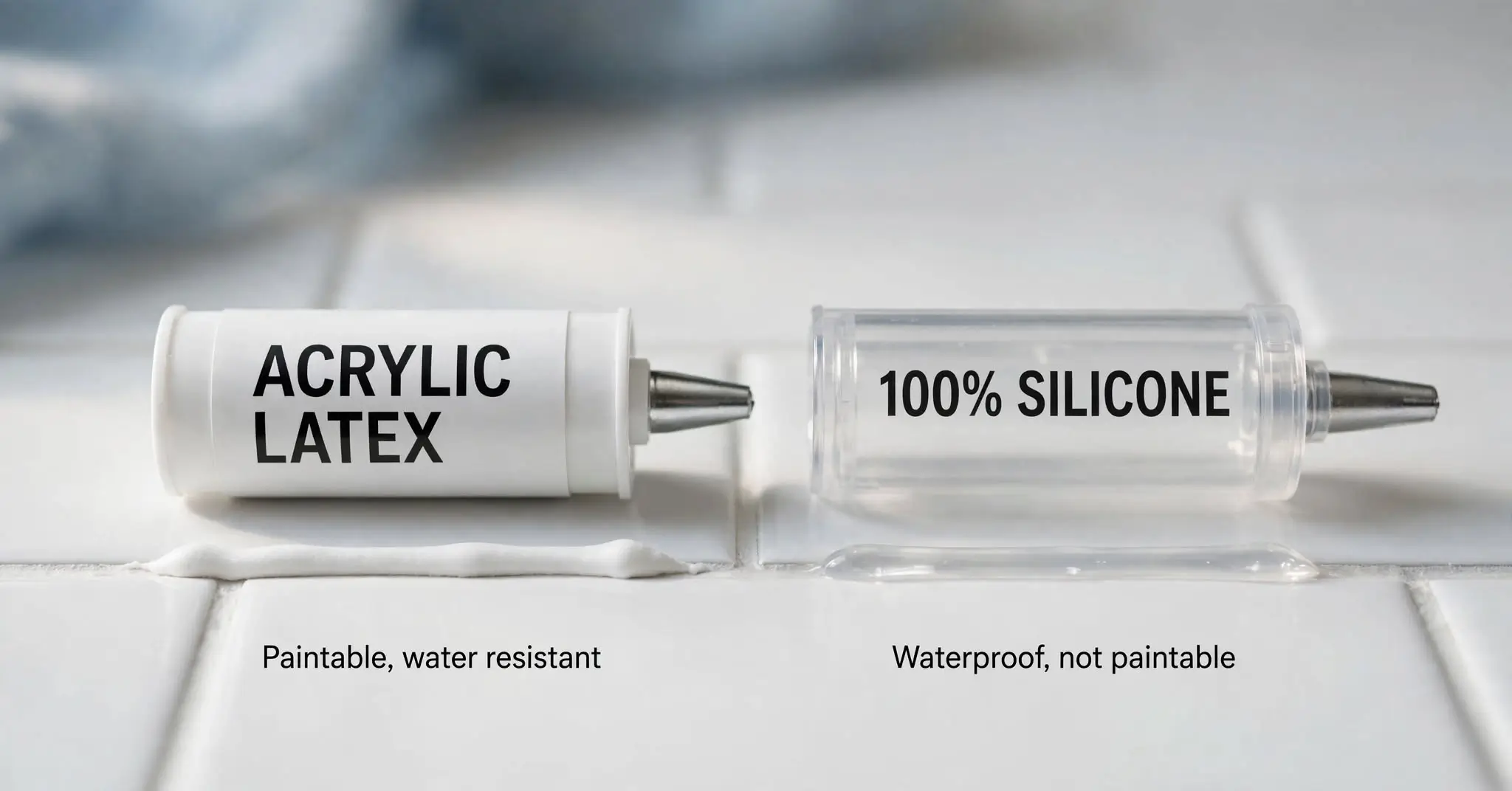
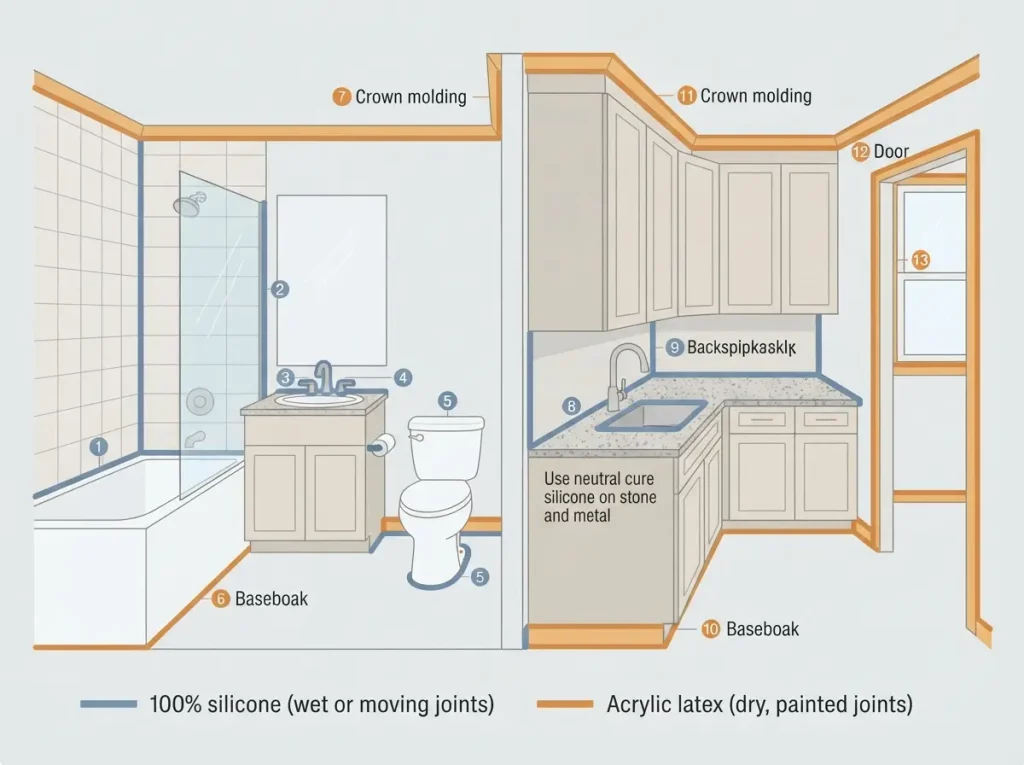
Use 100% silicone caulk where water hits every day or joints move, like tubs, showers, and sinks. Use acrylic latex caulk on joints you plan to paint, like trim, baseboards, and window casing. That single rule settles most latex vs silicone caulk choices.
Below, you’ll see what each caulk is made of. Then we compare them on water, paint, movement, cure time, and price. You’ll get a room by room pick list and a fair look at siliconized latex. The last sections cover how application differs and the mistakes that make caulk fail early.
| Job | What to use |
| Tub and shower joints | 100% silicone |
| Kitchen and bathroom sinks | 100% silicone |
| Baseboards and crown molding | Acrylic latex |
| Interior window and door trim | Acrylic latex |
| Painted exterior trim and siding | Siliconized latex rated for exterior use |
| Glass, metal, and natural stone | Neutral cure silicone |
Latex caulk vs silicone caulk: what each one is
“Caulk” is the everyday name for any gap filler you squeeze from a tube. Silicone counts as caulk, even when the label says “sealant.” The base material is what matters. It decides how the bead handles water, paint, and movement.
What is acrylic latex caulk?
Acrylic latex caulk is a water based caulk. It dries as the water evaporates. Most tubes meet ASTM C834, the US standard for latex sealants. Painters and trim carpenters reach for it more than any other type.
Why people like water based caulk:
- It takes latex or oil paint.
- It cleans up with a damp sponge and soap.
- It has a low odor, so it’s easy to use indoors.
- It smooths out easily with a wet finger.
- It grips wood, drywall, and plaster well.
Water is its weak spot. Latex handles splashes, but it isn’t built for daily soaking. It can also shrink a little as it dries, so deep gaps may need a second pass.
What is 100% silicone caulk?
Silicone caulk cures by reacting with moisture in the air. It turns into a soft rubber that stays flexible for years. Quality silicones are rated under ASTM C920, the standard for elastomeric joint sealants.
Benefits of 100% silicone:
- It’s waterproof once cured.
- It stretches and recovers as joints move.
- It sticks well to glass, tile, porcelain, and metal.
- It holds up to sun, heat, and cold outdoors.
Skip silicone on any joint you plan to paint, because paint won’t stick to it. Silicone is also stickier and harder to smooth. Wet silicone needs mineral spirits for cleanup, not water.
Acetoxy vs neutral cure silicone
Not all silicone behaves the same. Acetoxy silicone smells like vinegar while it cures. That acid can corrode some metals and blemish natural stone. Neutral cure silicone has little odor and is gentler on those surfaces. GE notes its neutral cure line works better on metal and plastic. Pick neutral cure for chrome fixtures, mirrors, and granite.
Latex vs silicone caulk comparison chart
This chart lines up acrylic latex caulk vs silicone on the points that decide most jobs. Times come from manufacturer data sheets at normal indoor conditions.
| Feature | Acrylic latex caulk | 100% silicone caulk |
| Base | Water based acrylic | Silicone rubber |
| US standard | ASTM C834 | ASTM C920 |
| Water | Water resistant | Waterproof |
| Paintable | Yes | No |
| Flexibility | Moderate | High |
| Shrinkage | Some, as the water leaves | Very little |
| Best surfaces | Wood, drywall, plaster, painted trim | Glass, tile, porcelain, metal |
| Lowest application temperature | 40°F (DAP) | 40°F for normal cure speed (GE) |
| Time to smooth the bead | 2 to 5 minutes (DAP) | 5 to 10 minutes (GE) |
| Ready for paint or water | Paint in about 30 minutes (DAP Alex Plus) | Water in 30 minutes to 8 hours (GE) |
| Full cure | Days, based on depth and humidity | About 24 hours for a thin bead (GE) |
| Cleanup before cure | Soap and water | Mineral spirits |
| Odor | Low | Low (neutral cure) to strong (acetoxy) |
| Price | Usually cheaper | Usually costs more |
How latex and silicone perform in a real home
The chart gives the specs. Here is what those specs mean once the caulk is in place.
Water and mold
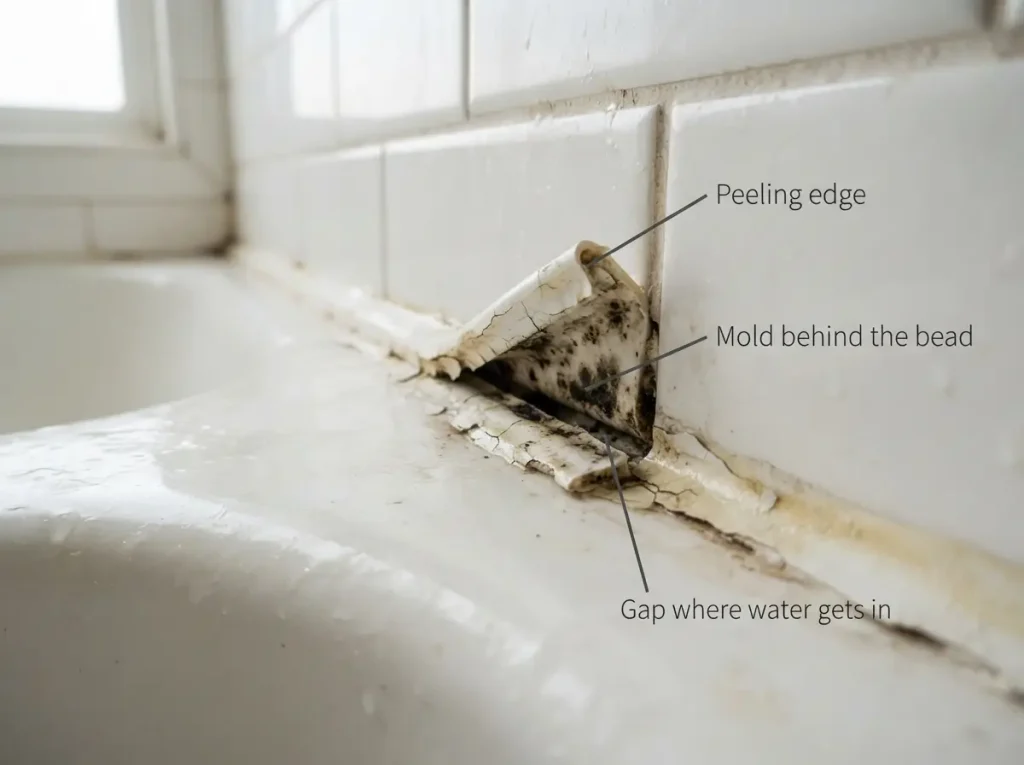
Silicone sheds water. Latex slowly takes it in when it stays wet day after day. Soaked latex softens and pulls away from the joint. Water then slips behind the bead, and mold grows there. The EPA puts it simply: the key to mold control is moisture control.
Silicone isn’t mold proof either. GE says soap residue can feed mold on a silicone bead. Wipe it down each time you clean the tub.
Flexibility and joint movement
Joints move more than most people expect. A tub sinks a little as it fills. Window frames swell in summer and shrink in winter. Silicone stretches and snaps back with that motion. Latex handles small shifts but can crack where joints move a lot.
Which surfaces each one grips
Latex grips porous surfaces like wood, drywall, and plaster. DAP warns its latex won’t grip some slick plastics well, like polyethylene and polypropylene. Silicone bonds best to smooth, non porous surfaces like glass, glazed tile, and metal. Neither one bonds to cured silicone.
Temperature, drying, and cure time
Latex needs mild, dry weather. DAP says to apply above 40°F. It also warns against caulking when rain or frost is due within 24 hours. Silicone cures slower in the cold, and GE also suggests working above 40°F.
Dry to the touch is not the same as cured. GE’s data sheet says the sealant cures about 2 to 3 mm per day in normal conditions. A thick bead can stay soft inside for days. Because how long caulk takes to dry depends on bead depth, humidity, and temperature, check the tube for your product’s water and paint times.
Latex vs silicone caulk: which lasts longer?
In a wet spot, silicone lasts much longer. In a dry spot like a baseboard, good latex holds up well too. The home inspector group InterNACHI lists caulking at 5 to 10 years as a rough range. Quality moves that number. Virginia Tech’s extension service notes that cheap caulk may last only a few years. Premium tubes are often designed to last 20 years or more.
Price per tube
Caulk runs about $2 to $15 or more per tube, based on the same Virginia Tech source. Latex usually sits at the low end. Silicone and specialty formulas cost more. For one bathroom, the silicone vs latex caulk price gap is a few dollars. A failed bead costs far more in repairs.
Can you paint silicone caulk?
No. Standard silicone will not hold paint. Paint beads up on the rubber surface and peels once it dries. If a joint must match your wall or trim, pick latex. For trim work, that one question usually settles silicone vs acrylic caulk.
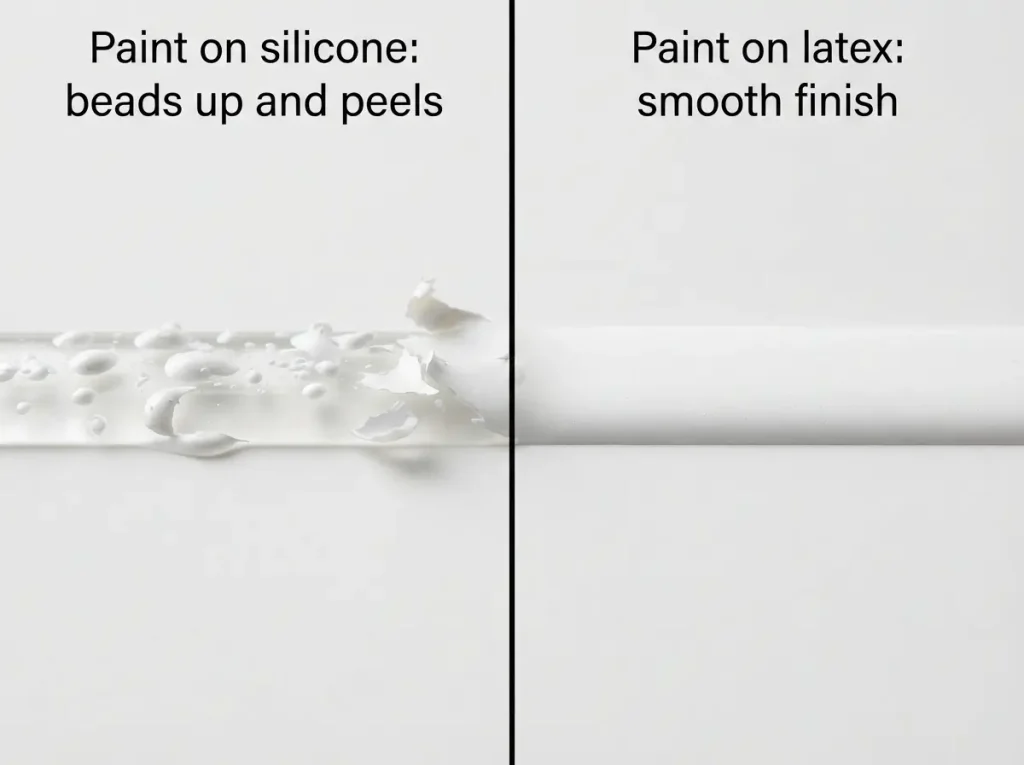
Paint is often the deciding factor in latex vs silicone caulk, so plan it before you buy. If a joint needs both paint and water resistance, you have two routes. Some brands sell a paintable silicone blend. You can also buy silicone in a matching color and skip paint. Latex offers far more colors, and plain white latex takes any paint shade.
Latex vs silicone caulk: which to use in each room
Each room has its own mix of water, movement, and paint. Here’s what to use, spot by spot.
Bathtub and shower
Use 100% silicone in a mildew resistant kitchen and bath formula. No spot in the house tests the acrylic vs silicone caulk choice harder. Hot water warms the tub and walls, and the joint moves with every shower. Latex breaks down here fast.
Before you caulk a bathtub, fill it with water. The weight opens the joint to its widest point. The bead then stretches less when someone steps in later.
Sinks, vanities, and toilet base
Use silicone around sinks, faucets, and vanity tops. These joints get splashed every day. Choose neutral cure near chrome or nickel fixtures. Silicone also works at a toilet base. Many pros leave a small gap at the back so a hidden leak can show.
Kitchen counters and backsplash
Use silicone where a counter meets an undermount sink or a backsplash. Pick neutral cure on granite, marble, or quartz. GE advises testing a hidden spot on natural stone first, since some blemishing can happen. On painted drywall above the splash zone, latex works fine.
Baseboards, crown molding, and trim
Use acrylic latex. These joints stay dry and almost always get painted. Latex fills the thin gaps between wood and wall and disappears under paint. It is the clear winner in acrylic latex caulk vs silicone for dry, painted joints.
Interior windows and doors
Use latex on painted casing and trim when you caulk windows from the inside. Use silicone where glass meets the frame. Sashes and doors that open need weatherstripping, not caulk. The Department of Energy says caulk is for fixed joints under 1/4 inch wide.
Exterior windows, doors, and siding
Use 100% silicone on unpainted joints, like vinyl or aluminum windows. For painted wood trim and siding, use a siliconized latex rated for exterior use. Caulk on a dry day above 40°F.
Is siliconized latex caulk a good middle option?
Siliconized latex is acrylic latex with some silicone added. DAP says the silicone in Alex Plus improves flexibility and adhesion. It still paints like latex and cleans up with water. That makes it a strong pick for painted trim, windows, and siding.
It’s latex at heart, though. DAP states Alex Plus is not for use in a bath or shower. Keep it out of wet zones and use 100% silicone there.
Other sealants for jobs latex and silicone can’t handle
Some joints need a different product.
- Polyurethane: tough and paintable. Good for concrete cracks and hard wearing exterior joints.
- Butyl rubber: very sticky and weatherproof. Common on gutters, flashing, and metal roofs.
- Hybrid polymer: waterproof like silicone and usually paintable. It costs more but covers both needs.
- Removable weatherstrip caulk: peels off in spring. Good for seasonal drafts on indoor windows.
For indoor windows, look for low VOC labels. Water based latex and many hybrid polymers have little smell.
How to tell if your old caulk is silicone or latex
Before you recaulk, find out what’s already there. It changes how you remove it.
- Press it with a fingernail. Silicone feels rubbery and springs back. Latex feels firmer and may crack.
- Look at the paint. Paint peeling off in flakes usually means silicone underneath.
- Cut a small piece. Silicone slices like rubber and pulls out in strips. Latex tends to chip.
- Think about the spot. Glossy caulk around a tub is often silicone. Painted caulk on trim is often latex.
Still unsure? Treat it as silicone. Remove old caulk completely, then wipe the joint with rubbing alcohol. GE recommends rubbing alcohol for silicone residue.
Latex vs silicone caulking: how application differs
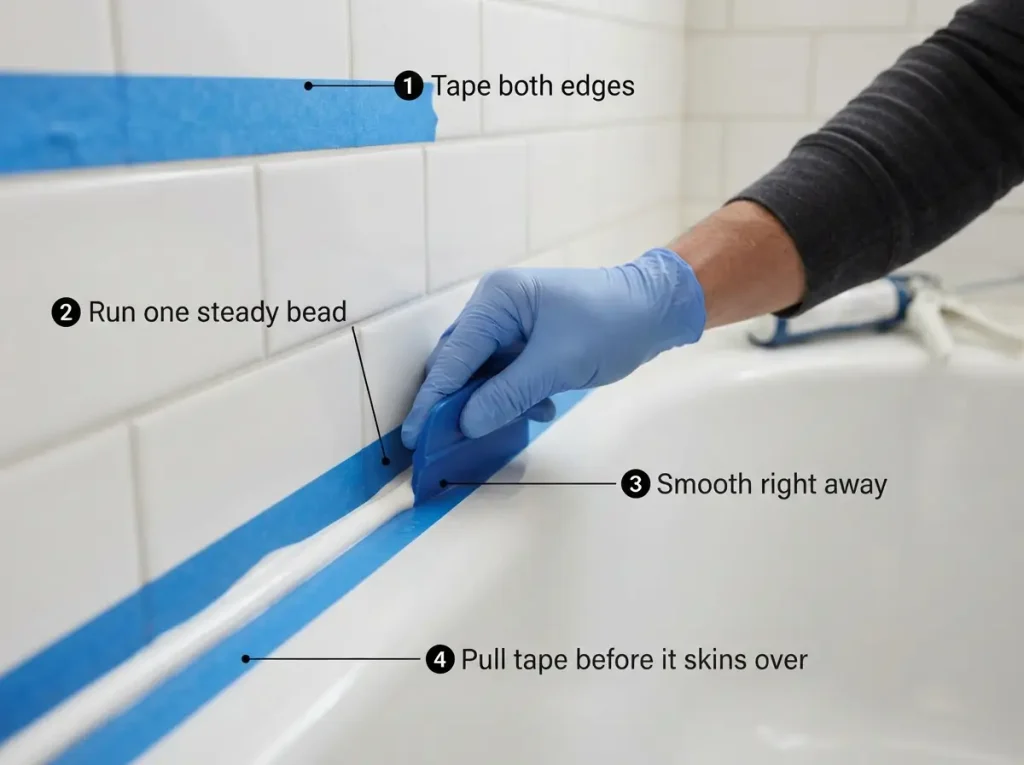
The basic steps match for both. Cut out old caulk, clean and dry the joint, tape both edges, and run one steady bead. The Department of Energy suggests holding the gun at about 45 degrees. Where the two part ways is timing, smoothing, and cleanup.
| Step | Acrylic latex | 100% silicone |
| Smoothing | Damp finger or tool | Tool or gloved finger |
| Working time | Short, about 2 to 5 minutes | Longer, about 5 to 10 minutes |
| Cleanup while wet | Damp rag and water | Paper towels, then mineral spirits |
| Tape removal | Before the bead skins over | Before the bead skins over |
| Deep gaps | Backer rod past 1/2 inch deep (DAP) | Backer rod for wide or deep joints |
Mistakes that make caulk fail early
Most early failures with latex vs silicone caulking come down to one of these.
- Latex in a wet zone. It softens, peels, and lets mold in behind it.
- New caulk over old caulk. The fresh bead has nothing solid to grip.
- A thin silicone film left behind. Even a trace stops new caulk from bonding.
- Gaps that are too wide. Wide beads sag and crack without backer rod.
- Water too soon. A bead can wash out or wrinkle before it cures.
Final Thoughts
For most latex vs silicone caulk decisions, let water and paint decide. Buy silicone for spots that get wet daily or move. Buy latex for dry joints you’ll paint. Grab siliconized latex for painted exterior trim, and neutral cure silicone for metal and stone. Prep each joint well, and you’ll recaulk far less often.
Frequently asked questions
How long after caulking can I shower?
Wait at least 8 hours for most silicones, and 24 hours to be safe. GE allows 30 minutes only for thin beads above 65°F and 50% humidity. It also says not to touch or clean the bead for 24 hours. Check your tube, because times vary by brand.
Will latex (decorator’s) caulk stick to silicone?
No. Latex caulk, called decorator’s caulk in the UK, won’t bond to cured silicone. DAP states its Alex Plus latex will not adhere over 100% silicone. Cut out all the old silicone first. Wipe the joint with rubbing alcohol, let it dry, and then apply the new caulk.
Is latex caulk waterproof enough for a shower?
No. Some latex labels promise a waterproof seal, and cured latex does block splashes. It can’t handle daily soaking the way silicone does. In a shower, it softens and lets mold grow behind it. Use 100% silicone on tub and shower joints, and save latex for dry, painted joints.
Which is better outdoors, latex or silicone?
In the silicone vs latex caulk outdoors question, weather decides. Use 100% silicone on unpainted exterior joints, like vinyl or aluminum window frames. It shrugs off sun, rain, and big temperature swings. Use a siliconized or elastomeric latex rated for exterior use on wood trim you’ll paint. Apply either one above 40°F with no rain due for a day.
Which is easier for a beginner?
In silicone vs latex caulk, latex is easier for first timers. It smooths with a wet finger, cleans up with water, and forgives small mistakes. Silicone is sticky and messy if you rush it. If silicone is the right call, tape both edges first and pull the tape before the bead skins over. That trick gives clean lines on the first try.
Does silicone caulk come in colors?
Yes. Most stores carry clear, white, almond, and a few grays or browns. The range is smaller than latex, and you can’t paint silicone later. Pick your final color before you buy. Clear silicone goes on milky white and turns clear as it cures.
Should a bathroom remodel use both?
Yes, most bathrooms need both. Use silicone around the tub, shower, sink, and toilet base. Use latex on baseboards, door trim, and any joint you’ll paint. Keeping each caulk in its own zone gives you a watertight room and clean painted lines.

About HomeFixStyle
HomeFixStyle is a home improvement blog dedicated to helping readers create better, more comfortable, and stylish homes. We share practical ideas, helpful guides, home decor inspiration, renovation tips, and simple solutions for everyday home projects. Our goal is to make home improvement easier to understand and apply, whether you are updating one room or improving your entire home.