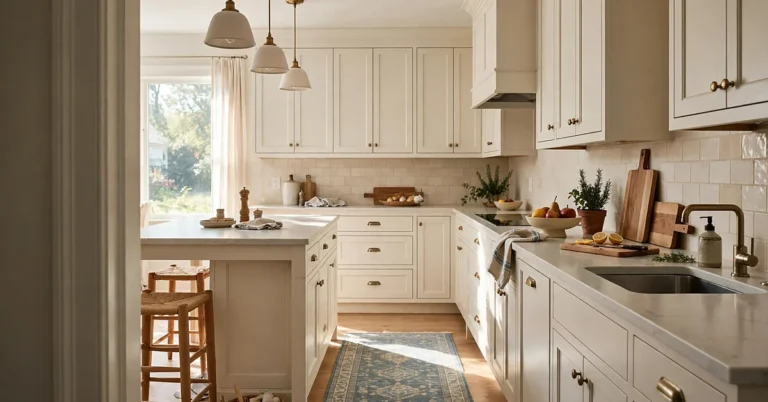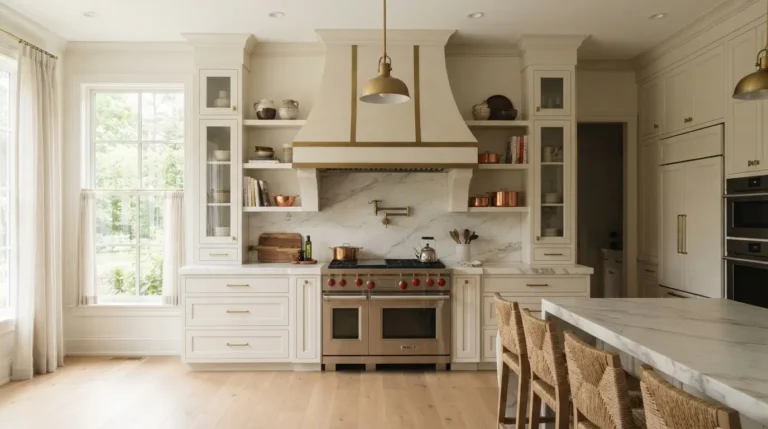

A good kitchen sink should look right, fit your space, and make daily cleanup easier. These 25 kitchen sink ideas cover farmhouse styles, modern finishes, compact kitchens, and practical layouts. You’ll discover which designs suit different cabinets, countertops, and cooking habits. We’ll also compare materials, explain installation requirements, and share measurements to check before buying. Whether you’re replacing an old sink or remodeling your entire kitchen, these ideas will help you narrow your choices.
Kitchen Sink Ideas at a Glance
The best choice depends on your kitchen layout and how you use the space. A deep single bowl helps with large cookware, while a workstation sink adds temporary preparation space.
Use this table to identify a few options before comparing the designs.
| Your main priority | Sink worth considering | What to check |
| Traditional kitchen style | Farmhouse sink | Cabinet support and apron clearance |
| Clean, modern appearance | Undermount sink | Countertop compatibility |
| Large pots and baking sheets | Deep single bowl | Basin dimensions and depth |
| Separate washing tasks | Double bowl | Space inside each basin |
| Limited countertop space | Compact workstation | Accessory storage |
| Bold color contrast | Granite composite | Cleaning and finish care |
| Easy replacement | Drop-in sink | Existing countertop cutout |
| Open kitchen layout | Island sink | Plumbing and working space |
Several designs overlap. A farmhouse sink can have one or two bowls. A stainless steel sink can also be undermount or workstation-style. Focus on the features that improve your kitchen instead of choosing by appearance alone.
1. Kitchen Sink Ideas by Style
Your sink should complement the cabinets, countertops, and hardware around it. Start with your kitchen’s existing colors and finishes.
1. White Farmhouse Sink With Natural Wood Cabinets
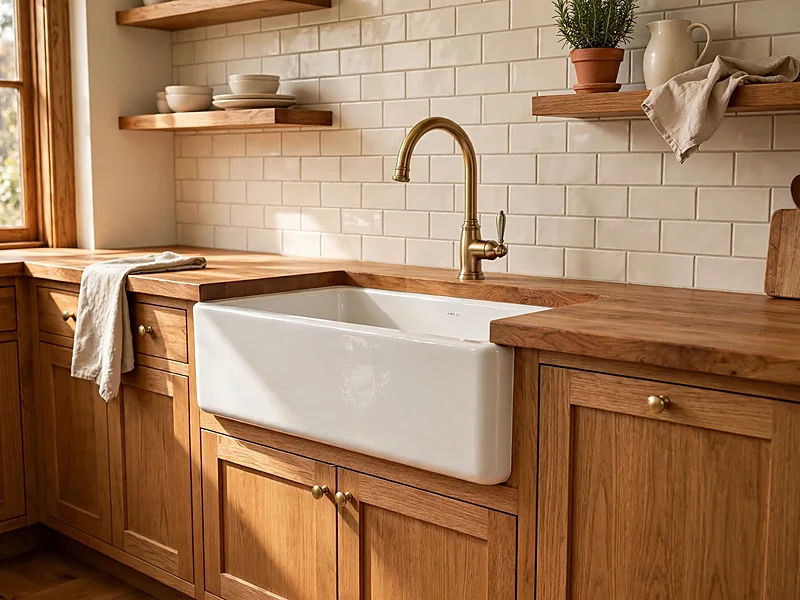
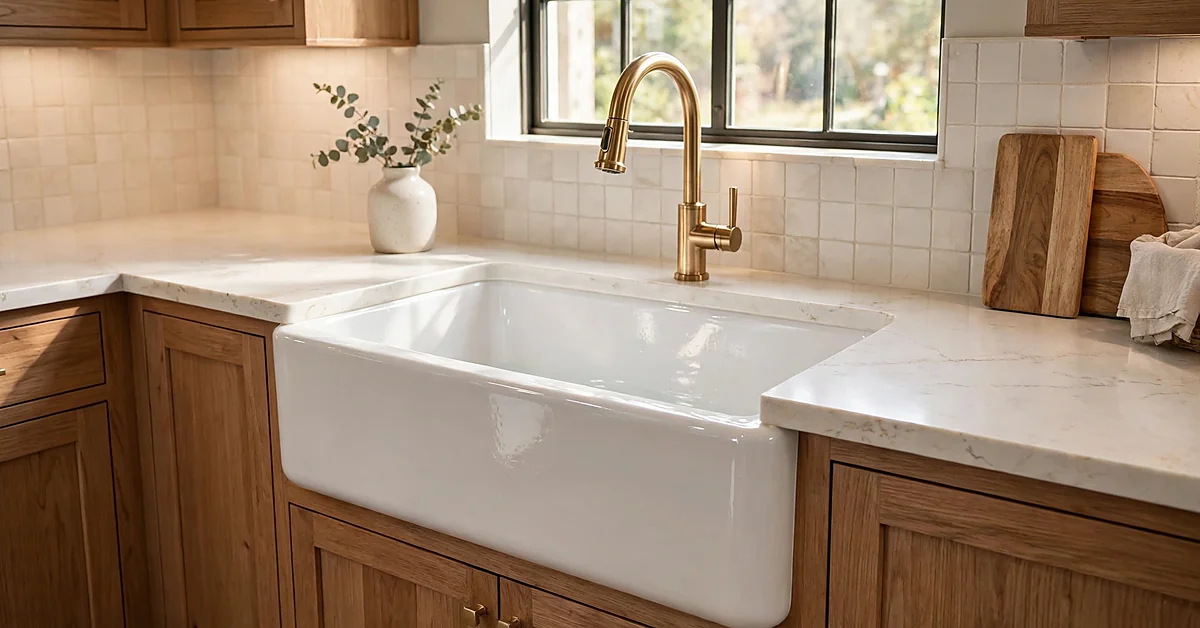
A white farmhouse sink pairs beautifully with oak cabinets, butcher block countertops, and warm neutral colors. Its exposed front becomes a noticeable part of the cabinetry. A deep basin also provides room for large baking sheets and roasting pans.
For a traditional appearance, pair white fireclay with Shaker cabinets and a brushed brass faucet. Natural wood shelves can bring the same warm color into the room. If you’re planning a larger renovation, our kitchen Ideas cover more cabinet, countertop, and layout combinations.
Best for: Farmhouse, cottage, and transitional kitchens.
Before buying: Check the cabinet opening and required support. Some apron-front models need cabinet modifications, while others fit specific existing cabinet designs.
2. Sleek Undermount Sink for Modern Kitchens
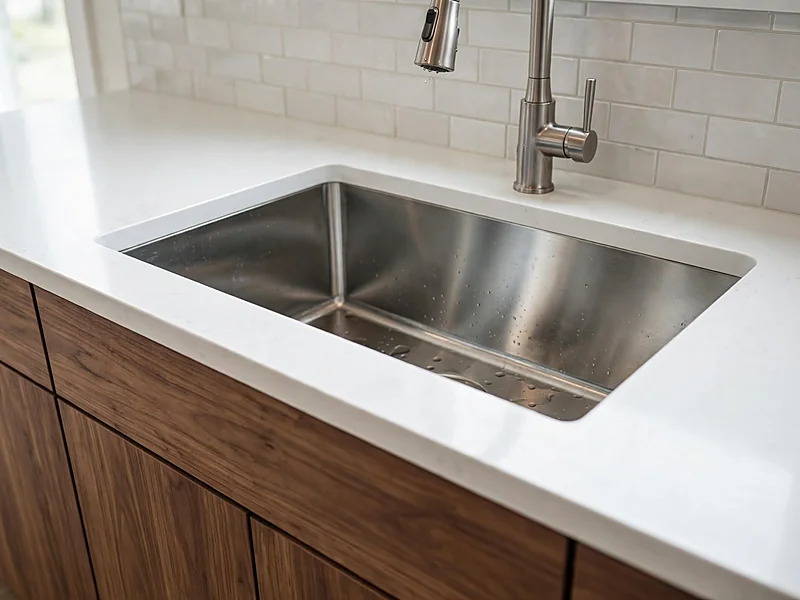
An undermount sink attaches beneath the countertop, leaving no raised rim around the basin. This design gives the counter a clean appearance. You can also wipe crumbs and water directly into the sink.
A rectangular stainless steel model looks good with white quartz, walnut cabinets, and simple hardware. A pull-down faucet with a brushed finish suits this arrangement.
Best for: Modern kitchens with quartz, granite, or suitable solid-surface countertops.
Before buying: Check the countertop material and mounting requirements. Some installations need additional support beneath the sink.
3. Matte Black Sink With White Quartz Countertops
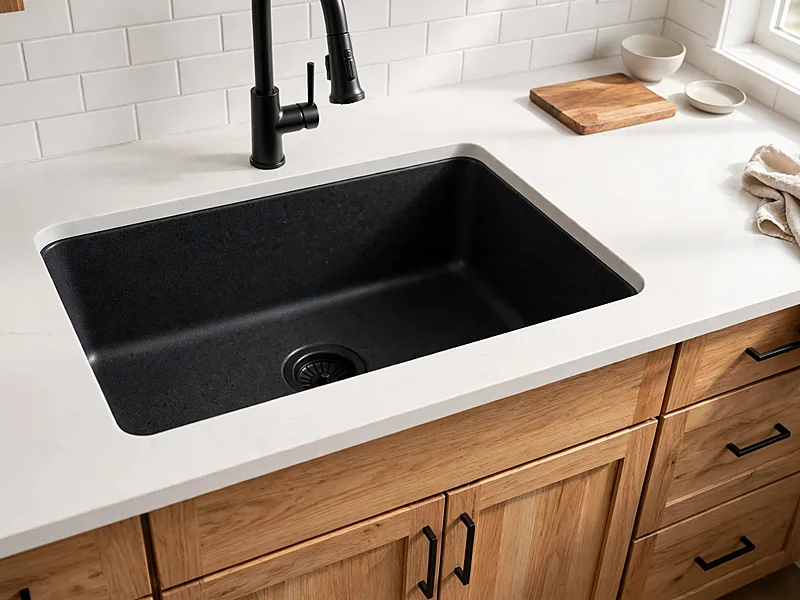
A matte black sink creates contrast against white quartz without making the entire kitchen dark. Pair it with oak cabinets for warmth or charcoal cabinets for a more uniform appearance. A black or brushed nickel faucet can complete the design.
Granite composite is worth considering because it comes in dark finishes and several basin shapes. However, pale mineral deposits can become noticeable on black surfaces in hard-water areas.
Best for: Contemporary kitchens with light countertops.
Before buying: Request a material sample and check the manufacturer’s care instructions.
4. Integrated Sink for a Continuous Countertop Look
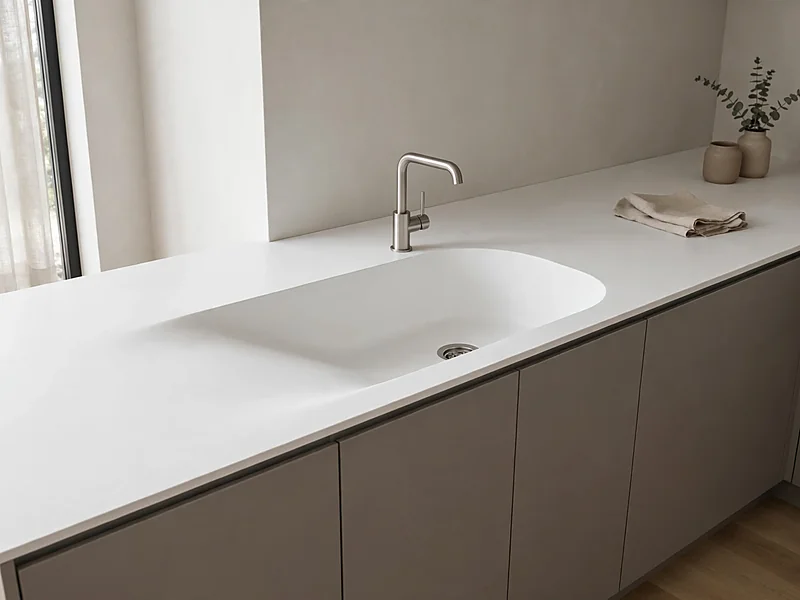
An integrated sink uses the same material, or a coordinated material, as the surrounding countertop. The transition between the counter and basin appears continuous. This creates a simple look with fewer visible edges.
An integrated solid-surface sink works particularly well with flat-panel cabinets and minimal hardware. Some custom stone sinks offer a similar appearance, although their fabrication differs.
Best for: Minimalist kitchens and custom renovations.
Before buying: Ask how the basin can be repaired or replaced. A damaged integrated sink may involve countertop work.
5. Vintage-Inspired Sink With a Bridge Faucet

A traditional bridge faucet can give a simple white sink an older-home appearance. Try this pairing with sage green cabinets, subway tile, and classic cabinet handles. A ceramic basin keeps the design consistent with the surrounding finishes.
Choose a faucet with enough reach to rinse the entire sink.
Best for: Traditional kitchens, cottages, and older homes.
Before buying: Check the faucet mounting holes and spacing. Some bridge faucets need a different configuration than standard single-hole models.
6. Copper Apron-Front Sink for Rustic Kitchens
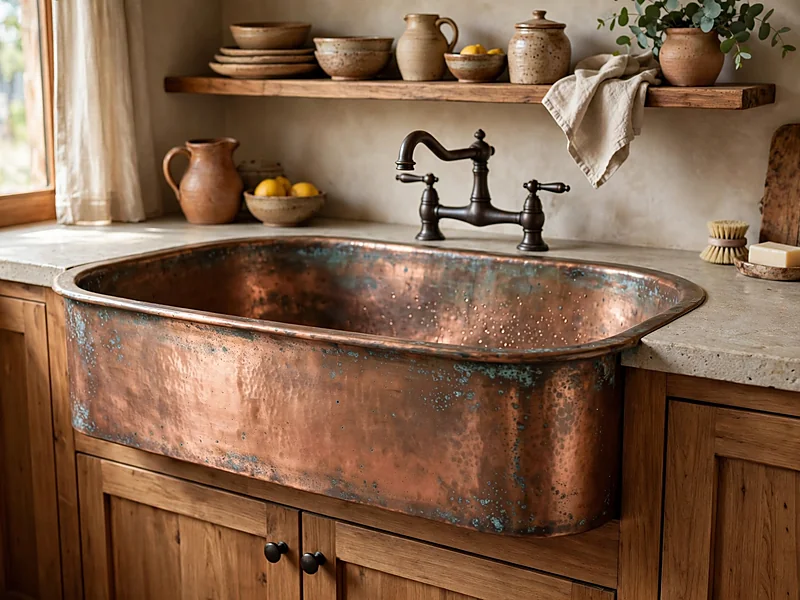
Copper sinks bring warm color to kitchens with wood cabinets, stone counters, and natural finishes. Their surfaces often develop a patina through contact with water and everyday use. This changes the appearance over time.
A copper apron-front sink can become the main design feature in a rustic kitchen. Choose simple cabinet hardware so the sink doesn’t compete with too many finishes.
Best for: Rustic kitchens and traditional interiors.
Before buying: Decide whether you enjoy copper’s changing appearance. Protective finishes and cleaning requirements vary between products.
7. Colored Kitchen Sink as a Focal Point

A colored sink can add personality without requiring new cabinetry. A muted green basin looks good against cream cabinets. Deep blue can work beside white tile and natural oak.
Colored composite, fireclay, and enameled sinks offer alternatives to stainless steel. Keep the surrounding finishes simple if you want the sink to draw attention.
For coordinating cabinet hardware, wall colors, and accessories, see our Kitchen Decor Ideas.
Best for: Kitchens that need a distinctive feature.
Before buying: Check the color in natural and artificial light. Product photographs may look different from the actual finish.
2. Space-Saving Kitchen Sink Ideas
A small kitchen needs enough washing space without losing valuable countertop room. The following designs address different layout problems.
8. Compact Single-Bowl Sink for a Small Kitchen
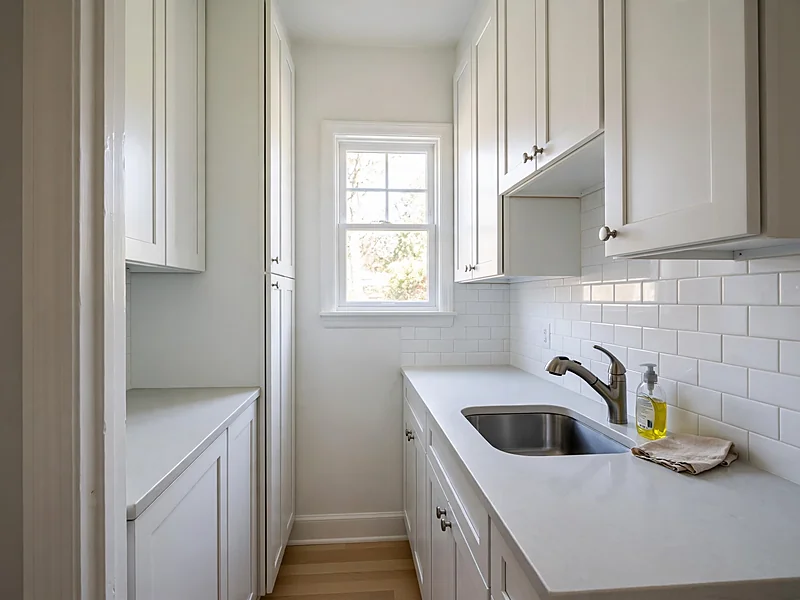
A compact single-bowl sink offers an open washing area without a center divider. It often makes better use of limited cabinet space than a wide double-bowl model.
Choose a basin that holds your everyday pans without occupying more countertop space than necessary. An undermount design may also help the counter look less crowded.
Best for: Apartments, galley kitchens, and smaller homes.
Before buying: Measure your largest frequently used pan. The advertised sink width doesn’t tell you its usable interior dimensions.
9. Corner Sink for an L-Shaped Kitchen

A corner sink can help make use of an awkward countertop corner. It may leave longer sections of the counter available for food preparation.
An angled basin can suit an L-shaped kitchen with limited straight countertop space. However, corner sinks can create uncomfortable reaching positions.
Best for: L-shaped kitchens with carefully planned cabinets.
Before buying: Check nearby cabinet doors, drawers, and dishwasher clearance. Make sure the sink remains comfortable to use.
10. Compact Workstation Sink With a Cutting Board
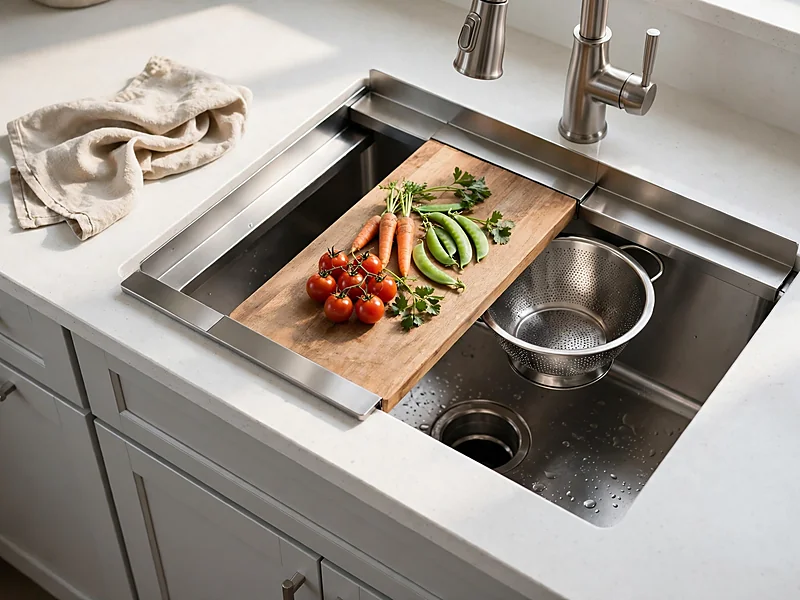
A workstation sink includes ledges that support accessories over the basin. A fitted cutting board creates temporary preparation space. A colander can help with rinsing vegetables.
These features are useful when the kitchen has limited countertops. A compact stainless steel workstation sink suits many modern kitchen designs.
Best for: Small kitchens used for frequent cooking.
Before buying: Confirm the accessories fit securely. You’ll also need somewhere to clean, dry, and store them.
11. Kitchen Sink With a Built-In Drainboard
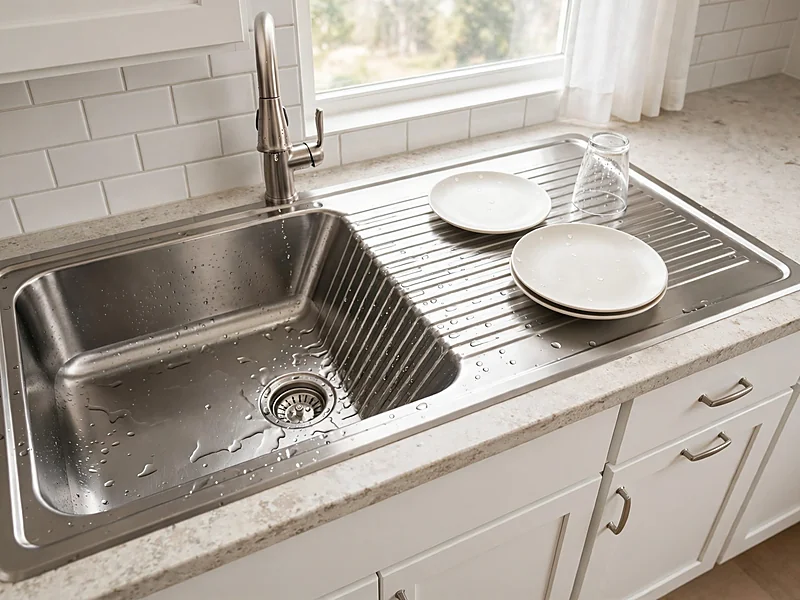
A drainboard sink has a sloped surface beside the basin. Water from washed dishes runs toward the sink instead of collecting across the countertop.
This can be useful in households without a dishwasher. Some models place the drainboard on the left, while others place it on the right.
Best for: Kitchens where dishes are washed by hand.
Before buying: Measure the full sink and drainboard assembly. The draining area reduces available countertop space.
12. Shallow Sink for Limited Cabinet Clearance

A shallower sink can leave more room for plumbing and storage beneath the counter. It may also feel more comfortable for users who find deep basins difficult to reach.
The drawback is reduced capacity for large cookware. Shallow bowls can also splash more easily.
Best for: Compact sink cabinets and kitchens with limited clearance.
Before buying: Check the garbage disposal, drain assembly, and plumbing connections.
3. Practical Kitchen Sink Ideas for Everyday Use
Different households need different sink configurations. Consider how often you cook, wash dishes, and use large cookware before choosing a basin.
13. Deep Single-Bowl Sink for Large Pots and Pans
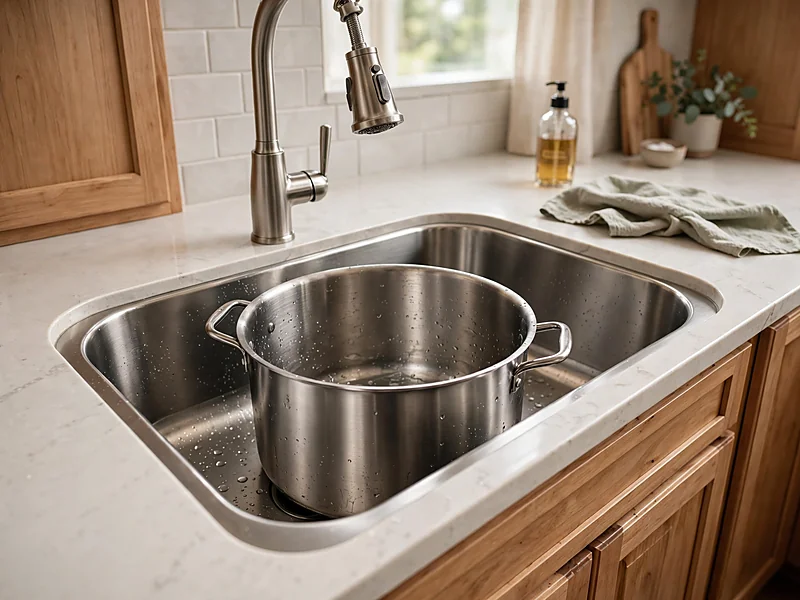
A deep single-bowl sink provides one open washing area without a divider. This makes it easier to wash stockpots, roasting pans, and baking sheets.
A pull-down faucet helps rinse cookware and reach the corners. However, a very deep basin can feel uncomfortable for someone who bends frequently during washing.
Best for: Home cooks who regularly use large cookware.
Before buying: Check both the basin width and depth. Consider the height of the countertop and the person using it.
14. Double-Bowl Sink for Separate Washing Tasks

A double-bowl sink divides the washing area into two basins. You can soak dirty dishes on one side while rinsing vegetables or cookware on the other.
Equal-sized bowls provide similar working areas. Offset configurations give one side more room. A double bowl can be useful for households that wash dishes by hand.
Best for: Families that prefer separate washing tasks.
Before buying: Check whether your largest cookware fits inside one basin.
15. Low-Divide Sink for Flexible Cleanup

A low-divide sink has a center wall that sits below the outer rim. It separates smaller washing tasks while allowing larger items to extend across the divider.
This arrangement offers some benefits of both single-bowl and double-bowl sinks.
Best for: Households with different washing needs.
Before buying: Compare divider height and interior dimensions. Not every low-divide model provides the same working space.
16. Full-Size Workstation Sink for Meal Preparation
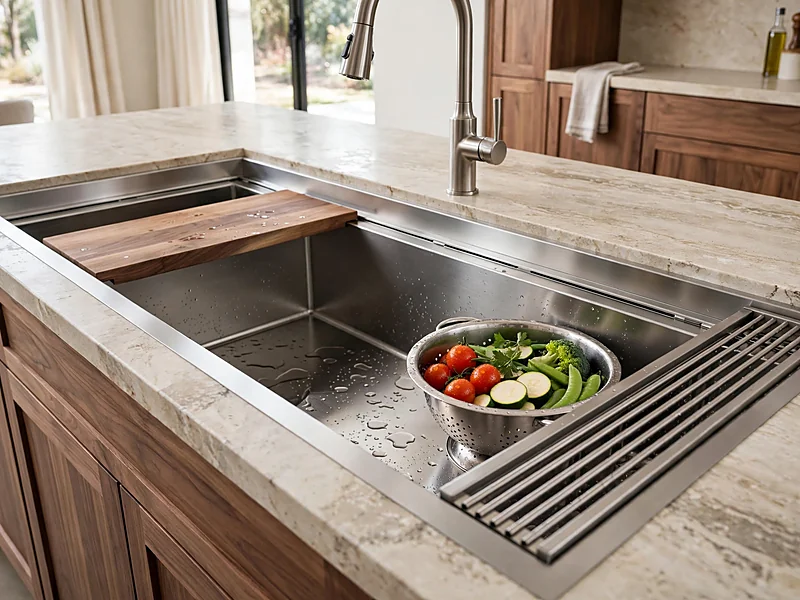
A large workstation sink can support cutting boards, colanders, and drying racks along built-in ledges. This allows some food preparation and cleanup to happen in one area.
A wide workstation model can be useful when several cooking tasks happen close together. However, accessories need storage and regular cleaning.
Best for: Home cooks who prepare meals frequently.
Before buying: Compare accessory quality, basin width, and how easily the sink can be cleaned.
17. Offset-Drain Sink for Better Cabinet Storage
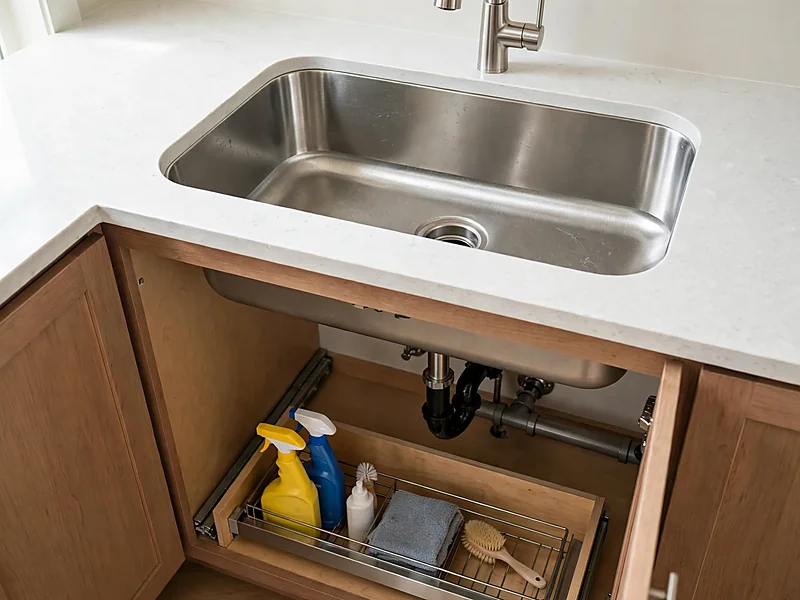
An offset-drain sink places the drain away from the center of the basin. Depending on the plumbing layout, this may leave more usable storage space underneath.
For example, a rear drain can make room for a pull-out organizer in some cabinet configurations.
Best for: Kitchens where under-sink storage matters.
Before buying: Check the plumbing and garbage disposal location. The drain position alone doesn’t guarantee more storage.
4. Kitchen Sink Material and Finish Ideas
The sink material affects appearance, cleaning, weight, and long-term care. Each option has advantages and limitations.
18. Brushed Stainless Steel Sink

Stainless steel is a practical option for kitchens that handle frequent washing and cooking. It pairs well with many countertop colors and cabinet finishes.
A brushed surface can make some light scratches less noticeable than a polished finish. Steel thickness is measured in gauges. Lower gauge numbers indicate thicker steel. Some models also include sound-reducing pads.
Best for: Busy households and modern kitchens.
Before buying: Compare steel gauge, basin construction, noise control, and manufacturer care instructions.
19. White Fireclay Sink

Fireclay sinks have a hard, glazed ceramic surface. They suit farmhouse kitchens, traditional cabinets, and warm countertop finishes.
The smooth surface is convenient for everyday cleaning. However, strong impacts may chip the glaze. These sinks can also be heavy.
Best for: Farmhouse and traditional kitchens.
Before buying: Confirm the cabinet’s support requirements and the model’s mounting instructions.
20. Granite Composite Sink in a Stone Finish
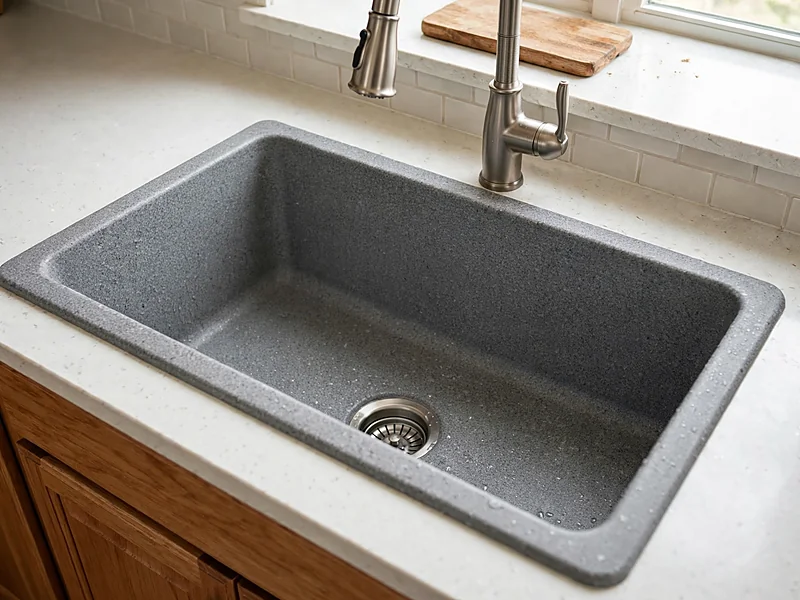
Granite composite sinks combine mineral material with resin. They come in black, gray, white, and other colors.
A gray composite sink can complement wood cabinets and pale quartz countertops. Cleaning requirements vary by manufacturer.
For example, BLANCO’s SILGRANIT care guidance explains how to care for its composite sinks.
Best for: Homeowners who want a colored, stone-like surface.
Before buying: Check the approved cleaners, heat limits, and mineral-deposit care instructions for your chosen model.
21. Enameled Cast Iron Sink

Enameled cast iron sinks have a cast iron body covered with a glazed finish. They offer a traditional appearance that works with painted cabinets and classic kitchen hardware.
The heavy construction requires proper support. Sharp impacts may damage the enamel surface.
Best for: Vintage-inspired and traditional kitchens.
Before buying: Confirm the cabinet can support the sink. Follow the manufacturer’s enamel-cleaning recommendations.
22. Concrete Sink for an Industrial Kitchen
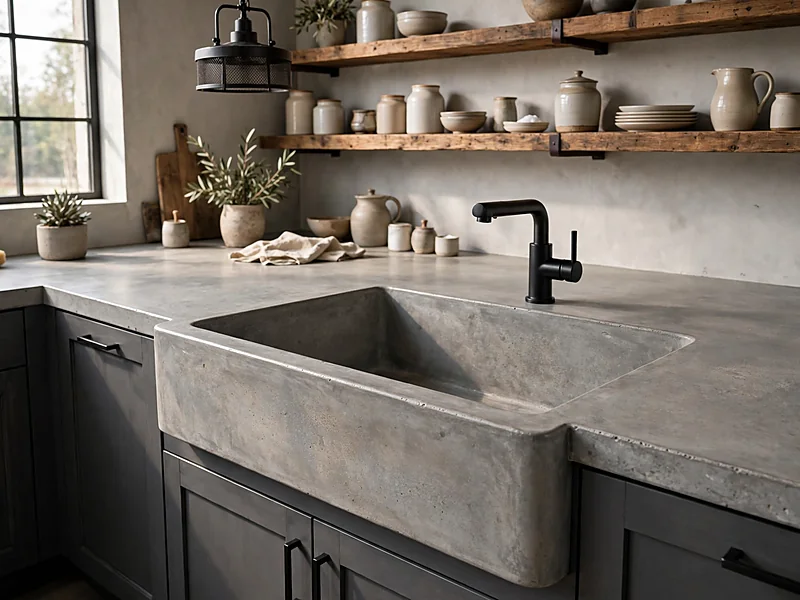
A concrete sink suits kitchens with wood shelves, dark cabinets, and matte metal hardware. Custom fabrication allows different basin shapes and dimensions.
Concrete sinks can have a distinctive textured appearance. However, their care requirements depend on the finish and sealing system.
Best for: Custom industrial and modern kitchens.
Before buying: Ask about sealing, stains, cracking, repairs, and structural support.
5. Creative Kitchen Sink Placement Ideas
Sink placement affects kitchen workflow and countertop space. The best location should support food preparation, washing, and cleanup.
23. Kitchen Sink Beneath a Window
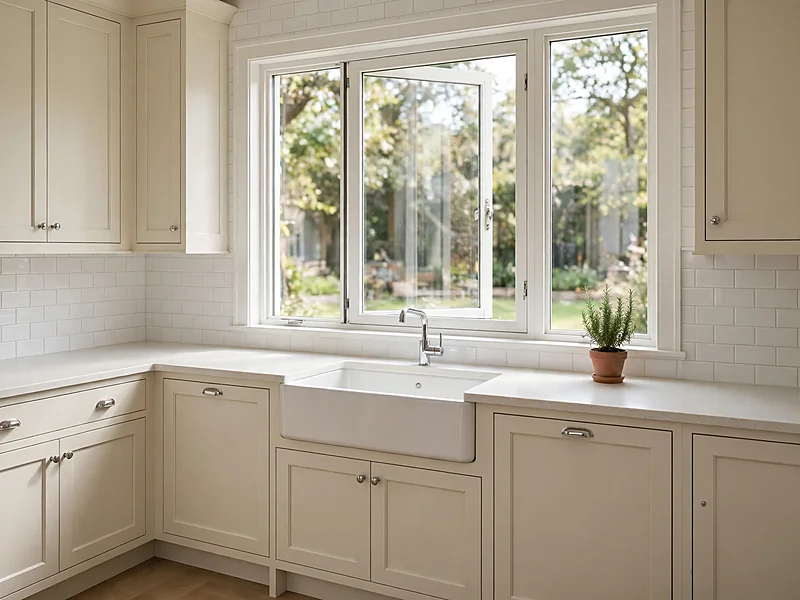
Placing a sink beneath a window brings natural light into the washing area. A white farmhouse sink can complement traditional window trim.
Stainless steel works equally well with simpler modern cabinets. Leave enough space around the faucet for cleaning.
Best for: Kitchens with a conveniently located exterior window.
Before buying: Check faucet clearance and how the window opens.
24. Kitchen Island Sink With Open Prep Space
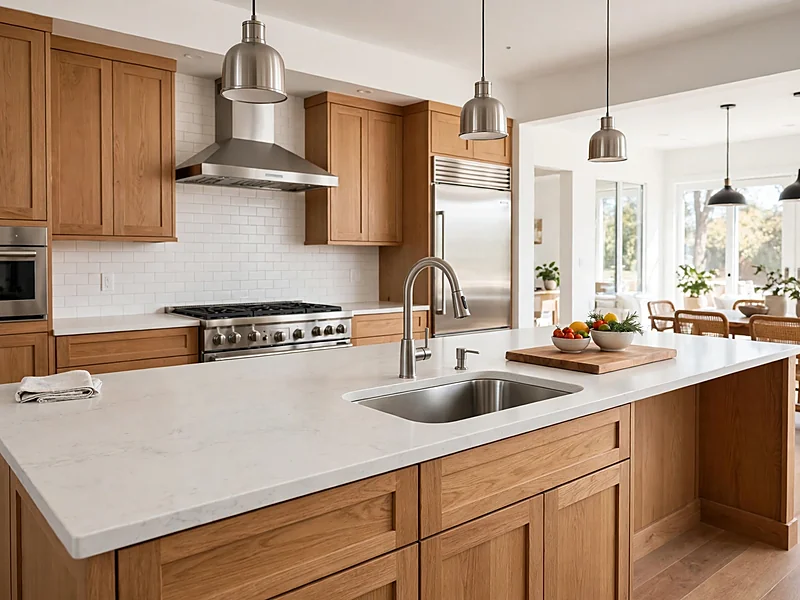
An island sink can make food preparation easier in an open kitchen. It allows someone to work while facing the surrounding room.
An undermount model keeps the island countertop visually simple. Leave adequate space beside the basin for dishes, ingredients, and cooking equipment.
Best for: Spacious kitchens with a large island.
Before buying: Plan plumbing, dishwasher placement, seating, and splash zones together.
25. Secondary Prep Sink for Busy Kitchens
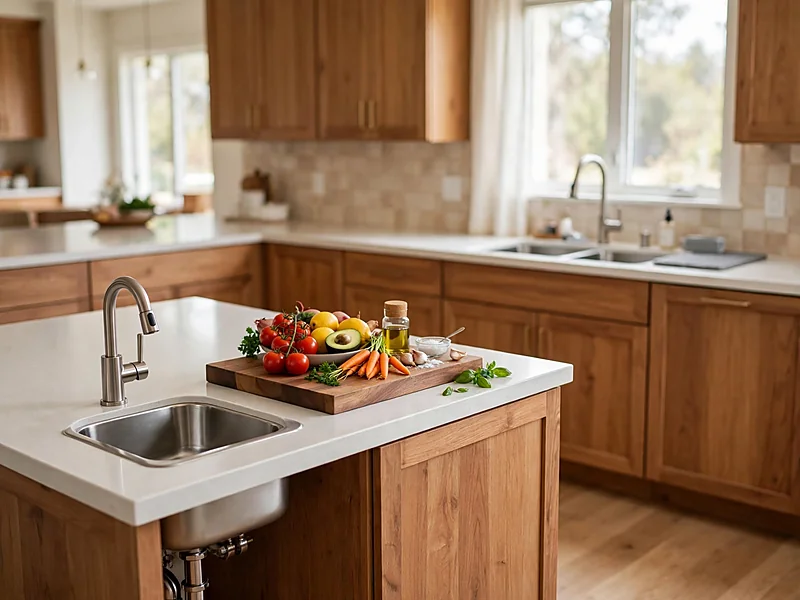
A second sink can help when several people cook at the same time. Place it near a preparation counter or beverage station.
A compact single-bowl model is often enough for rinsing produce or filling containers.
Best for: Large kitchens with multiple cooking areas.
Before buying: Consider whether the extra plumbing and lost countertop space justify the convenience.
6. How to Choose the Right Kitchen Sink
The best kitchen sink ideas should also work with your cabinet dimensions, countertop, and daily routine. Before ordering, narrow your options using the following checks.
Match the Sink to Your Cooking Habits
Choose the basin configuration around the tasks you perform most often. If you regularly wash large pots, consider a deep single bowl. If you prefer separate washing and rinsing areas, compare double-bowl sinks.
If you need more preparation space, look at workstation models. A feature is only useful when it solves a problem in your kitchen.
Measure Your Sink Cabinet Before Buying
One common mistake is assuming the sink’s advertised width equals its required cabinet size. It doesn’t.
For example, KOHLER lists these requirements for two Vault undermount models:
| Example sink | Sink width | Minimum base cabinet |
| KOHLER Vault K-3822 | 24 inches | 27 inches |
| KOHLER Vault K-3821 | 32 inches | 36 inches |
These measurements apply to the specific models listed. Other sinks may have different requirements, even when their advertised widths match.
Always use the manufacturer’s specifications and cutout template.
Sources: KOHLER Vault 24-inch sink and KOHLER Vault 32-inch sink.
Five Measurements to Take Before Replacing a Sink
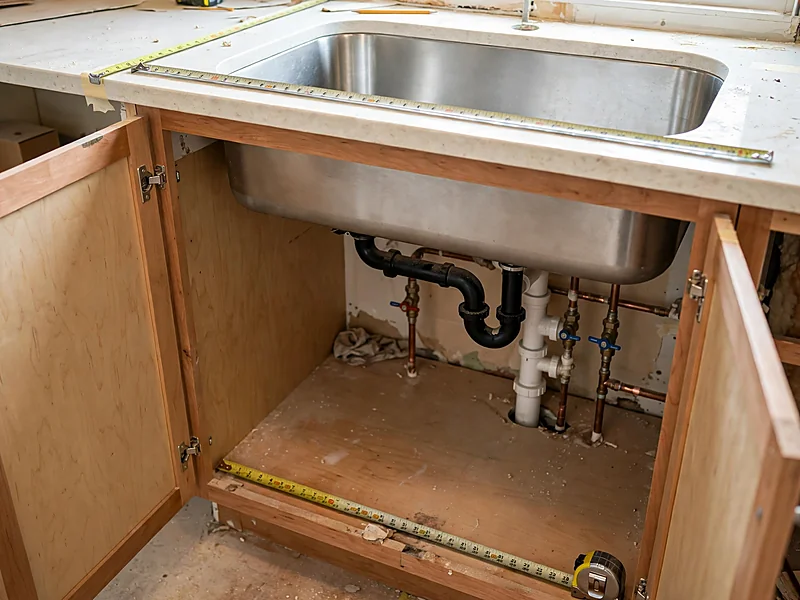
Record these measurements before visiting a showroom or ordering online.
- Sink-base cabinet width: Measure the available cabinet space and check the manufacturer’s minimum requirement.
- Existing countertop opening: Record the cutout length and width.
- Countertop depth: Measure the available space from the front edge toward the backsplash.
- Under-sink clearance: Check room for the basin, drain, garbage disposal, and storage accessories.
- Faucet clearance: Measure available space behind the basin and near windows.
These measurements help narrow your options. They don’t replace a manufacturer’s cutout template or installation instructions.
Choose the Right Mounting Style
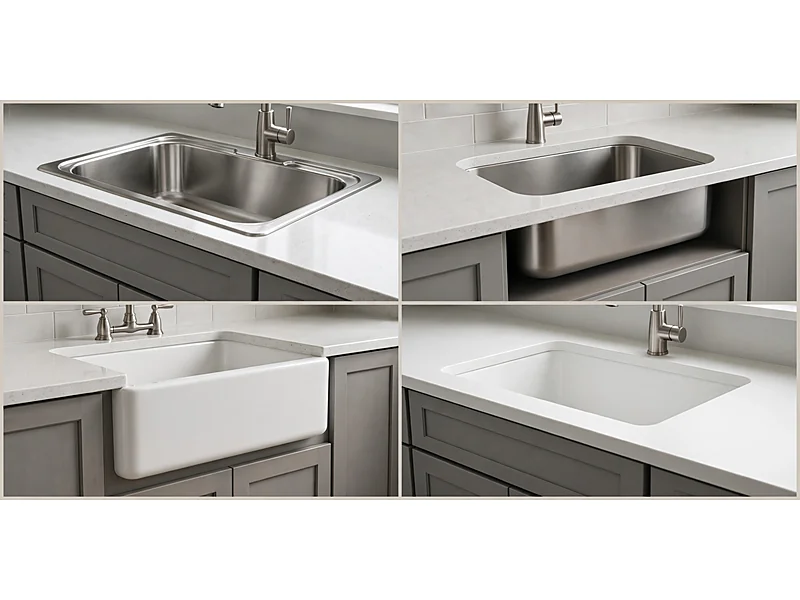
The mounting style affects both appearance and installation.
| Mounting style | How it works | Main consideration |
| Drop-in | Rim rests on the countertop | Visible rim and cutout compatibility |
| Undermount | Basin attaches beneath the countertop | Countertop material and support |
| Farmhouse | Exposed apron becomes part of the cabinet front | Cabinet modifications |
| Integrated | Basin connects visually with the countertop | Custom fabrication and repair |
A drop-in sink can suit a straightforward replacement project, especially with a compatible laminate counter. Undermount sinks commonly work with quartz, granite, and suitable solid-surface countertops.
A farmhouse installation may need additional support or cabinet modifications.
For more information, see KOHLER’s kitchen sink buying guide.
Replacing a Sink Without Changing the Countertop
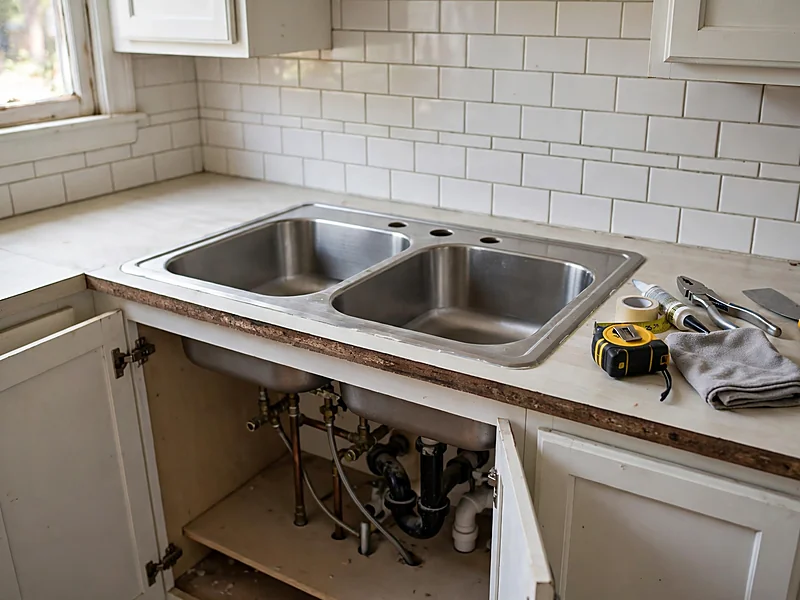
You can sometimes replace a sink while keeping the existing countertop. The new model must fit the opening and meet the installation requirements.
A like-for-like replacement is often simpler than changing mounting styles. However, an undermount conversion or farmhouse installation may require countertop and cabinet work.
Before ordering:
- Identify the existing mounting style.
- Measure the current cutout.
- Check the countertop material and condition.
- Compare manufacturer templates.
- Ask an installer to confirm compatibility.
Don’t cut a stone countertop or modify its support without appropriate professional assessment.
Which Kitchen Sink Material Is Best?
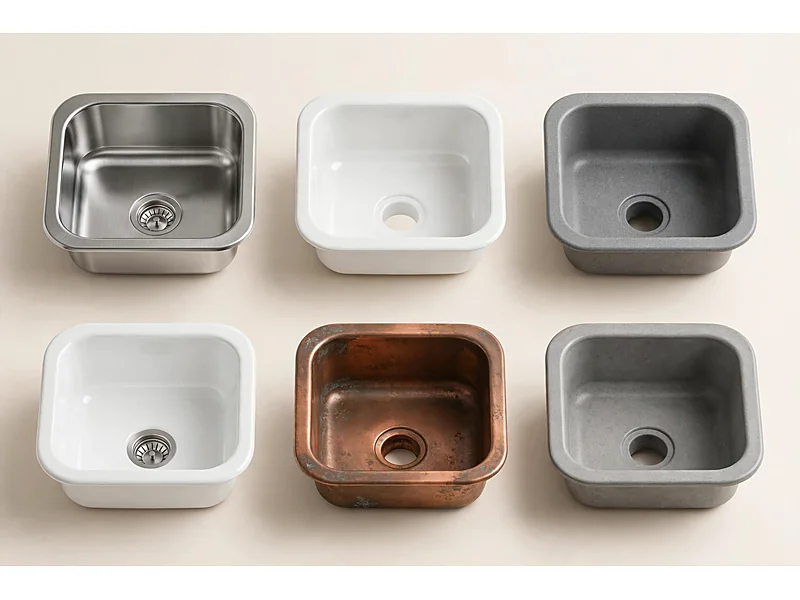
No material is best for every household. Use this comparison to narrow your choice.
| Material | Main advantage | Possible drawback |
| Stainless steel | Practical and versatile | Scratches and water spots |
| Fireclay | Smooth glazed surface | Impact damage |
| Granite composite | Color choices | Mineral marks and model-specific care |
| Enameled cast iron | Traditional appearance | Weight and enamel damage |
| Copper | Warm appearance | Changing patina |
| Concrete | Custom design | Sealing and maintenance |
For busy kitchens: Stainless steel is a sensible starting point.
For traditional styling: Compare fireclay and enameled cast iron.
For modern colors: Granite composite offers several finishes.
For custom designs: Copper and concrete provide distinctive appearances but need careful maintenance planning.
Granite Composite vs. Stainless Steel: Which Should You Choose?
Both materials can work well in everyday kitchens. Stainless steel offers a familiar metal finish and handles regular cooking and cleaning.
Granite composite provides more color options and a stone-like appearance. The better choice depends on your kitchen style, water conditions, and maintenance preferences.
Choose stainless steel if you prefer a familiar, versatile finish. Consider granite composite if you want a particular color and accept its care requirements.
Compare specific products rather than assuming every sink within one material category performs identically.
Choose a Faucet That Fits the Sink
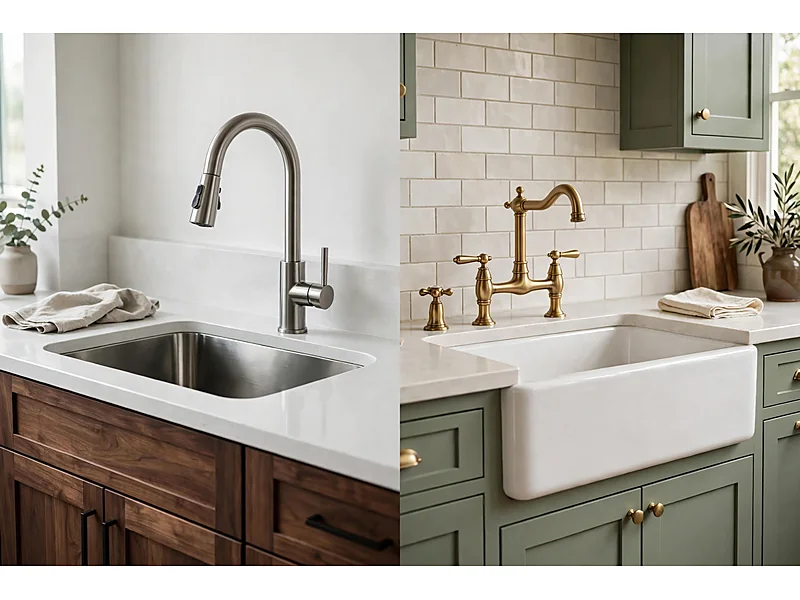
Your faucet should reach the areas you need to rinse without creating unnecessary splashing. Pull-down faucets can help with large single-bowl sinks.
Traditional bridge faucets work well with classic kitchen designs. A shallow basin may work better with a lower faucet than a tall commercial-style model.
Check faucet reach, handle clearance, and mounting holes.
The US Environmental Protection Agency recommends kitchen faucet flow rates of 1.8 gallons per minute or less. Kitchen faucets are not eligible for WaterSense labeling.
Plan the Full Replacement Cost
The purchase price is only one part of a sink replacement. Installation costs depend on the existing plumbing, countertop, mounting style, and cabinet condition.
A simple drop-in replacement may require less work than converting to a farmhouse sink.
Ask local installers for itemized quotes that include:
- Sink and faucet
- Removal of the existing sink
- Plumbing connections
- Installation labor
- Cabinet modifications
- Countertop cutting or repair
- Disposal of old materials
Check whether mounting hardware, drain fittings, and accessories are included. A written estimate helps you compare the full project cost rather than the sink price alone.
7. Kitchen Sink Design Mistakes to Avoid
A sink can look attractive in photographs and still cause problems in everyday use. Avoid these common mistakes before ordering.
Choosing the wrong size: Measure the cabinet and countertop opening. Don’t rely only on the advertised sink width.
Ignoring bowl depth: Deep basins offer room for cookware but may feel uncomfortable during long cleaning sessions.
Overlooking countertop compatibility: Not every mounting style works with every countertop material.
Selecting a finish without considering cleaning: Dark finishes may show mineral deposits. Metal surfaces may develop visible scratches.
Forgetting faucet clearance: Check nearby windows, backsplashes, and cabinet hardware.
Ignoring under-sink plumbing: Drain lines and garbage disposals can limit storage space.
Paying for unused accessories: A workstation sink offers little extra value if you never use its accessories.
Choosing style over workflow: Place the sink where washing, food preparation, and cleanup remain convenient.
Frequently Asked Questions
What Type of Kitchen Sink Is Best for Everyday Use?
A stainless steel single-bowl sink is a practical starting point for many households. It provides an open washing area and works with different kitchen styles.
However, double-bowl sinks may suit people who frequently wash dishes by hand. Choose based on your cabinet size, cookware, and cleaning habits.
Are Farmhouse Sinks Still in Style?
Farmhouse sinks remain a design option for traditional, cottage, and transitional kitchens. Their exposed fronts create a distinctive appearance.
For a simpler look, pair an apron-front sink with flat cabinet doors and understated hardware. Choose the style because it suits your home rather than following a short-term trend.
Is an Undermount or Drop-in Sink Better?
An undermount sink offers a clean countertop edge and works with suitable countertop materials. A drop-in sink can be easier to fit during some replacement projects.
Neither option is universally better. Your countertop, existing opening, budget, and preferred appearance should guide the decision.
What Kitchen Sink Material Is Easiest to Maintain?
Stainless steel and smooth glazed sinks are practical materials to compare. Stainless steel may show scratches and water spots.
Fireclay has a smooth glazed surface but can chip under strong impacts. Granite composite can also be easy to maintain, depending on its finish and manufacturer instructions.
What Sink Works Best in a Small Kitchen?
A compact single-bowl sink works well in many small kitchens. It provides an open washing area without taking up unnecessary counter space.
A small workstation sink is another option when food preparation space is limited. Measure your cookware and cabinet before choosing.
Should You Caulk Around a Kitchen Sink?
Many sink installations require a suitable sealant to prevent water from entering the joint between the sink and countertop. The correct sealant and application method depend on the sink’s mounting style and manufacturer instructions.
Don’t assume every installation needs the same caulking method. If an existing seal fails, identify and correct the source of the leak before resealing.
Can You Paint a Kitchen Sink?
Some sink surfaces can be refinished using products designed for the specific material. However, ordinary household paint generally isn’t suitable for a basin exposed to water, detergents, and regular use.
Refinishing may also affect warranties and maintenance requirements. Check the sink manufacturer’s advice before attempting a coating project.
Conclusion
The best kitchen sink ideas combine a design you enjoy with features that suit your daily routine. A farmhouse sink adds character to traditional cabinets. An undermount basin gives compatible countertops a clean edge. A workstation sink can provide temporary preparation space in a compact kitchen.
Before choosing, check your cabinet dimensions, countertop opening, and mounting requirements. Compare materials based on how you cook and clean. A well-chosen sink should fit your kitchen, suit your style, and make everyday tasks easier.

About Author
Hello there. I am Lathen Reed, a home improvement and interior design enthusiast. With a passion for creating beautiful, practical, and comfortable spaces, I share helpful ideas and inspiration related to home improvement, home decor, interior design, and home styling. Through HomeFixStyle, my goal is to make home improvement simple, inspiring, and accessible for everyone.