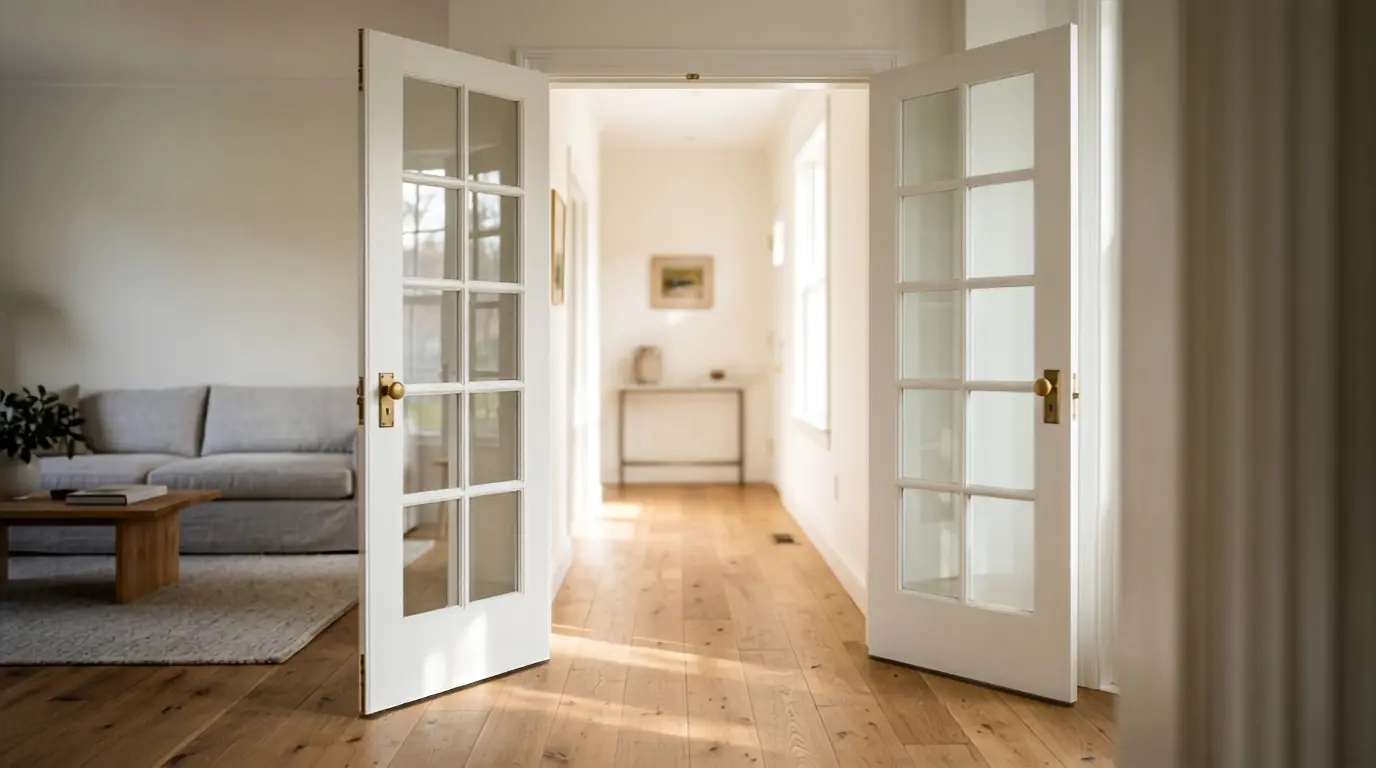
Interior French doors are a pair of glass panel doors used to divide rooms inside a home. Light passes between the spaces while each room still feels separate. Homeowners choose them for offices, dining rooms, pantries, and bedrooms. This guide covers the main types, styles, and glass options. It also covers sizes, materials, room uses, and real cost ranges. You will also see how these doors compare to barn doors, pocket doors, and standard double doors. By the end, you will know which style fits your home and your budget.
What Are French Doors?
A French door is one of a matching pair. Each door is made mostly of glass panels called lites. The glass sits inside a wood or MDF door frame. Many French doors feature thin dividing bars called muntins, which break the glass into smaller panes. This build is often called stile and rail construction.
The name comes from 17th century French architecture. Builders installed tall casement windows that ran to the floor. The style later spread across Europe and North America and became known as the French door.
French Doors vs. Interior French Doors
Exterior French doors handle weather. They need weatherstripping, security locks, and impact-rated glass. Interior French doors skip all of that. They focus on privacy, sound control, and matching the trim of a room. Hardware differs too. Exterior sets use deadbolts. Interior sets usually need only a simple passage latch.
Types of French Doors
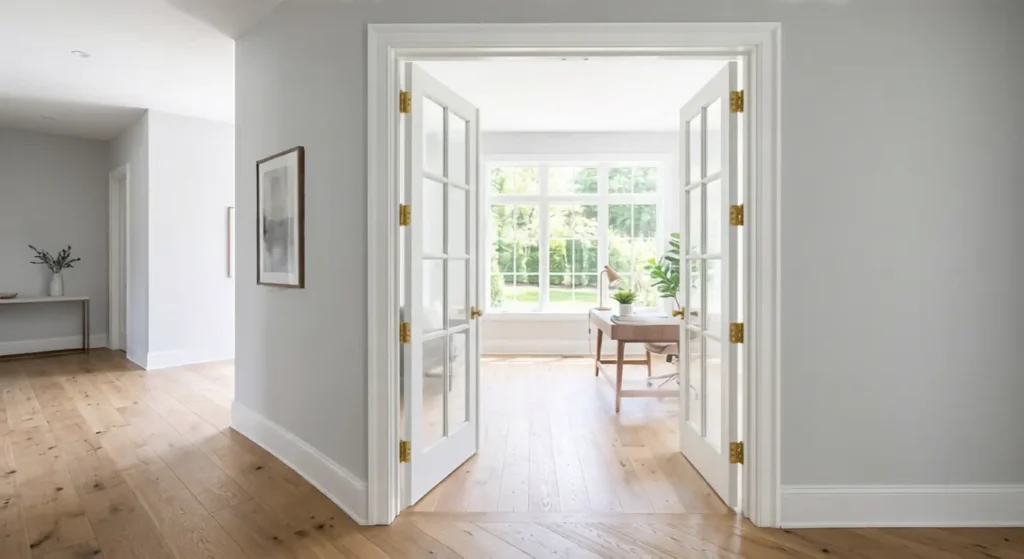
Type refers to how a door operates, not how it looks.
- Swing (hinged): The classic style. Both panels swing on hinges. They need clear floor space to open. This type gives the widest opening for entertaining.
- Sliding: Panels move on a track instead of swinging. This saves floor space. It suits small offices or tight hallways.
- Pocket: Doors slide fully into the wall. They disappear when open. Installation takes more work since it involves opening the wall.
- Bifold: Panels fold along a track. This suits closets, pantries, and laundry rooms with limited space.
- Barn style: Doors slide on hardware mounted above the frame. This adds a modern, rustic look. It needs wall space beside the frame for the track.
Inswing or Outswing: Which Works Best Indoors?
Indoor swing direction is about room layout, not weather. Inswing doors open into the room. They work well when a hallway is narrow. Outswing doors open away from the room. They save floor space inside, which helps in small offices or bedrooms. Check that the swing path will not block foot traffic before you choose. This matters most when guests are over.
Styles of French Doors
Style is about looks, not function.
- Lite patterns: Doors range from a single full pane to 15 or 18 small panes. Fewer, larger lites look modern. More, smaller lites look traditional.
- Traditional vs. modern: Traditional styles use divided lites and stained wood. Modern styles favor large clear panes and black hardware.
- Arch top: A curved header suits formal dining rooms and taller entryways.
- Shaker and craftsman: Shaker uses flat panels and simple lines. Craftsman adds thicker rails for a sturdier feel.
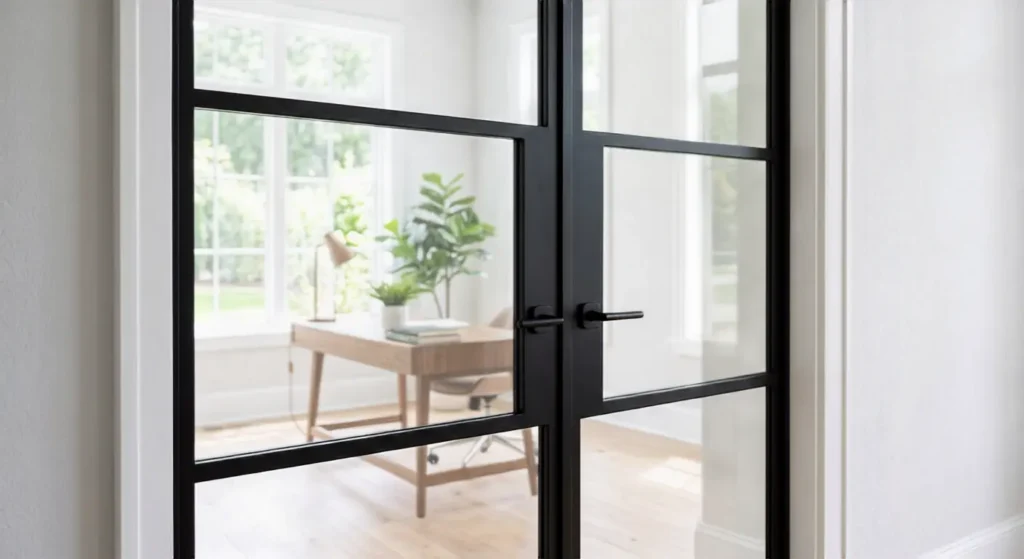
Mid-century modern homes often pair large clear panes with thin black frames instead of traditional white lites. If your home leans modern, ask for a simplified lite pattern.
Glass and Privacy Options
Glass choice is one of the most important decisions here, and one most guides skip.
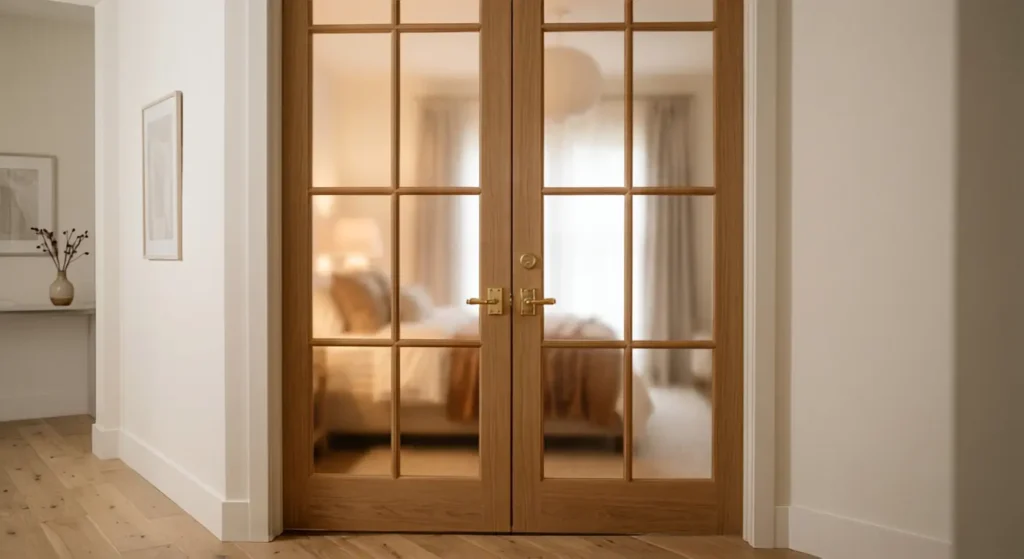
Clear glass lets in the most light. It offers no privacy, so it suits dining rooms and offices. Frosted glass blurs shapes while still letting light through. This makes it the top choice for bedrooms and bathrooms. Decorative and reeded glass add texture along with partial privacy. Reeded glass has become popular in newer builds for this reason.
Divided lite patterns come in three builds. Simulated Divided Lites attach bars to one solid pane. This keeps cost down. Grilles Between Glass place bars between two panes for easier cleaning. Authentic Divided Lites use real separate panes joined by working muntin bars. This method costs the most, but gives the most traditional result.
If you need both visual and sound privacy, pair frosted glass with solid core panels. Add good weatherstripping around the frame too.
What Are Interior French Doors Made Of?
Solid wood offers the most natural look and the longest lifespan, though it costs more. MDF comes primed and ready for paint, resists warping in humid rooms, and costs less. Common wood species include pine, oak, alder, and mahogany, ranging from affordable to premium.
Interior French Door Sizes and Rough Opening Guide
Most manufacturers use a standard height of 80 inches. Each door leaf ranges from 18 to 36 inches wide, stepping up in 2 inch increments.
To measure your rough opening, measure the framed hole itself, not your old door. Measure width and height in three spots and use the smallest number. If your opening does not match a standard size, ask about custom sizing. Custom doors cost more and take longer to arrive, so measure early.
Best Rooms for These Doors
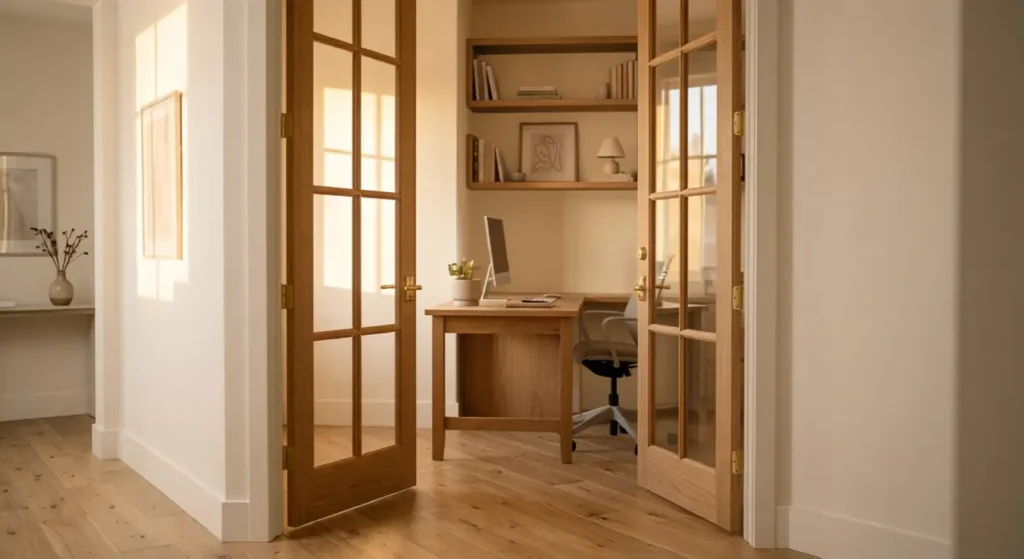
Home offices benefit from frosted glass, which brings in light while keeping calls private. Primary bedrooms work well with frosted or reeded glass for the same reason. Dining rooms suit clear glass since privacy rarely matters there. Pantries and laundry rooms do well with bifold or sliding styles that save space. Walk-in-closets work best with bifold doors, since they open wide without swinging into the room.
How Much Do Interior French Doors Cost?
MDF doors in standard sizes with clear glass sit at the budget tier. Solid wood doors with standard glass and pre-hung frames sit in the mid-range. This is the most common choice for full renovations. Custom wood species, decorative glass, and non-standard sizing push cost to the premium tier. Size, glass type, wood species, and installation labor all affect the final price.
French Doors vs. Other Interior Door Options
French doors offer more natural light than solid doors. That comes with tradeoffs in privacy and cost, so compare your options first.
Barn doors need no swing clearance. They leave larger gaps around the frame, which reduces sound control. Pocket doors disappear into the wall for a clean look, though they need more construction work upfront. Standard double doors are solid with no glass, so they offer more privacy but less light. Some homeowners choose frosted glass French doors as a middle ground between these options.
Installing Interior French Doors
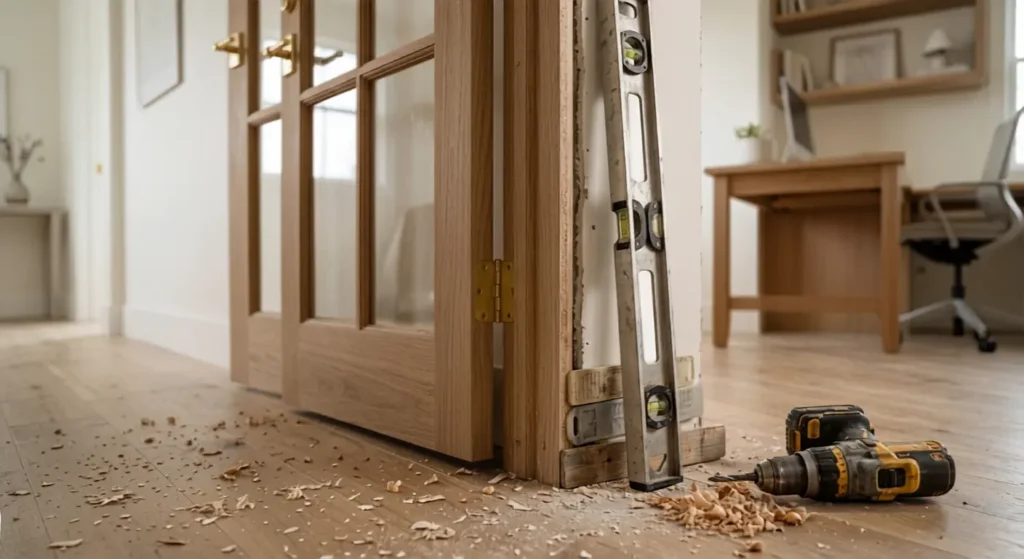
Pre-hung doors come already set inside a frame with hinges attached, so they install faster. Slab doors are just the panel, meant for openings that already have a working frame.
Can You Install Interior French Doors Yourself?
A skilled DIYer can install a pre-hung door in a weekend with a level, shims, and a drill. Getting the frame level and plumb matters most. Even a small tilt makes the doors swing open on their own. Sliding and pocket doors involve tracks or wall framing. Hiring a pro is usually the safer choice for those.
Are Interior French Doors Worth It?
These doors add light and style to any room, especially ones that feel dark or closed off. The tradeoffs are real. Glass panels offer less privacy unless you choose frosted glass. Swing doors need clear floor space. Glass also means more surface to clean. For most homeowners, the benefits outweigh these tradeoffs. A well chosen door will match your home for years.
How to Care for Interior French Doors
Wipe glass with a standard cleaner and a soft cloth. Avoid harsh chemicals on painted or stained frames, since they can strip the finish. Check hinges twice a year and tighten loose screws. For sliding and pocket doors, keep the track clear of dust. Buildup is the most common cause of a door that no longer glides well.
Conclusion:
Interior French doors bring light and flexibility to almost any room in your home. They work well in offices, bedrooms, dining rooms, and pantries alike. Pick the type that fits your space. Choose glass that matches your privacy needs and a size that fits your opening. Get those three choices right, and the doors will pay off for years to come.
Frequently Asked Questions
How much do custom interior French doors cost?
Custom doors cost more than standard sizes due to material and labor. Wood species, glass type, and size all affect the price.
What is the standard size for interior French doors?
Most use an 80 inch height, with each leaf ranging from 18 to 36 inches wide.
Do French doors open inward or outward indoors?
They can open either way. Choose inswing for narrow hallways, or outswing to save floor space inside.
What is the difference between French doors and double doors?
French doors are mostly glass. Standard double doors are solid, offering more privacy but less light.
Do French doors always have glass?
Most do, since glass is the defining feature. Some styles combine partial glass with solid wood for added privacy.
Are interior French doors good for privacy?
Clear glass offers little privacy. Frosted or reeded glass gives strong visual coverage, though sound still passes through more easily than solid wood.
Can interior French doors be installed in any doorway?
Standard sizes fit most common openings. Non-standard openings need custom sizing, which takes longer and costs more.