
A green bathroom can feel calm, cozy, or dramatic, depending on the shades and materials you choose. Sage walls pair beautifully with white tile, while emerald showers bring richer color. Olive vanities, mint accents, and forest green paint offer plenty of ways to refresh your home. Whether you’re decorating a small powder room or planning a full remodel, the right finishes make a difference. You’ll find 30 inspiring designs, helpful color pairings, paint advice, and affordable updates to suit your space and budget.
30 Green Bathroom Ideas to Inspire Your Next Makeover
You don’t need to replace every fixture to introduce green into your bathroom. A fresh coat of paint can change its appearance, while tile and cabinetry offer more permanent updates. Start with the surfaces you want to change and consider how the new color will look beside your existing flooring, sink, and lighting.
1. Sage Green Bathroom With Warm White Tile
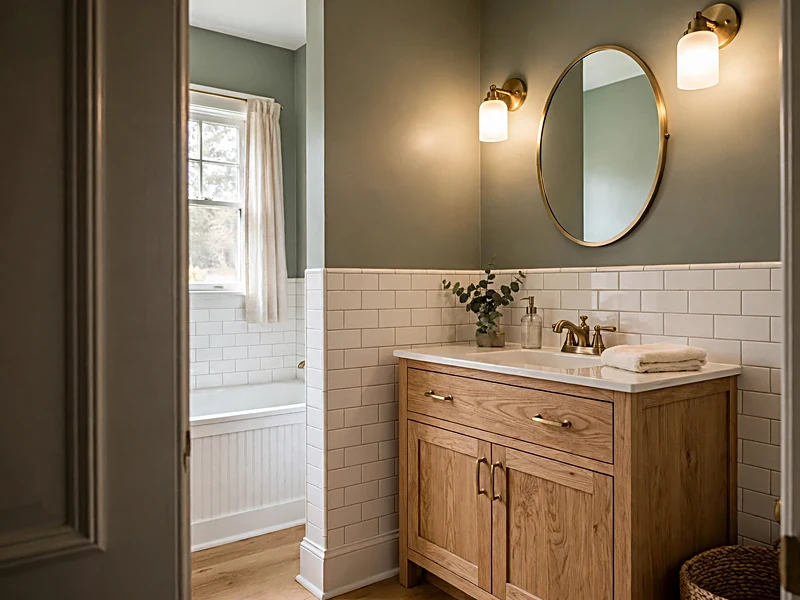
Sage green walls look beautiful beside warm white subway tile and a light oak vanity. The muted paint softens the white surfaces, while natural wood gives the room a welcoming appearance. Brushed brass faucets add warmth without competing with the surrounding colors.
If your bathroom already has white fixtures, there’s no need to replace them. Painting the walls may be enough to refresh the room. Before choosing a shade, hold a sample beside your tile and check it under your bathroom lights. Sage colors with gray undertones can appear dull under some cool bulbs.
2. Forest Green Walls With Brass Fixtures
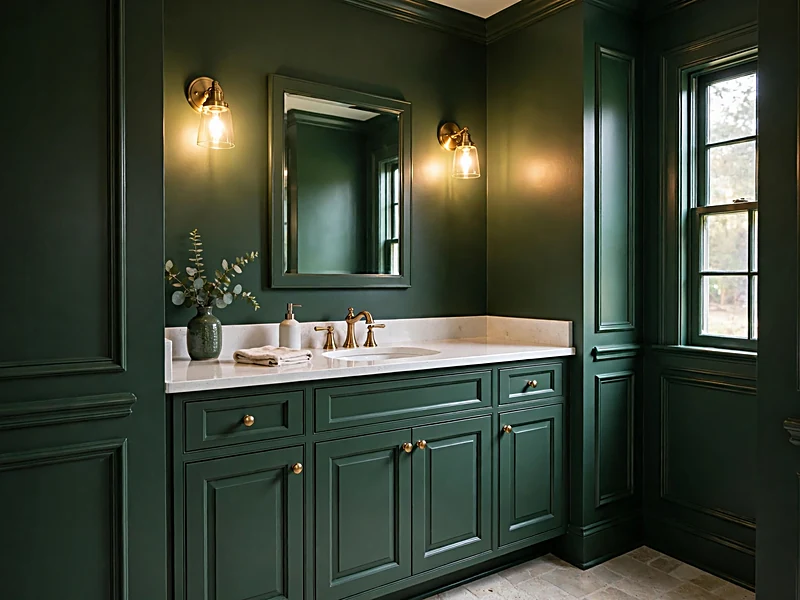
Forest green walls create a cozy atmosphere, especially alongside brushed brass faucets and a white countertop. The pale surfaces provide contrast, helping the deeper paint stand out without making every part of the room dark.
For a traditional bathroom, consider painting the trim to match the walls. Modern spaces often look better with simple cabinets and a mirror without decorative details. If your room receives little daylight, give special attention to vanity lighting. A forest green accent wall also offers a less permanent commitment than painting the entire room.
3. Olive Green Bathroom With Natural Wood
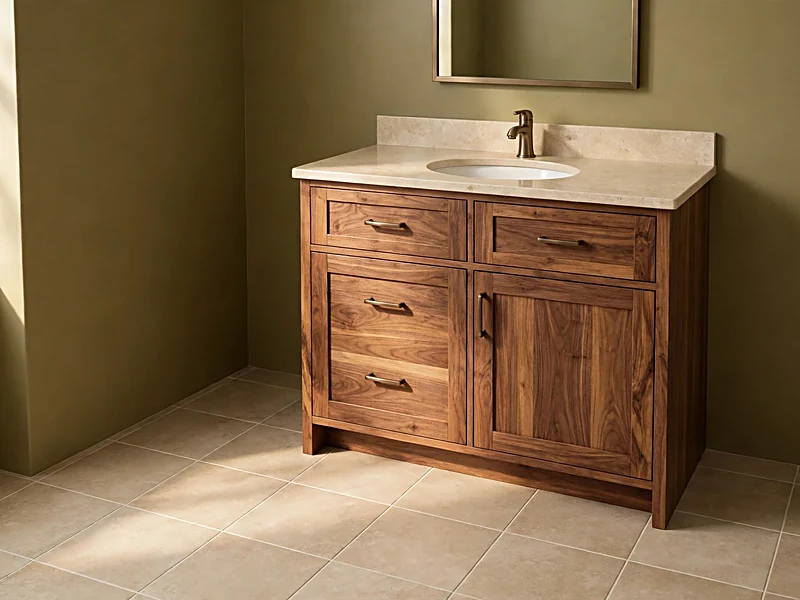
Olive green and natural wood share warm, earthy tones that suit both traditional and modern bathrooms. Pair olive walls with a walnut vanity, cream countertop, and beige floor tile for a coordinated appearance. The wood grain adds texture, while the lighter surfaces prevent the colors from feeling too heavy.
Existing cabinets can help you choose the right shade. Walnut often has warmer brown tones, while oak may lean yellow or neutral. Compare paint samples against the actual wood finish before buying. A color that looks attractive online may appear quite different beside your cabinetry.
4. Mint Green Bathroom With Vintage Details
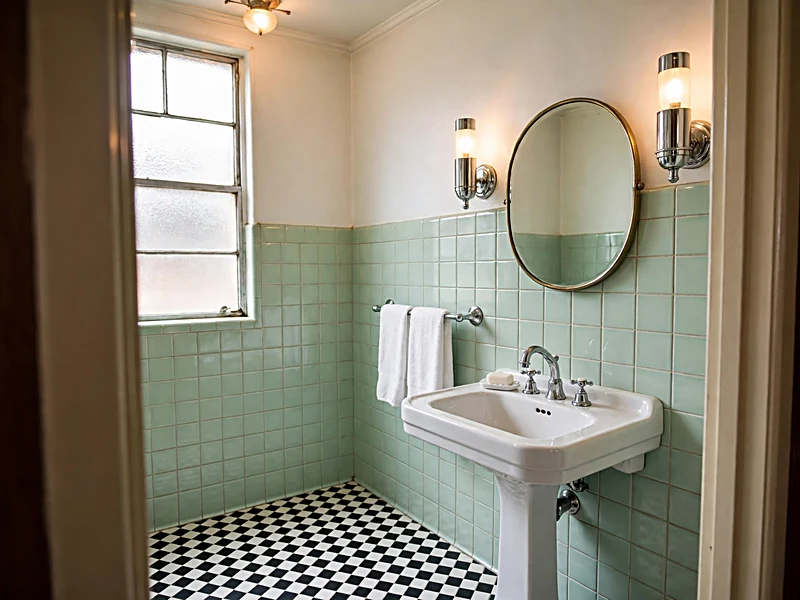
Mint green tile, a white pedestal sink, and chrome faucets bring a cheerful retro appearance to a bathroom. Add black and white patterned flooring, a rounded mirror, and simple wall lights to support the vintage character. White towels and a plain shower curtain will keep the softer green from getting lost among too many patterns.
Older bathrooms sometimes have original mint fixtures worth keeping. Rather than replacing everything, consider refreshing the walls, lighting, and accessories. You’ll preserve the room’s character while giving it a cleaner, more coordinated finish.
5. Emerald Green Shower Tile as a Focal Point
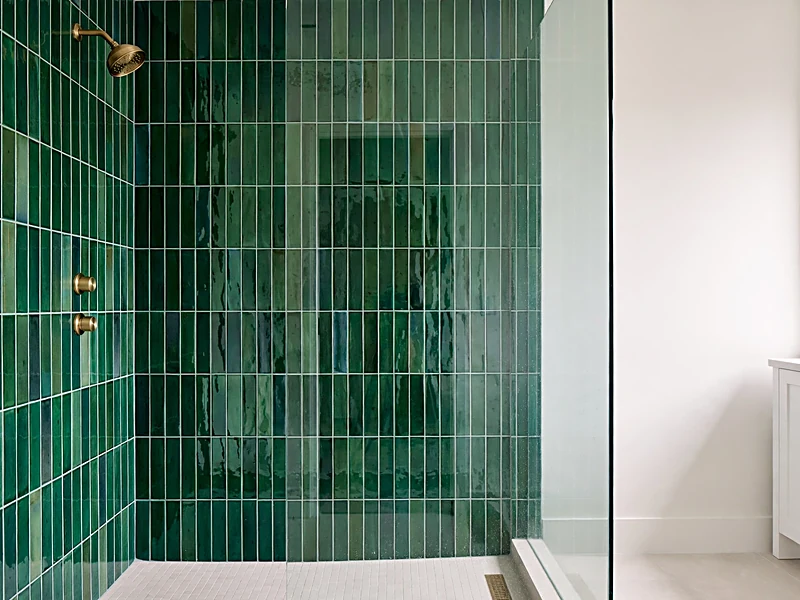
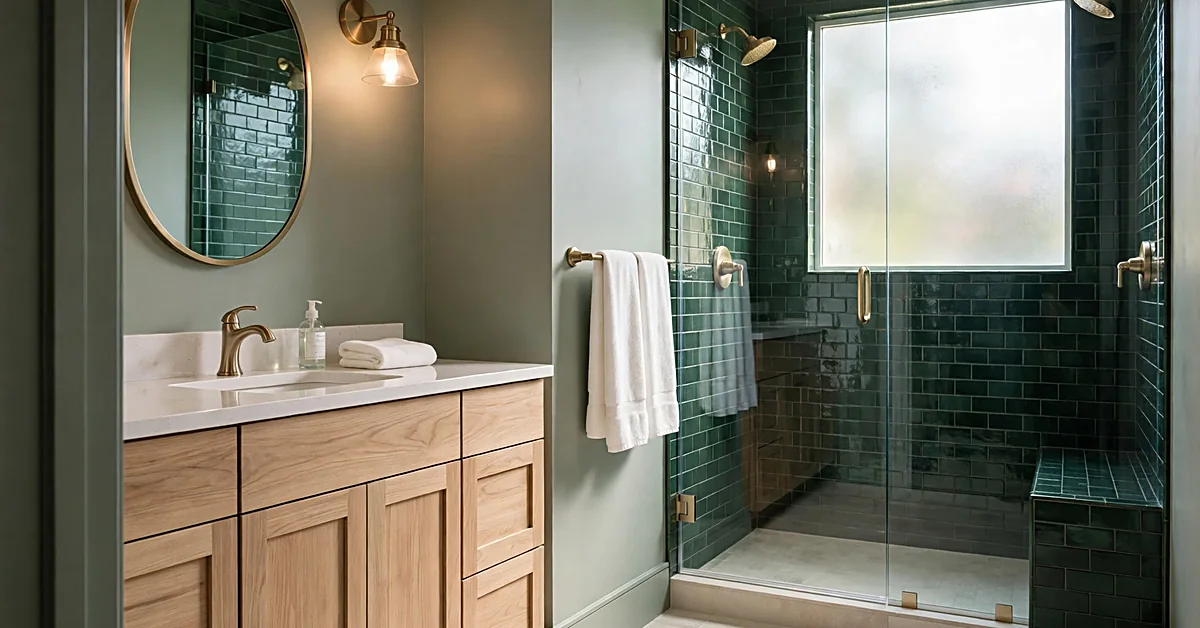
Glossy emerald tile can turn a plain shower into the main feature of your bathroom. White walls and pale flooring help the rich color stand out, while a clear glass enclosure keeps the tile visible. Brass fixtures introduce warmth, although polished chrome also looks attractive against the green.
Rectangular tiles arranged vertically create a clean pattern that draws attention upward. Before ordering materials, confirm that the tile suits shower walls and choose a proper waterproofing system. Tile and grout alone don’t make a shower waterproof. Light grout emphasizes the individual tiles, while darker grout gives the wall a more continuous finish.
6. Hunter Green Vanity With a White Countertop
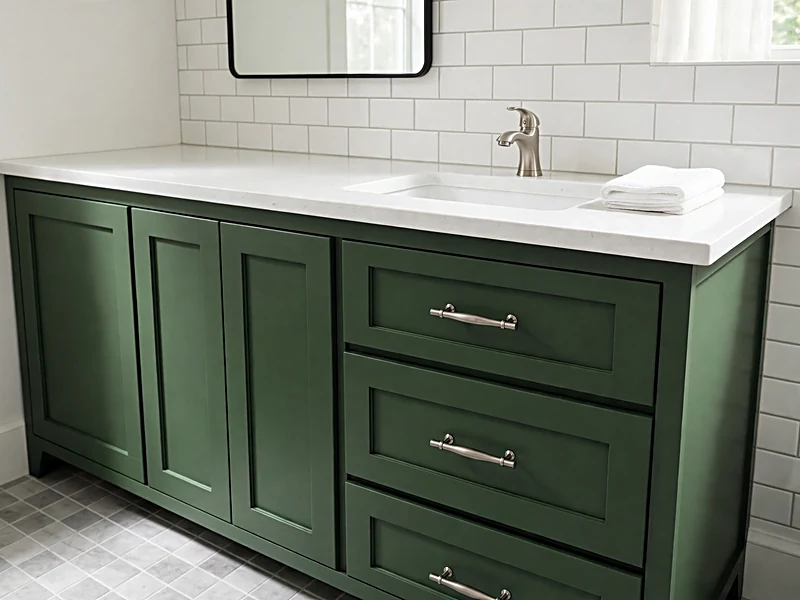
A hunter green vanity brings strong color into a bathroom without requiring new wall or floor finishes. Pair the cabinet with a white countertop and brushed nickel hardware for a classic appearance. Brass handles can create a warmer finish if your existing faucets have similar tones.
Painting your current vanity may be enough if the cabinet remains sturdy. Clean the surface thoroughly, prepare the existing finish, and choose a coating made for cabinetry. Laminate and previously painted surfaces may need different preparation, so follow the product instructions before starting.
7. Seafoam Green Tile for a Light, Airy Look
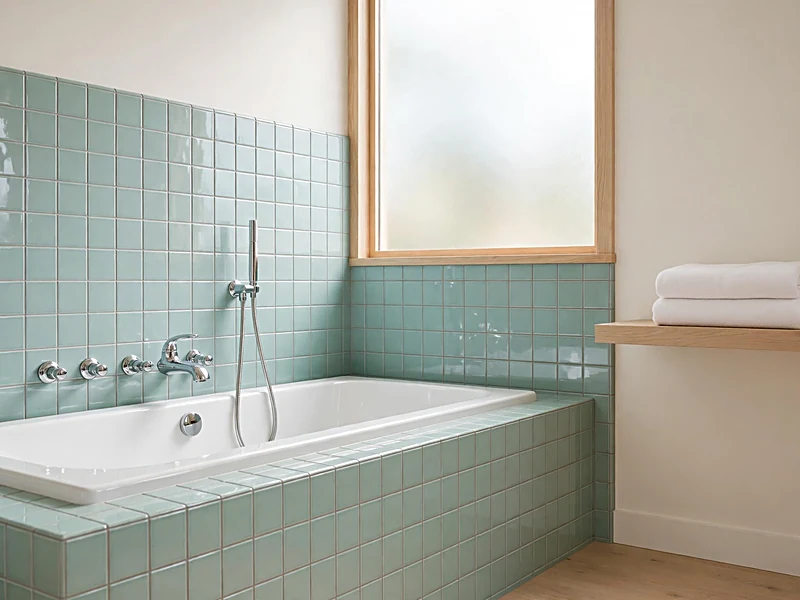
Seafoam green offers a soft mix of blue and green that looks especially attractive with white porcelain and pale wood. Use it around a bathtub or along a shower wall, then keep the surrounding surfaces warm white. Chrome fixtures and a simple mirror support the relaxed coastal appearance.
This pale shade can suit guest bathrooms where you want color without a dramatic statement. However, seafoam varies considerably between products. Some tiles appear distinctly blue under cool lighting, so compare samples in your own bathroom before placing an order.
8. Dark Green Powder Room With Statement Lighting
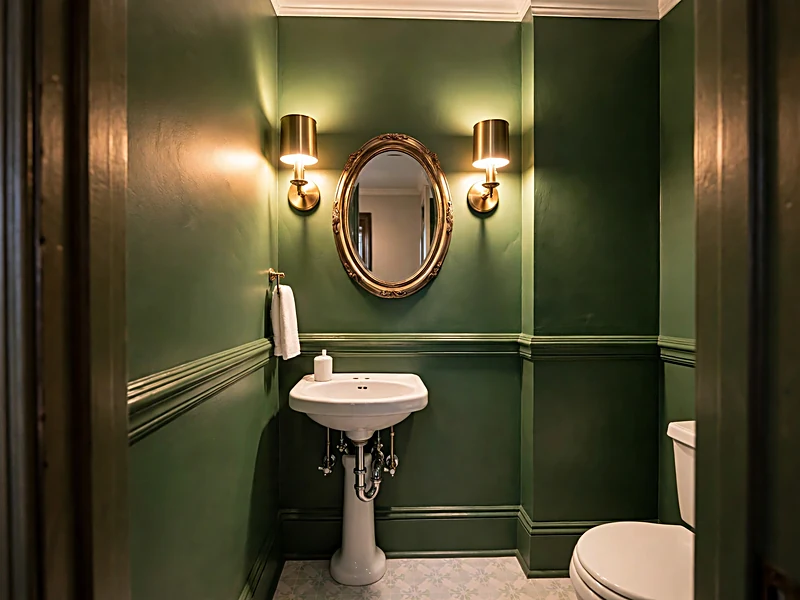
Deep green walls can give a small powder room a cozy, finished appearance. Forest or hunter green looks striking beside a white sink, brass sconces, and a large mirror. Painted molding adds character if you prefer a traditional style.
Because many powder rooms have no shower, they often face less steam exposure than full bathrooms. This makes certain decorative finishes easier to consider, although product suitability still matters. Place enough lighting around the mirror for everyday use rather than relying on decorative fixtures alone.
9. Glossy Green Zellige Tile With Handmade Texture
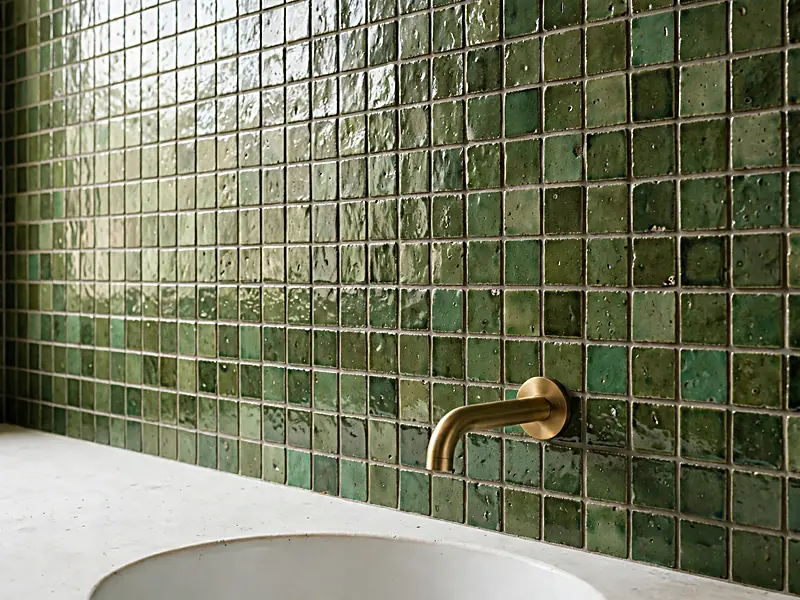
Green zellige tile introduces subtle changes in color and texture that plain ceramic tiles may not offer. Its irregular surface catches light differently across the wall, making a small backsplash visually interesting without a printed pattern. A white countertop and simple mirror allow the tile to remain the main feature.
Handmade tile needs careful planning. The edges and thickness may vary, which affects spacing and installation. Check the manufacturer’s recommendations before using zellige in a shower, and discuss exposed edges and corners with your installer.
10. Green Hexagon Floor Tile With Neutral Walls
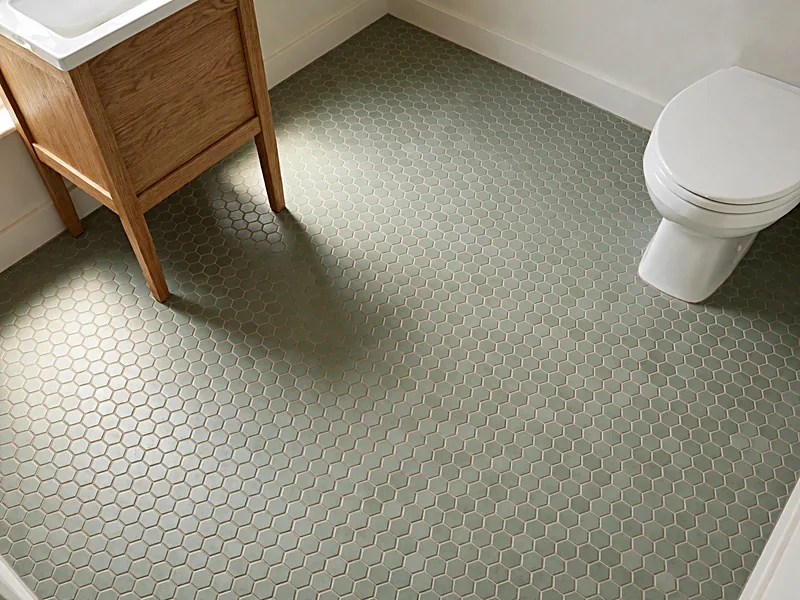
Green hexagon flooring adds color beneath otherwise neutral bathroom fixtures. Muted sage suits a softer interior, while forest green creates stronger contrast against white walls. A natural wood vanity can connect the floor color with the rest of the room.
Smaller hexagon tiles have more grout joints, which may require additional cleaning. Confirm that the selected product is suitable for bathroom floors, especially where water collects. Decorative wall tiles aren’t automatically appropriate for wet flooring, so review the manufacturer’s slip-resistance guidance.
11. Sage Green Beadboard With White Walls
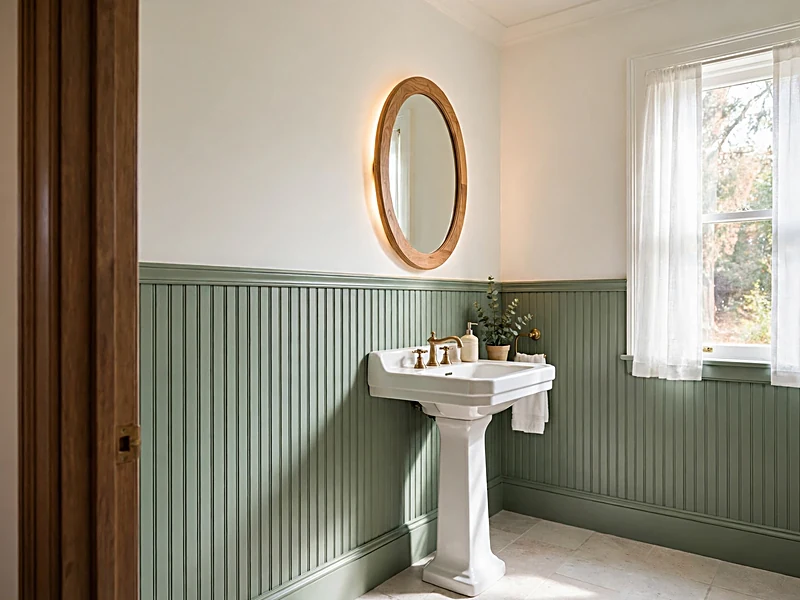
Sage green beadboard gives plain bathroom walls texture and a traditional appearance. Paint the lower section green and keep the upper wall warm white. A wood-framed mirror, white sink, and simple brass fixtures create a comfortable, familiar combination.
Beadboard works particularly well in guest bathrooms and older homes with decorative trim. Choose materials suitable for bathroom humidity and protect exposed edges as directed by the manufacturer. Standard wood paneling should stay away from areas that receive frequent water splashes.
12. Botanical Green Wallpaper in a Guest Bathroom
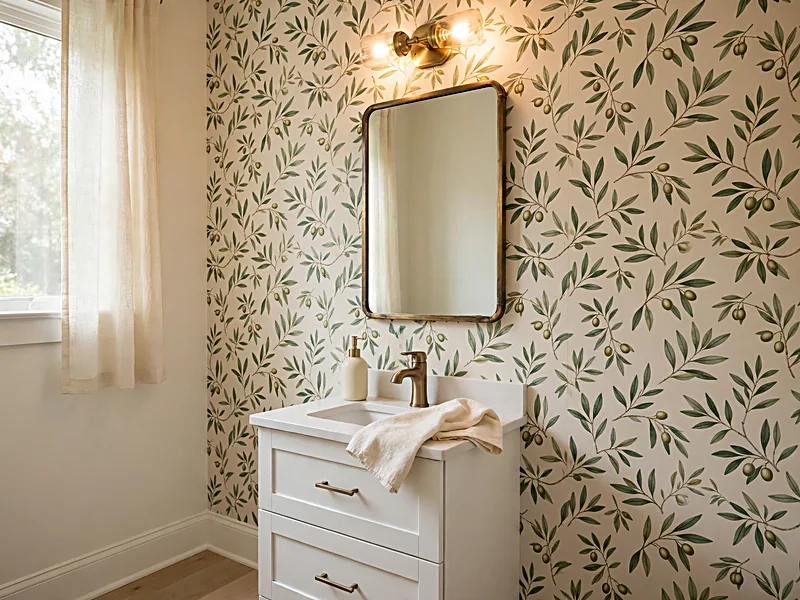
Botanical wallpaper brings leaves, vines, or floral patterns into a bathroom without covering every surface in solid green. A cream background with sage leaves creates a softer appearance, while deep green patterns look more dramatic. Keep the vanity and mirror simple so the wallpaper gets the attention.
A powder room without a shower may be suitable for certain decorative wallpapers. Still, humidity and water exposure affect how well the material holds up. Check the manufacturer’s instructions and avoid placing ordinary wallpaper beside a frequently used shower.
13. Pink and Green Bathroom With Vintage Charm
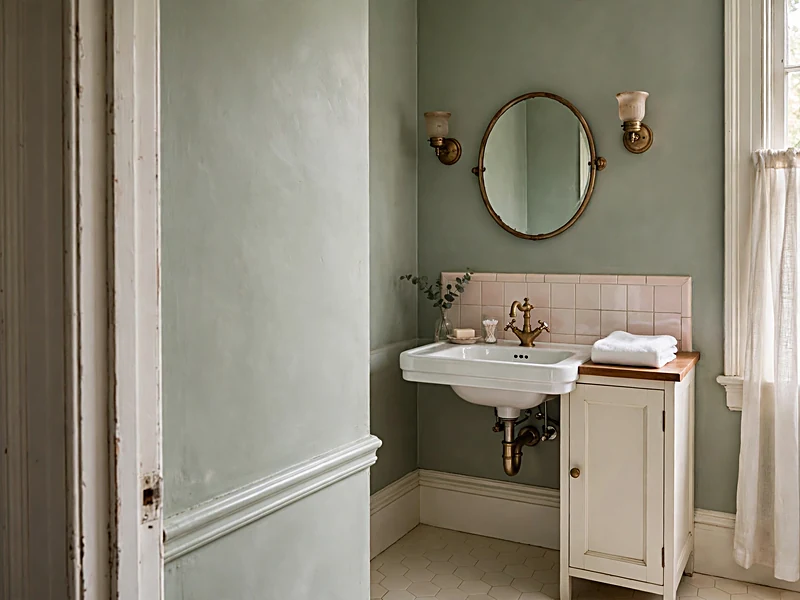
Sage green walls and pale pink tile make a cheerful combination with vintage character. Brass faucets, a rounded mirror, and white porcelain fixtures help the two colors work together. The softer shades feel less intense than bright pink paired with emerald green.
Choose one color for the larger surface and use the second more sparingly. If your walls are sage, pink tile around the vanity may provide enough contrast. Compare both samples together under the bathroom lights, since warm and cool undertones can change how the colors appear.
14. Dark Green Walls With Gray Marble
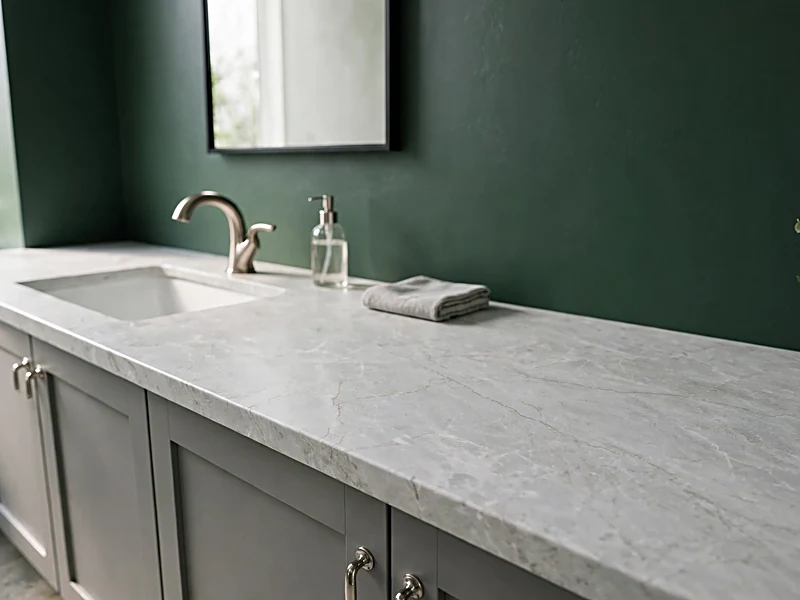
Dark green paint looks refined beside light gray marble and white porcelain. Subtle stone veining adds texture without requiring decorative wallpaper or patterned walls. Choose a countertop that complements the paint undertone rather than selecting the materials separately.
Natural marble may need sealing and specific cleaning products, especially around sinks. Marble-look porcelain or suitable engineered surfaces offer different maintenance options. Compare physical samples before purchasing, as stone colors and patterns can vary from one piece to another.
15. Green Shiplap Walls for a Farmhouse Bathroom
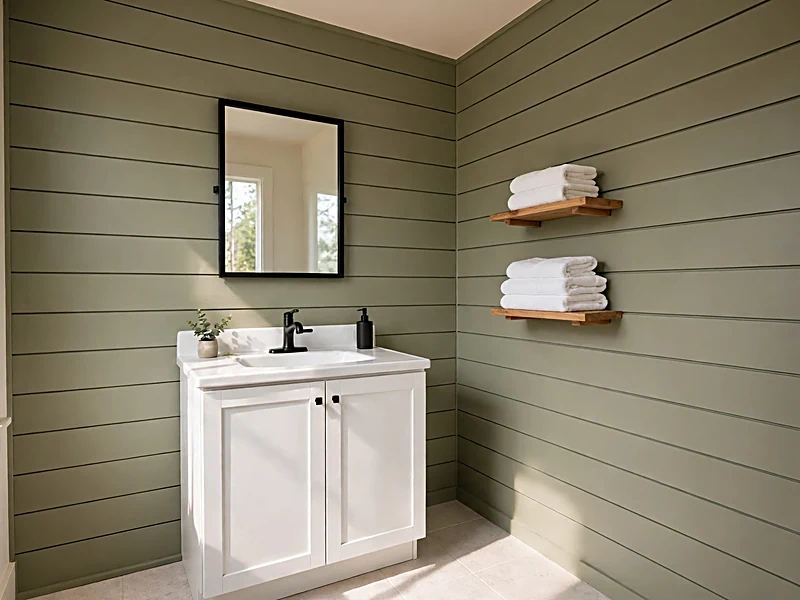
Muted sage or olive shiplap creates a farmhouse appearance without relying on bright decorative colors. Pair the painted boards with white fixtures, natural wood shelves, and simple black hardware. Horizontal boards feel traditional, while vertical paneling changes the wall’s proportions.
Bathroom humidity should guide your material choice. Select suitable panels and follow the manufacturer’s sealing instructions, particularly around joints and exposed edges. Ordinary wood shiplap doesn’t belong inside a shower or any area exposed to repeated direct water.
16. Modern Green Bathroom With a Floating Vanity
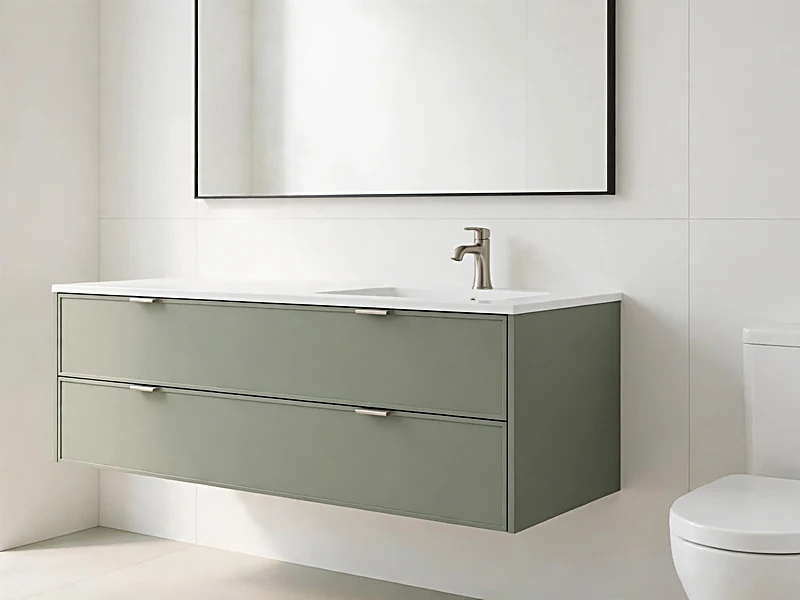
A floating vanity with flat green cabinet fronts gives a bathroom a clean, modern appearance. Olive, sage, and forest green all look attractive with white countertops and large mirrors. Keeping the floor visible beneath the cabinet can also make a compact room feel less crowded.
Wall-mounted cabinets require proper support because the weight rests on the wall rather than the floor. Check the installation requirements before purchasing. Choose simple fixtures and limited countertop accessories to keep attention on the cabinetry.
17. Green Bathroom Ceiling With White Walls
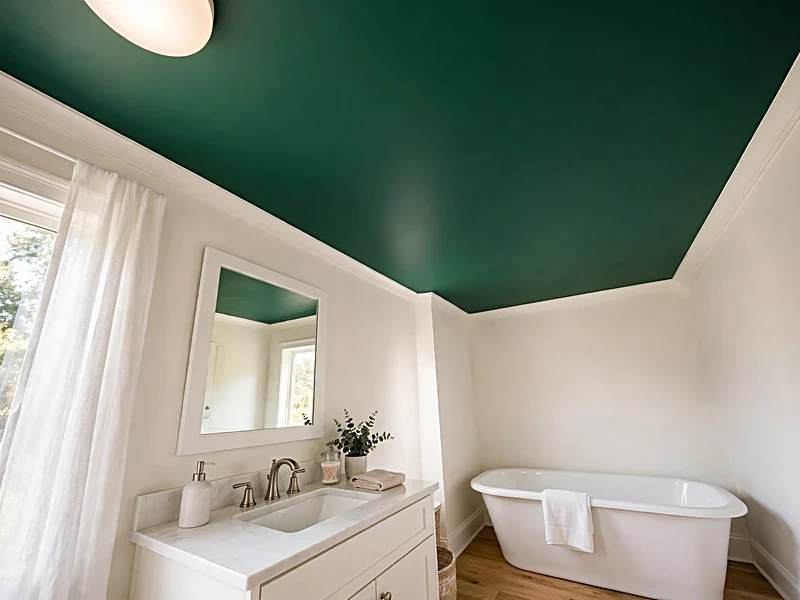
A painted green ceiling introduces color while leaving white walls and existing tile untouched. Muted sage creates a softer effect, while forest green looks more dramatic beside decorative crown molding. The overhead color can also connect with towels, artwork, or a painted vanity.
Ceiling paint sometimes appears darker than the same shade on a wall. Check a sample under your bathroom lighting before painting the entire surface. Use a coating suitable for the room’s humidity and repair any existing moisture damage first.
18. Freestanding Green Bathtub as the Centerpiece
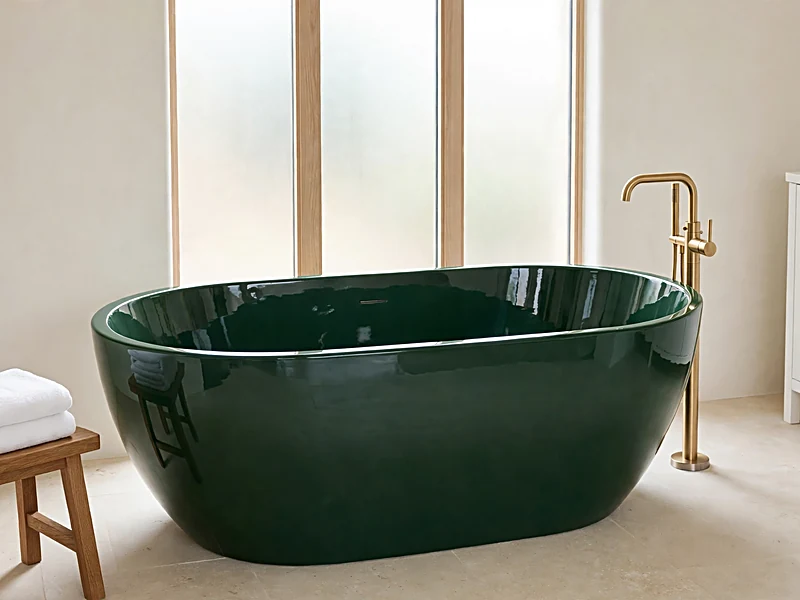
A freestanding bathtub with a green exterior can become the main feature of a spacious bathroom. Hunter green looks striking beside cream walls and pale floors, while olive offers a softer alternative. Brass fixtures add warmth and suit traditional clawfoot tubs.
If you’re considering refinishing an existing bathtub, confirm that its material and condition allow the treatment. Some coating and stripping products create serious safety risks in enclosed rooms. Professional refinishing may be the safer choice. Also check the bathtub’s size, weight, and plumbing needs before installation.
19. Moss Green Limewash for Textured Walls
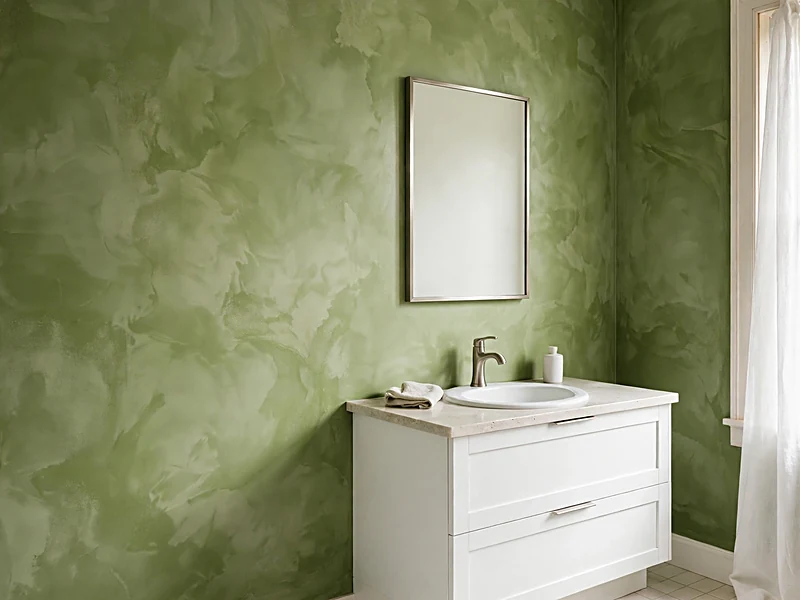
Moss green limewash gives walls a softly varied finish that complements wood, limestone, and white fixtures. The uneven texture adds character without requiring a strong pattern. It can be particularly attractive behind a vanity in a powder room.
Traditional limewash and modern decorative coatings have different performance requirements. Not every product tolerates frequent splashing or bathroom humidity. Check the technical information and apply a sample to see how the texture develops before finishing the entire wall.
20. Green Subway Tile in a Vertical Stack Pattern
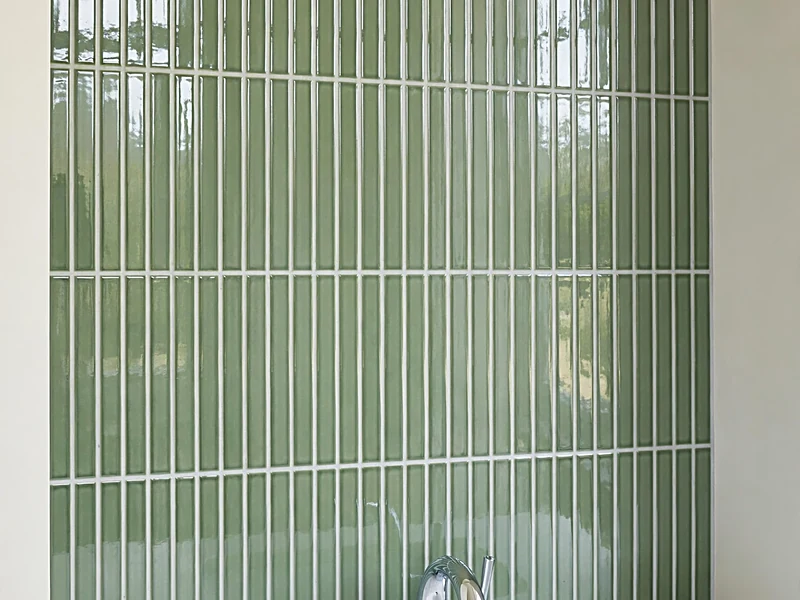
Vertical subway tile gives shower walls a clean pattern with straight lines that draw the eye upward. Sage creates a subtle finish, while emerald brings stronger color. Matching grout makes the surface look more continuous, whereas contrasting grout outlines every rectangle.
Plan the tile arrangement before installation. Shower niches, plumbing fixtures, and corners can lead to narrow cuts that interrupt the pattern. A carefully planned layout creates a neater finish and may reduce unnecessary material waste.
21. Terra-Cotta Floors With Muted Green Walls
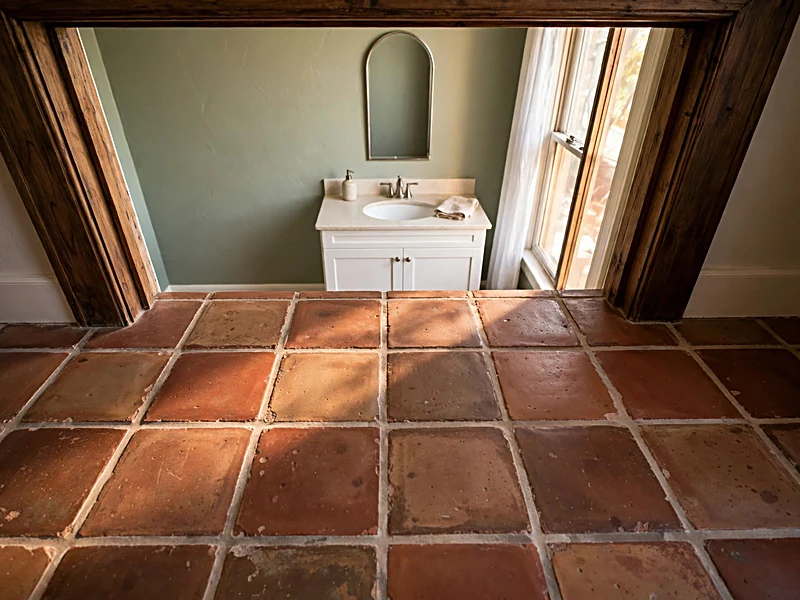
Warm terra-cotta floors pair naturally with sage and olive walls. The orange-brown flooring adds warmth, while a cream sink and wood vanity keep the colors connected. This combination suits traditional and Mediterranean-inspired homes.
Real terra-cotta can be porous and may require sealing or special care. Porcelain tile with a terra-cotta appearance offers another material choice. Check the manufacturer’s floor-use and slip-resistance information before selecting either option.
22. Art Deco Green Bathroom With Geometric Details
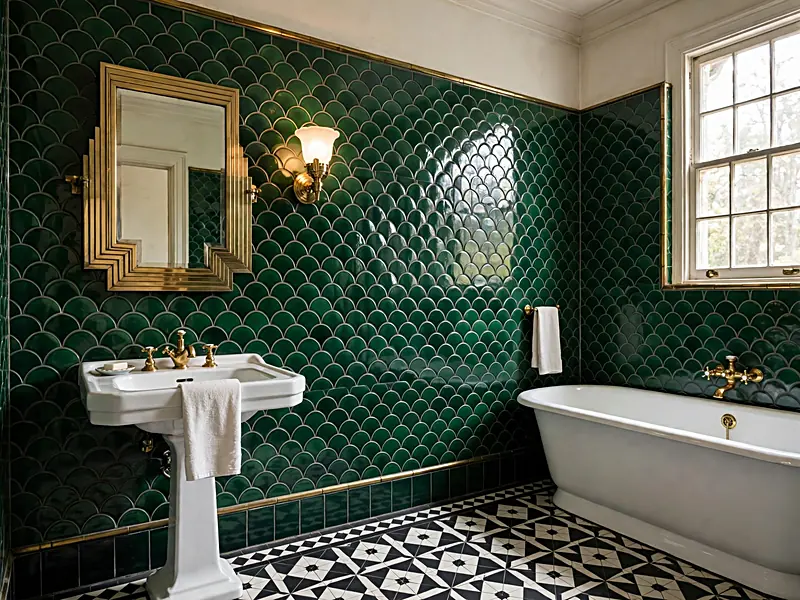
An Art Deco-inspired bathroom combines geometric patterns, decorative mirrors, and rich colors. Emerald wallpaper with a fan pattern looks attractive behind a white vanity. Brass wall lights and a shaped mirror support the period-inspired appearance.
Black and white flooring can add another classic detail, but avoid using competing patterns on every surface. If you prefer a quieter room, choose plain green walls and let the mirror or lighting provide the decorative detail.
23. Small Green Bathroom With White Fixtures
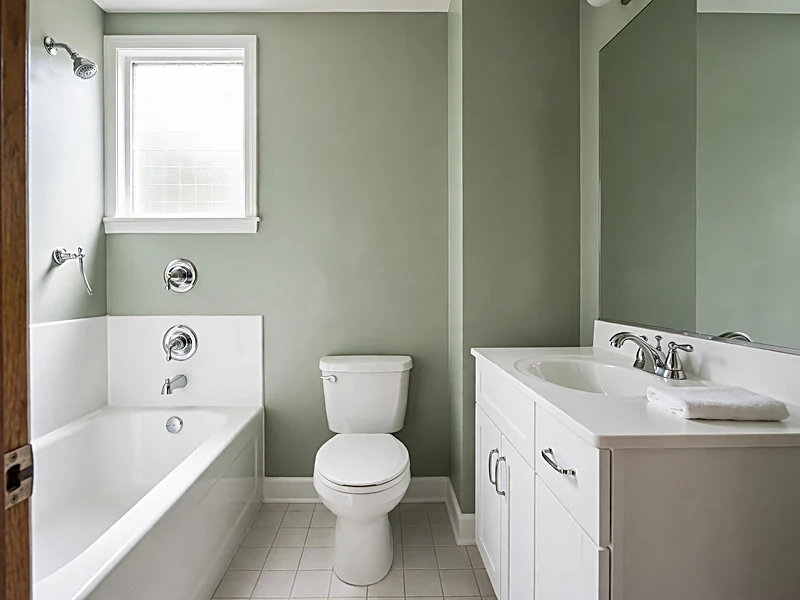
A small bathroom can handle sage, olive, or forest green when you plan the surrounding finishes carefully. White sinks, toilets, and shower fixtures create contrast against painted walls. A compact vanity with drawers also keeps everyday items out of sight.
Choose paint according to your existing tile and lighting rather than room size alone. Darker greens can feel cozy in small spaces, while lighter shades create softer contrast. Check samples under your installed lights before deciding which appearance suits you.
24. Green and Black Bathroom With Matte Fixtures
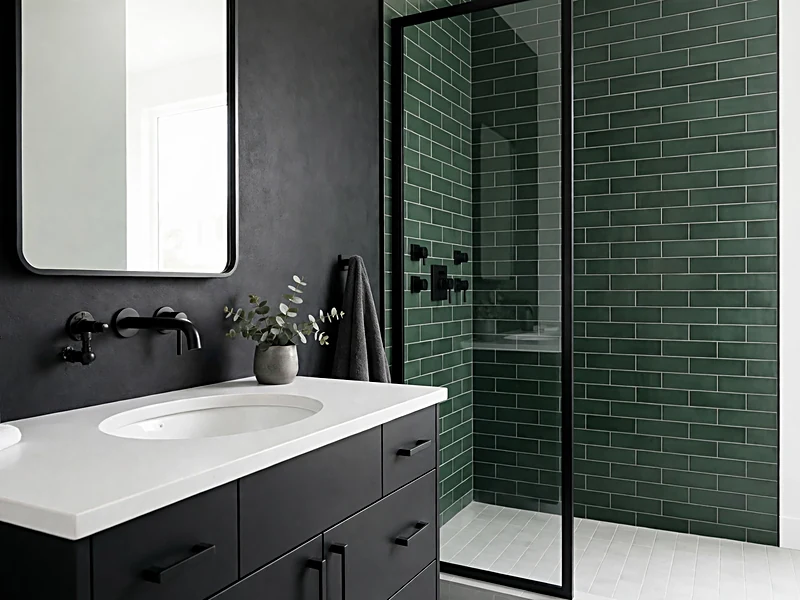
Matte black faucets, towel bars, and mirror frames stand out against olive or forest green walls. A light countertop helps separate the dark finishes, while plain rectangular tile keeps the room modern.
Match hardware finishes as closely as possible, particularly when buying from different manufacturers. Some matte black products have warmer or cooler undertones, and certain finishes show water spots more clearly. Review cleaning instructions before purchasing.
25. Two-Tone Green Walls for a Layered Color Scheme
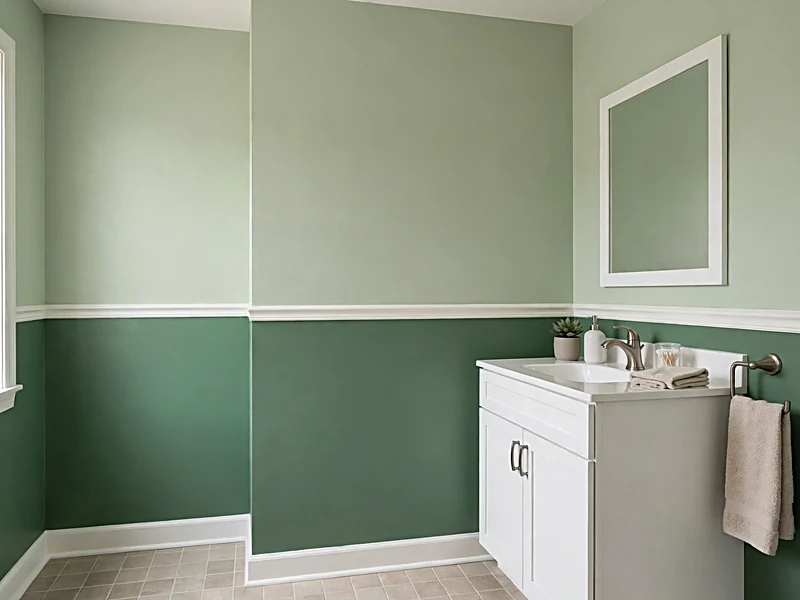
Painting the lower wall olive and the upper wall sage creates a gentle change in color. A slim molding strip can separate the shades and give older bathrooms a more traditional appearance. Neutral flooring and white fixtures allow the two greens to remain the main feature.
Choose shades with compatible undertones. Warm olive beside a strongly blue-green mint may look disconnected. Compare large samples together, including near the trim and vanity, before selecting your final colors.
26. Green Herringbone Tile for a Statement Backsplash
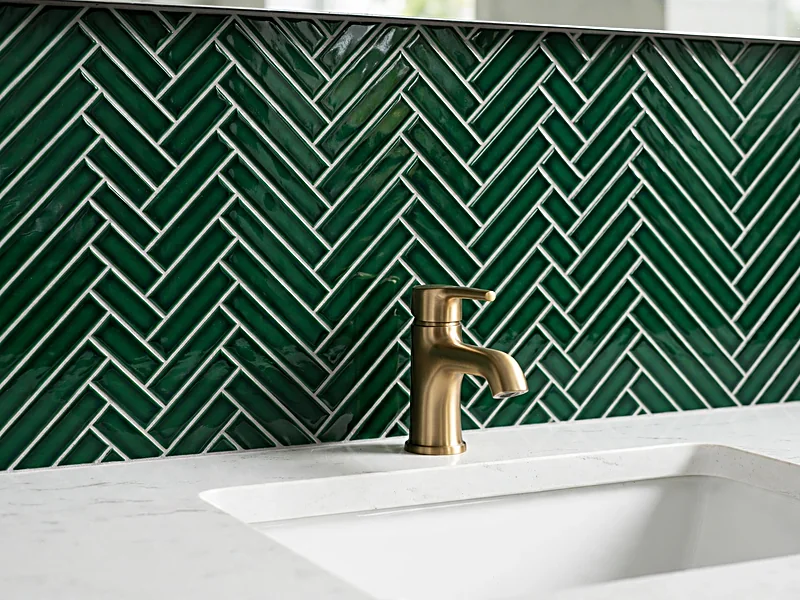
Green herringbone tile adds an angled pattern behind the bathroom sink. Narrow rectangular tiles in sage or olive create a softer effect, while glossy emerald makes the pattern more noticeable. Pair the backsplash with a simple countertop and plain wall paint.
Herringbone installations require careful alignment and angled cuts. Material waste and labor can be higher than with a straight tile layout. Discuss the pattern with your installer before ordering, especially when working around outlets, mirrors, or small corners.
27. Traditional Green Bathroom With Classic Trim
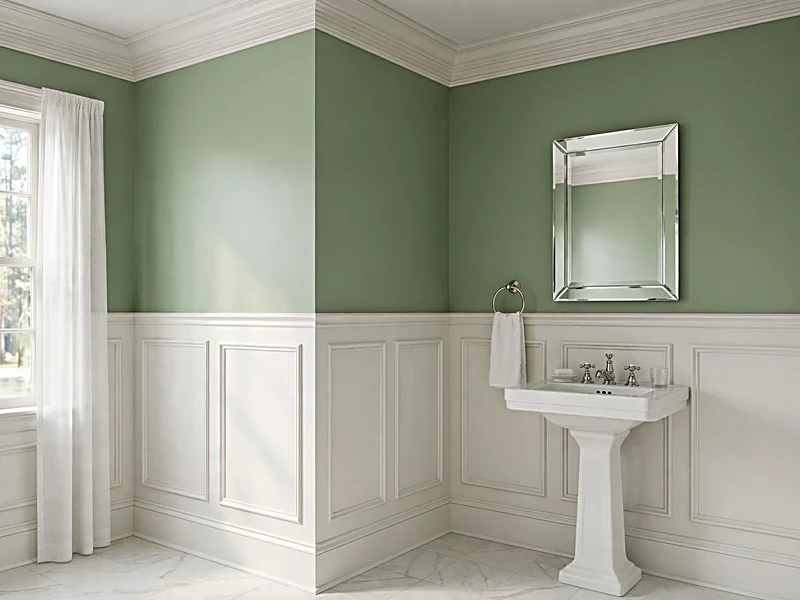
Forest green walls, white paneled cabinetry, and polished nickel faucets suit a traditional bathroom. Decorative molding and a marble-look countertop help preserve the room’s older character. Olive green offers a softer choice if forest feels too dark.
Keep original trim when it’s in good condition rather than replacing it for a different style. A fresh paint finish and coordinated hardware may be enough to update the room while retaining its traditional details.
28. Windowless Green Bathroom With Warm Lighting
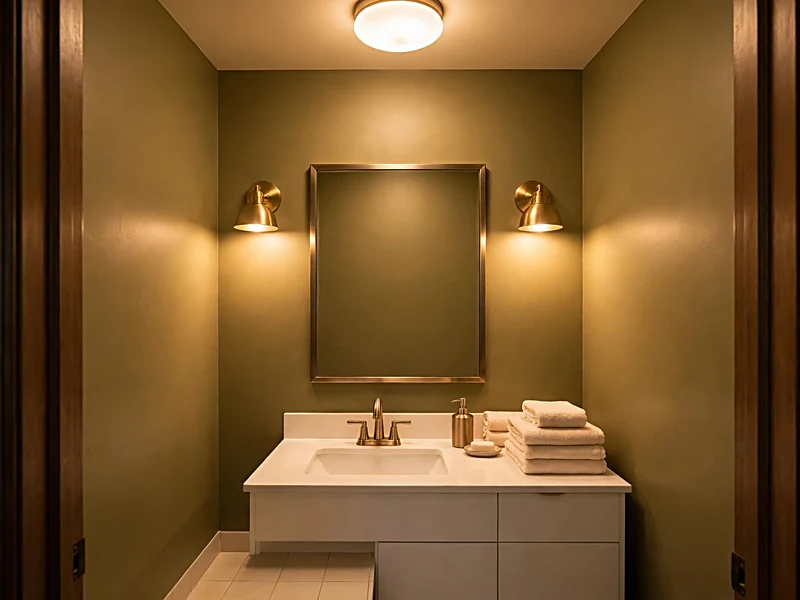
Without daylight, your bathroom’s artificial lighting determines how the paint looks throughout the day. Test sage, olive, and forest green samples under the existing bulbs. Use ceiling lights for general visibility and separate lighting near the mirror for grooming.
Ventilation matters as much as appearance. A bathroom without windows needs effective moisture control, especially when it contains a shower. The U.S. Environmental Protection Agency recommends managing indoor moisture to reduce mold growth. Bathroom exhaust fans should vent outdoors rather than into an attic.
29. Budget Green Bathroom With Removable Accessories
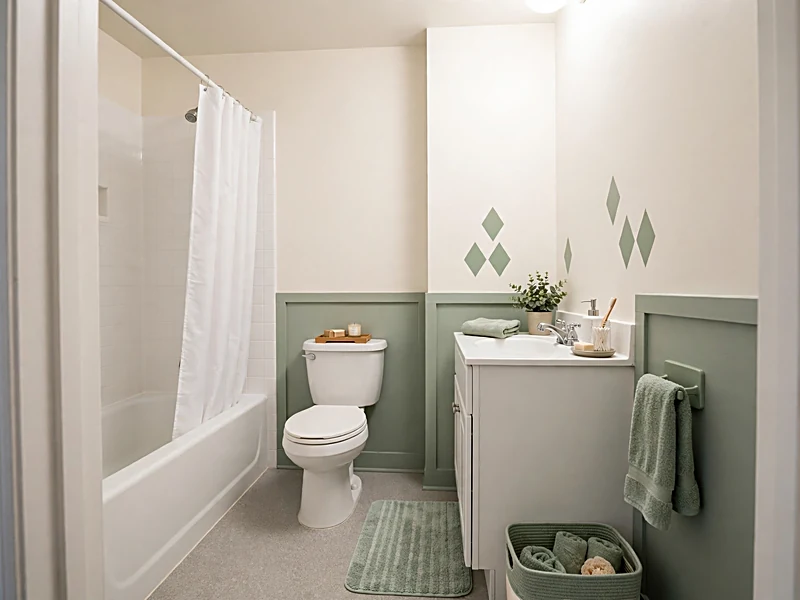
You can introduce green without painting walls, changing tile, or replacing the vanity. Start with a sage shower curtain, olive towels, and a matching bath mat. Botanical artwork or a framed print can connect the colors while keeping the room easy to update.
Renters can focus on removable items that don’t damage walls or fixtures. Choose washable textiles and keep countertops clear to avoid clutter. HomeFixStyle bathroom decor ideas offer more affordable ways to refresh existing spaces.
30. Spa-Inspired Green Bathroom With Natural Stone
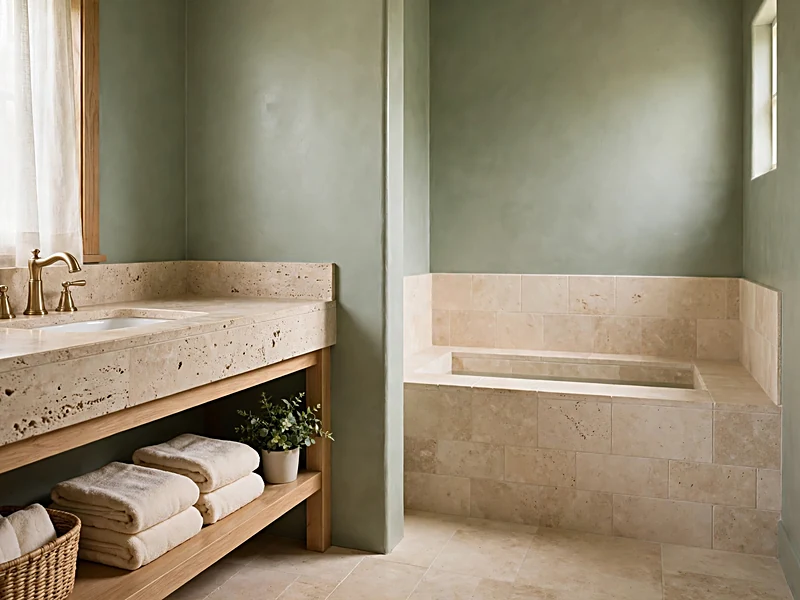
A spa-inspired bathroom pairs muted green walls with light wood, pale stone, and comfortable lighting. Sage looks attractive beside an oak vanity and warm white towels. Keeping the countertop clear helps the natural materials remain visible.
You don’t need expensive natural stone to achieve a similar appearance. Suitable porcelain tile can provide a stone-like finish with different care requirements. Choose practical storage and lighting that supports both relaxing baths and everyday grooming. You can find other decorating directions in HomeFixStyle bathroom theme ideas.
How to Choose the Right Shade for Your Green Bathroom
Your existing flooring, vanity, and lighting should guide your paint choice. Sage and seafoam create softer color schemes, while olive brings earthy warmth. Emerald and forest green make a stronger statement, especially against white fixtures.
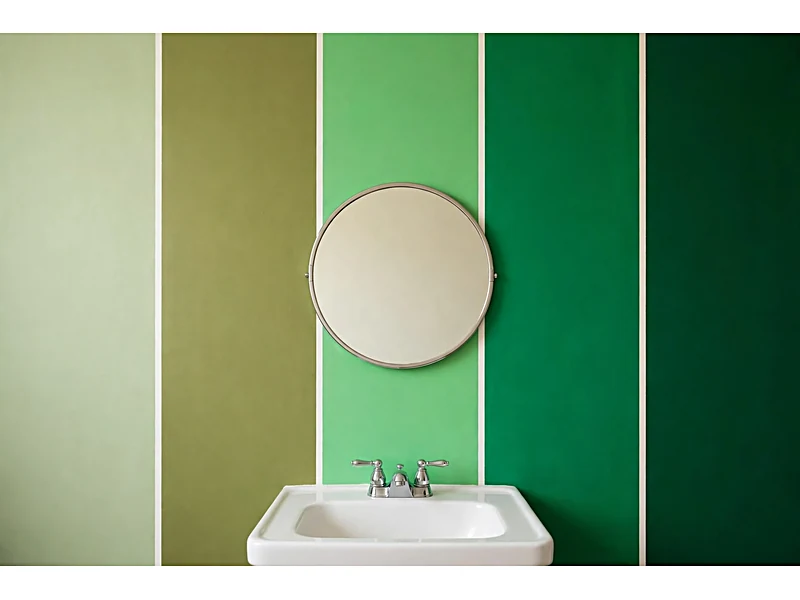
Sage, Olive, Mint, Emerald, or Forest Green?
| Shade | Appearance | Recommended pairing |
| Sage | Soft gray-green | White tile, oak, brushed nickel |
| Olive | Warm, earthy green | Walnut, cream, terra-cotta |
| Mint | Pale, cool green | White porcelain, chrome |
| Seafoam | Soft blue-green | Light wood, white tile |
| Emerald | Rich jewel green | White marble, brass |
| Forest | Deep natural green | Cream stone, oak |
| Hunter | Dark classic green | White cabinetry, brass |
| Moss | Muted earthy green | Limestone, natural wood |
For a versatile starting point, consider sage. Olive can suit bathrooms with beige flooring or warm wood cabinets. Forest and emerald offer stronger color when you want the painted surfaces to stand out.
One manufacturer shade worth sampling is Sherwin-Williams Evergreen Fog SW 9130. Its muted green-gray appearance pairs with many neutral finishes. Always check a physical sample before purchasing paint for the entire room.
How Lighting Changes Green Paint
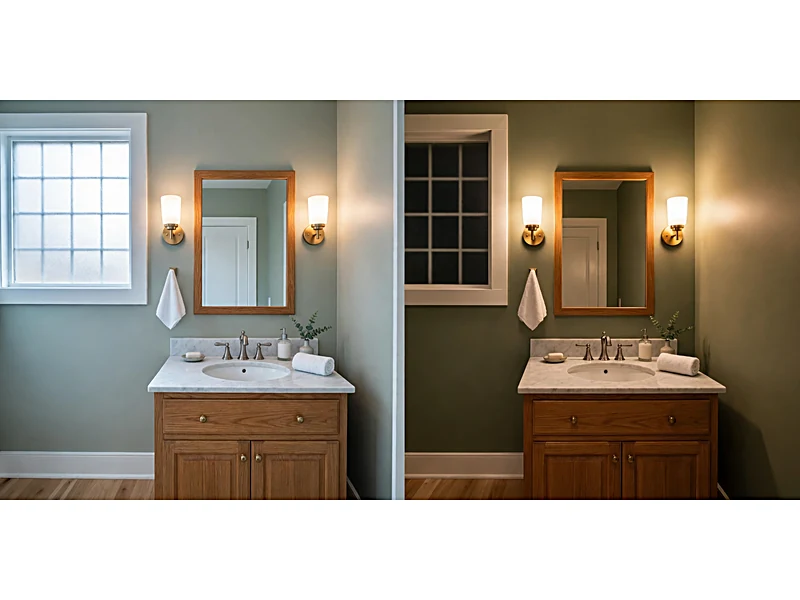
Natural and artificial lighting can change how green paint appears. Some shades look warmer in afternoon sunlight and cooler under certain bulbs. Dark green can appear almost black in poorly lit corners.
Before buying paint:
- Choose two or three suitable samples.
- Apply them to separate boards according to the product instructions.
- Place them beside your tile, vanity, and countertop.
- Check the colors during daylight if your bathroom has windows.
- Compare them again under your regular bathroom lighting.
- Select the shade that looks best under the conditions you use most.
Physical samples give you a better basis for choosing than digital color swatches alone.
What Colors Go With Green Bathroom Walls and Fixtures?
White, cream, natural wood, and brass complement many green shades. Gray, black, pink, and terra-cotta can also work when their undertones suit the selected color. Use your existing flooring and fixtures as the starting point instead of replacing materials that already coordinate.
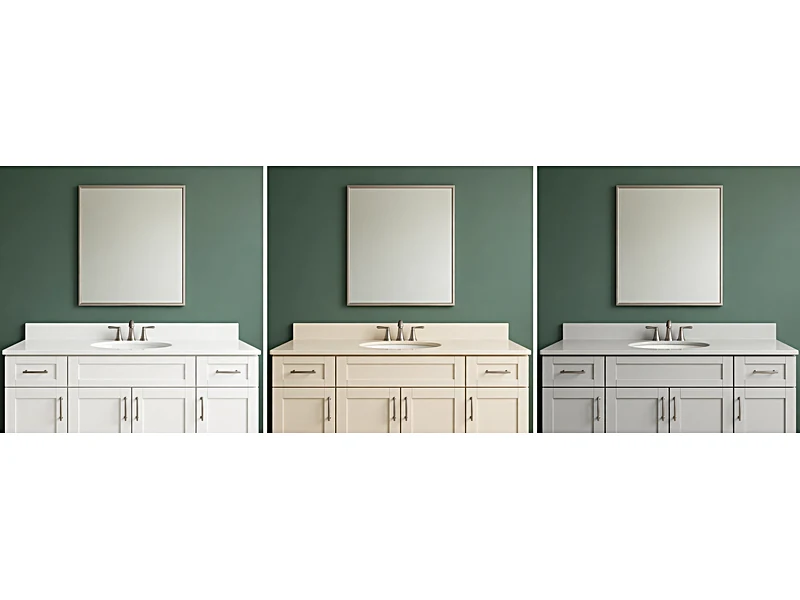
White, Cream, and Gray for a Neutral Base
White creates clear contrast against forest and emerald walls, while warm white softens sage and olive. Cream looks attractive beside wood cabinetry and beige flooring.
Gray requires more attention because its undertones vary. Warm gray may suit olive, while cooler shades can complement some blue-green paints. If your bathroom has gray flooring, compare samples directly against the tile before choosing a wall color.
Wood, Terra-Cotta, and Natural Stone for Warmth
Light oak pairs well with sage and mint, while walnut complements olive and forest green. Terra-cotta introduces warm orange-brown tones that suit traditional and Mediterranean-inspired interiors.
Natural stone offers another way to add texture, although maintenance varies by material. Compare the actual samples and check cleaning requirements before selecting countertops or floor tile.
Brass, Chrome, and Black Hardware
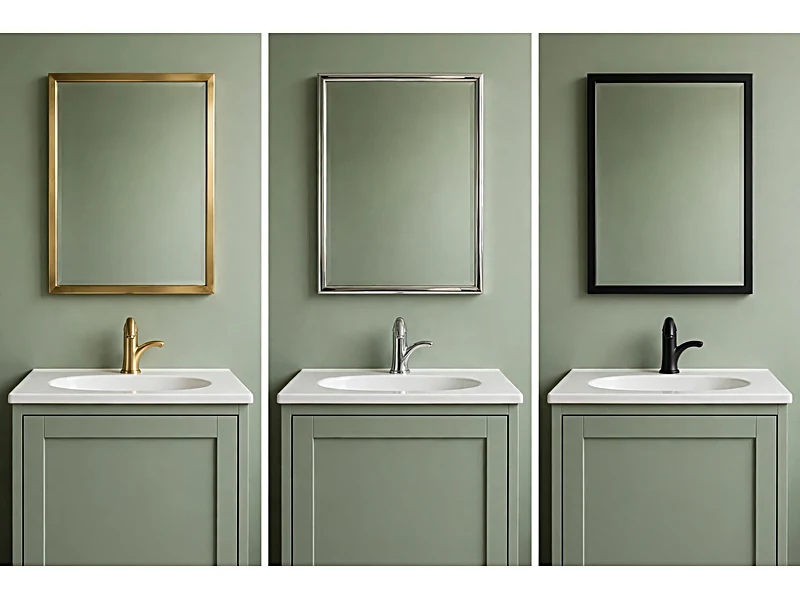
The finish on your faucets and cabinet handles can change how the green appears.
| Fixture finish | Suitable greens | Appearance |
| Brushed brass | Sage, emerald, forest | Warm contrast |
| Chrome | Mint, seafoam, sage | Bright and classic |
| Matte black | Olive, sage, forest | Strong contrast |
| Brushed nickel | Sage, hunter, olive | Subtle metallic finish |
| Aged bronze | Forest, moss, olive | Traditional warmth |
You don’t need to replace every metal fixture. Changing cabinet pulls or a mirror frame may be enough. Keep new finishes coordinated with the faucets and lighting you plan to retain.
How to Make a Small Green Bathroom Look Its Best
Both light and dark green can suit compact bathrooms. The better choice depends on your lighting, fixtures, and preferred appearance. A small room doesn’t automatically need pale walls, although lighter finishes may reflect more light.
Light and Dark Green in Compact Spaces
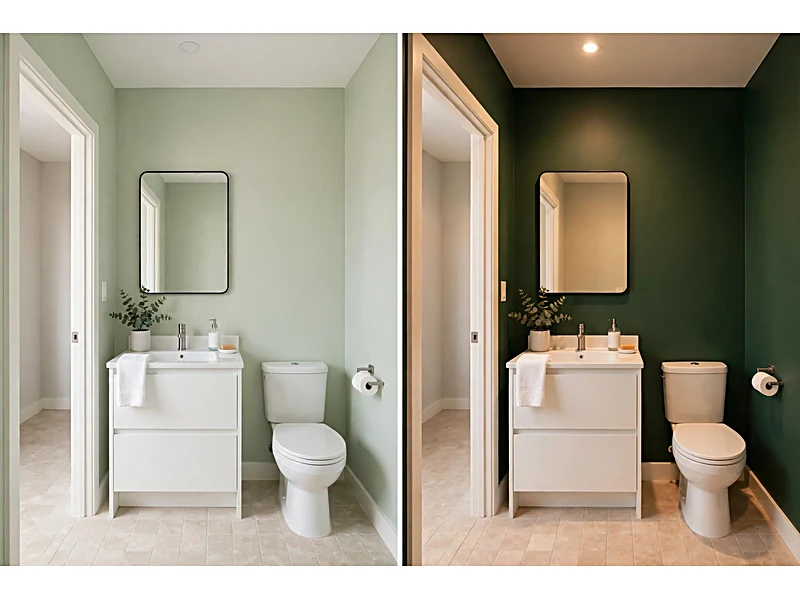
Pale sage creates soft contrast beside white fixtures, while seafoam introduces a cooler tone. Forest green can produce a cozy appearance when paired with light countertops and suitable lighting.
If painting every wall feels too bold, consider a green vanity instead. You can leave the surrounding walls white and still introduce a noticeable color feature.
Mirrors, Lighting, and Tile Layouts
A large mirror can reflect available light, while separate vanity lighting supports grooming tasks. Vertical tile layouts draw attention upward and can emphasize the room’s height.
Storage deserves equal attention. A compact vanity with drawers may serve your daily routine better than crowded open shelves. For more layout options, see HomeFixStyle bathroom ideas for different room sizes and budgets.
Green Paint, Tile, or Vanity: Where Should You Add Color?
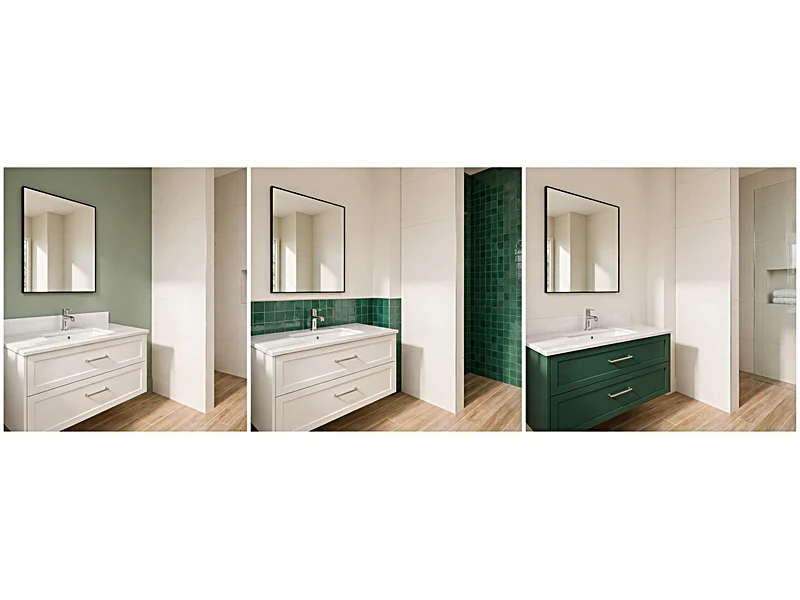
Wall paint often offers the easiest way to change a bathroom’s appearance without replacing fixtures. A painted vanity brings color into an otherwise neutral room, while tile creates a longer-lasting finish. Choose based on the work involved, your budget, and how permanent you want the result to be.
| Option | Relative cost | Difficulty | Best use |
| Wall paint | Low | Often DIY-friendly | Refreshing an existing room |
| Painted vanity | Low to medium | Careful preparation needed | Keeping walls neutral |
| Accessories | Low | Easy | Temporary updates |
| Wallpaper | Low to medium | Product-dependent | Adding pattern |
| Backsplash tile | Medium | Moderate | Decorating the sink area |
| Shower tile | High | Professional work often needed | Full shower updates |
| New vanity | Medium to high | May involve plumbing | Replacing worn cabinets |
Actual U.S. costs depend on room size, product quality, labor, and local conditions. These relative categories are intended for comparing project scope rather than estimating a final bill.
Best Paint Finishes for Bathrooms
Satin and semi-gloss paints are common choices for humid bathroom walls because many products offer good cleaning and moisture resistance. Sherwin-Williams provides guidance on choosing finishes for different surfaces.
Some manufacturers also make matte coatings specifically formulated for bathrooms. Check the product’s technical specifications instead of choosing by sheen alone. For a vanity, use a suitable cabinet coating. No decorative paint finish can replace proper waterproofing in a shower.
How to Update Your Bathroom With Green on a Budget
You can refresh a bathroom without moving plumbing or replacing major fixtures. Focus on the changes that will make the biggest visible difference, then decide whether larger work is worth the expense.
Affordable Changes Without Replacing Fixtures
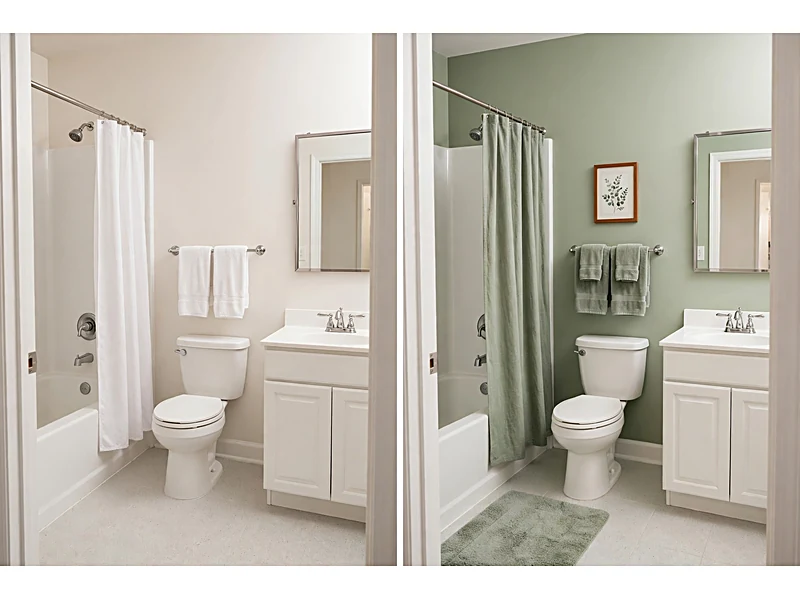
New towels, a shower curtain, and a bath mat can introduce coordinated green shades for relatively little money. A suitable vanity repaint or decorative mirror frame offers another way to change the room without replacing fixtures.
For rentals, choose removable accessories and follow your lease requirements. If you’re considering adhesive wallpaper, check whether the product suits humid rooms. Small changes also help you test a color scheme before investing in tile or cabinetry.
Budgeting for Paint, Tile, and Vanity Updates
| Project | Materials to consider | Main cost factors |
| Wall painting | Cleaner, primer if needed, bathroom paint | Wall area and preparation |
| Vanity painting | Cleaning supplies, primer, cabinet coating | Cabinet condition |
| Decor refresh | Towels, curtain, mat, hardware | Number and quality of items |
| Backsplash | Tile, setting materials, grout | Tile type and labor |
| Shower tile | Waterproofing, tile, grout | Shower size and installation |
| New vanity | Cabinet, sink, countertop, faucet | Plumbing and labor |
A sturdy vanity may only need fresh paint and hardware. Loose shower tile, however, can indicate problems that need attention before decorating.
For larger renovations, request written estimates from local contractors. Compare the materials and preparation included instead of choosing by price alone.
Green Bathroom Design Mistakes to Avoid
Color selection is only one part of creating a bathroom that looks good and performs well. Lighting, moisture, and material suitability also affect the finished result.
Choosing paint without testing it. Green can look different under daylight and artificial lighting. Compare samples beside your existing tile and countertop.
Ignoring undertones. Yellow-green paint may clash with a blue-gray surface. Check warm and cool finishes together before buying.
Using ordinary wall paint on cabinets. Vanities need coatings suitable for frequent handling, cleaning, and the cabinet material.
Selecting unsuitable floor tile. Check slip-resistance information and the manufacturer’s intended-use guidance before installing bathroom flooring.
Placing wallpaper near direct water. Repeated splashing can damage products that aren’t designed for wet conditions.
Using dark colors without enough lighting. Provide suitable general lighting and separate illumination around the mirror.
Overlooking ventilation. Excess moisture can damage finishes and encourage mold growth. The EPA’s moisture and mold guidance explains why controlling indoor humidity matters.
Assuming low-VOC paint needs no precautions. Low-VOC products may still release substances that require ventilation. Follow the manufacturer’s safety instructions during application.
Frequently Asked Questions
Is Green a Good Color for a Bathroom?
Yes. Green pairs with white fixtures, natural wood, stone, and several metal finishes. Sage creates a softer appearance, while forest and emerald green add stronger color. Your existing materials and lighting should guide the final choice.
What Is the Best Green Paint Color for a Bathroom?
Sage is a versatile option for white tile and light wood, while olive suits warmer finishes. Forest green works when you prefer darker walls. There isn’t one best shade for every room, so compare physical samples and select a bathroom-appropriate coating.
What Color Tile Goes With a Green Vanity?
White subway tile complements most green vanities. Cream softens olive and forest green, while pale gray may suit cooler shades. Compare samples under your bathroom lights before choosing the final combination.
Can You Mix Different Shades of Green in One Bathroom?
Yes. Pale sage walls can look attractive with a deeper olive vanity when their undertones coordinate. Let one shade cover the larger area and use the second on a smaller feature to keep the colors balanced.
What Makes a Bathroom Feel Relaxing?
Muted colors, comfortable lighting, and simple materials can contribute to a relaxing appearance. Sage walls, pale tile, natural wood, and cream towels create a soft combination. Practical storage also helps keep everyday products organized.
Are Green Bathrooms Still Popular?
Green remains a familiar choice in home decorating, with sage, olive, and forest shades appearing across traditional and modern interiors. Rather than selecting a color for its popularity alone, choose one that suits your home and preferences.
Final Thoughts
A green bathroom can suit modern, traditional, vintage, and farmhouse interiors. For an affordable refresh, start with painted walls, coordinated towels, or an existing vanity. A larger remodel may involve shower tile or a statement bathtub.
Keep your current fixtures and flooring in mind when choosing colors. Test samples, follow material instructions, and plan around your budget. The finished room should feel comfortable, support your routine, and remain easy to care for.

About Author
Hello there. I am Lathen Reed, a home improvement and interior design enthusiast. With a passion for creating beautiful, practical, and comfortable spaces, I share helpful ideas and inspiration related to home improvement, home decor, interior design, and home styling. Through HomeFixStyle, my goal is to make home improvement simple, inspiring, and accessible for everyone.