
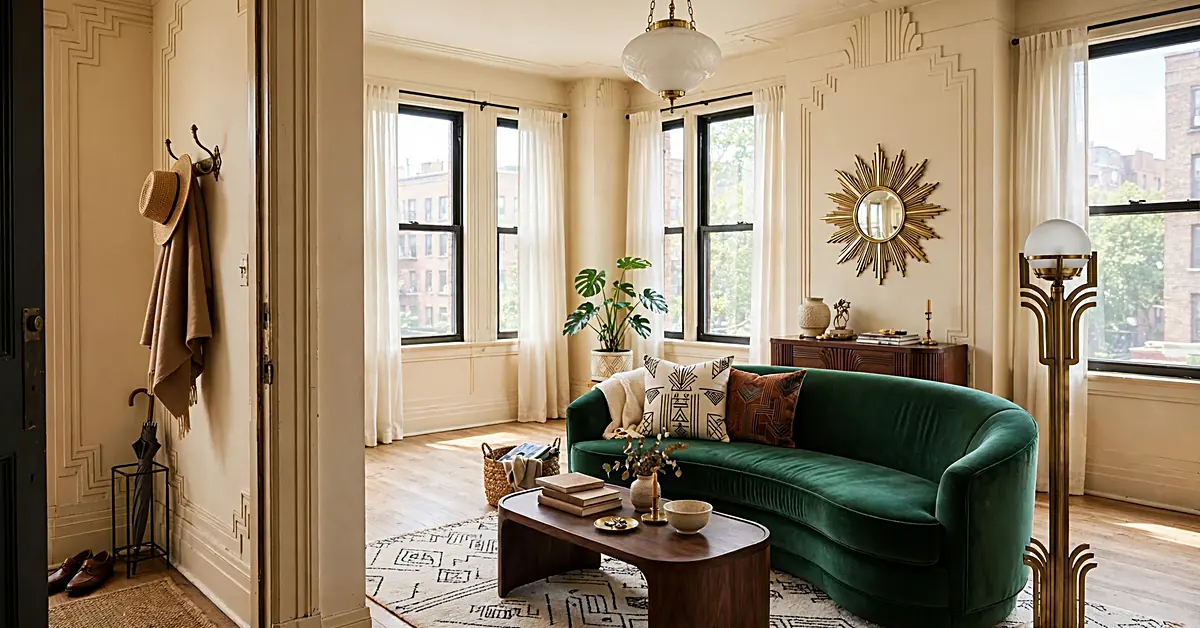
An Art Deco apartment combines geometric patterns, curved furniture, rich colors, and polished finishes. The style draws from the 1920s and 1930s, but it works in modern homes too. A velvet chair, geometric rug, or brass lamp can bring its character into a plain room. The right choices depend on your space, furniture, budget, and rental restrictions.
You don’t need a historic building or expensive antiques to achieve the look. A small apartment can feel Art Deco with a few carefully chosen pieces. The following room ideas show how to combine colors, furniture, and decorative details without crowding your home.
What Is an Art Deco Apartment?
An Art Deco apartment reflects a decorative style that became popular during the 1920s and 1930s. It features geometric shapes, striking furniture, polished surfaces, and carefully arranged decorative details. The style developed from several artistic influences and gained international attention during the 1925 Paris exhibition. The Victoria and Albert Museum explains its history and distinctive design features.
Some apartments retain original architectural details, while others recreate the appearance through furniture and decor. Both approaches can work when the colors, shapes, and materials suit the room.
Original Art Deco buildings vs. Art Deco-inspired interiors
Original Art Deco buildings may have patterned entrance floors, stepped wall details, decorative plasterwork, or metal railings. These features were part of the building’s original design. Modern apartments often have plain walls and standard fixtures, so the style comes mainly from furniture and accessories.
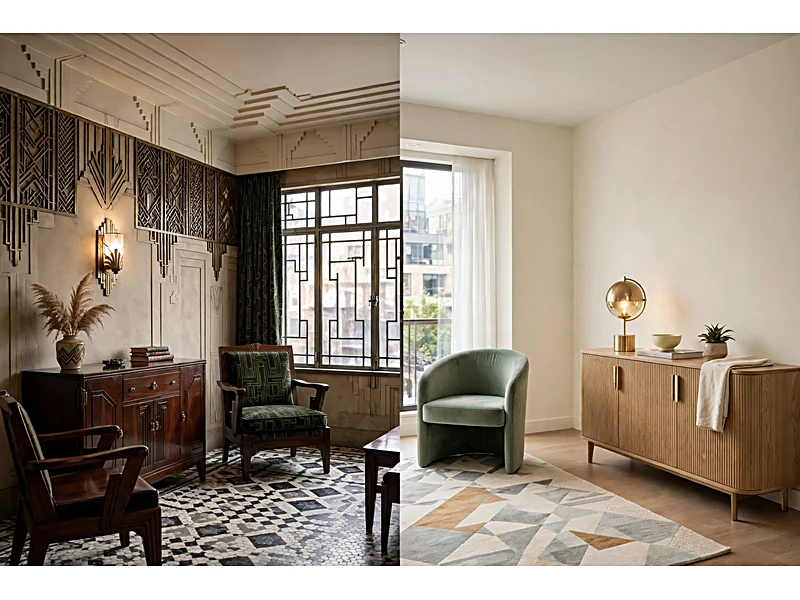
For example, a 1930s apartment might have original ceiling molding worth preserving. A modern rental could introduce similar geometric lines through a patterned rug, framed art, or fluted cabinet. Owners of historic properties should check which original features deserve preservation before renovating.
Key Features of Art Deco Apartment Design
Art Deco has several recognizable features, but you don’t need all of them in one room. Choose a few details that suit your existing furniture and repeat their colors or finishes where appropriate.
Geometric patterns and symmetry
Chevrons, zigzags, stepped forms, and sunbursts are common Art Deco motifs. The Victoria and Albert Museum describes the geometric influences that helped shape the movement. These patterns appear in rugs, wallpaper, mirrors, lighting, and architectural decoration.
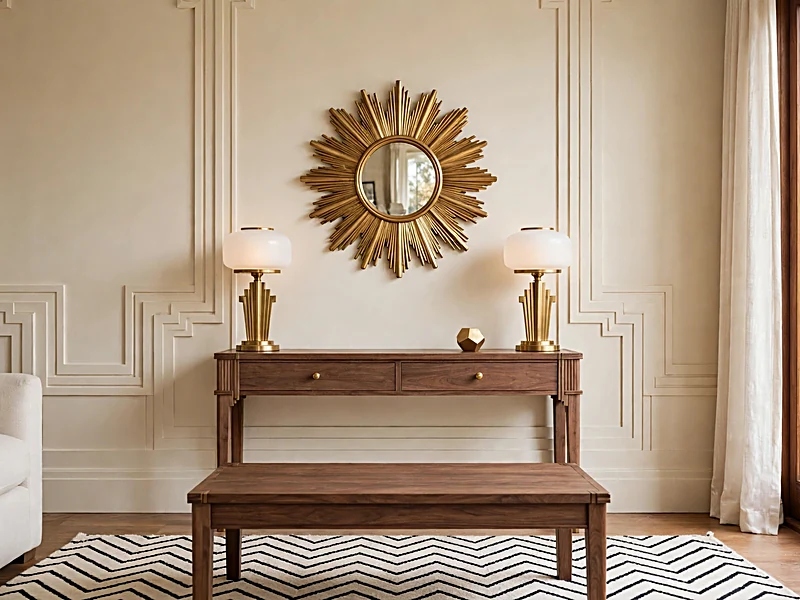
In a living room, a geometric rug can provide the main pattern beneath simple furniture. You might repeat one of its colors in a picture frame or lamp base. Matching bedside lamps or chairs placed around a central table can also create balance. Keep other surfaces quieter when one pattern already attracts attention.
Curved furniture and strong outlines
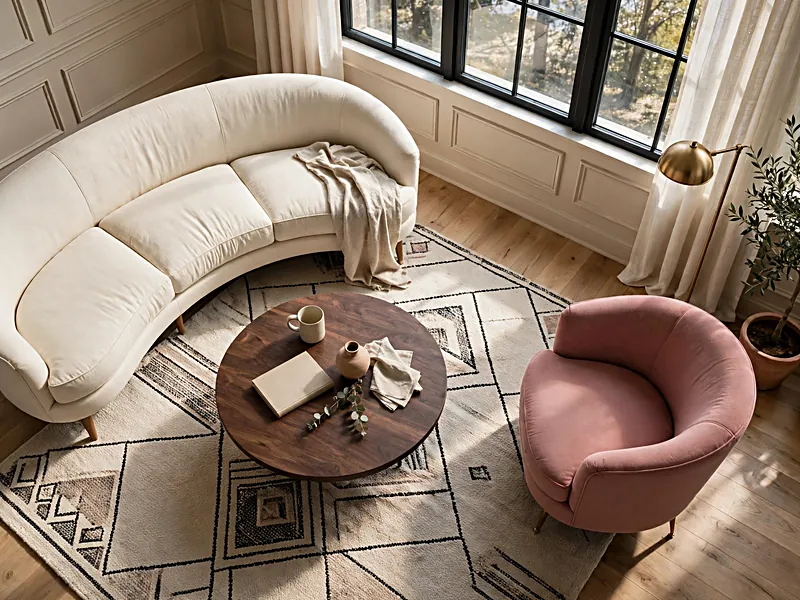
Rounded sofas, barrel chairs, and circular tables balance the sharp lines of geometric designs. A curved chair can soften a room filled with rectangular furniture. A round coffee table also works well beside a straight sofa.
Check the furniture’s width and depth before buying. Some curved pieces occupy more floor space than their photographs suggest. If your room already has several straight-lined items, one rounded chair or table may be enough.
Velvet, polished wood, and stone
Velvet adds softness and texture to seating, while walnut and lacquered wood give cabinets and tables a polished appearance. Marble introduces natural veining and a smooth surface. These materials create contrast when used together.
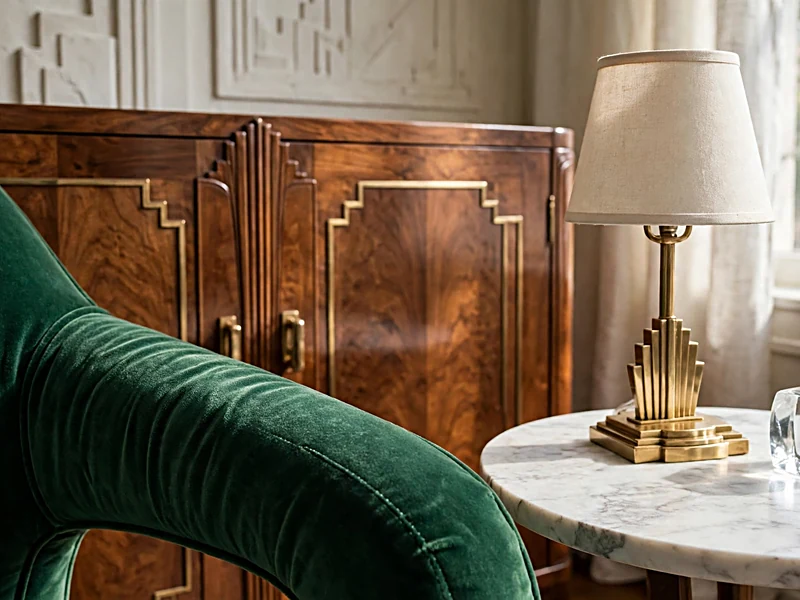
Natural marble can stain or etch when exposed to certain liquids. A small stone tabletop or an easier-cleaning alternative may suit everyday use better. For a practical living room, try one upholstered chair, a walnut table, and a washable rug.
Brass, chrome, and mirrors
Brass creates a warm golden finish, while chrome and nickel give furniture and lighting a cooler appearance. Both suit Art Deco interiors, but using too many different metals can make a room feel busy.
Choose one main finish and repeat it on two or three pieces. Brass cabinet handles might match a nearby floor lamp, for example. Place mirrors where they reflect a window, attractive furniture, or another useful view. Avoid positioning them directly opposite cluttered shelves.
Globe lights and decorative details
Frosted globe lights, geometric sconces, and sculptural lamps are common choices for Art Deco-inspired rooms. Their shapes add character, while their light helps define different areas of an apartment.
A globe pendant can illuminate a dining table, while a floor lamp provides light beside the sofa. Use more than one light source when the room serves several purposes. Renters can choose plug-in lamps instead of changing permanent electrical fixtures.
Art Deco Decorating Ideas for Every Room
An Art Deco apartment can use different colors and furniture in each room while maintaining a connected appearance. Repeating one material, color, or decorative shape helps the spaces feel related. The following ideas focus on how each room looks and functions.
Art Deco Apartment Living Room: Curved Seating and Statement Lighting
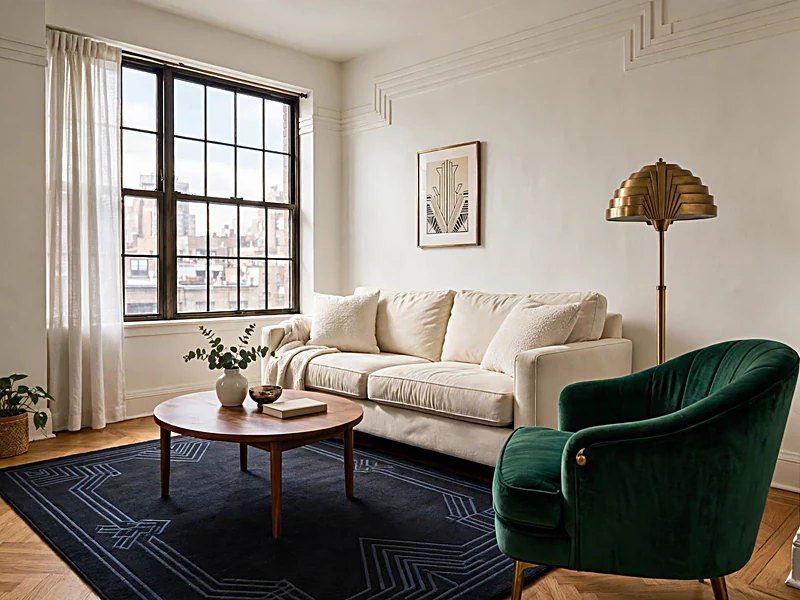
Start with the largest furniture piece you plan to keep. A cream sofa works with a navy rug, walnut coffee table, and brass floor lamp. If you prefer stronger color, an emerald accent chair can stand out against warm white walls.
A round coffee table softens the straight lines of the sofa and rug. Choose a rug that reaches beneath the front legs of your seating when space allows. Keep the main walking route clear, especially in apartments with open kitchens or balconies.
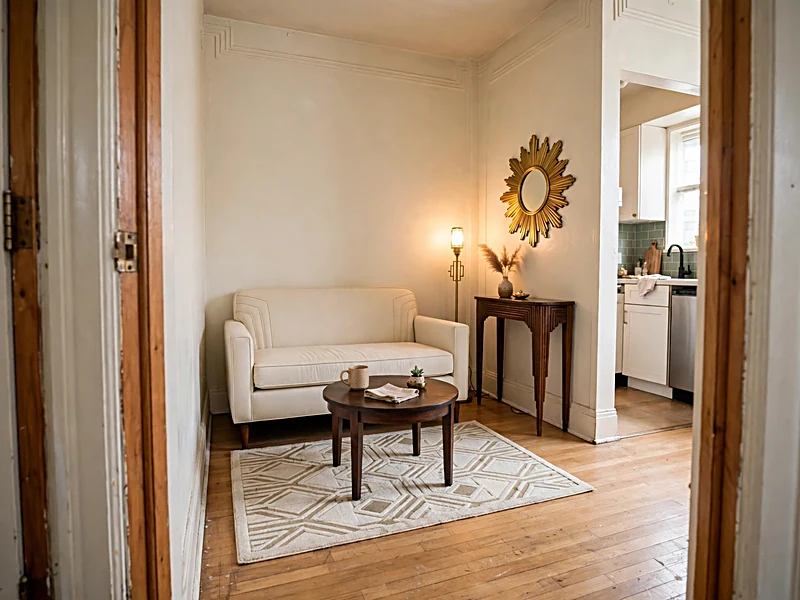
For a smaller living room, focus on comfortable seating, useful lighting, and one decorative feature. A large mirror or sculptural lamp can provide enough visual interest without adding several competing statement pieces.
Art Deco bedroom: Upholstered headboard and balanced lighting
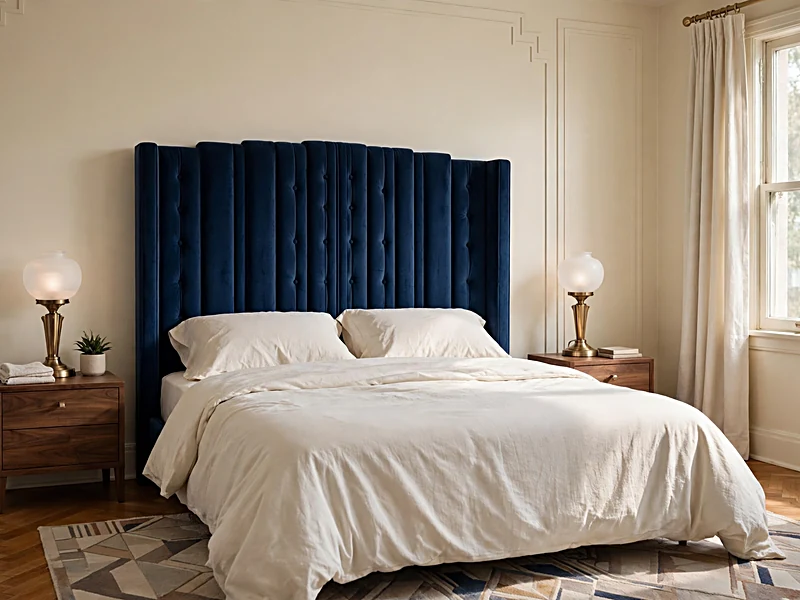
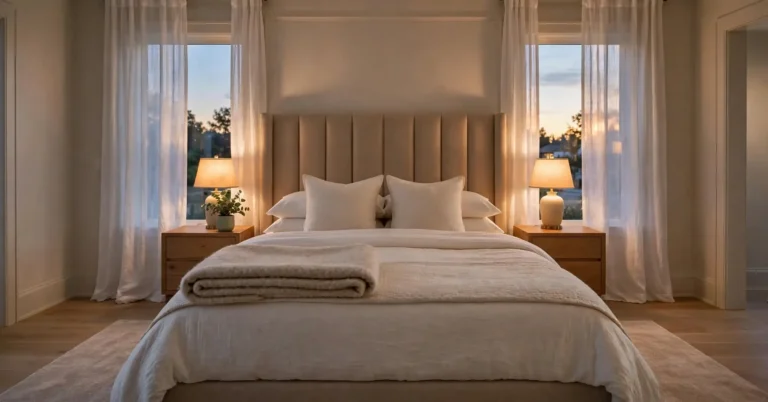
An upholstered headboard can establish the style without changing the walls. Channel tufting, scalloped edges, and curved profiles give the bed a distinctive shape. Navy, dusty rose, cream, and forest green work well with walnut bedside furniture.
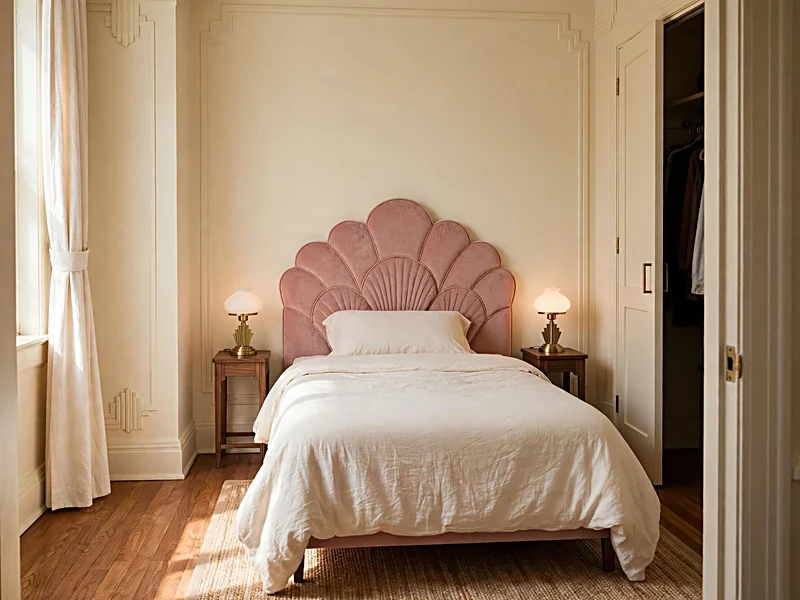
Use simple bedding to balance a decorative headboard. Matching bedside lamps can create symmetry, while a soft rug adds comfort underfoot. If your bedroom is narrow, choose slim nightstands or wall-mounted shelves instead of bulky cabinets.
Measure the space beside the bed before ordering furniture. Leave enough room to access drawers, open closet doors, and walk comfortably.
Art Deco kitchen: Geometric tile and cabinet details
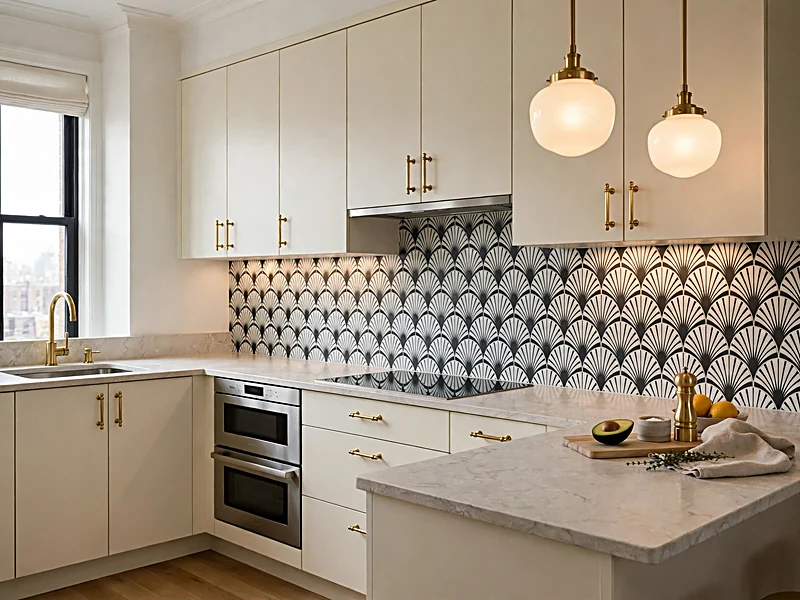
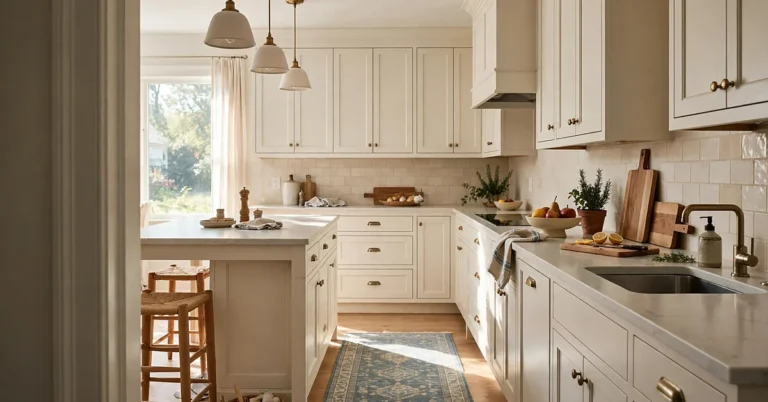
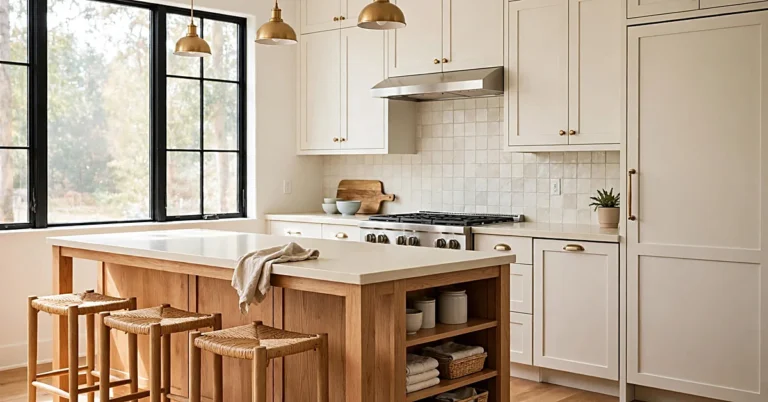
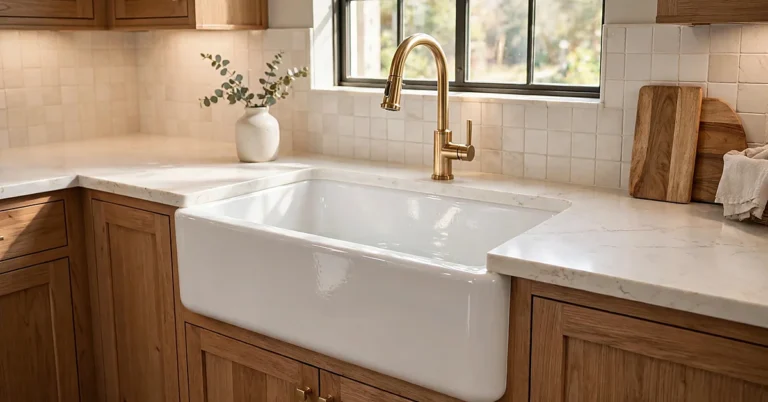
Geometric backsplashes, polished cabinet handles, and globe lighting can give a kitchen Art Deco character. Diamond, fan, and repeated line patterns work well when the surrounding cabinets remain simple.
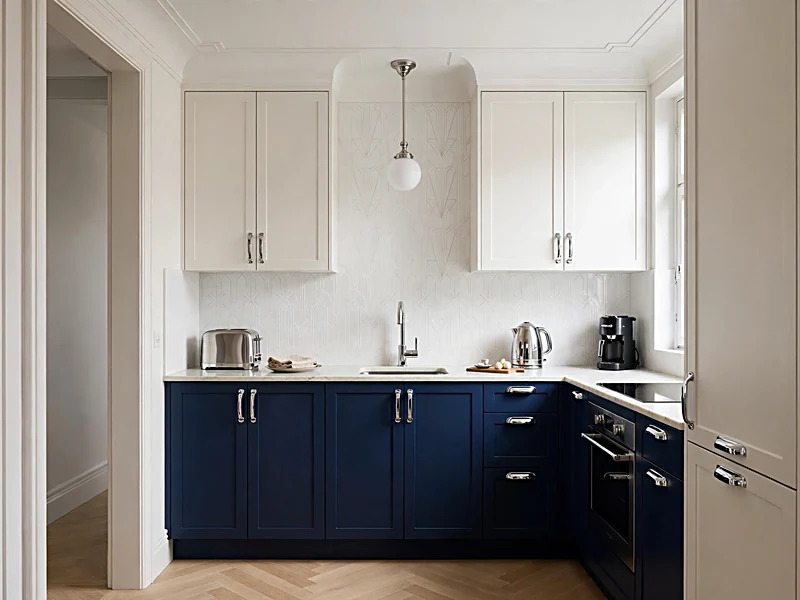
Brass handles complement warm cabinetry, while chrome works with black, navy, or white finishes. If your countertops already have strong veining, a plain backsplash may create better balance than another bold pattern.
Renters can introduce the style through framed prints, decorative trays, or portable accessories. Check heat resistance, moisture limits, and rental rules before using removable backsplash products near cooking areas.
Art Deco bathroom: Black and white with polished metal
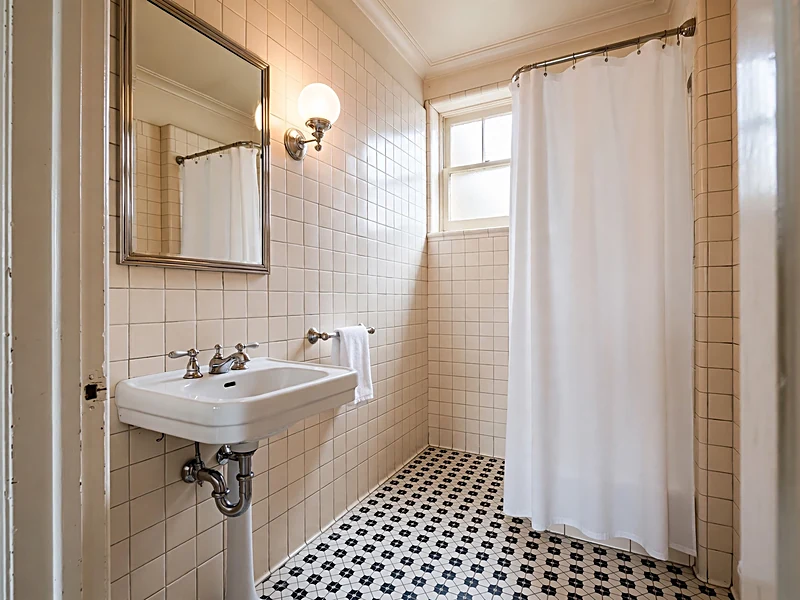
Black and white geometric tiles can give a bathroom a recognizable Art Deco appearance. Cream walls, polished nickel fixtures, and a framed mirror offer a softer alternative. A frosted globe light can connect the different finishes.
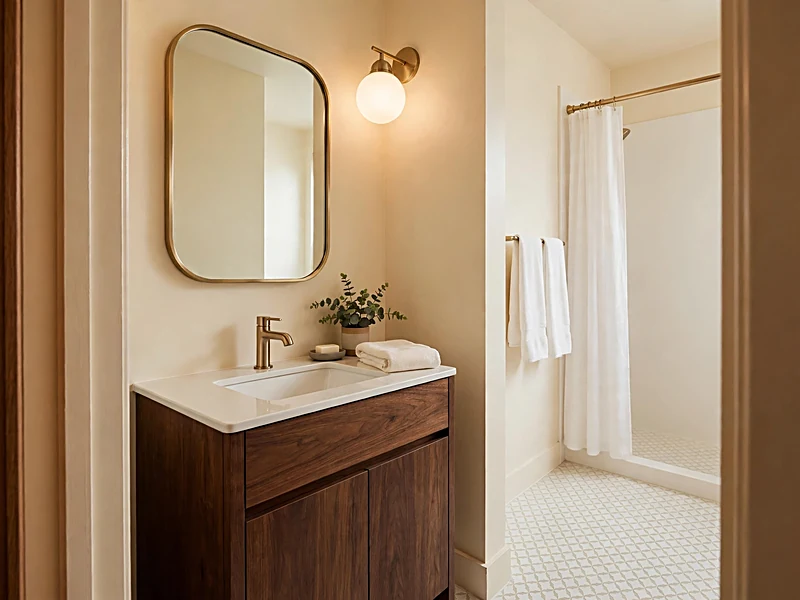
If the floor already has a strong pattern, keep the shower curtain and accessories simple. Renters can try a geometric shower curtain, matching containers, and towels in one accent color.
Choose materials suitable for damp spaces, and keep ventilation openings clear. Electrical fixtures near water must meet the appropriate safety requirements.
Art Deco dining area: Compact shapes and useful seating
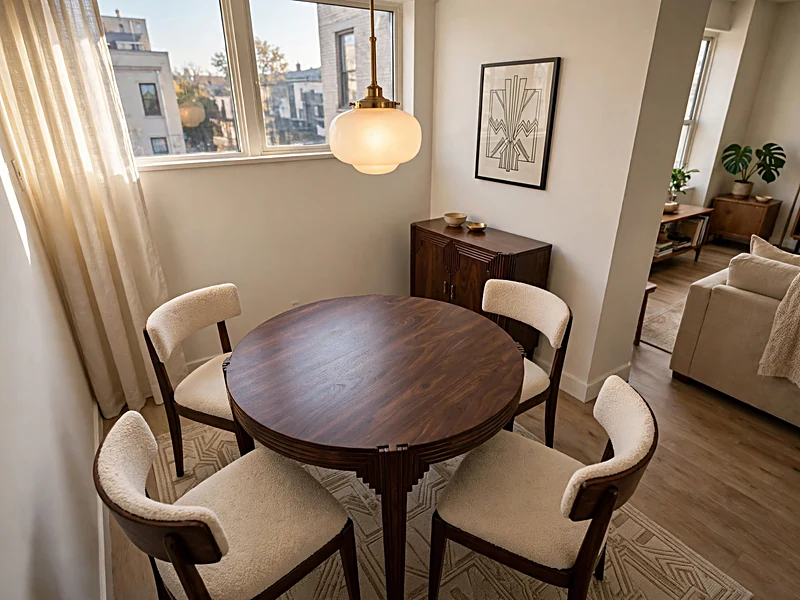
A round dining table can work well in an apartment with limited floor space. Curved-back chairs add another recognizable design detail, while upholstered seats provide comfort during longer meals.
A globe pendant can help define the dining area in an open-plan apartment. If you have space for a sideboard, choose one with dark wood or fluted doors. Repeat a finish from the living room to connect the two spaces.
Leave enough clearance to pull out chairs and move around the table. A smaller table that fits properly will work better than an oversized statement piece.
Art Deco entryway: Mirror, console, and decorative details
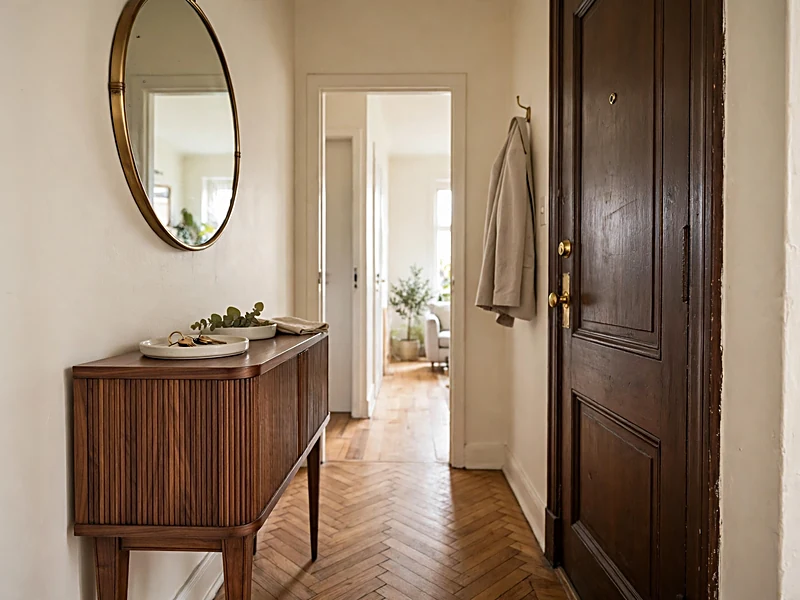
A narrow console, round mirror, and small tray can bring Art Deco style into an entryway. Fluted cabinet doors or brass handles add detail without taking up extra floor space.
In a tight hallway, use a shallow shelf instead of a full console. A geometric mirror can provide the main decorative feature when there isn’t room for furniture.
Keep everyday items organized so the design remains visible. Closed storage helps hide shoes, bags, and other items that collect near the entrance.
Best Art Deco Color Schemes for Apartments
Art Deco interiors often use rich colors, but lighter combinations can work just as well. Choose one main color, a supporting neutral, and an accent finish. Test paint and fabric samples under your apartment’s daytime and evening lighting before making large purchases.
Emerald green, cream, and brass
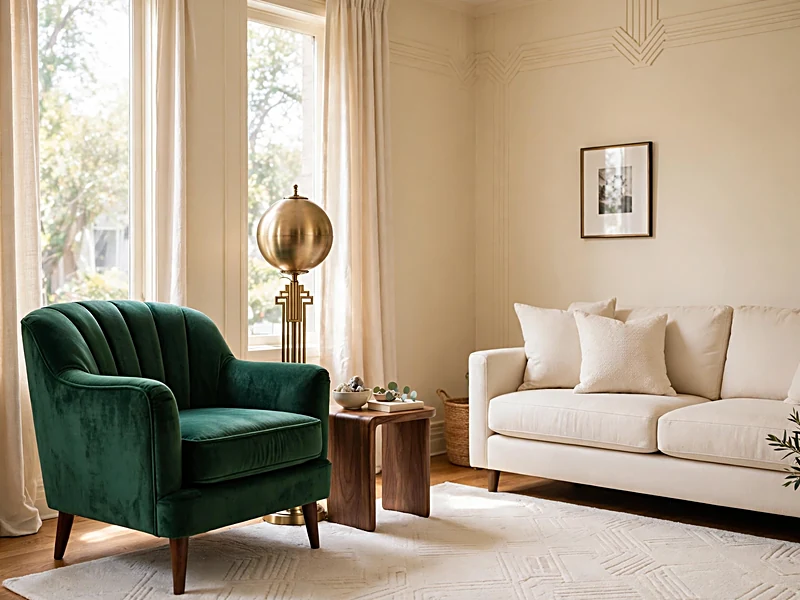
Emerald green adds depth to upholstery, while cream keeps larger surfaces light. Brass works well on lamps, mirror frames, and cabinet handles. A cream sofa with emerald cushions and a brass floor lamp offers a simple starting point.
This combination also suits dark wood furniture. In smaller rooms, use emerald on one main piece instead of covering several walls.
Navy, ivory, and chrome
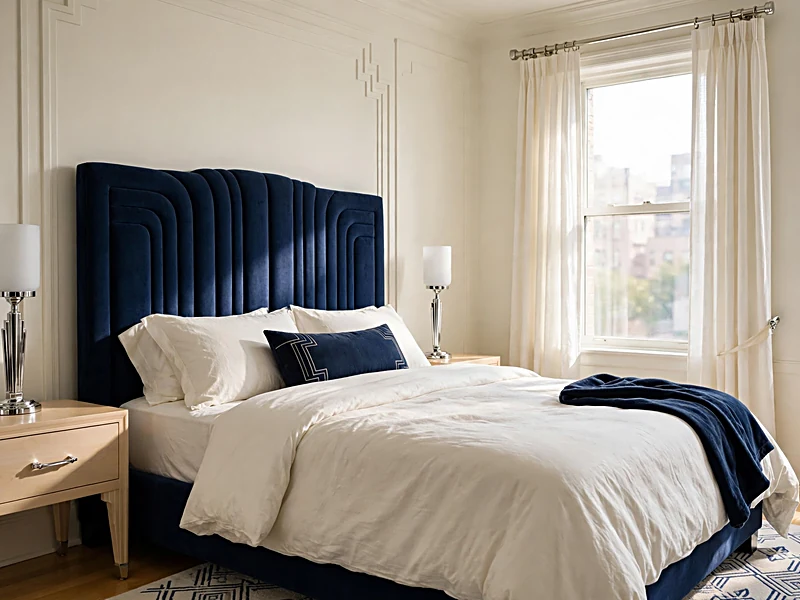
Navy upholstery or a headboard creates contrast against ivory walls and bedding. Chrome lighting adds a cooler finish without competing with the deeper color.
This palette works well in bedrooms and living rooms. If the apartment receives little natural light, keep the walls ivory and use navy on furniture or smaller accents.
Blush pink, black, and gold
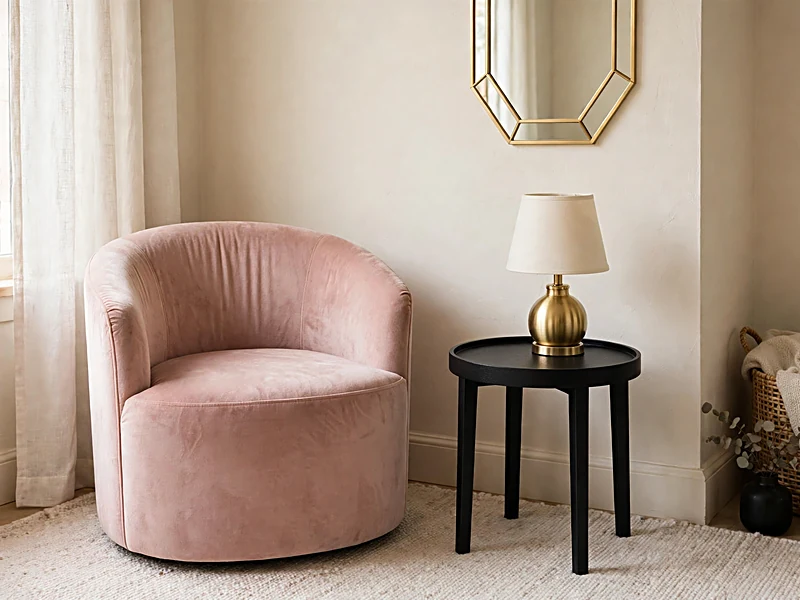
Blush pink softens black furniture and geometric details. Use it on an upholstered chair, headboard, or curtains, then add black table legs and a gold-framed mirror.
Matte black works particularly well beside reflective gold finishes. Keep large surfaces pale when the room needs more light.
Burgundy, walnut, and warm white
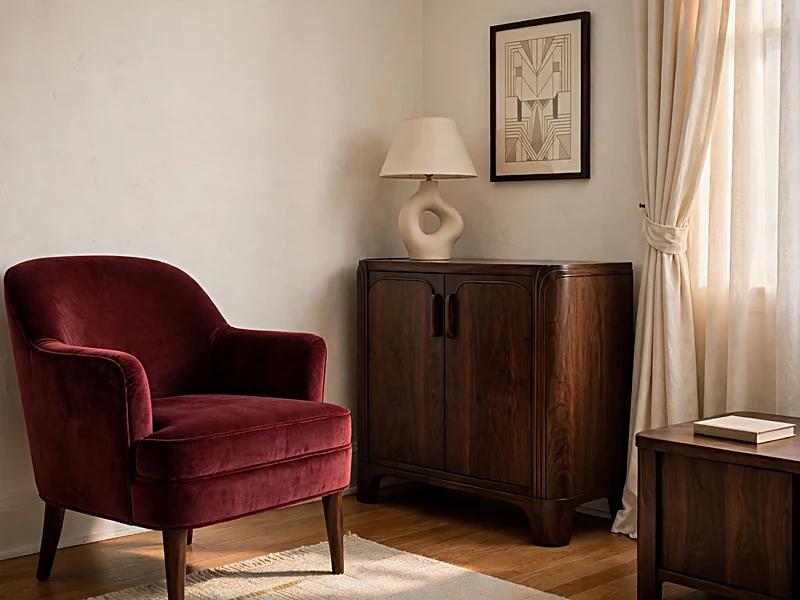
Burgundy works with walnut furniture and warm white walls. An upholstered accent chair or a few cushions can introduce the color without changing the entire room.
This palette suits readers who prefer dark wood over shiny metallic furniture. Use warm lighting and lighter textiles to keep the space comfortable.
How to Choose Art Deco Furniture and Decor

Furniture should support the style without making your apartment difficult to use. Look at size, comfort, finish, and storage before focusing on decorative details.
Sofas, chairs, and upholstery
Curved backs, rounded arms, and channel-tufted upholstery suit Art Deco-inspired seating. Velvet is a common choice, but practical fabrics can work too.
If your current sofa fits the room, keep it and add one accent chair. Compare the chair’s overall width with its usable seat space. Thick arms sometimes occupy valuable floor area without providing more comfort.
Tables and storage
Round coffee tables, dark wood sideboards, and fluted cabinets work well with curved seating. They also provide practical surfaces and storage.
Choose furniture that solves a real problem. A sideboard with closed compartments can hide electronics, paperwork, or dining items. Check drawer clearance and door swings before placing cabinets in narrow areas.
Chandeliers, sconces, and table lamps
Globe pendants, decorative sconces, and sculptural lamps can introduce Art Deco lighting. Their placement matters as much as their appearance.
Use ceiling fixtures for general illumination and smaller lamps for reading or working. Check bulb brightness, shade direction, and available outlets before buying. Hire a qualified electrician for hardwired changes when necessary.
Sunburst mirrors, wall art, and geometric rugs
A sunburst mirror or geometric rug can serve as the main decorative feature in a room. Framed prints with stepped shapes or repeated lines offer another option.
Choose one larger piece before adding smaller accessories. If a rug includes several colors, repeat one in cushions or wall art. This helps the furniture and decor feel connected without matching everything.
How to Decorate a Small Art Deco Apartment
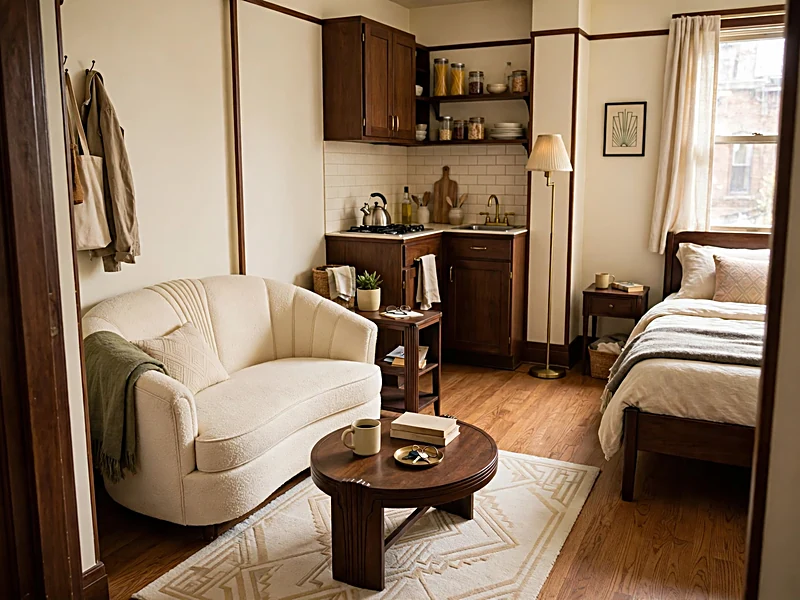
A small Art Deco apartment needs furniture that fits comfortably and leaves space for daily movement. One strong decorative feature usually works better than several competing pieces. Start with the floor plan, then choose furniture and accessories.
Choose one statement piece
A curved loveseat, geometric rug, or framed mirror can establish the style. Keep the surrounding furniture simple so the focal piece remains visible.
For a studio, a compact loveseat and one accent chair may offer more flexibility than a sectional. If the rug has a strong geometric pattern, choose plain upholstery and curtains.
Use mirrors and lighting to brighten compact spaces
Mirrors can reflect daylight or attractive parts of a room. Position them where the reflection improves the space without creating glare.
Use a slim floor lamp near seating and a smaller lamp near your desk or bed. Warm lighting can work well with brass and dark wood, especially in rooms with limited daylight.
Arrange furniture in a studio or one-bedroom apartment
Start by measuring the room and marking doors, windows, outlets, and existing storage. For an illustrative 12-by-14-foot living room, consider a 72-inch loveseat, a 30-inch round table, and one compact chair. The arrangement will depend on your actual floor plan.
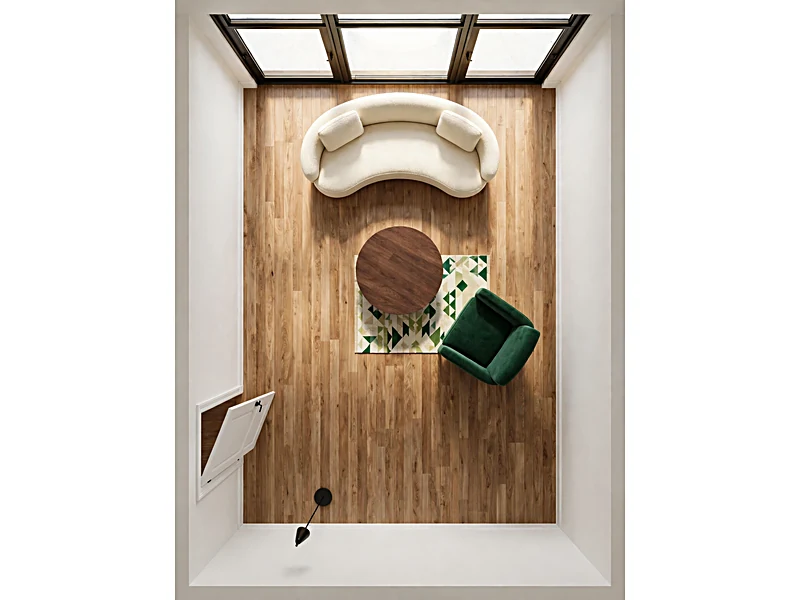
Place the loveseat against the longest usable wall. Position the coffee table in front, leaving room to move between them. Set the accent chair near one end of the sofa and angle it toward the seating area.
Aim for around 30 to 36 inches along main walking routes where feasible. Your needs may differ based on mobility, furniture placement, and door access. Test the layout by marking furniture dimensions on the floor with painter’s tape.
If the arrangement feels crowded, try a smaller accent chair before replacing the sofa. Good apartment interior design starts with comfortable movement and furniture that suits everyday activities.
Renter-Friendly Art Deco Apartment Ideas
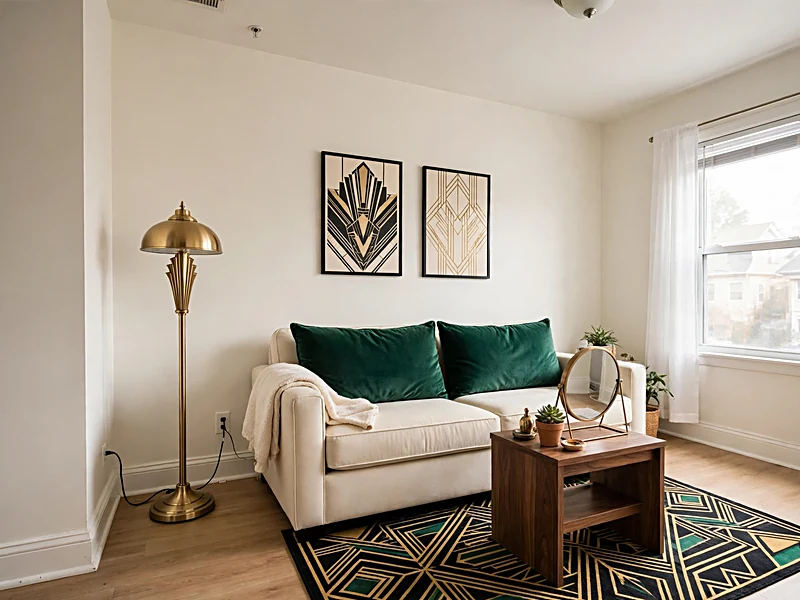
Renters can change their apartment aesthetic through portable furniture, lighting, textiles, and wall art. Focus on pieces you can reuse when you move, and check your lease before making changes.
Geometric wallpaper and wall art without major changes
Removable wallpaper can introduce geometric patterns, but some products may damage paint. Test a small hidden area and follow the manufacturer’s installation and removal instructions.
For a lower-risk alternative, use framed prints with approved hanging methods. A geometric print above a nightstand can provide enough decoration without covering an entire wall.
Portable lighting and layered textiles
A plug-in lamp, patterned rug, and velvet cushion covers can change the appearance of a plain living room. Freestanding mirrors and secondhand chairs offer more options without permanent construction.
Choose pieces that fit different layouts rather than buying decor for one unusual corner. Store original cabinet hardware if your landlord permits temporary replacements.
How Much Does It Cost to Decorate an Art Deco Apartment?
Decorating costs depend on your existing furniture, room size, and materials. You can start with accessories or replace larger pieces if your budget allows.
The following amounts are illustrative spending allowances, not verified store prices. Taxes, delivery, and installation may increase the final cost.
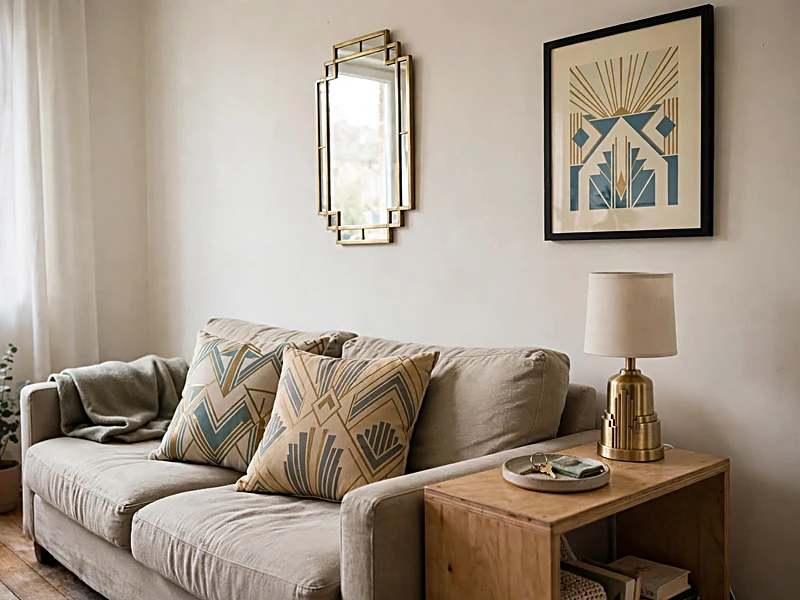
Under $250: Start with accessories and lighting
| Item | Example allowance |
| Geometric cushion covers | $30 |
| Framed print | $35 |
| Small table lamp | $65 |
| Decorative mirror | $70 |
| Tray or vase | $25 |
| Total | $225 |
This plan works when your existing furniture is in good condition. Start with the lamp and mirror because they introduce recognizable shapes and finishes. A secondhand mirror may cost less, leaving money for a rug later.
$250 to $500: Build around one focal piece
| Item | Example allowance |
| Secondhand accent chair | $160 |
| Floor lamp | $75 |
| Small geometric rug | $100 |
| Mirror | $65 |
| Cushions | $30 |
| Total | $430 |
An accent chair can become the room’s main decorative feature. Check its upholstery, stability, and dimensions before buying used furniture. If your current lighting works well, consider putting that allowance toward a larger rug.
$500 to $1,000: A fuller room update
| Item | Example allowance |
| Compact loveseat | $400 |
| Round coffee table | $120 |
| Area rug | $150 |
| Lighting | $100 |
| Mirror | $85 |
| Total | $855 |
This budget allows for a more noticeable furniture change, although actual prices will vary. Buy the main seating first, then choose a rug and lighting that fit its size and color. Before replacing a sofa, consider whether accessories could achieve the look for less.
Modern vs. Traditional Art Deco Apartments
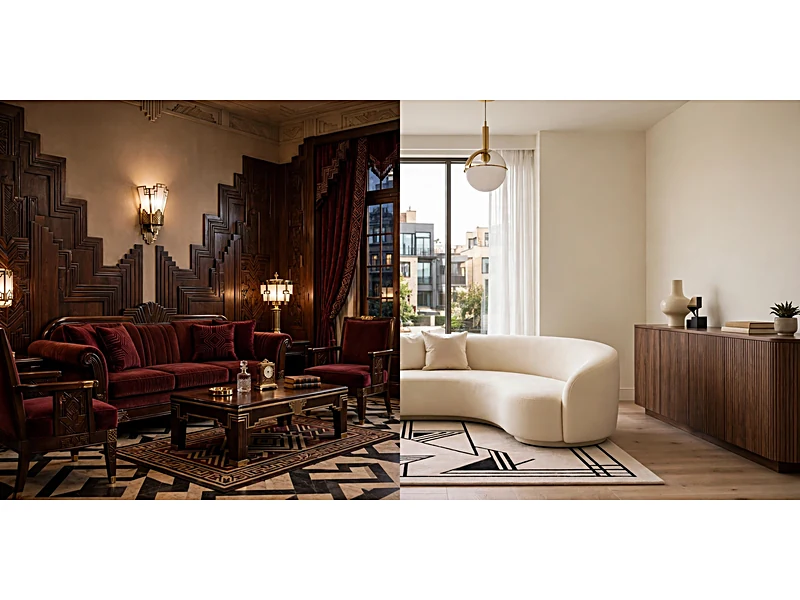
Traditional Art Deco interiors often feature decorative furniture, polished surfaces, and bold patterns. Modern versions usually use fewer period details alongside contemporary pieces.
| Feature | Traditional direction | Modern direction |
| Furniture | Decorative profiles and polished wood | Selected curves with simpler seating |
| Patterns | Repeated geometric decoration | One prominent patterned surface |
| Color | Deep contrasts and rich shades | Neutral base with focused accents |
| Metal | Detailed brass or chrome | Small repeated metal accents |
| Lighting | Decorative period-style fixtures | Globe lamps and clean-lined pendants |
A modern apartment might combine a simple sofa, fluted cabinet, and geometric pendant. These features provide Art Deco character without making the room resemble a historical display.
The same ideas can also work for condo interior design. Owners may have more freedom to alter flooring, lighting, or built-in furniture, subject to building rules.
Modern examples of Art Deco architecture and interiors
New York’s Chrysler Building is known for its stepped crown and geometric details. Miami Beach’s historic Art Deco district offers colorful examples of period architecture in the United States.
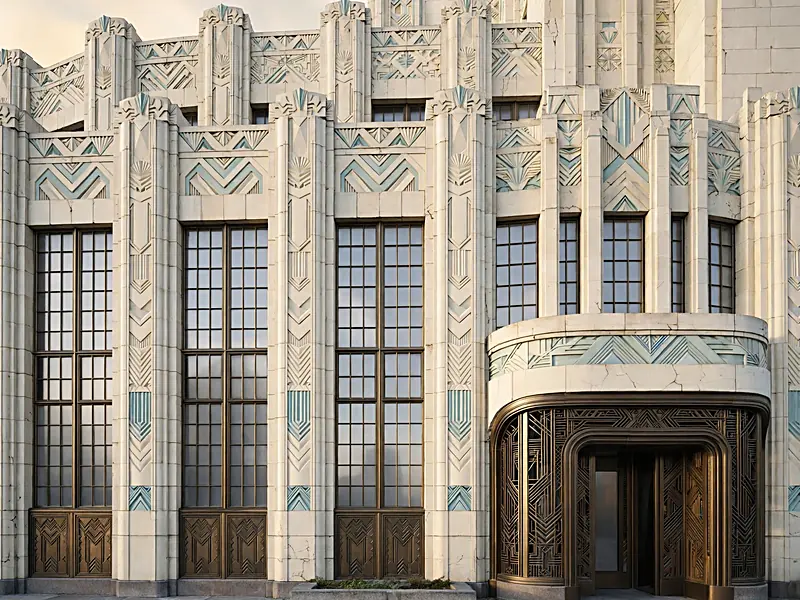
The National Park Service also documents Art Deco architectural features at Lerma’s Nite Club in San Antonio.
These buildings offer ideas for interior design without serving as exact room templates. Repeated vertical lines can inspire fluted cabinet doors. Stepped forms may appear in mirrors, furniture bases, and decorative lighting.
Common Art Deco Decorating Mistakes
Art Deco furniture and patterns need room to stand out. Too many decorative features can make a space feel crowded.
Using too many geometric patterns: Choose one main pattern for a rug or wall. Keep nearby furniture and textiles simpler.
Mixing too many metallic finishes: Use one dominant metal and repeat it across lighting, handles, or frames.
Buying oversized furniture: Measure width, depth, and doorway clearance before ordering. Leave enough room for daily movement.
Ignoring practical lighting: Decorative fixtures may not provide enough light for reading or working. Add task lamps where needed.
Adding too many statement pieces: Let one or two items attract attention. Plain furniture can help decorative pieces stand out.
Choosing high-maintenance finishes: Mirrors, glass, and polished surfaces show fingerprints. Consider cleaning requirements before buying.
Frequently Asked Questions
Can a modern apartment look Art Deco?
Yes. A modern apartment can use curved furniture, geometric patterns, polished accents, and globe lighting. Original 1930s architecture isn’t required.
What is the difference between Art Deco and Art Nouveau?
Art Nouveau often uses flowing lines inspired by plants and nature. Art Deco favors geometric shapes and stylized forms. The movements share some historical influences, as the Victoria and Albert Museum explains.
Can you mix Art Deco furniture with modern decor?
Yes. A curved chair can work beside a simple modern sofa. Repeat one color or finish to help the furniture feel connected.
Does Art Deco work with neutral colors?
Yes. Cream, ivory, walnut, and black can create an Art Deco-inspired room. Distinctive furniture shapes and geometric details help establish the style.
How do you recognize an original Art Deco building?
Look for stepped details, geometric ornament, decorative metalwork, and period finishes. These features don’t confirm a building’s age by themselves. Check historic records when authenticity matters.
Is Art Deco expensive to furnish?
It can be expensive if you buy original antiques or custom furniture. Secondhand pieces, modern reproductions, and smaller decorative accents offer more affordable options.
Final Thoughts
An Art Deco apartment works best when the design suits your space and daily routine. Start with a distinctive furniture shape, choose colors that work together, and add lighting where you need it. Renters can focus on portable pieces, while owners may consider longer-lasting finishes.
Measure before buying, leave comfortable walking space, and choose furniture you’ll enjoy using. A few well-chosen details can give your apartment Art Deco character without making it difficult to live in.

About Author
Hello there. I am Lathen Reed, a home improvement and interior design enthusiast. With a passion for creating beautiful, practical, and comfortable spaces, I share helpful ideas and inspiration related to home improvement, home decor, interior design, and home styling. Through HomeFixStyle, my goal is to make home improvement simple, inspiring, and accessible for everyone.