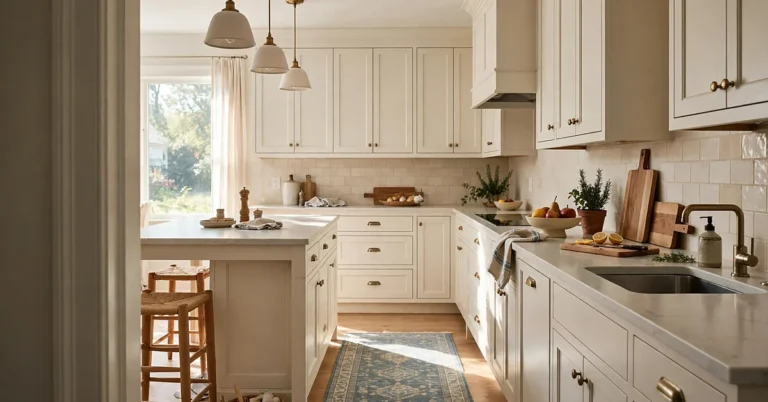

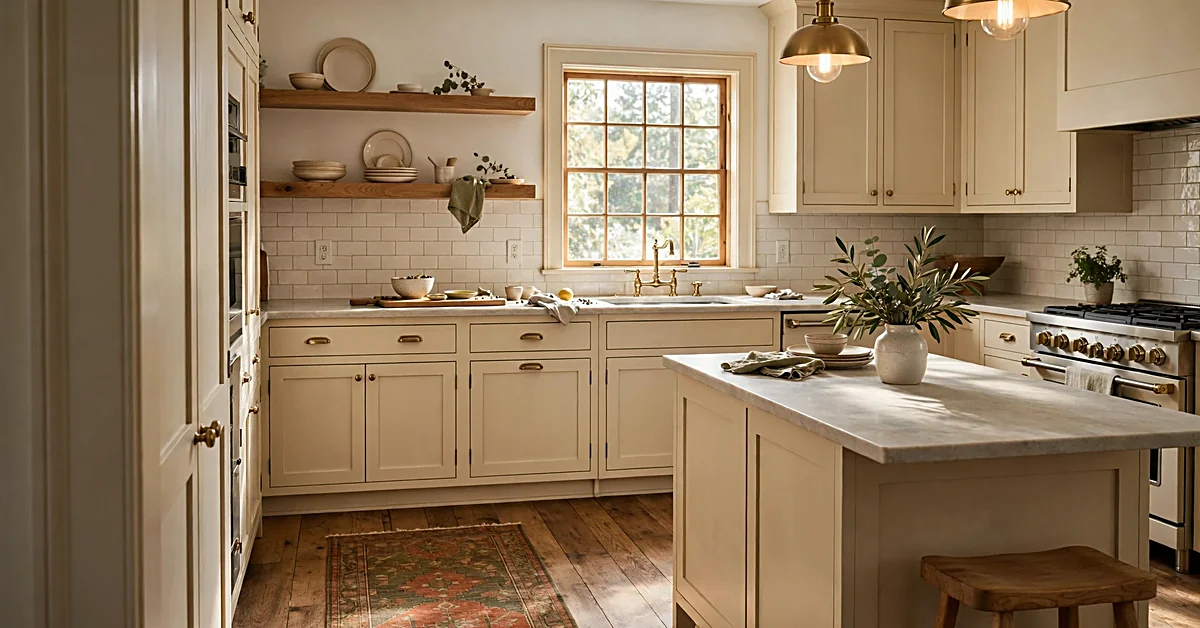
A cozy kitchen feels warm, comfortable, and welcoming without sacrificing everyday function. You can create that feeling with soft lighting, natural wood, earthy colors, and personal details. A washable runner, a few vintage finds, or a small breakfast corner can make a difference.
These cozy kitchen ideas work for small apartments, family homes, and kitchens that need a refresh. Many require little money or permanent work. You’ll also find practical color combinations, budget tips, and ways to make a small kitchen comfortable without adding clutter.
Start with what your kitchen needs most. A dark room may benefit from better lighting, while a plain kitchen may only need a little color.
25 Cozy Kitchen Ideas for a Warm and Welcoming Space
The best decorating choices work with your existing cabinets, countertops, and layout. Each idea below offers a way to add warmth while keeping the kitchen useful.
1. Soften Hard Floors With a Vintage-Style Runner
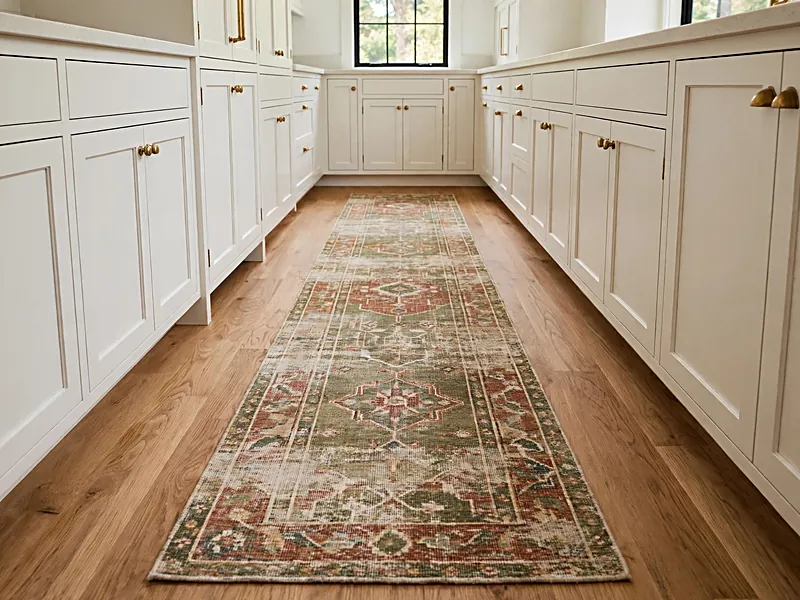
A vintage-style runner adds color and texture to kitchens with tile, vinyl, or wood floors. Faded rust, olive green, and cream patterns work well with neutral cabinets. Choose a washable, low-pile rug with a nonslip backing. Measure the floor first, especially in a narrow galley kitchen.
Leave enough room for cabinet doors and appliances to open. A rug should lie flat without creating a tripping hazard. If your backsplash already has a bold pattern, choose a quieter runner. This keeps the room from looking too busy.
2. Create a Gentle Glow With Layered Lighting
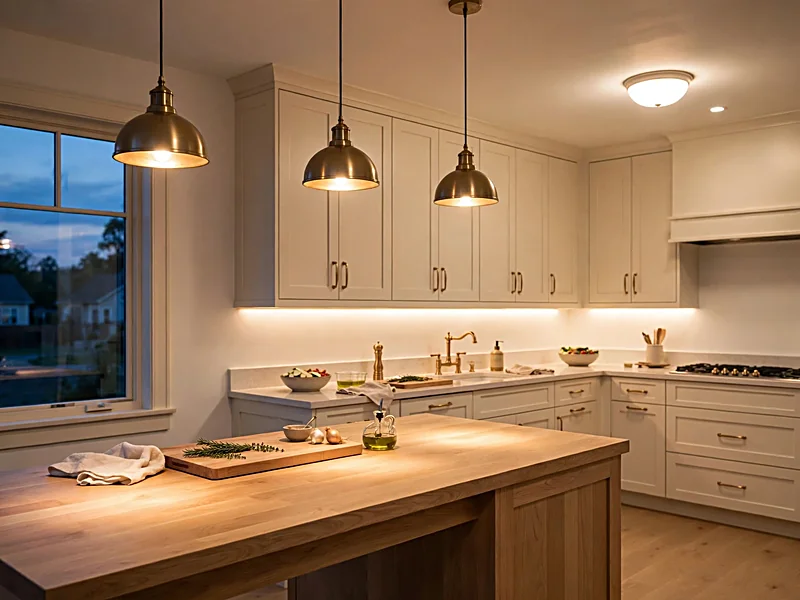
One bright ceiling light can make a kitchen feel harsh in the evening. Use different light sources for cooking, dining, and relaxing. Keep your main ceiling lights for general visibility. Add pendants above a table or island when the layout allows.
For a softer appearance, consider warm-white bulbs rated between 2700K and 3000K. ENERGY STAR identifies this range with warm or soft white lighting. Dimmers can help adjust compatible fixtures throughout the day. Keep food preparation areas bright enough for safe cooking.
3. Bring Natural Wood Into Your Kitchen
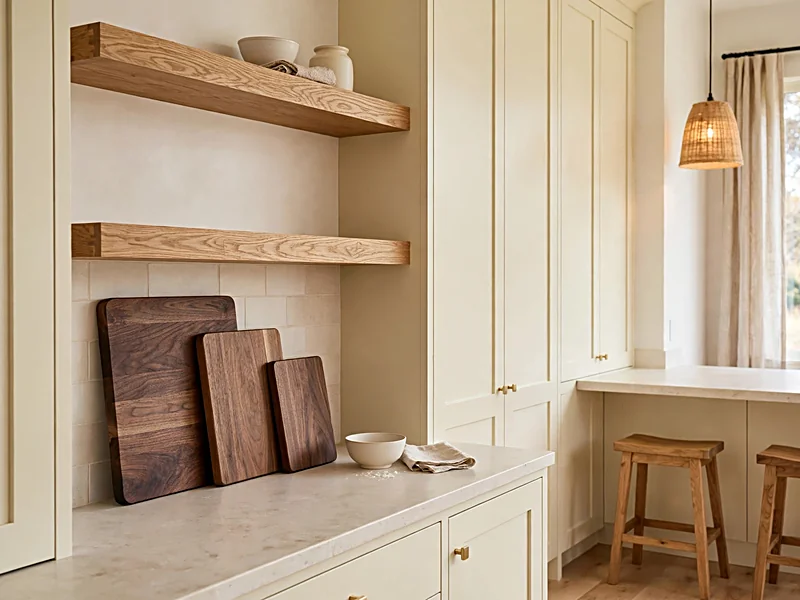
Natural wood adds grain and texture to kitchens with painted cabinets and smooth counters. Try oak shelves, walnut cutting boards, or wooden stools. These details work especially well against cream, white, and sage green cabinetry.
You don’t need matching wood finishes everywhere. Choose one main wood tone and use smaller pieces with similar undertones. If you already have wood cabinets, keep other wooden accessories simple. Too many matching pieces can make the room feel heavy.
4. Choose Cream, Sage Green, or Earthy Colors
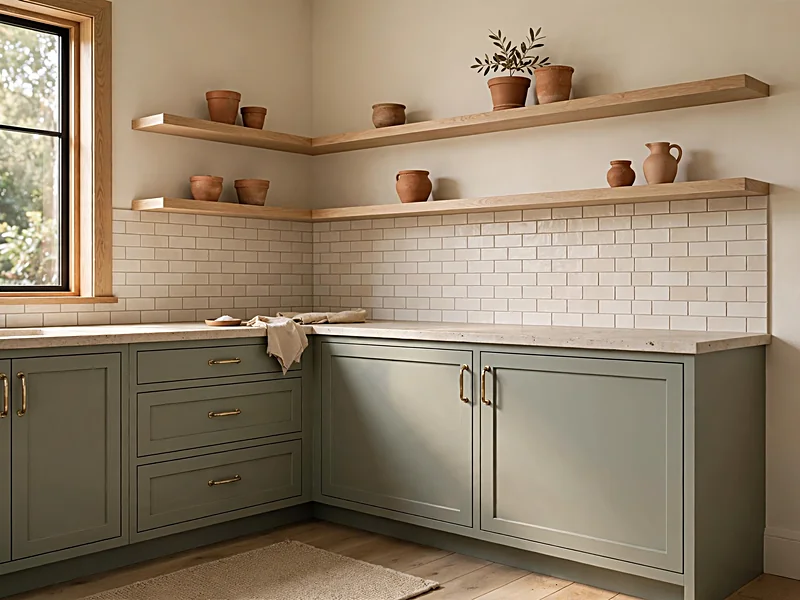
Soft colors can make a kitchen feel calmer without losing personality. Cream, warm white, sage green, muted olive, and terracotta work well with natural wood. Choose colors that complement your existing floors and countertops.
Before painting cabinets, test samples in different lighting conditions. Look at them during the day and under your kitchen lights at night. If painting isn’t practical, use color through dish towels, pottery, curtains, or a runner. Choose one main color and one or two supporting shades. This helps different accessories feel connected.
5. Hang Cafe Curtains for a Softer Window Look
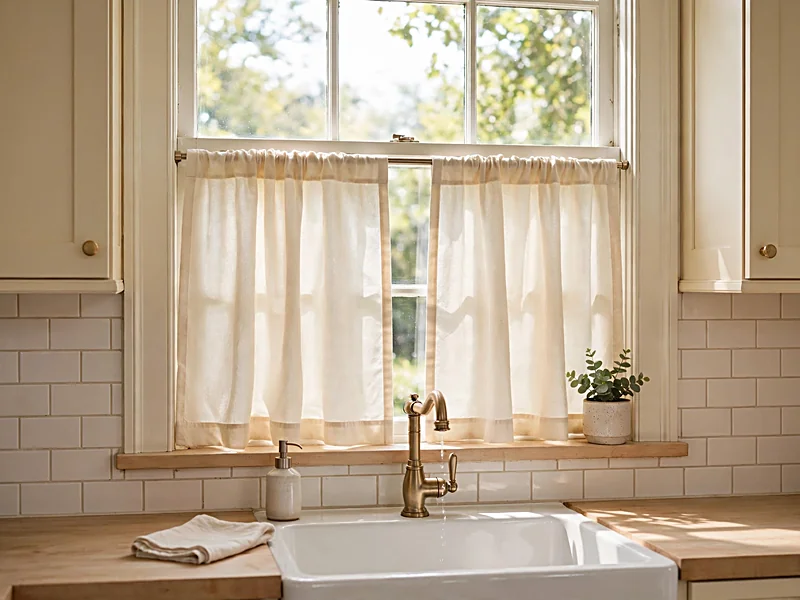
Café curtains cover the lower part of a window while allowing light through the upper glass. They work well in cottage and traditional kitchens, especially where privacy matters. Choose washable cotton or linen-look fabric. Cream, oatmeal, and small check patterns pair nicely with wooden furniture.
A tension rod may work if the window frame supports it securely. Keep curtains away from burners, hot appliances, and water. For modern kitchens, plain fabric often looks cleaner than a busy print.
6. Add Character With Vintage Finds
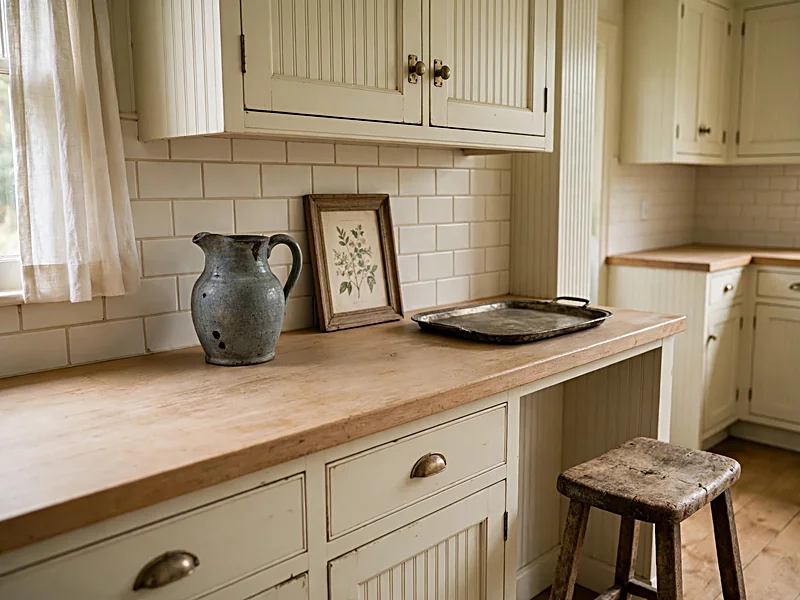
Secondhand pieces can give a kitchen personality without requiring a remodel. Look for ceramic pitchers, framed prints, wooden stools, or old serving trays. Choose objects you enjoy using or seeing every day.
A small antique table can make a breakfast corner feel comfortable. Vintage pottery can decorate a shelf without filling the counter. Check older cookware before using it for food. Keep questionable electrical items as decoration rather than using them. One or two personal pieces usually work better than a crowded collection.
7. Refresh Cabinet Handles With Warm Metals
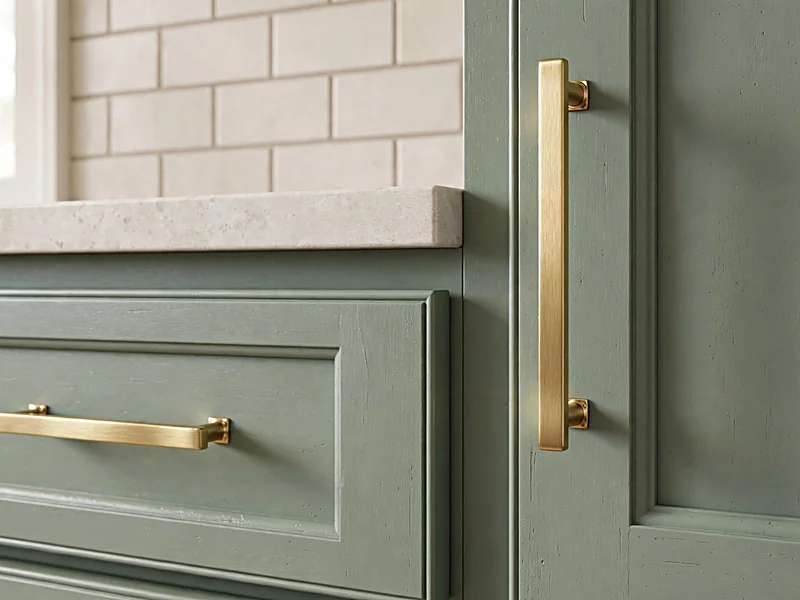
Cabinet handles are a small detail with a noticeable effect. Brushed brass, aged bronze, and copper finishes work well with cream, green, and natural wood cabinets.
Measure the distance between existing screw holes before ordering replacements. Choosing the same spacing can avoid extra drilling. Test one handle first to check its color and grip. You can mix metal finishes, but keep one as the main choice. Repeating that finish helps the room feel organized.
8. Style Open Shelves With Everyday Dishes
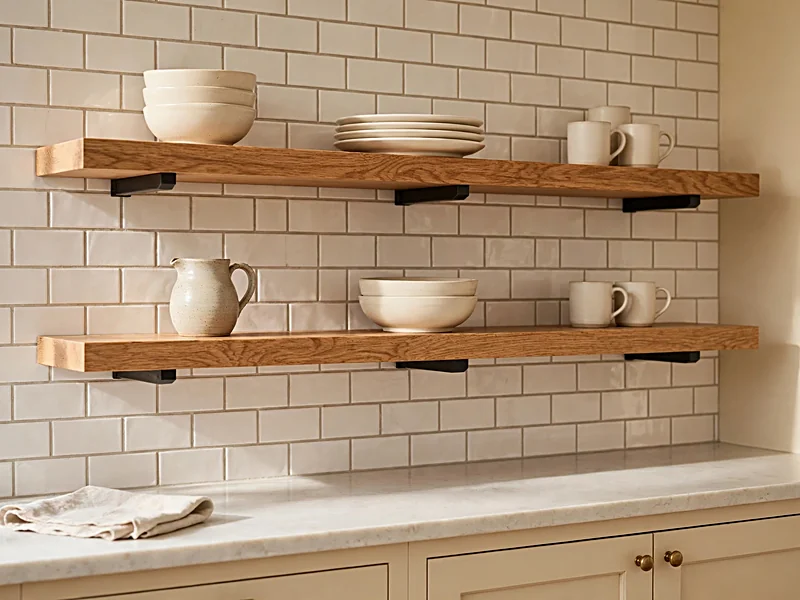
Open shelves look best when they hold useful objects instead of endless decorations. Arrange everyday plates, mugs, and bowls in small groups. Add a ceramic pitcher or wooden cutting board for variety. Leave some open space between the objects. This helps the display look relaxed rather than crowded.
Shelves near cooking areas collect grease and dust, so choose items that are easy to wash. Check shelf weight limits and mounting before displaying heavy dishes. If open shelves aren’t practical, style a glass-front cabinet instead.
9. Create a Comfortable Breakfast Nook

A small dining corner can make your kitchen a place for conversation and relaxed meals. Choose a round table if the layout suits it. Add two comfortable chairs or a bench with washable cushions. A pendant above the table can help define the area.
Measure the available space with chairs pulled out before buying furniture. The National Kitchen & Bath Association recommends walkways at least 36 inches wide. Seating areas may need more clearance depending on traffic. Keep cabinet doors and nearby appliances accessible.
10. Make the Walls Personal With Artwork
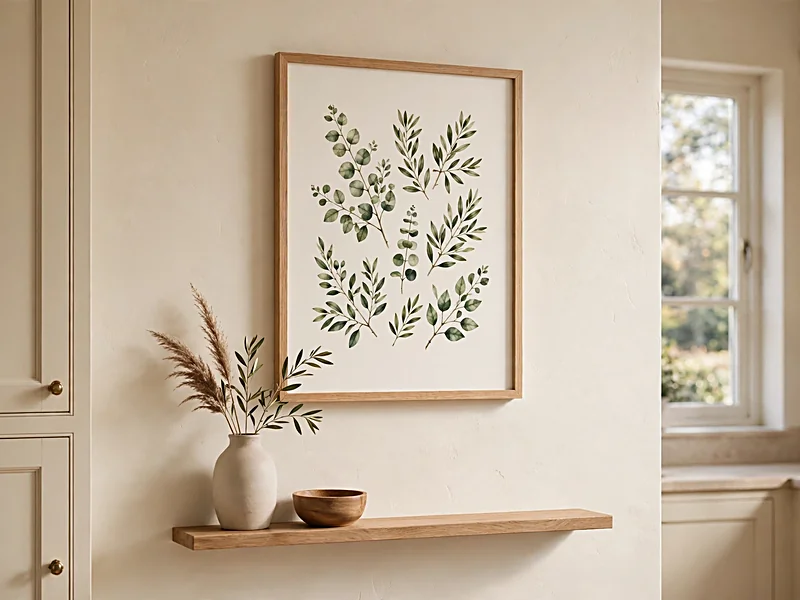
A framed family recipe, landscape, or botanical print can bring character to an empty kitchen wall. Choose artwork that shares colors with your cabinets, rug, or curtains.
One larger frame may look calmer than several small pieces placed close together. Keep artwork away from grease, direct heat, and frequent splashes. For an inexpensive update, reuse an existing frame and change the picture inside.
11. Add Texture With Linen, Cotton, and Baskets
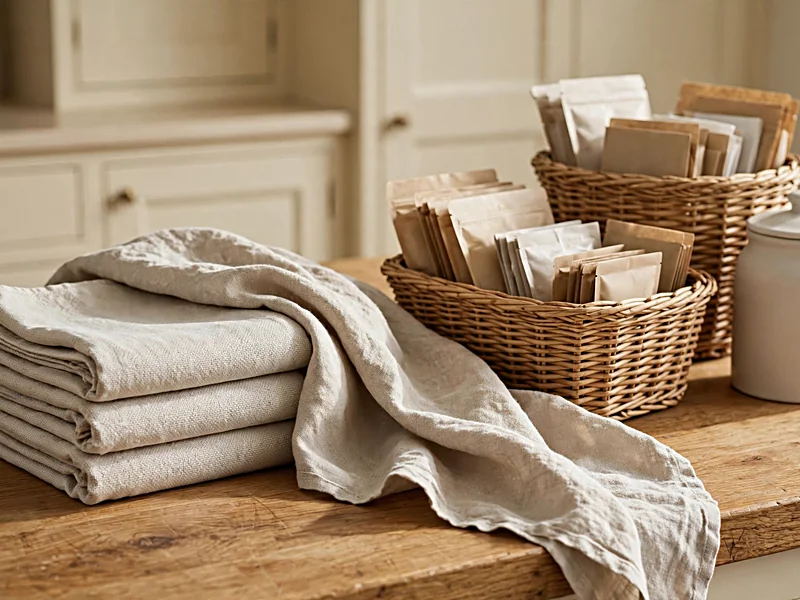
Kitchens have many hard surfaces, including stone, tile, glass, and metal. Fabric and woven materials create a softer appearance. Try washable cotton towels, linen-look curtains, or woven baskets for dry kitchen supplies.
Choose practical fabrics that can handle regular cleaning. Use sealed food-safe containers for ingredients and keep baskets away from wet areas. If your cabinets and backsplash already have strong patterns, choose plain textiles. Their texture will add interest without competing with the existing finishes.
12. Make White Cabinets Feel Warmer
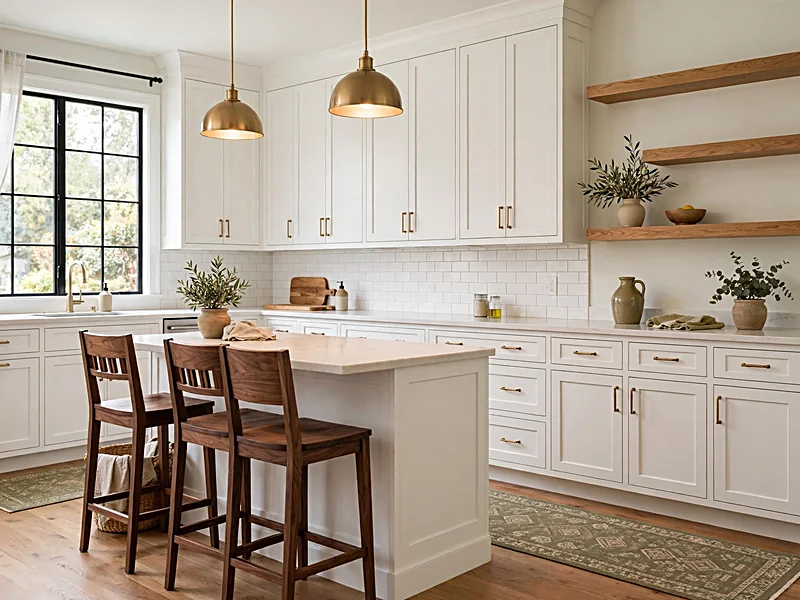
White cabinets can feel stark when the rest of the room uses cool colors and hard surfaces. Introduce contrast with oak shelves, walnut stools, or a patterned runner. Warm lighting can also soften the appearance of white cabinetry.
Test cream and beige accessories against your cabinets. Some warm shades may appear yellow beside cool white paint. Start with small changes before considering new cabinet finishes.
13. Add Under-Cabinet Lighting for Cooking
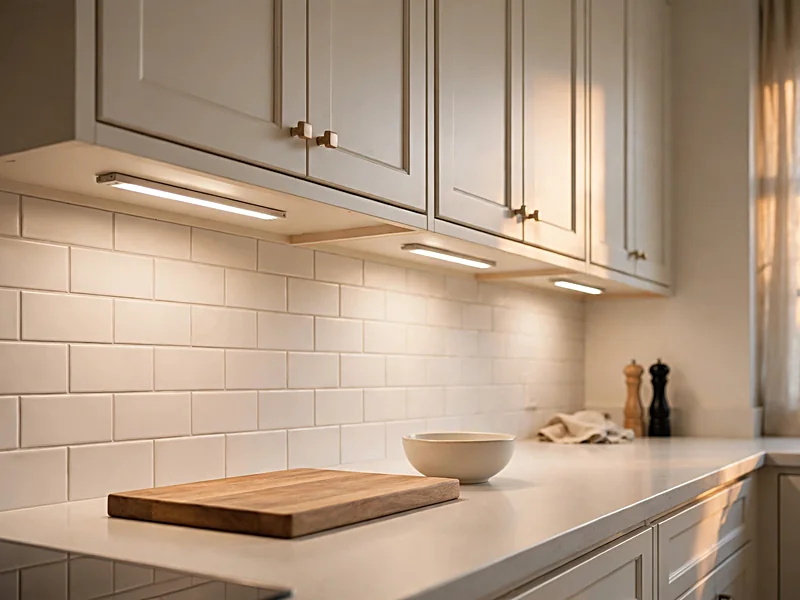
Under-cabinet lights brighten worktops that may sit in the shadow of upper cabinets. LED light bars and strips can provide useful task lighting without taking much space.
Choose a system that gives even light across your preparation area. Avoid fixtures that cause glare. Some products plug into outlets, while others need professional installation. Keep wiring away from water and heat. Use a qualified electrician for work beyond your experience.
14. Make a Coffee or Tea Corner
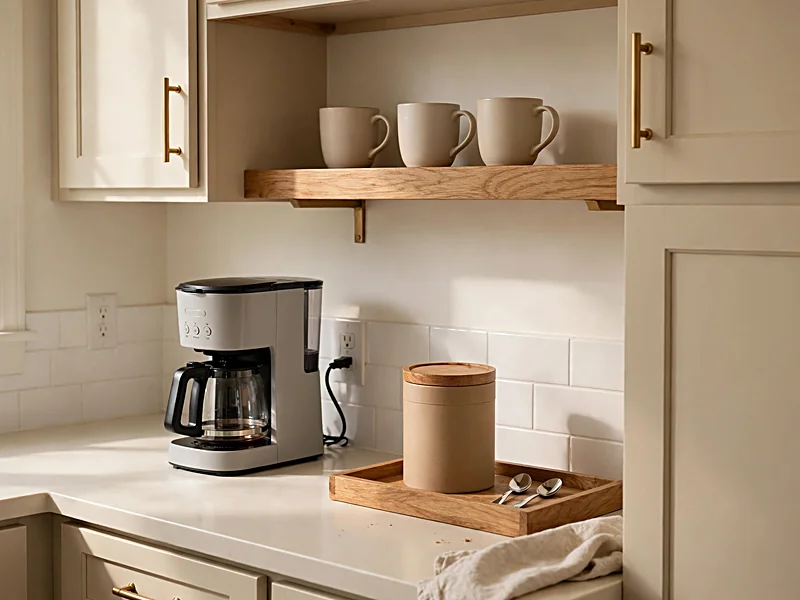
A small drink station can make morning routines more organized. Keep your coffee maker or kettle, mugs, and daily supplies together near a suitable outlet. A wooden tray can hold spoons and sealed containers. Store extra supplies in a nearby cabinet.
In smaller kitchens, a shelf for mugs may work better than another piece of furniture. Leave enough counter space for preparation and cleaning.
15. Decorate With Plants and Fresh Herbs
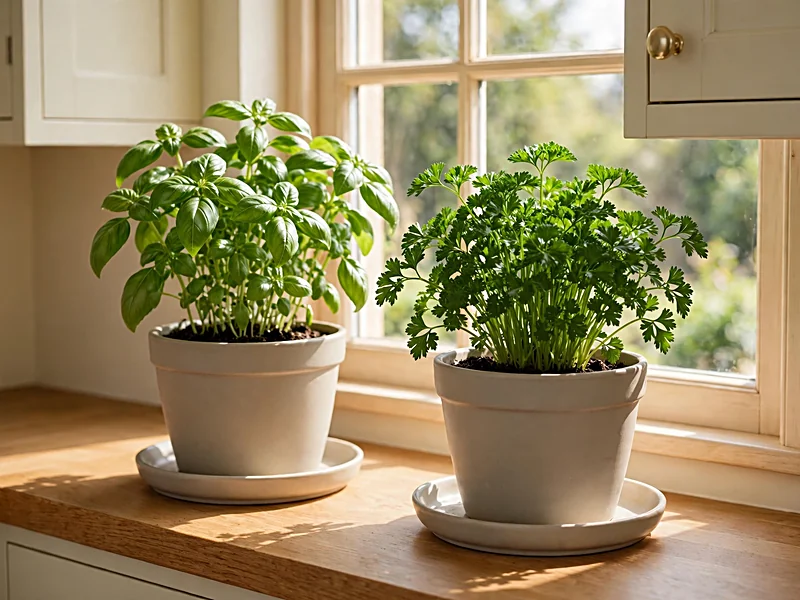
Plants introduce natural green tones and can soften plain cabinets or countertops. Fresh herbs work well near windows that receive suitable light. Basil needs more light than many low-light houseplants. Choose plants according to your kitchen’s conditions.
Place pots on waterproof saucers and protect wood from moisture. Keep loose soil away from food preparation surfaces. If natural light is limited, a small artificial plant can provide color without extra maintenance.
16. Choose Wooden Stools for Island Seating
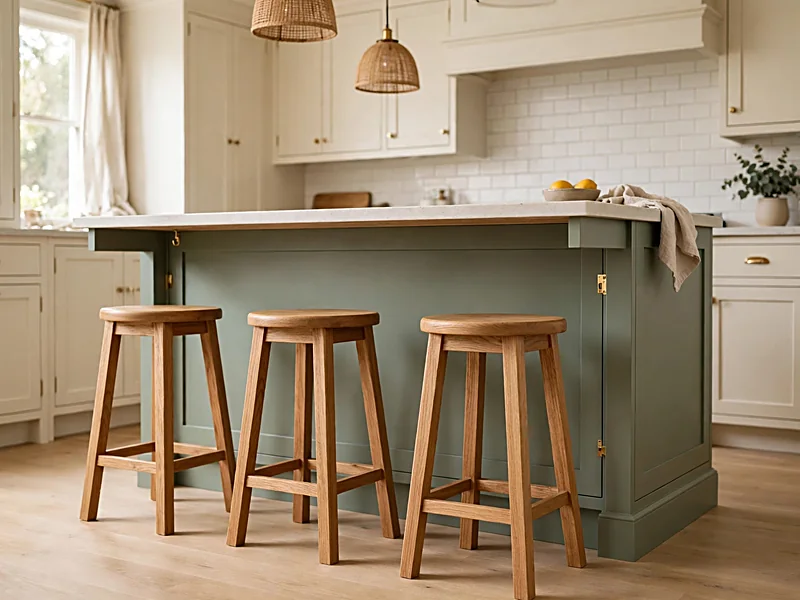
Wooden stools add warmth beside painted islands, stone counters, and modern cabinets. Choose a finish that complements your shelves or flooring.
Check the distance between the seat and counter before buying. Roughly 10 to 12 inches of knee space is a useful starting point. Stools with backs may be more comfortable for long meals. Backless stools can fit under a counter more easily. Measure the walking space around the island before choosing a design.
17. Add Pattern With a Kitchen Backsplash
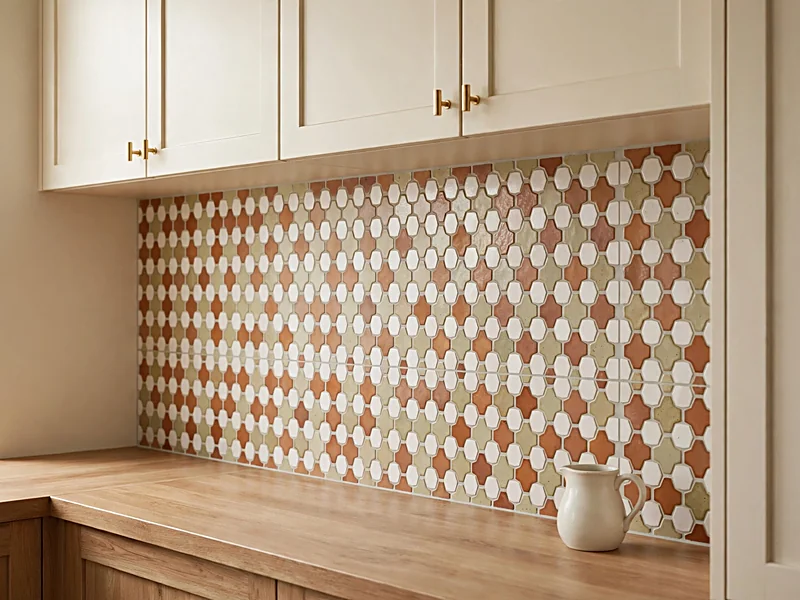
A backsplash can introduce color and texture without changing the room’s layout. Consider warm white subway tile, muted patterned tile, or ceramic tile with a handmade appearance. Bring samples home and compare them with your cabinets and counters.
Choose materials that handle moisture, grease, and regular cleaning. For rented homes, some removable backsplash products may be suitable. Check lease rules and manufacturer heat ratings before installation.
18. Add Rustic Details Without Overdecorating
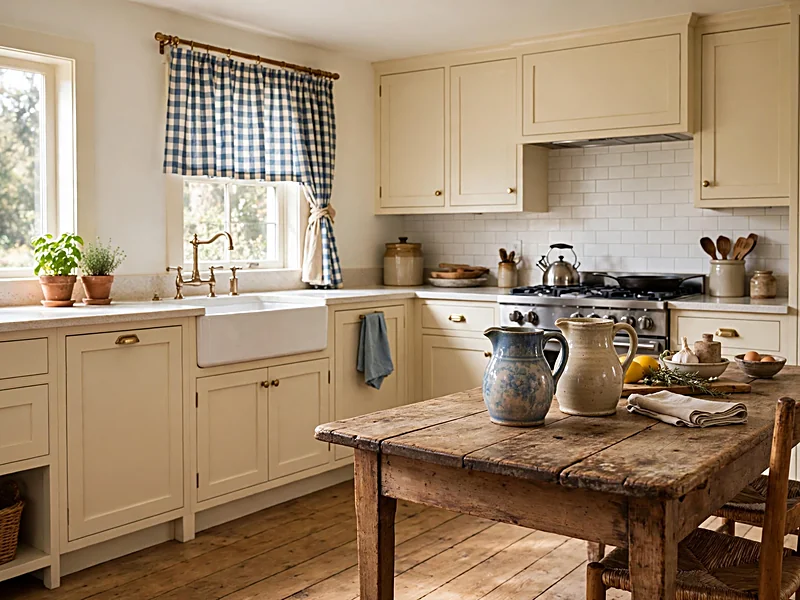
A wooden table, old pottery, or checked curtain can make a kitchen feel relaxed and lived in. Choose a few pieces that suit your existing cabinets and countertops.
An apron-front sink can also complement a cottage or farmhouse kitchen. Different kitchen sink ideas can help you compare shapes, materials, and practical installation needs. Replacing a sink may require plumbing work and cabinet adjustments. If you’re decorating on a budget, start with smaller accessories.
19. Bring Warmth Into a Modern Kitchen
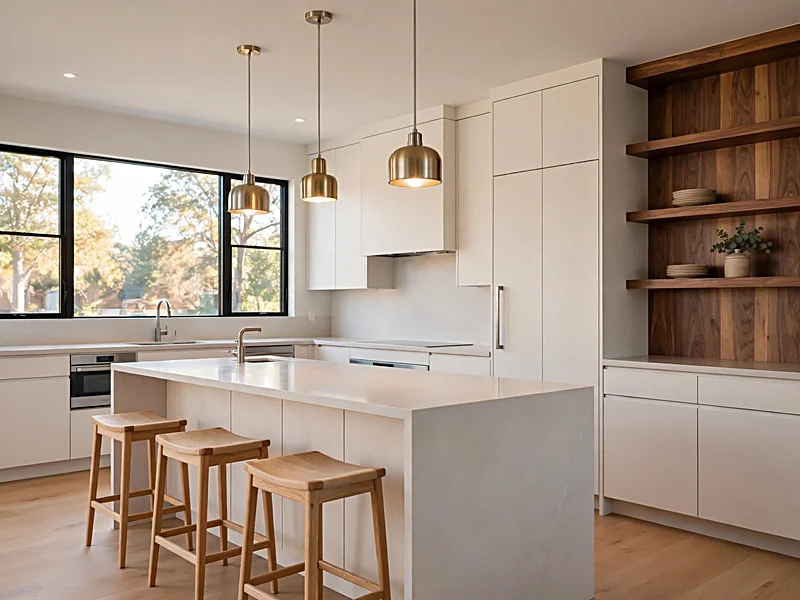
Modern kitchens often feature flat cabinets, smooth countertops, and simple shapes. Add natural wood, comfortable stools, and warm lighting to soften these finishes. A walnut shelf can look attractive against white cabinets. Oak stools can add contrast beside a dark island.
If you’re planning larger changes, different kitchen ideas can help you compare layouts, materials, and cabinet styles. For an open-plan kitchen, repeat one wood tone or accent color in the living area. This helps both spaces feel connected.
20. Try Deep Cabinet Colors
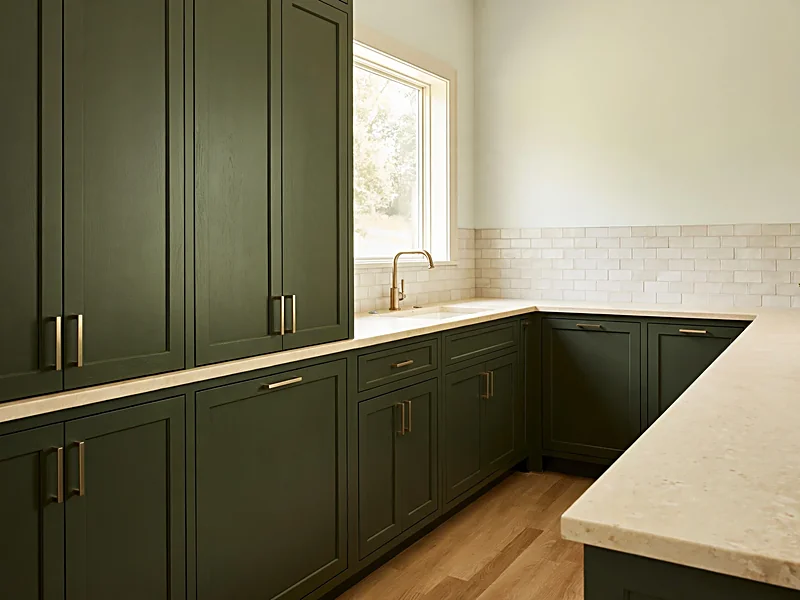
Deep olive, charcoal, and muted blue-green cabinets can give a kitchen a richer appearance. Balance darker cabinetry with pale countertops or lighter walls when daylight is limited.
Dark colors don’t automatically make small kitchens look cramped. Lighting, contrast, and layout all affect the result. Test large paint samples before making permanent changes. If you’re unsure, paint a freestanding cabinet or island first. Use paint suitable for cabinetry and follow the preparation instructions.
21. Cozy Kitchen Ideas for a Small Galley Layout

Galley kitchens need clear walking space and practical storage. Use a narrow washable runner, warm task lighting, and a few wooden accessories. Avoid deep shelves or oversized furniture that restrict movement.
The NKBA recommends a 42-inch work aisle for one cook when planning a kitchen. Existing layouts may have less room, so avoid making narrow spaces harder to use. Keep your main preparation area clear and choose decorations that don’t interfere with daily cooking.
22. Personalize a Rental Without Permanent Changes
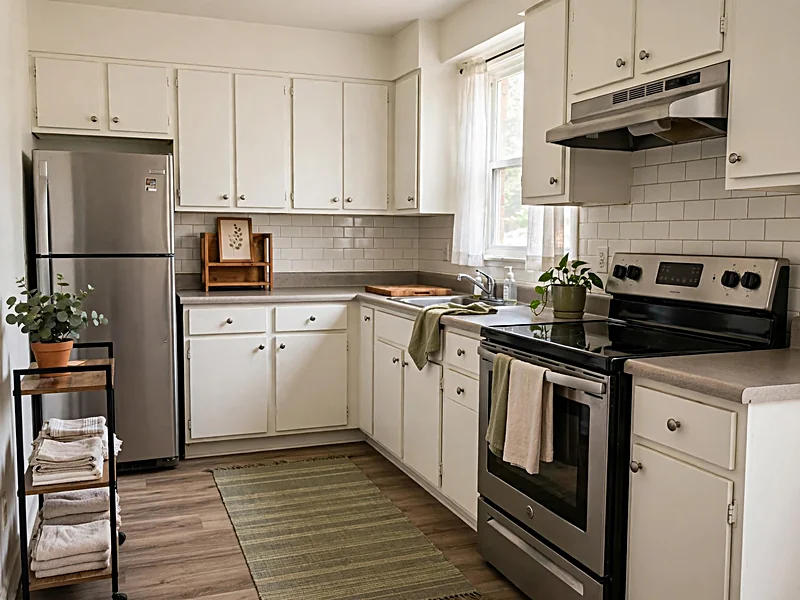
Renters can decorate with accessories that are easy to remove. Try a washable runner, framed artwork, dish towels, and freestanding storage. Choose items that work with the existing cabinet colors.
Check your lease before drilling, painting, or replacing hardware. Some adhesive products can damage walls when removed. Keep original fixtures if your landlord permits temporary replacements. Focus on pieces you can take to your next home.
23. Add a Countertop Lamp Where It’s Safe
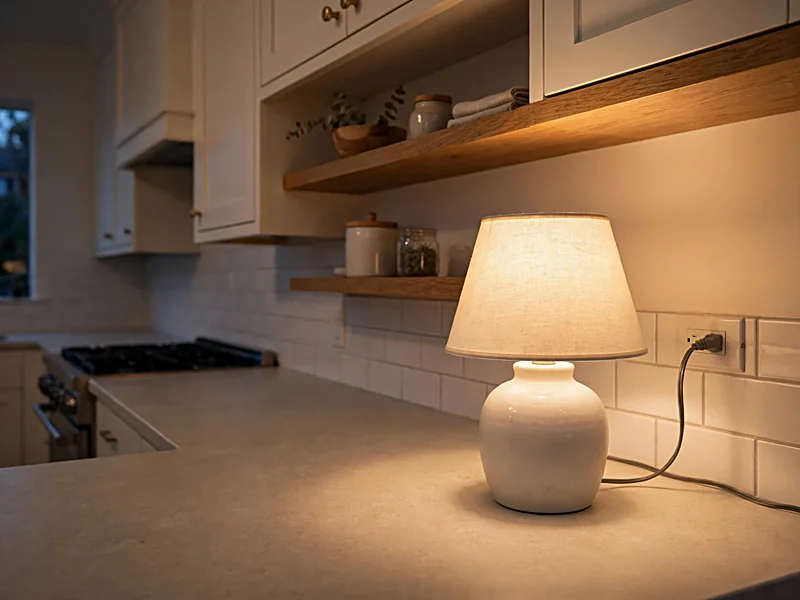
A small lamp can create softer light in a kitchen during the evening. Place it on a dry, stable counter away from burners, sinks, and hot appliances. Avoid loose cords and overloaded outlets.
The U.S. Consumer Product Safety Commission recommends keeping electrical cords away from water and hot surfaces. If your counters don’t offer a safe location, use a suitable wall fixture or dimmable ceiling light instead.
24. Make Everyday Storage Look Attractive
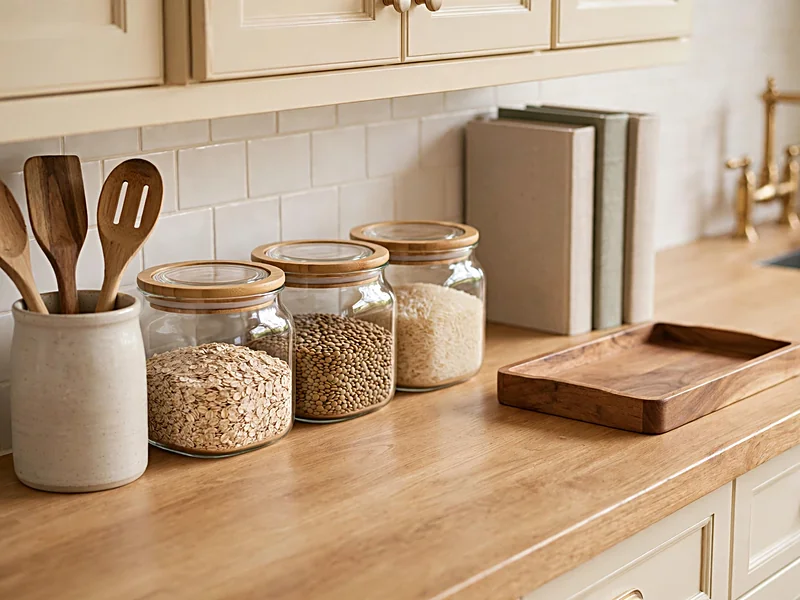
Useful kitchen objects can double as decoration. Keep wooden spoons in a ceramic holder and dry ingredients in sealed containers. Display a few cookbooks away from water and steam. Limit visible storage to things you use regularly.
Simple kitchen decor ideas like coordinated towels, framed art, and wooden trays can add color without taking over your countertops. Keep enough space available for preparing meals and cleaning.
25. Create a Window Seat or Quiet Corner
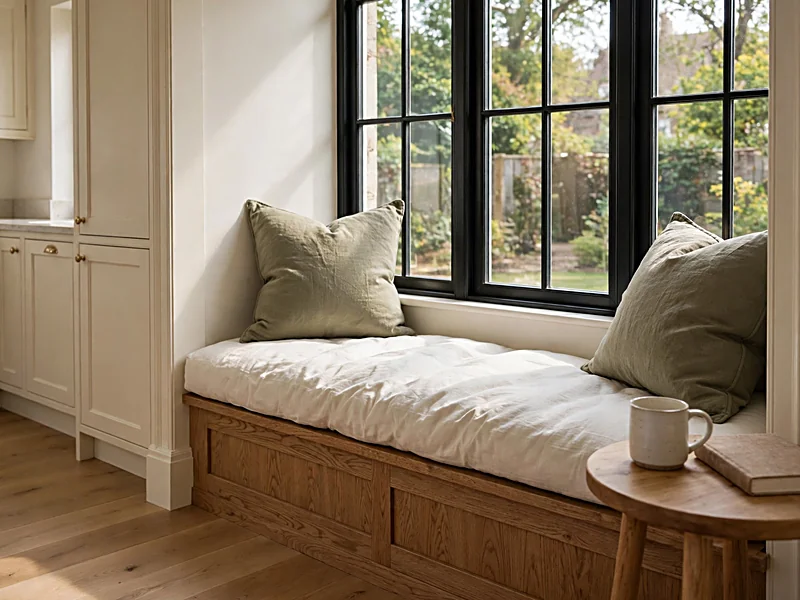
A window alcove can become a comfortable place to enjoy coffee or read. A fitted bench with washable cushions works when the room has enough space. Consider storage underneath if the design allows safe access.
Keep seating away from cooking hazards and avoid blocking doors or walkways. If a built-in seat won’t fit, a compact chair beside a small table can create a similar feeling.
How to Make a Kitchen Cozy Without Remodeling
Start by identifying what makes your kitchen feel uncomfortable. Harsh lighting, bare floors, cold colors, and cluttered countertops are common problems. Many can be improved without replacing expensive fixtures.
Begin With Changes You Can Easily Reverse
Start with a runner, curtains, small artwork, or wooden accessories. Choose one main color and repeat it through a few details.
Make one change at a time. This allows you to judge what works before spending more money. Avoid buying decorative objects simply because a shelf or counter looks empty.
Work With Your Existing Cabinets and Counters
Choose accessories that complement your current finishes. Cream cabinets and brown countertops often work with oak and muted green. Gray cabinetry can look warmer with wood and softer lighting.
If your backsplash already has a busy pattern, keep nearby decorations simple. The goal is to improve the room you have, not make every surface match.
Cozy Kitchen Ideas on a Budget
A comfortable kitchen doesn’t need an expensive renovation. Focus on changes that improve everyday use and the room’s appearance. Plan purchases around your biggest problems first.
| Budget | Possible changes | Main benefit |
| Under $50 | Thrifted artwork, towels, ceramic accessories, small plants | Adds personality |
| $50 to $150 | Runner, curtains, selected cabinet hardware, compatible bulbs | Improves color and lighting |
| $150 to $500 | Coordinated decor, compact seating, limited paint projects | Refreshes several areas |
These are sample spending plans, not verified retailer prices. Actual costs depend on materials, store, size, and installation.
Small Updates Under $50
Begin with what you already own. A wooden cutting board, favorite pitcher, or framed picture can add character without another purchase.
If you’re shopping, choose one useful item that complements your existing colors. Secondhand stores may offer affordable options, but check each item’s condition.
Updates Between $50 and $150
Choose a change that covers a noticeable part of the room. A washable runner can soften a bare floor. Curtains can improve privacy while adding texture. New handles may improve the appearance of older cabinets.
Measure before buying and compare current prices. Spend on materials that are practical to clean and maintain.
Larger Updates Between $150 and $500
Use a bigger budget to combine two or three improvements. For example, a runner, new curtains, and selected cabinet hardware can create a coordinated look.
Check the cost of installation supplies before starting paint or lighting projects. Set your budget before shopping and keep a little room for unexpected expenses.
Best Color and Material Combinations for a Cozy Kitchen

Colors look more connected when they share similar undertones. Choose one main color, one wood finish, and a smaller accent. Test samples beside your actual cabinets and countertops.
| Color combination | Materials | Best suited to |
| Cream and natural oak | Linen, ceramic, brushed brass | Cottage and traditional kitchens |
| Sage green and warm brass | Oak, cotton, cream tile | Farmhouse and transitional kitchens |
| Terracotta and soft beige | Pottery, wicker, natural wood | Rustic kitchens |
| Walnut and warm white | Pale stone, matte metal | Modern kitchens |
Cream Cabinets With Natural Oak
Cream cabinets and oak create a light, relaxed appearance. Use wood on stools, shelves, or serving trays. Add muted green textiles for subtle color.
Sage Green With Warm Brass
Sage green pairs well with warm brass handles and cream surfaces. Choose a muted shade if your kitchen already has strong countertop patterns. Test the paint in both daylight and evening light.
Terracotta Accents With Soft Beige
Terracotta pottery, tile, or patterned textiles can introduce earthy color. Pair these details with beige walls and natural wood. Keep the larger surfaces simple to let the accents stand out.
Walnut Wood With Warm White
Walnut adds deeper brown tones beside warm white cabinets or counters. Try walnut stools, shelves, or small furniture. Use fewer accessories if the wood grain already gives the room enough visual interest.
How to Make a Small Kitchen Cozy Without Clutter
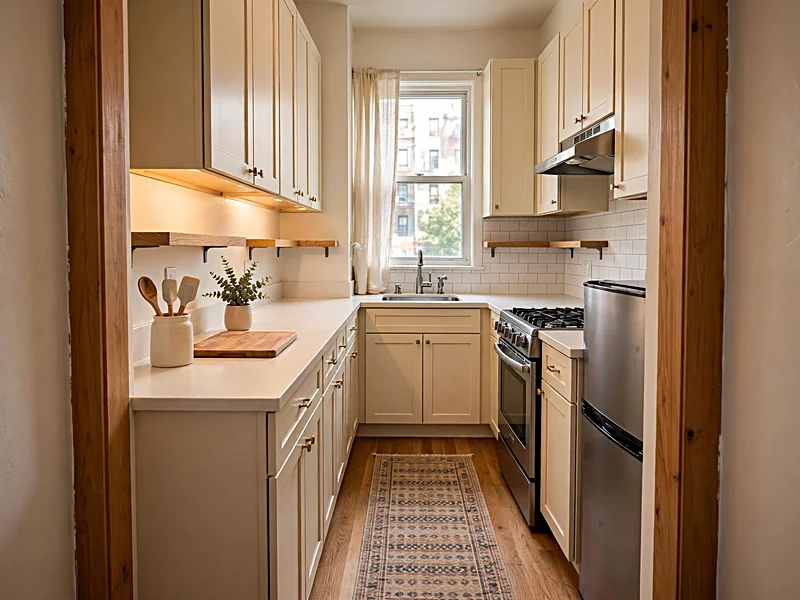
A small kitchen can feel comfortable when storage, lighting, and movement are carefully considered. Before decorating, check where you prepare food, open appliances, and walk.
Keep Countertops Clear
Store appliances you rarely use when cabinet space allows. Group everyday essentials in one accessible area. Use wall storage only where it won’t interfere with cooking.
Avoid filling every shelf with decorative objects.
Add Lighting and Texture Without Using Extra Space
Under-cabinet lighting can brighten work surfaces without taking up counter space. A washable runner adds color at floor level.
Use small curtains where appropriate and keep wall decorations simple. Choose changes that improve comfort without making the layout feel crowded.
Choose Furniture That Fits
A round table may work better than a rectangular one in some small layouts. Stools that tuck beneath a counter can save space.
Measure the room with chairs pulled out and appliance doors open. Don’t buy furniture that makes cooking or walking harder.
Cozy Kitchen Decorating Mistakes to Avoid
A kitchen should look comfortable and remain safe to use.
Avoid these common mistakes:
- Poor task lighting: Keep cooking and preparation areas bright enough.
- Crowded countertops: Leave clear space for everyday work.
- Slippery rugs: Choose nonslip backing and keep edges flat.
- Fabric near burners: Keep curtains and towels away from heat.
- Too many competing colors: Use a limited palette that suits existing finishes.
- Oversized furniture: Measure walking and appliance clearances first.
- Hard-to-clean decor: Choose materials that suit your cooking habits.
Small changes work best when they improve both comfort and daily use.
Frequently Asked Questions
What Makes a Kitchen Feel Cozy?
A kitchen often feels cozy when it combines warm lighting, natural materials, comfortable seating, and personal details. Wood, soft colors, washable textiles, and familiar accessories can help create that atmosphere.
How Can I Make My Kitchen Look Better for Less?
Start with clean countertops and a few coordinated accessories. Try a wooden tray, thrifted artwork, or fresh dish towels. Add a washable runner if your budget allows.
How Do I Make a White Kitchen Feel Warmer?
Use natural wood, warm lighting, and earthy accent colors. Oak shelves, walnut stools, and olive textiles can soften white cabinetry without replacing it.
What Lighting Works Best for a Cozy Kitchen?
Combine general ceiling lighting with brighter task lighting and softer accent lights. Warm-white bulbs around 2700K to 3000K can work well in suitable fixtures. Keep preparation areas properly lit.
Can a Modern Kitchen Still Feel Cozy?
Yes. Natural wood, comfortable stools, warm lighting, and simple textiles can soften modern surfaces. Keep the room organized and choose accessories that complement the existing finishes.
How Can Renters Make a Kitchen More Inviting?
Use removable accessories such as rugs, dish towels, framed artwork, and freestanding storage. Check your lease before painting or changing permanent fixtures.
Final Thoughts
Start with the change your kitchen needs most. Better lighting, a washable runner, or natural wood accessories may be enough to make the room feel more comfortable.
Choose colors that suit your existing finishes. Keep work surfaces clear and add personal details gradually. A welcoming kitchen doesn’t need expensive cabinets or a complete renovation. It needs practical choices that make everyday cooking and gathering more enjoyable.

About Author
Mia Anderson is a gardening writer at HomeFixStyle with a keen interest in plants, garden design, and outdoor living. Her work focuses on small-space gardening, plant care, and practical landscaping ideas. She enjoys sharing simple, well-researched advice that helps homeowners create beautiful gardens suited to their space, budget, and lifestyle.